Eunice Kennedy Shriver National Institute of Child Health and Human Development, National Institutes of Health, Bethesda, MD, USA.
Cell Death Dis. 2023 Dec 8;14(12):807. doi: 10.1038/s41419-023-06227-8.
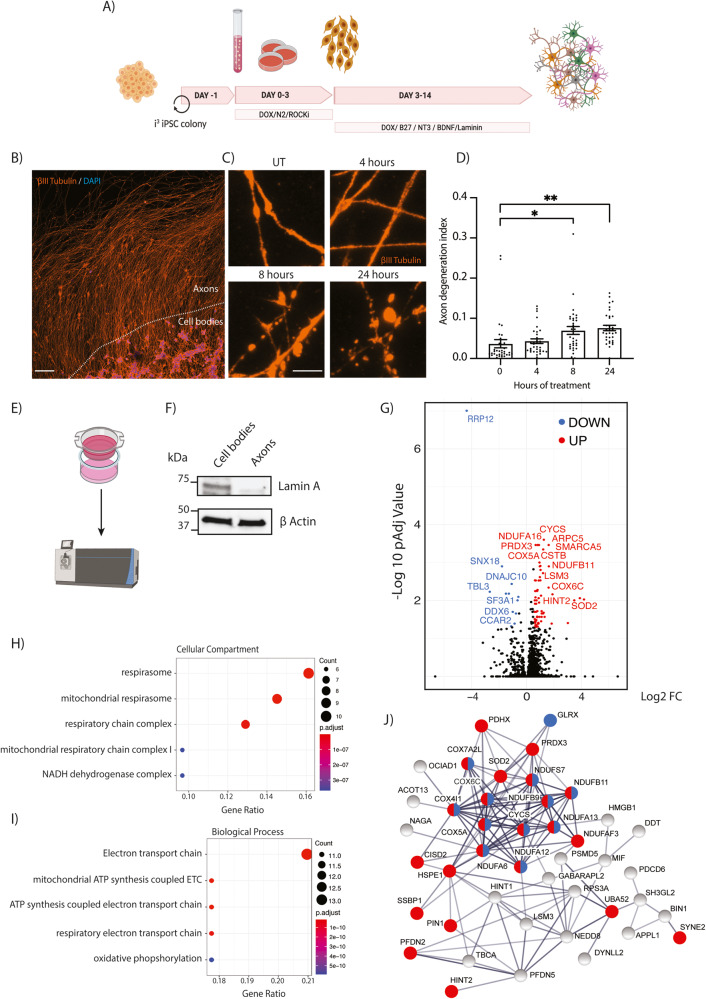
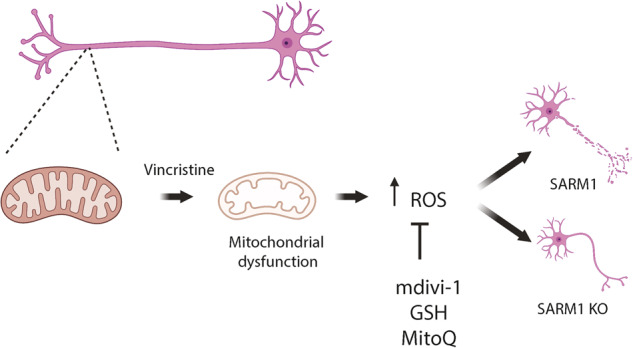
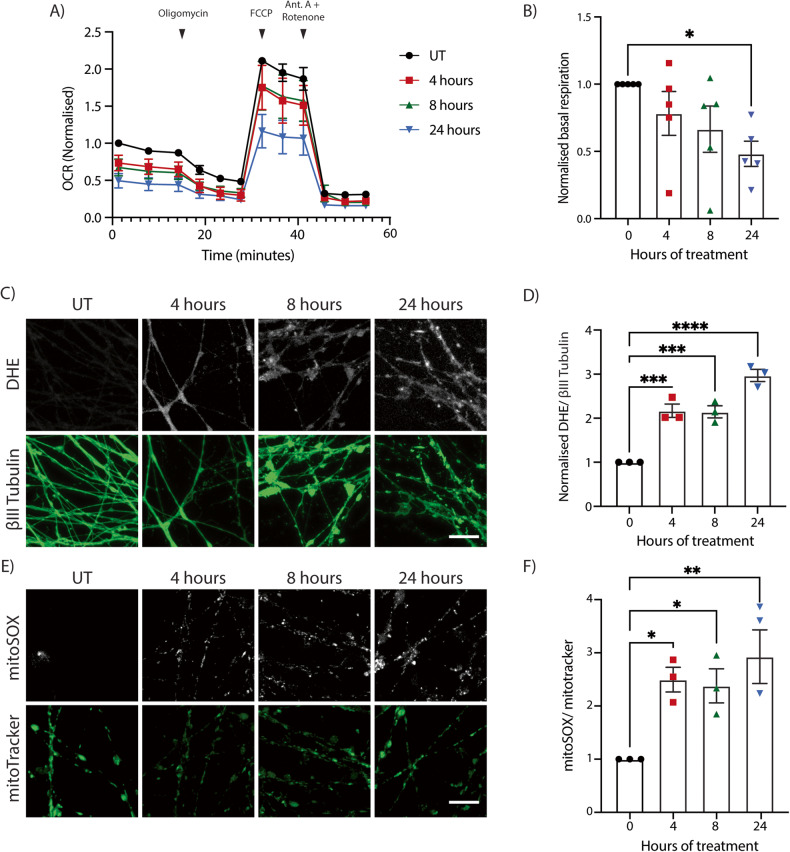
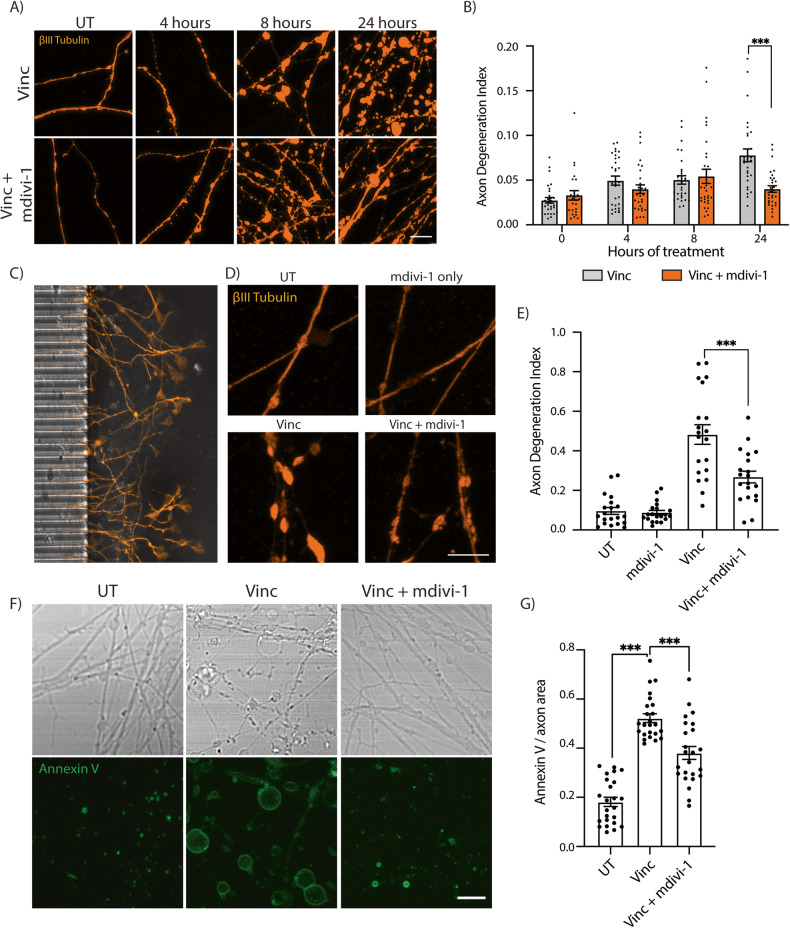
Neurological side effects arising from chemotherapy, such as severe pain and cognitive impairment, are a major concern for cancer patients. These major side effects can lead to reduction or termination of chemotherapy medication in patients, negatively impacting their prognoses. With cancer survival rates improving dramatically, addressing side effects of cancer treatment has become pressing. Here, we use iPSC-derived human neurons to investigate the molecular mechanisms that lead to neurotoxicity induced by vincristine, a common chemotherapeutic used to treat solid tumors. Our results uncover a novel mechanism by which vincristine causes a local increase in mitochondrial proteins that produce reactive oxygen species (ROS) in the axon. Vincristine triggers a cascade of axon pathology, causing mitochondrial dysfunction that leads to elevated axonal ROS levels and SARM1-dependent axon degeneration. Importantly, we show that the neurotoxic effect of increased axonal ROS can be mitigated by the small molecule mitochondrial division inhibitor 1 (mdivi-1) and antioxidants glutathione and mitoquinone, identifying a novel therapeutic avenue to treat the neurological effects of chemotherapy.
由化疗引起的神经系统副作用,如剧烈疼痛和认知障碍,是癌症患者的主要关注点。这些主要副作用可能导致患者减少或停止化疗药物的使用,从而对他们的预后产生负面影响。随着癌症存活率的显著提高,解决癌症治疗的副作用已变得紧迫。在这里,我们使用 iPSC 衍生的人类神经元来研究导致长春新碱(一种常用于治疗实体瘤的化疗药物)诱导的神经毒性的分子机制。我们的结果揭示了长春新碱在轴突中引起线粒体蛋白局部增加从而产生活性氧 (ROS) 的新机制。长春新碱引发一连串的轴突病变,导致线粒体功能障碍,从而导致轴突 ROS 水平升高和 SARM1 依赖性轴突退化。重要的是,我们表明,增加的轴突 ROS 的神经毒性作用可以通过小分子线粒体分裂抑制剂 1(mdivi-1)和抗氧化剂谷胱甘肽和线粒体醌来减轻,这为治疗化疗引起的神经系统副作用开辟了新的治疗途径。