State Key Laboratory of Reproductive Medicine and Offspring Health, Department of Reproduction, Women's Hospital of Nanjing Medical University, Nanjing Women and Children's Healthcare Hospital, Nanjing, Jiangsu Province, 210004, China.
State Key Laboratory of Reproductive Medicine and Offspring Health, Department of Histology and Embryology, Nanjing Medical University, Nanjing, China.
BMC Biol. 2023 Dec 8;21(1):285. doi: 10.1186/s12915-023-01760-6.
Immature cumulus-oocyte complexes are retrieved to obtain mature oocytes by in vitro maturation (IVM), a laboratory tool in reproductive medicine to obtain mature oocytes. Unfortunately, the efficiency of IVM is not satisfactory. To circumvent this problem, we therefore intended to commence with the composition of ovarian follicular fluid (FF), an important microenvironment influencing oocyte growth. It is well known that FF has a critical role in oocyte development and maturation. However, the components in human FF remain largely unknown, particularly with regard to small molecular peptides.
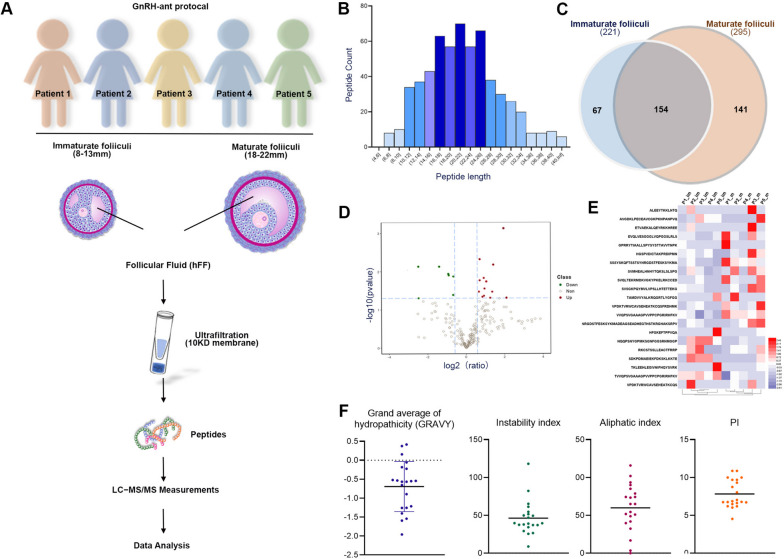
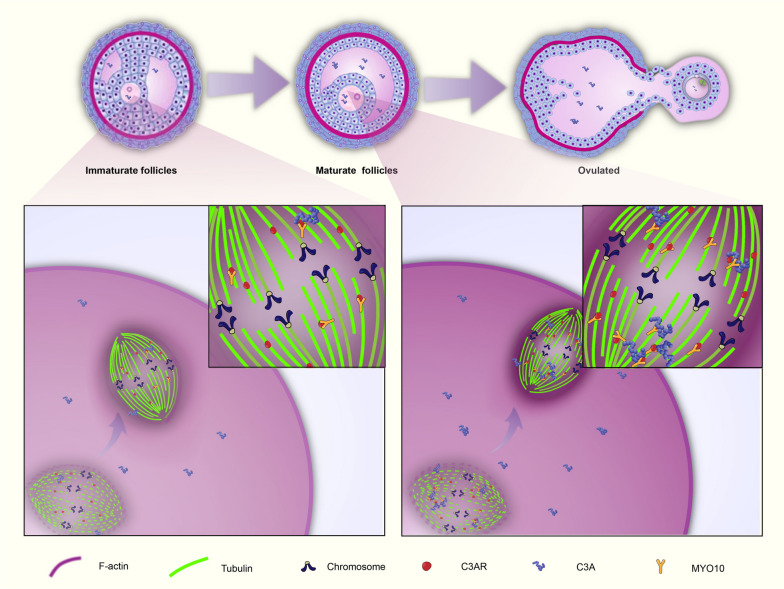
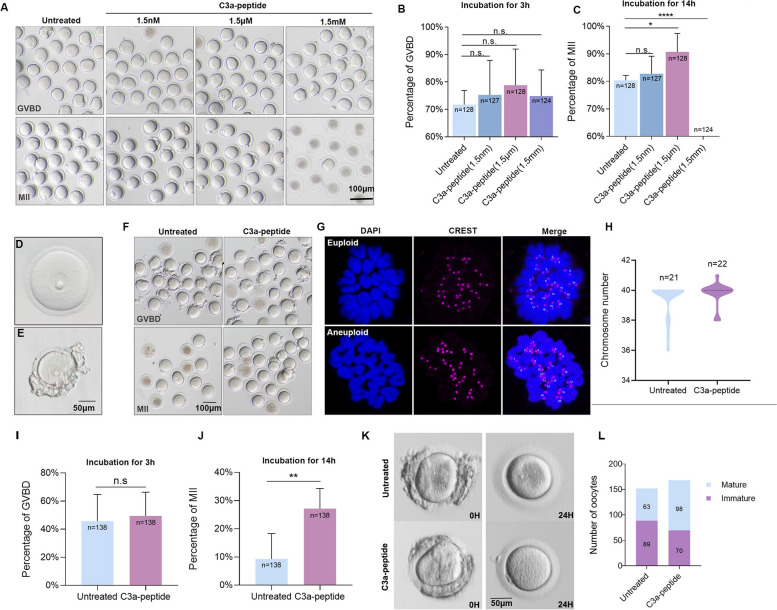
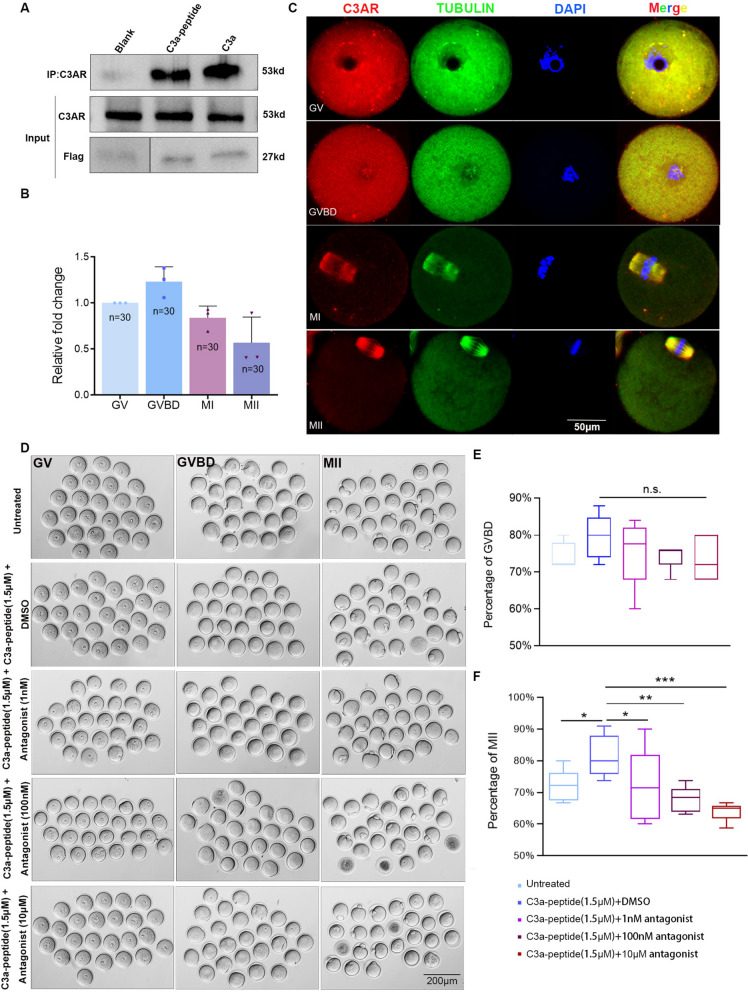
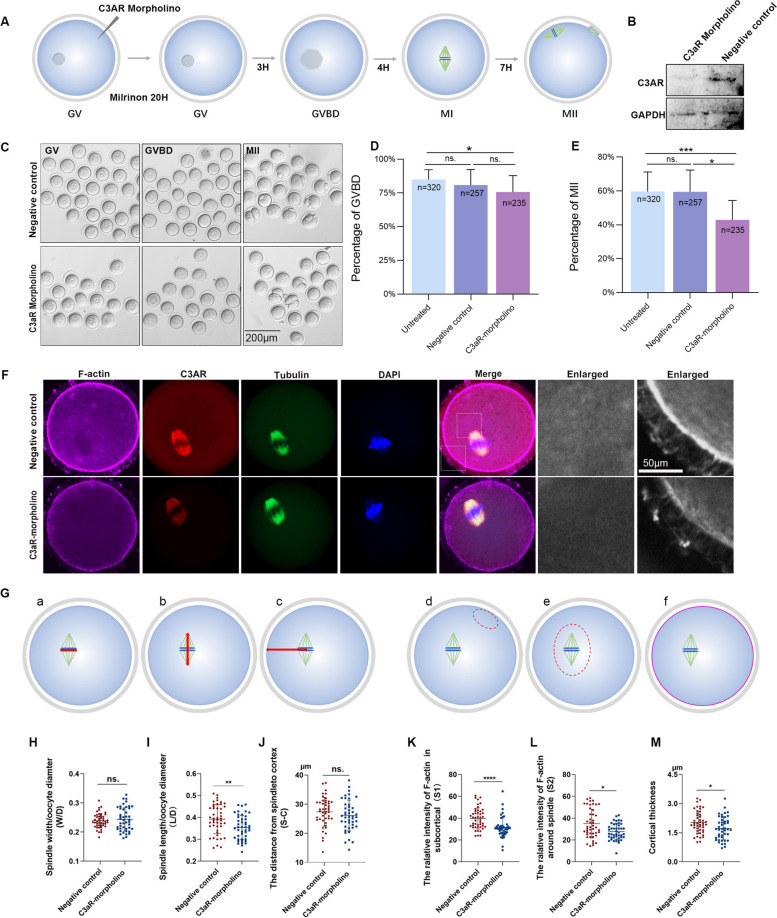
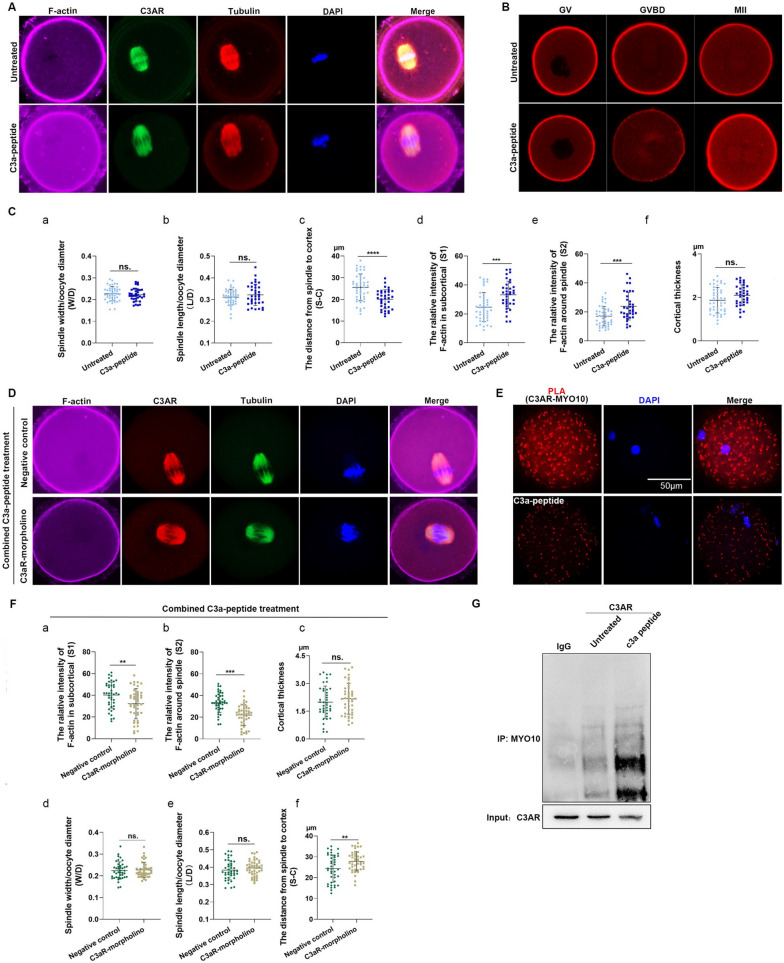
In current study, the follicular fluid derived from human mature and immature follicles were harvested. The peptide profiles of FF were further investigated by using combined ultrafiltration and LC-MS/MS. The differential peptides were preliminary determined by performing differentially expressed analysis. Human and mouse oocyte culture were used to verify the influence of differential peptides on oocyte development. Constructing plasmids, cell transfecting, Co-IP, PLA etc. were used to reveal the detail molecular mechanism. The results from differentially expressed peptide as well as cultured human and mouse oocytes analyses showed that highly conserved C3a-peptide, a cleavage product of complement C3a, definitely affected oocytes development. Intriguingly, C3a-peptide possessed a novel function that promoted F-actin aggregation and spindle migration, raised the percentage of oocytes at the MII stage, without increasing the chromosome aneuploidy ratio, especially in poor-quality oocytes. These effects of C3a-peptide were attenuated by C3aR morpholino inhibition, suggesting that C3a-peptide affected oocytes development by collaborating with its classical receptor, C3aR. Specially, we found that C3aR co-localized to the spindle with β-tubulin to recruit F-actin toward the spindle and subcortical region of the oocytes through specific binding to MYO10, a key regulator for actin organization, spindle morphogenesis and positioning in oocytes.
Our results provide a new perspective for improving IVM culture systems by applying FF components and also provide molecular insights into the physiological function of C3a-peptide, its interaction with C3aR, and their roles in enabling meiotic division of oocytes.
不成熟的卵丘-卵母细胞复合物通过体外成熟(IVM)被回收以获得成熟的卵母细胞,这是生殖医学中获得成熟卵母细胞的一种实验室工具。不幸的是,IVM 的效率并不令人满意。为了解决这个问题,我们着手研究卵巢卵泡液(FF)的组成,FF 是影响卵母细胞生长的重要微环境。众所周知,FF 在卵母细胞发育和成熟中起着关键作用。然而,人类 FF 中的成分在很大程度上仍然未知,特别是小分子肽。
本研究中,从人类成熟和不成熟的卵泡中采集卵泡液。通过联合超滤和 LC-MS/MS 进一步研究 FF 的肽谱。通过差异表达分析初步确定差异肽。用人和鼠卵母细胞培养来验证差异肽对卵母细胞发育的影响。构建质粒、细胞转染、Co-IP、PLA 等方法用于揭示详细的分子机制。差异表达肽以及培养的人和鼠卵母细胞分析的结果表明,高度保守的 C3a-肽,补体 C3a 的裂解产物,肯定会影响卵母细胞的发育。有趣的是,C3a-肽具有促进 F-肌动蛋白聚集和纺锤体迁移的新功能,提高了 MII 期卵母细胞的比例,而不会增加染色体非整倍体的比例,特别是在质量差的卵母细胞中。C3a-肽的这些作用被 C3aR 形态发生抑制所减弱,表明 C3a-肽通过与其经典受体 C3aR 协同作用来影响卵母细胞的发育。特别地,我们发现 C3aR 与 β-微管蛋白共定位到纺锤体,通过与肌球蛋白 10(MYO10)特异性结合,将 F-肌动蛋白募集到纺锤体和卵母细胞的皮质下区域,肌球蛋白 10 是卵母细胞中肌动蛋白组织、纺锤体形态发生和定位的关键调节因子。
我们的结果为通过应用 FF 成分来改善 IVM 培养系统提供了新的视角,并为 C3a-肽的生理功能、它与 C3aR 的相互作用以及它们在卵母细胞减数分裂中的作用提供了分子见解。