Yan Chang, Wang Chenglai, Wagner Jackson C, Ren Jianyu, Lee Carlynda, Wan Yuhao, Wang Shizhen E, Xiong Wei
Department of Chemistry and Biochemistry, University of California San Diego, La Jolla, California 92093, United States.
Center for Ultrafast Science and Technology, School of Chemistry and Chemical Engineering, Shanghai Jiao Tong University, Shanghai 200240, China.
J Am Chem Soc. 2024 Jan 24;146(3):1874-1886. doi: 10.1021/jacs.3c07251. Epub 2023 Dec 12.
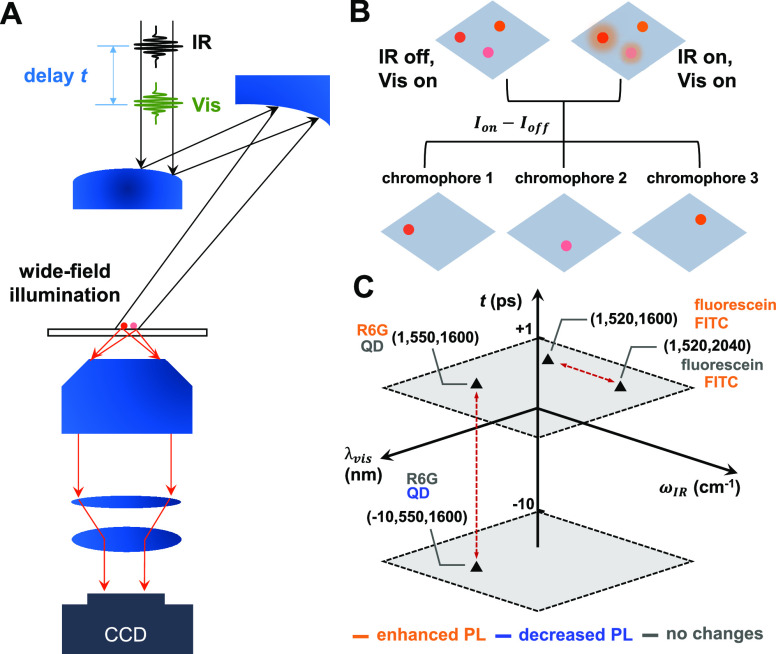
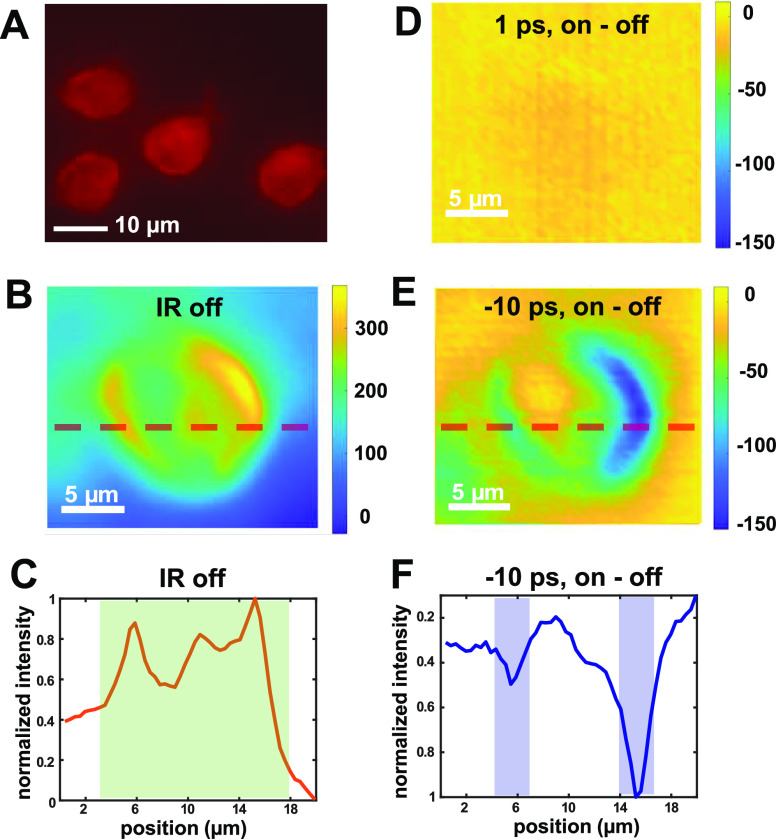
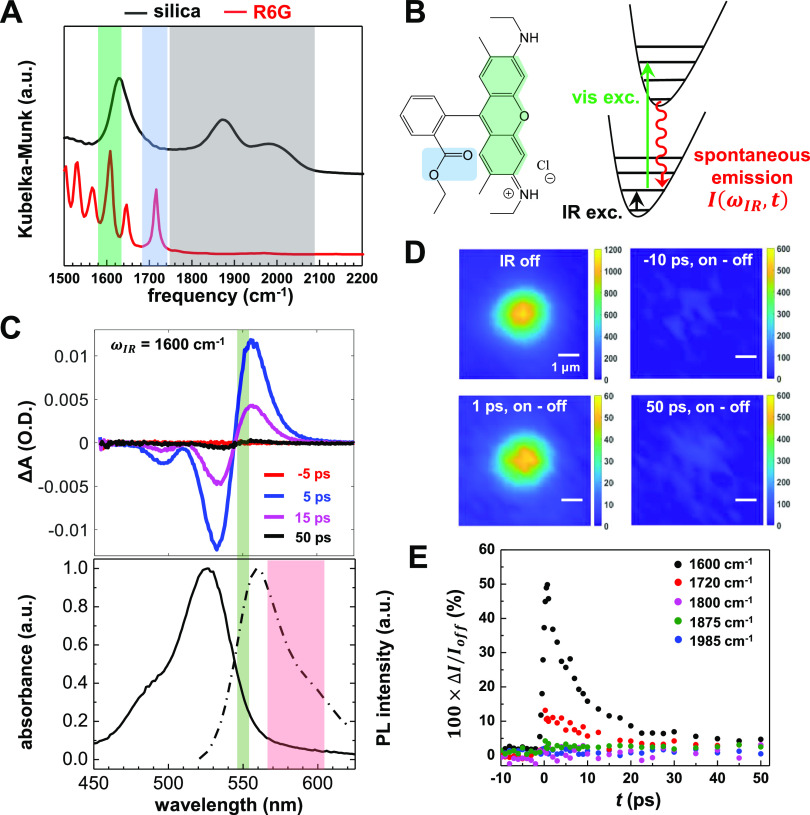
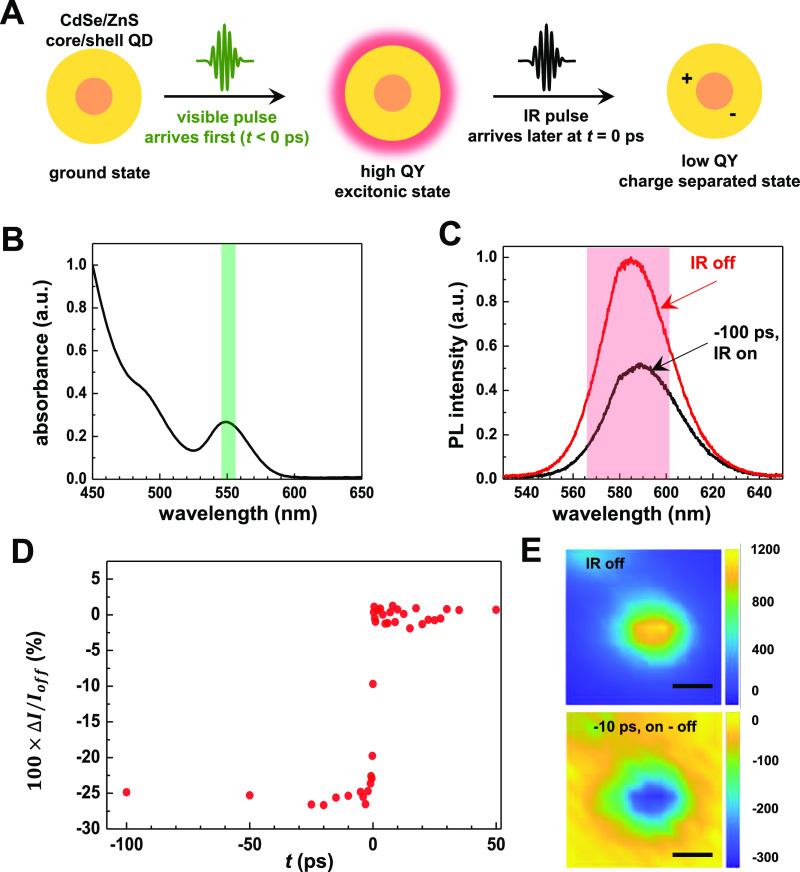
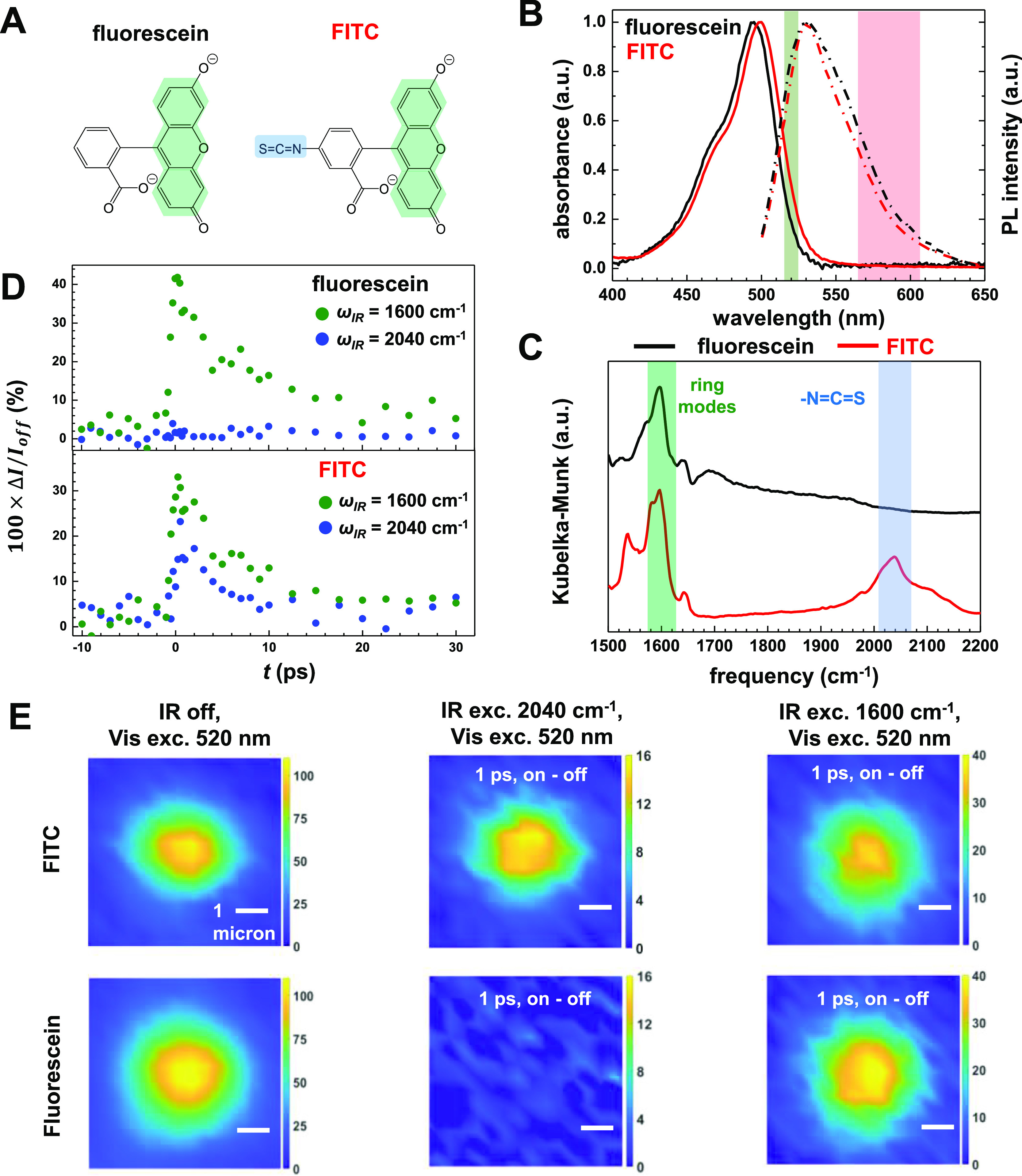
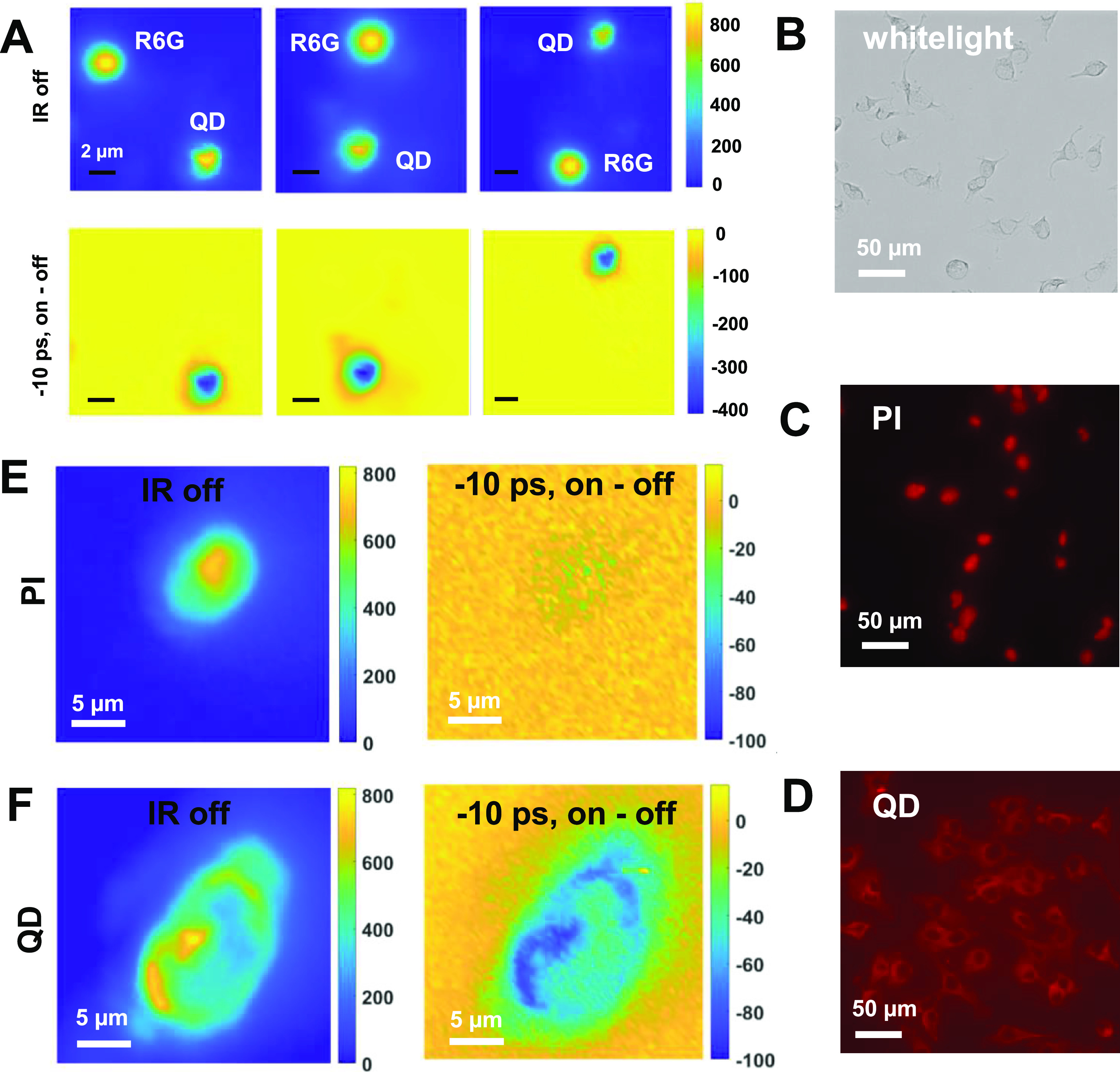
Photoluminescence (PL) imaging has broad applications in visualizing biological activities, detecting chemical species, and characterizing materials. However, the chemical information encoded in the PL images is often limited by the overlapping emission spectra of chromophores. Here, we report a PL microscopy based on the nonlinear interactions between mid-infrared and visible excitations on matters, which we termed MultiDimensional Widefield Infrared-encoded Spontaneous Emission (MD-WISE) microscopy. MD-WISE microscopy can distinguish chromophores that possess nearly identical emission spectra via conditions in a multidimensional space formed by three independent variables: the temporal delay between the infrared and the visible pulses (), the wavelength of visible pulses (λ), and the frequencies of the infrared pulses (ω). This method is enabled by two mechanisms: (1) modulating the optical absorption cross sections of molecular dyes by exciting specific vibrational functional groups and (2) reducing the PL quantum yield of semiconductor nanocrystals, which was achieved through strong field ionization of excitons. Importantly, MD-WISE microscopy operates under widefield imaging conditions with a field of view of tens of microns, other than the confocal configuration adopted by most nonlinear optical microscopies, which require focusing the optical beams tightly. By demonstrating the capacity of registering multidimensional information into PL images, MD-WISE microscopy has the potential of expanding the number of species and processes that can be simultaneously tracked in high-speed widefield imaging applications.
光致发光(PL)成像在可视化生物活动、检测化学物质和表征材料方面有着广泛应用。然而,PL图像中编码的化学信息常常受到发色团重叠发射光谱的限制。在此,我们报告一种基于中红外与可见光激发在物质上的非线性相互作用的PL显微镜,我们将其称为多维宽场红外编码自发发射(MD-WISE)显微镜。MD-WISE显微镜能够通过由三个独立变量所构成的多维空间中的条件,区分具有近乎相同发射光谱的发色团:红外与可见脉冲之间的时间延迟()、可见脉冲的波长(λ)以及红外脉冲的频率(ω)。该方法由两种机制实现:(1)通过激发特定振动官能团来调制分子染料的光吸收截面;(2)降低半导体纳米晶体的PL量子产率,这是通过激子的强场电离实现的。重要的是,MD-WISE显微镜在宽场成像条件下运行,视野可达数十微米,不同于大多数非线性光学显微镜所采用的共聚焦配置,后者需要紧密聚焦光束。通过展示将多维信息记录到PL图像中的能力,MD-WISE显微镜有潜力扩大在高速宽场成像应用中能够同时追踪的物种和过程的数量。