Yang Yan, Du Jie, Huang Yun-Fei, He Wei, Liu Li, Li Dan, Chen Rui
Department of Laboratory Medicine, Affiliated Hospital of Zunyi Medical University, Zunyi, Guizhou 563003, P.R. China.
School of Laboratory Medicine, Zunyi Medical University, Zunyi, Guizhou 563003, P.R. China.
Oncol Lett. 2023 Dec 5;27(2):43. doi: 10.3892/ol.2023.14176. eCollection 2024 Feb.
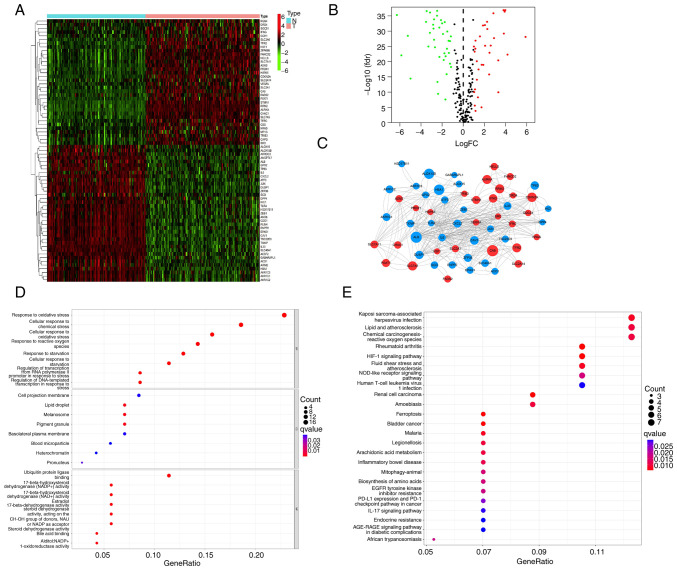
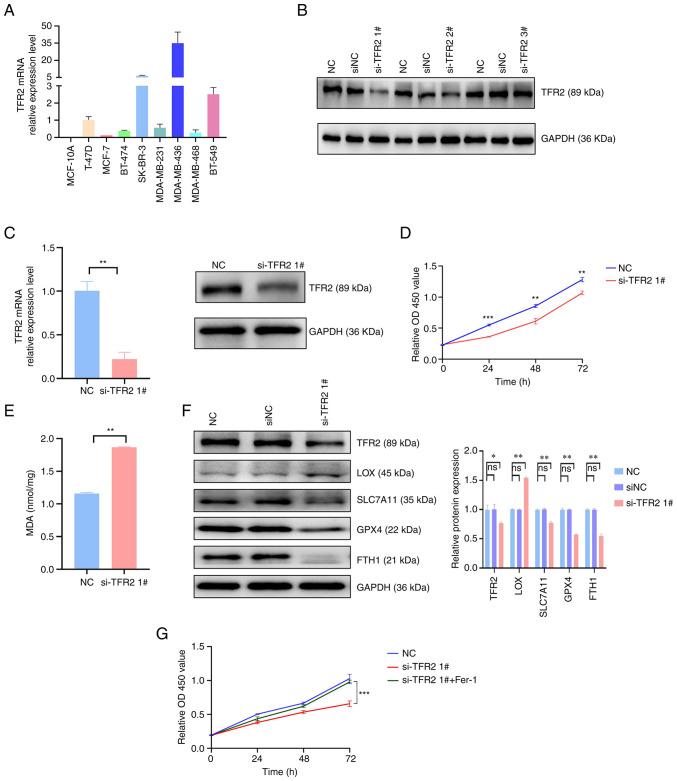
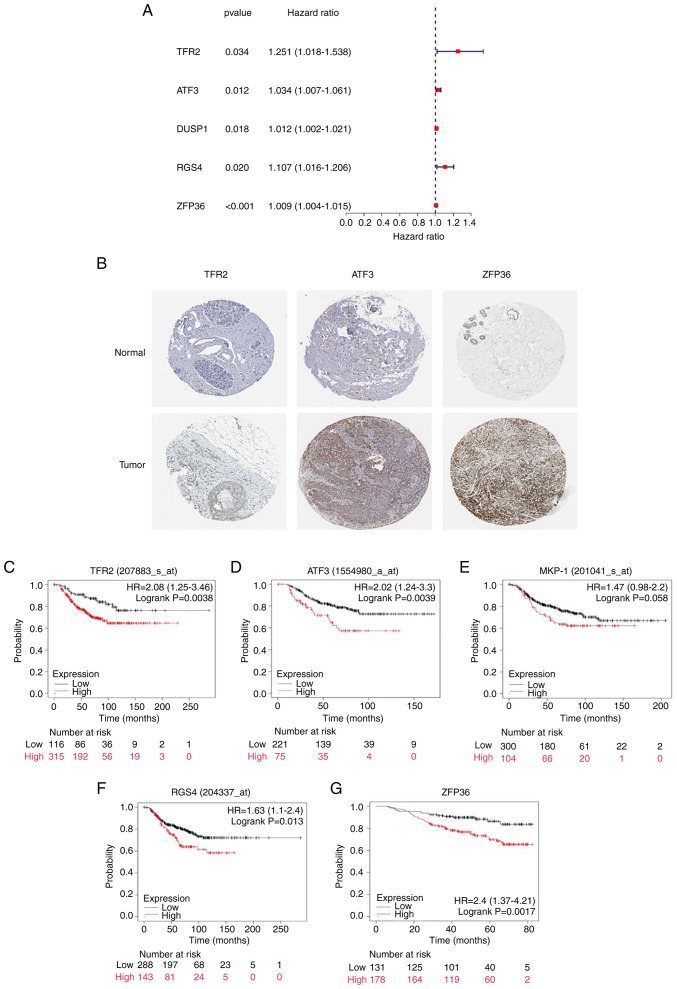
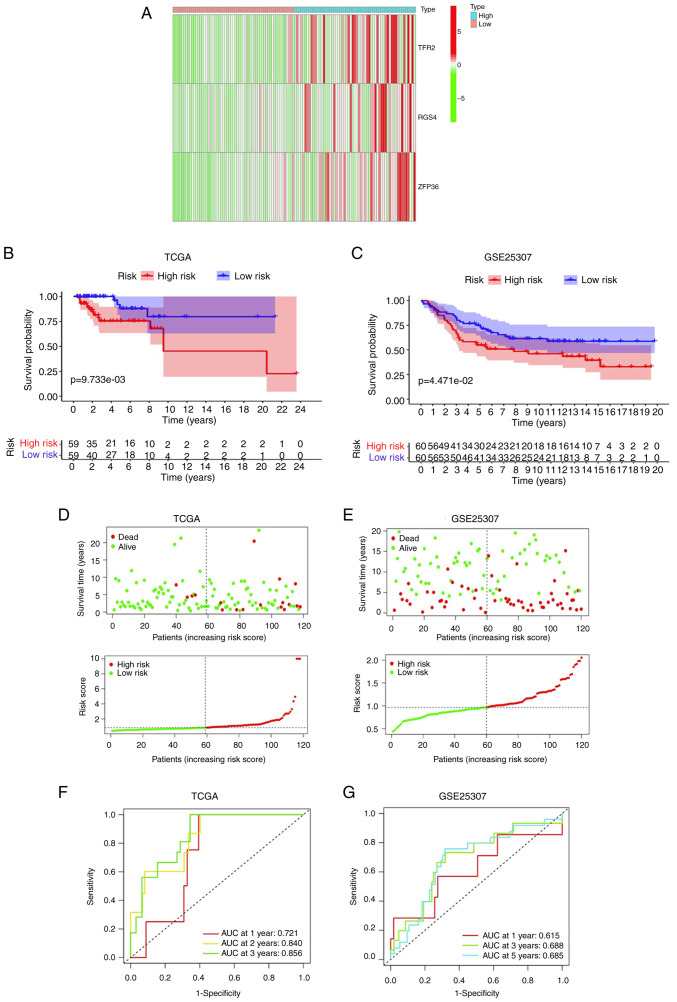
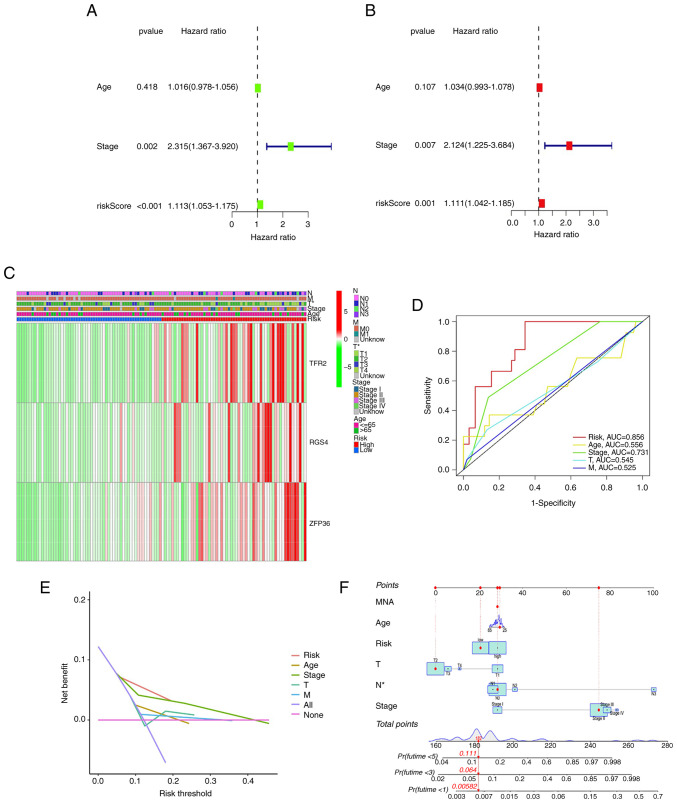
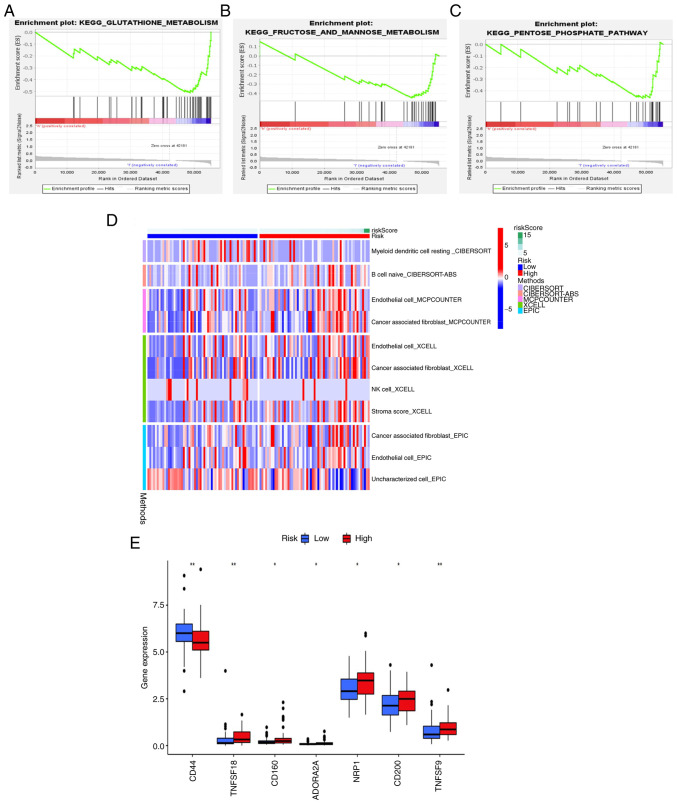
Effective targeted therapeutic strategies for triple-negative breast cancer (TNBC), the most malignant subtype of breast cancer, are currently lacking. Ferroptosis has been reported to be associated with the onset and advancement of various cancer types, including TNBC. However, there are limited studies on the correlation between TNBC and ferroptosis-related genes. In addition, the potential biomarkers of ferroptosis in TNBC need further investigation. The present study aimed to assess the prognostic role of a novel ferroptosis-related gene signature in the context of TNBC. The signature was established utilizing The Cancer Genome Atlas dataset. This three-gene model [transferrin receptor 2 (TFR2), regulator of G protein signaling 4 and zinc finger protein 36] was developed utilizing least absolute shrinkage and selection operator regression analysis and demonstrated satisfactory predictive performance in TNBC. The area under the curve values of the receiver operating characteristic curves in this model concerning the 1-, 2- and 3-year survival prediction were 0.721, 0.840 and 0.856, respectively. The predictive performance of the model was verified using the TNBC dataset GSE25307. Gene set enrichment analysis (GSEA) demonstrated the enrichment of genes in the low-risk group in a number of important metabolic pathways. Single-sample GSEA demonstrated a variation in the expression levels of immune checkpoint molecules between the high- and low-risk groups. The inhibitory impact of TFR2 knockdown on the proliferative capacity of TNBC cells was verified through experiments. The data also demonstrated that TFR2 knockdown facilitated the ferroptosis of TNBC cells. Additional assessments indicated that the effects of TFR2 knockdown were partially reversed upon treatment with the ferroptosis inhibitor ferrostatin-1. In conclusion, in the present study, a novel and accurate ferroptosis-related predictive signature was established for TNBC with potential future clinical applications. To the best of our knowledge, the present study is the first to report that TFR2 regulated ferroptosis in TNBC cells
三阴性乳腺癌(TNBC)是乳腺癌中最恶性的亚型,目前缺乏有效的靶向治疗策略。据报道,铁死亡与包括TNBC在内的各种癌症类型的发生和进展有关。然而,关于TNBC与铁死亡相关基因之间相关性的研究有限。此外,TNBC中铁死亡的潜在生物标志物需要进一步研究。本研究旨在评估一种新的铁死亡相关基因特征在TNBC中的预后作用。该特征是利用癌症基因组图谱数据集建立的。这个三基因模型[转铁蛋白受体2(TFR2)、G蛋白信号调节因子4和锌指蛋白36]是利用最小绝对收缩和选择算子回归分析开发的,在TNBC中显示出令人满意的预测性能。该模型在1年、2年和3年生存预测方面的受试者工作特征曲线下面积值分别为0.721、0.840和0.856。使用TNBC数据集GSE25307验证了该模型的预测性能。基因集富集分析(GSEA)表明低风险组中的基因在许多重要代谢途径中富集。单样本GSEA显示高风险组和低风险组之间免疫检查点分子的表达水平存在差异。通过实验验证了TFR2敲低对TNBC细胞增殖能力的抑制作用。数据还表明,TFR2敲低促进了TNBC细胞的铁死亡。进一步评估表明,在用铁死亡抑制剂铁抑素-1处理后,TFR2敲低的作用部分被逆转。总之,在本研究中,为TNBC建立了一种新的、准确的铁死亡相关预测特征,具有潜在的未来临床应用价值。据我们所知,本研究首次报道TFR2调节TNBC细胞中的铁死亡。