The Third Clinical College, Shanxi University of Chinese Medicine, Jinzhong, PR China.
Shanxi Provincial Key Laboratory of Kidney Disease, Shanxi Provincial People's Hospital, Taiyuan, PR China.
Medicine (Baltimore). 2023 Dec 15;102(50):e36177. doi: 10.1097/MD.0000000000036177.
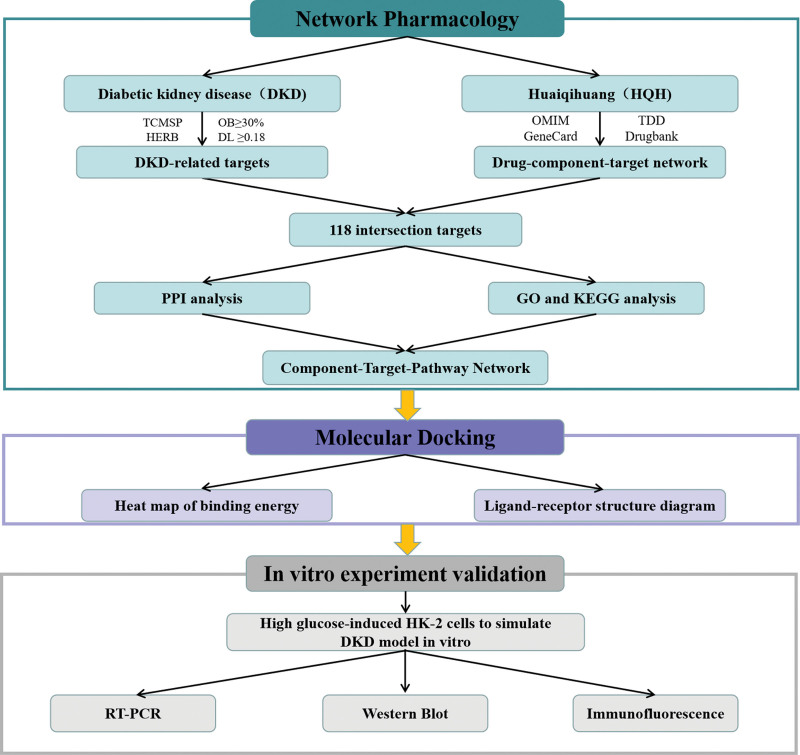
This study aimed to investigate the active components, key targets, and potential molecular mechanisms Huaiqihuang (HQH) in the treatment of diabetic kidney disease (DKD) through network pharmacology, molecular docking, and in vitro experiments.
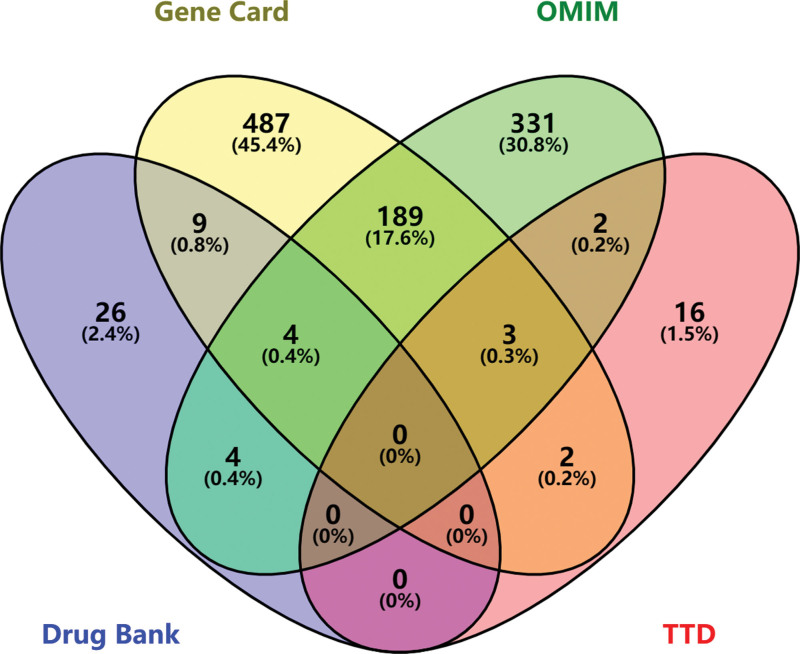
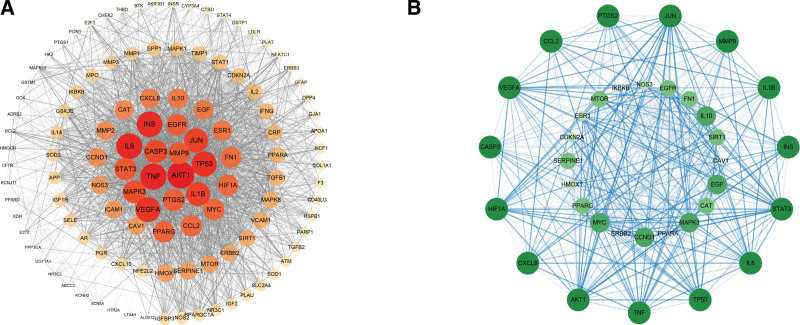
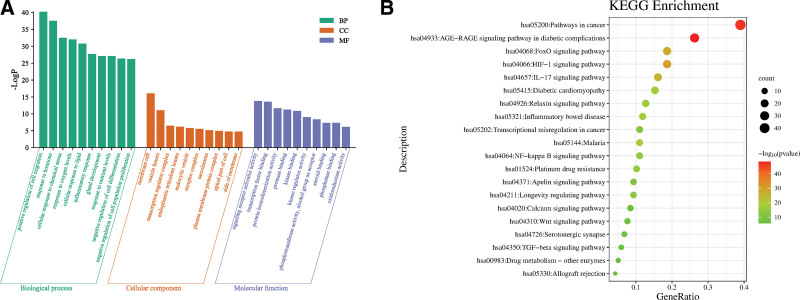
The active components and potential targets of HQH were obtained from the TCMSP and HERB databases. The potential targets of DKD were obtained from the GeneCards, OMIM, DrugBank, and TTD databases. Protein interaction relationships were obtained from the STRING database, and a protein interaction network was constructed using Cytoscape software. Gene ontology and Kyoto Encyclopedia of Genes and Genomes enrichment analysis was performed using the Metascape database. Molecular docking was performed using AutoDock software to verify the binding between key compounds and core target genes. In vitro experiments were conducted using human renal proximal tubular epithelial cells and various methods, such as CCK8, RT-PCR, immunofluorescence, and western blot, to evaluate the effects of HQH on inflammatory factors, key targets, and pathways.
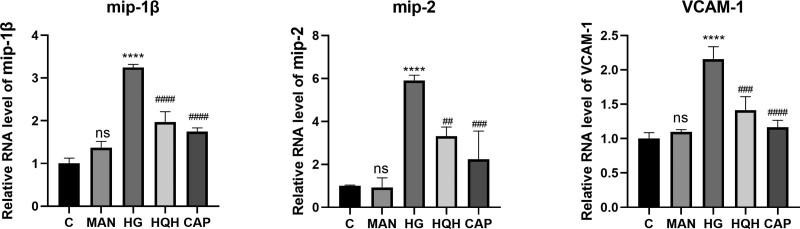
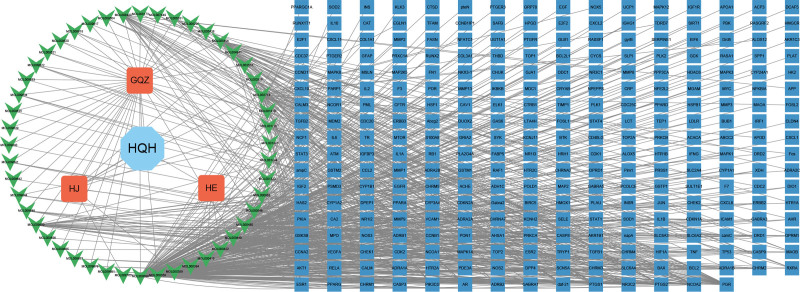
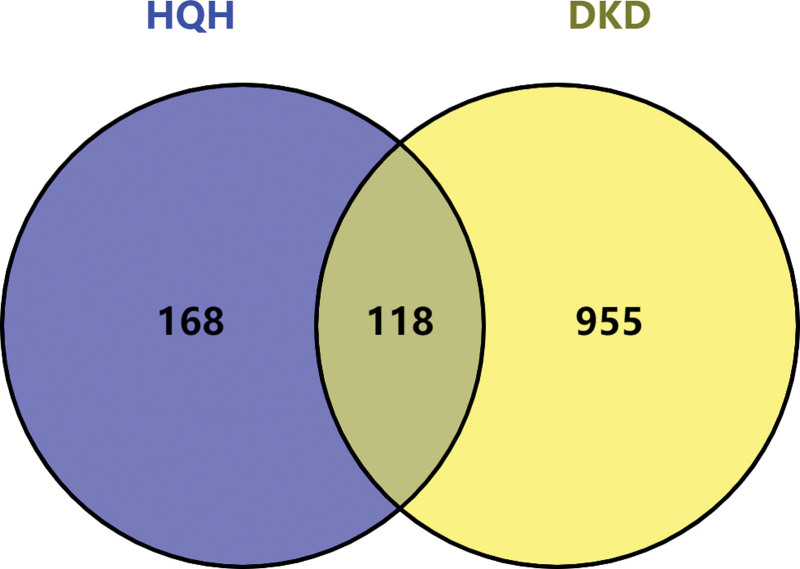
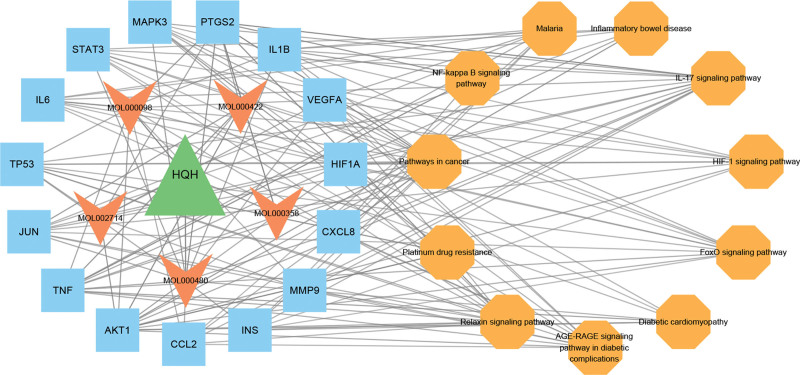
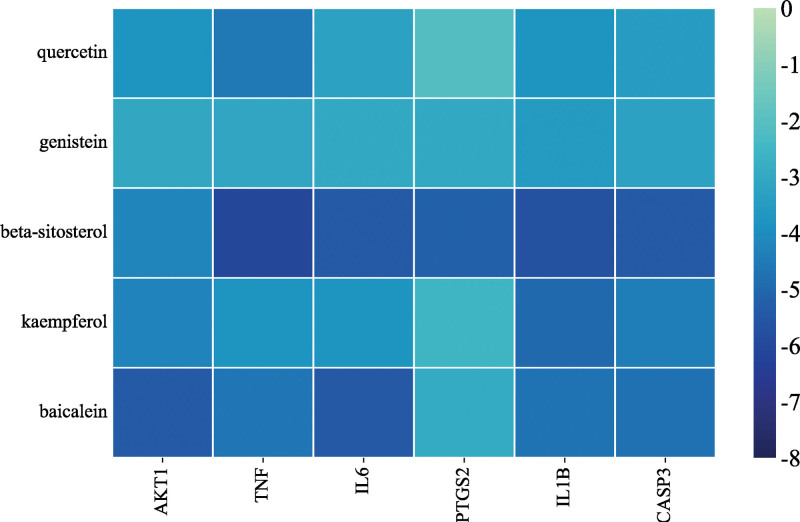
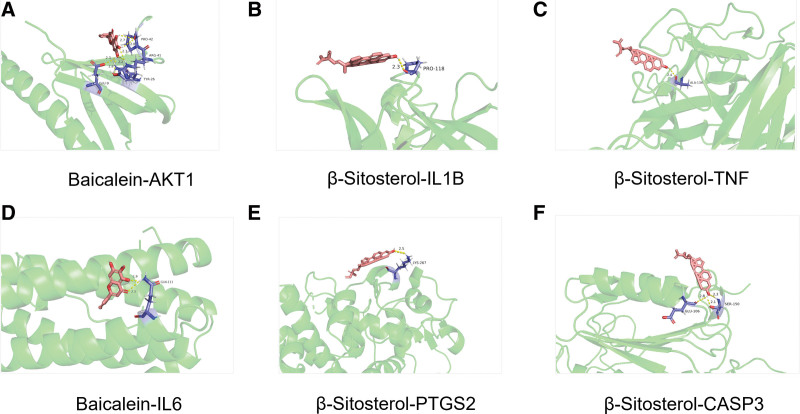
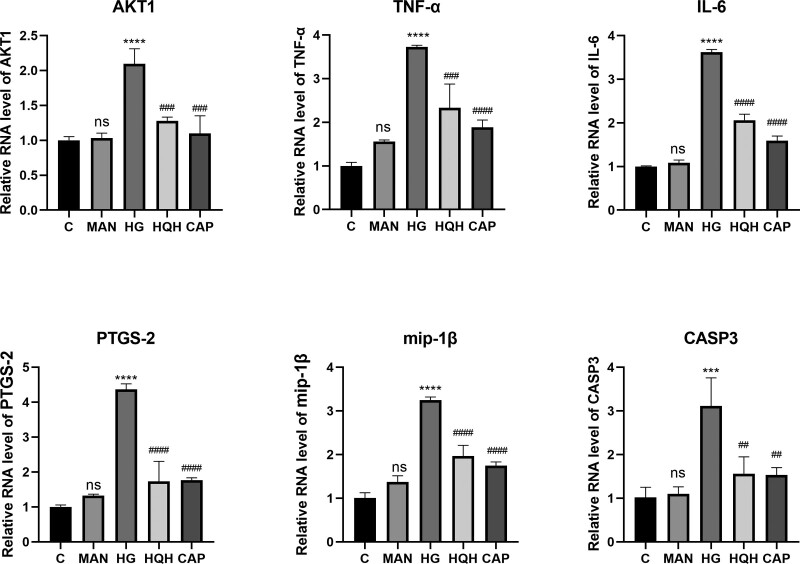
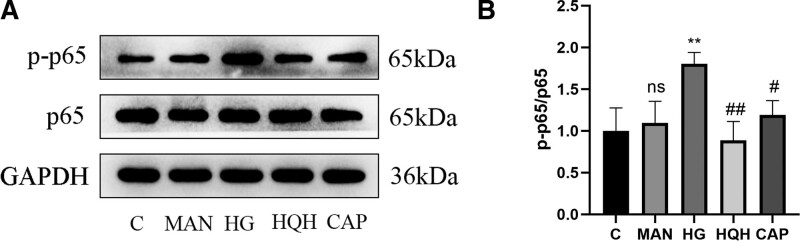
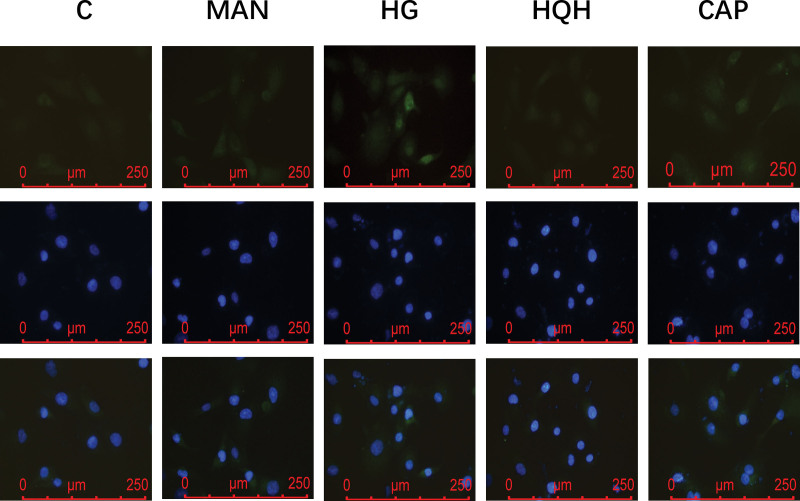
A total of 48 active ingredients, 168 potential targets of HQH, and 1073 potential targets of DKD were obtained. A total of 118 potential targets, 438 biological processes, and 187 signal pathways were identified for the treatment of DKD. Gene ontology and Kyoto Encyclopedia of Genes and Genomes analysis indicated that HQH may exert its therapeutic effects on DKD by regulating the expression of inflammatory factors through the nuclear factor kappa B (NF-κB) signaling pathway. The molecular docking results showed that β-sitosterol and baicalein had the highest binding affinity with key targets such as AKT1, IL6, TNF, PTGS2, IL1B, and CASP3, suggesting that they may be the most effective active ingredients of HQH in the treatment of DKD. In vitro experimental results demonstrated that HQH could enhance the viability of human renal proximal tubular epithelial cells inhibited by high glucose, decrease the levels of AKT1, TNF, IL6, PTGS2, IL1B, and CASP3, reduce the expression of NF-κB-P65 (P < .01), inhibit NF-κB-p65 nuclear translocation, and decrease chemokine expression (P < .01).
HQH may exert its therapeutic effects on DKD by inhibiting the NF-κB signaling pathway, reducing the level of pro-inflammatory cytokines, and alleviating the high glucose-induced injury of renal tubular epithelial cells.
本研究旨在通过网络药理学、分子对接和体外实验研究槐芪黄(HQH)治疗糖尿病肾病(DKD)的活性成分、关键靶点和潜在分子机制。
从 TCMSP 和 HERB 数据库中获取 HQH 的活性成分和潜在靶点。从 GeneCards、OMIM、DrugBank 和 TTD 数据库中获取 DKD 的潜在靶点。从 STRING 数据库中获取蛋白质相互作用关系,并使用 Cytoscape 软件构建蛋白质相互作用网络。使用 Metascape 数据库进行基因本体论和京都基因与基因组百科全书富集分析。使用 AutoDock 软件进行分子对接,以验证关键化合物与核心靶基因之间的结合。采用 CCK8、RT-PCR、免疫荧光和 Western blot 等方法,在人肾近端管状上皮细胞及多种方法中进行体外实验,评价 HQH 对炎症因子、关键靶点和通路的影响。
共获得 48 种 HQH 的活性成分、168 个潜在靶点和 1073 个 DKD 潜在靶点。共获得 118 个潜在靶点、438 个生物学过程和 187 个信号通路,用于治疗 DKD。基因本体论和京都基因与基因组百科全书分析表明,HQH 可能通过核因子 kappa B(NF-κB)信号通路调节炎症因子的表达,从而发挥对 DKD 的治疗作用。分子对接结果表明,β-谷甾醇和黄芩素与 AKT1、IL6、TNF、PTGS2、IL1B 和 CASP3 等关键靶点具有最高的结合亲和力,提示它们可能是 HQH 治疗 DKD 最有效的活性成分。体外实验结果表明,HQH 可增强高糖抑制的人肾近端管状上皮细胞活力,降低 AKT1、TNF、IL6、PTGS2、IL1B 和 CASP3 水平,减少 NF-κB-P65 的表达(P<0.01),抑制 NF-κB-p65 核转位,降低趋化因子表达(P<0.01)。
HQH 可能通过抑制 NF-κB 信号通路、降低促炎细胞因子水平、减轻高糖诱导的肾小管上皮细胞损伤,发挥对 DKD 的治疗作用。