
母亲接触砷及其对母婴健康的影响:综述
Maternal Exposure to Arsenic and Its Impact on Maternal and Fetal Health: A Review.
作者信息
Ortiz-Garcia Nancy Y, Cipriano Ramírez Anayansi Ixchel, Juarez Karen, Brand Galindo Jazmin, Briceño Gabriela, Calderon Martinez Ernesto
机构信息
General Medicine, Universidad Juárez del Estado de Durango, Durango, MEX.
General Practice, Instituto Politécnico Naciónal, Mexico City, MEX.
出版信息
Cureus. 2023 Nov 21;15(11):e49177. doi: 10.7759/cureus.49177. eCollection 2023 Nov.
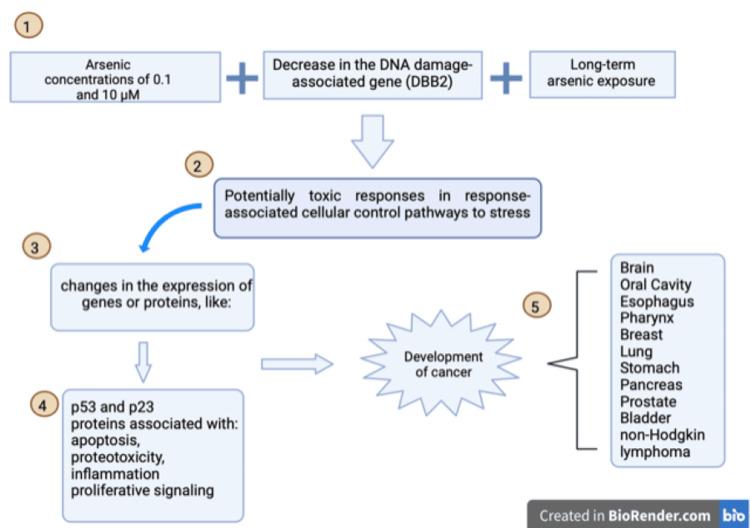
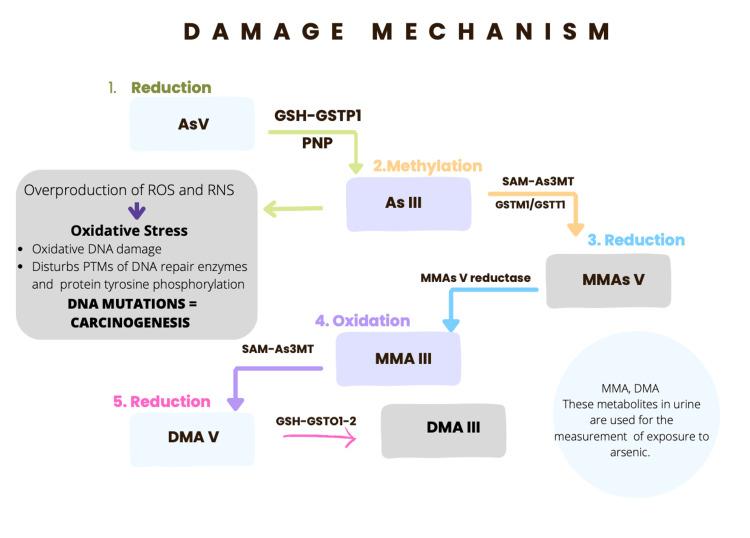
Arsenic exposure is a significant public health issue, with harmful effects caused by its use in commercial products such as car batteries, pesticides, and herbicides. Arsenic has three main compounds: inorganic, organic, and arsine gas. Inorganic arsenic compounds in water are highly toxic. The daily intake of arsenic from food and beverages is between 20 and 300 mcg/day. Arsenic is known for its carcinogenic properties and is classified as a human carcinogen by different institutions. Exposure can lead to oxidative stress, DNA damage, and epigenetic deregulation, which can cause endocrine disorders, altered signal transduction pathways, and cell proliferation. In addition, arsenic can easily cross the placenta, making it a critical concern for maternal and fetal health. Exposure can lead to complications such as gestational diabetes, anemia, low birth weight, miscarriage, and congenital anomalies. Female babies are particularly vulnerable to the negative impact of arsenic exposure, with a higher risk of low weight for gestational age and congenital cardiac anomalies. Therefore, it is crucial to monitor and regulate the levels of arsenic in drinking water and food sources to prevent these adverse health outcomes. Further research is necessary to fully understand the impact of arsenic exposure on human health, especially during pregnancy and infancy, by implementing preventative measures and monitoring the levels of arsenic in the environment.
砷暴露是一个重大的公共卫生问题,其在汽车电池、杀虫剂和除草剂等商业产品中的使用会造成有害影响。砷有三种主要化合物:无机砷、有机砷和砷化氢气体。水中的无机砷化合物具有剧毒。食物和饮料中砷的每日摄入量在20至300微克/天之间。砷因其致癌特性而闻名,被不同机构列为人类致癌物。暴露会导致氧化应激、DNA损伤和表观遗传失调,进而引发内分泌紊乱、信号转导通路改变和细胞增殖。此外,砷很容易穿过胎盘,这使其成为母婴健康的一个关键问题。暴露会导致妊娠糖尿病、贫血、低出生体重、流产和先天性异常等并发症。女婴尤其容易受到砷暴露的负面影响,出现小于胎龄儿和先天性心脏异常的风险更高。因此,监测和监管饮用水及食物来源中的砷含量,以预防这些不良健康后果至关重要。有必要通过实施预防措施和监测环境中的砷含量,进一步开展研究,以全面了解砷暴露对人类健康的影响,尤其是在孕期和婴儿期的影响。
 Zotero 插件