
探究数字人类注视表情对参与诱导的影响。
Examining the Impact of Digital Human Gaze Expressions on Engagement Induction.
作者信息
Mok Subin, Park Sung, Whang Mincheol
机构信息
Department of Emotion Engineering, Sangmyung University, Seoul 03016, Republic of Korea.
Department of Human-Centered Artificial Intelligence, Sangmyung University, Seoul 03016, Republic of Korea.
出版信息
Biomimetics (Basel). 2023 Dec 14;8(8):610. doi: 10.3390/biomimetics8080610.
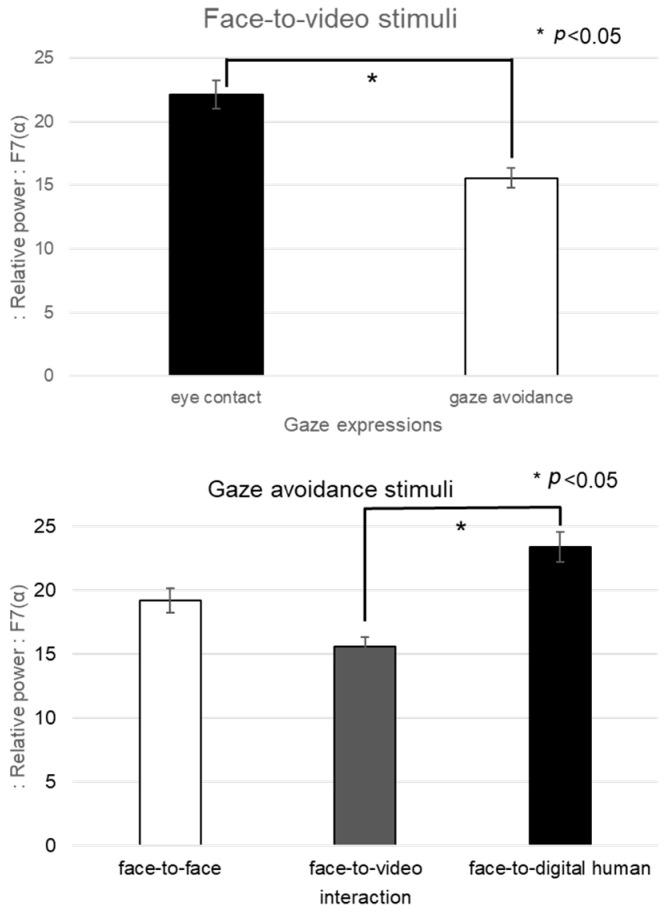
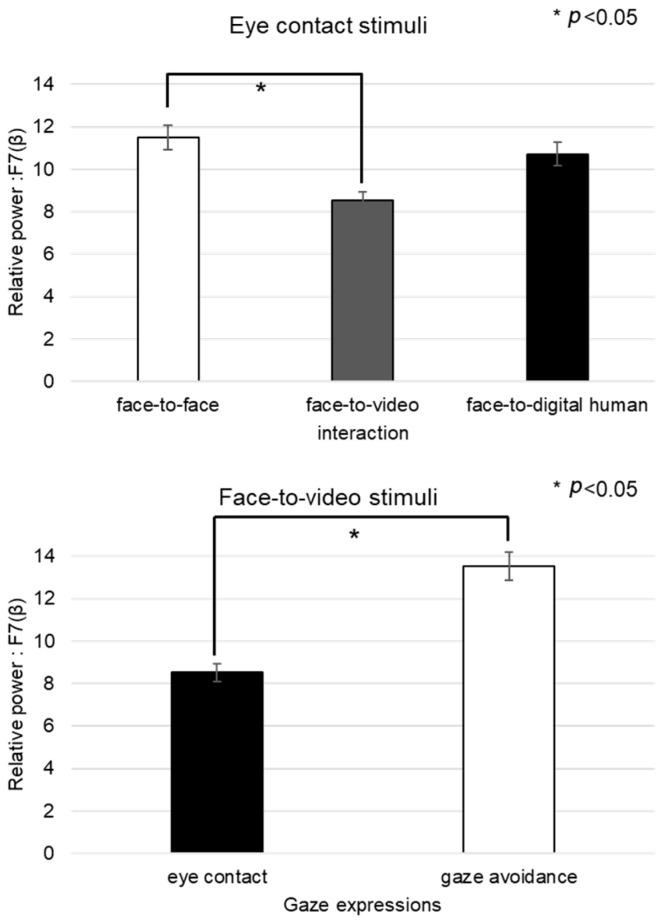
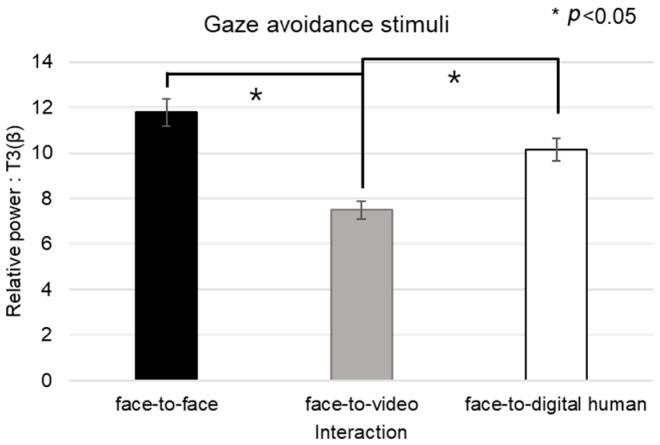
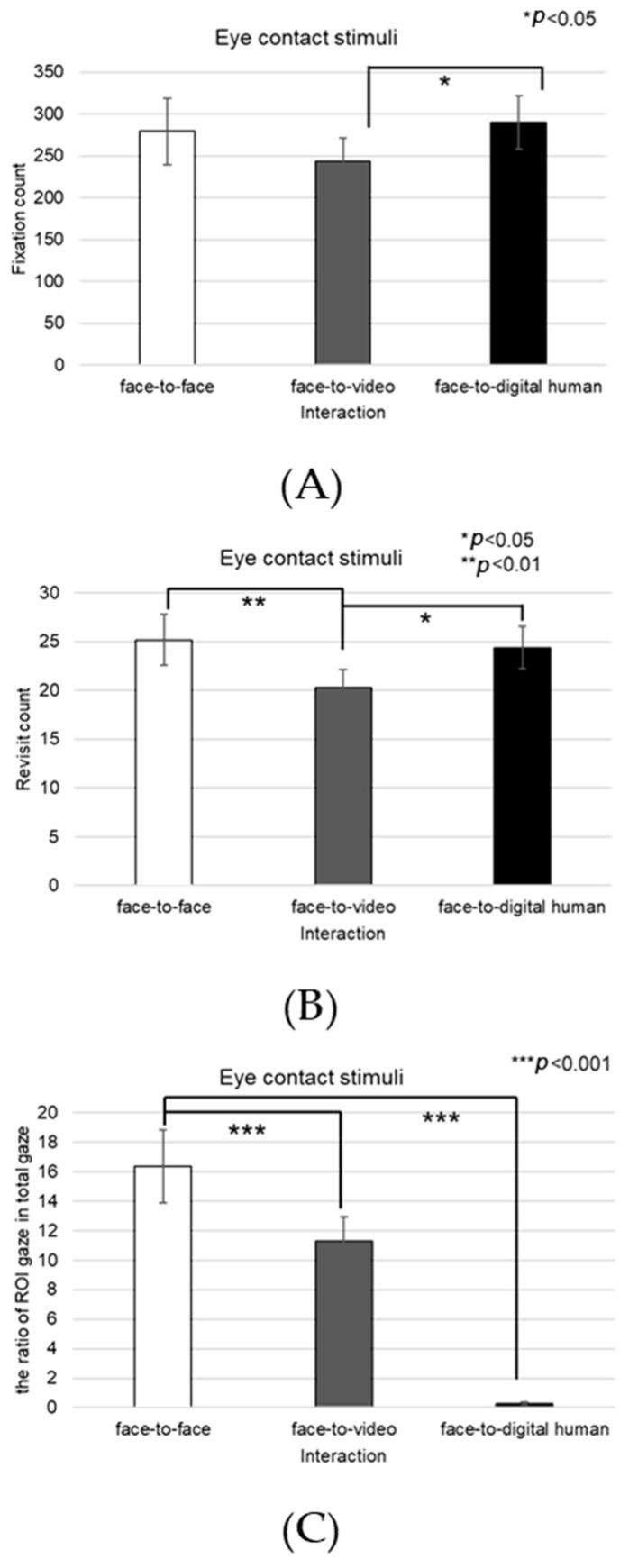
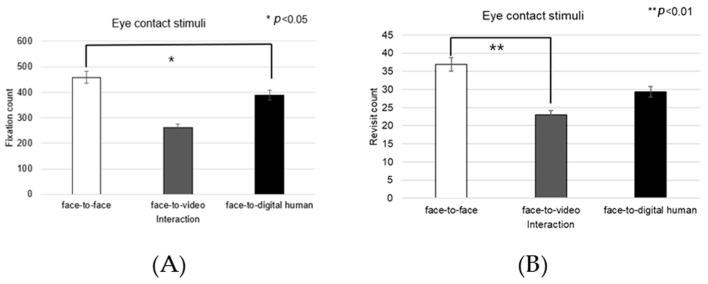
With advancements in technology, digital humans are becoming increasingly sophisticated, with their application scope widening to include interactions with real people. However, research on expressions that facilitate natural engagement in interactions between real people and digital humans is scarce. With this study, we aimed to examine the differences in user engagement as measured by subjective evaluations, eye tracking, and electroencephalogram (EEG) responses relative to different gaze expressions in various conversational contexts. Conversational situations were categorized as face-to-face, face-to-video, and digital human interactions, with gaze expressions segmented into eye contact and gaze avoidance. Story stimuli incorporating twelve sentences verified to elicit positive and negative emotional responses were employed in the experiments after validation. A total of 45 participants (31 females and 14 males) underwent stimulation through positive and negative stories while exhibiting eye contact or gaze avoidance under each of the three conversational conditions. Engagement was assessed using subjective evaluation metrics in conjunction with measures of the subjects' gaze and brainwave activity. The findings revealed engagement disparities between the face-to-face and digital-human conversation conditions. Notably, only positive stimuli elicited variations in engagement based on gaze expression across different conversation conditions. Gaze analysis corroborated the engagement differences, aligning with prior research on social sensitivity, but only in response to positive stimuli. This research departs from traditional studies of un-natural interactions with digital humans, focusing instead on interactions with digital humans designed to mimic the appearance of real humans. This study demonstrates the potential for gaze expression to induce engagement, regardless of the human or digital nature of the conversational dyads.
随着技术的进步,数字人正变得越来越复杂,其应用范围不断扩大,已包括与真实人类的互动。然而,关于促进真实人类与数字人之间自然互动的表情研究却很匮乏。通过本研究,我们旨在考察在各种对话情境中,相对于不同的注视表情,通过主观评价、眼动追踪和脑电图(EEG)反应所衡量的用户参与度差异。对话情境分为面对面、面对视频和数字人互动,注视表情分为眼神接触和目光回避。在验证之后,实验采用了包含十二个经证实能引发积极和消极情绪反应的句子的故事刺激。共有45名参与者(31名女性和14名男性)在三种对话条件下,分别通过眼神接触或目光回避,接受积极和消极故事的刺激。使用主观评价指标并结合受试者的注视和脑电波活动测量来评估参与度。研究结果揭示了面对面和数字人对话条件之间的参与度差异。值得注意的是,只有积极刺激在不同对话条件下基于注视表情引发了参与度的变化。注视分析证实了参与度的差异,这与先前关于社会敏感性的研究一致,但仅针对积极刺激。本研究不同于传统的关于与数字人非自然互动的研究,而是专注于与旨在模仿真实人类外观的数字人的互动。这项研究表明,无论对话双方是真实人类还是数字人,注视表情都有引发参与度的潜力。








 Zotero 插件