Madrid Joseph V, Vera-Colón Madeline K M, Zur Nieden Nicole I
Department of Molecular, Cell & Systems Biology and Stem Cell Center, College of Natural and Agricultural Sciences, University of California Riverside, Riverside, CA 92521, USA.
Toxics. 2023 Dec 7;11(12):998. doi: 10.3390/toxics11120998.
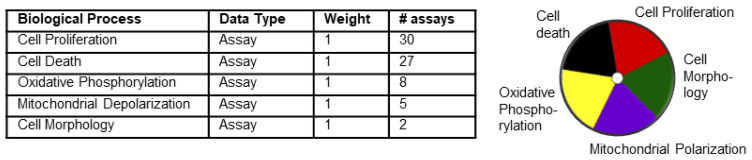
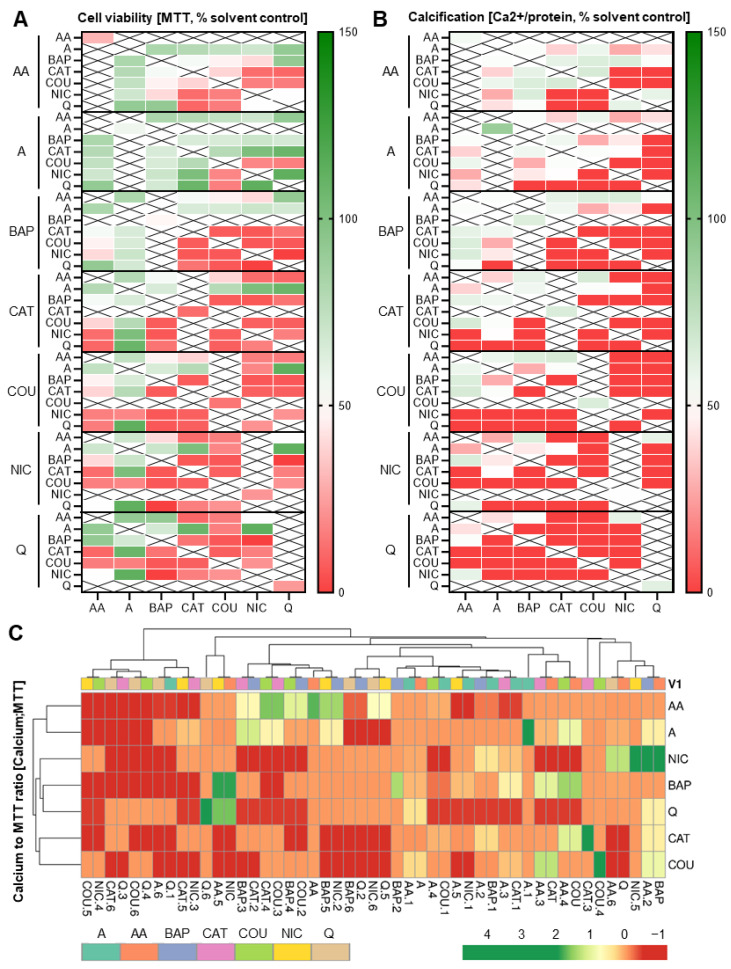
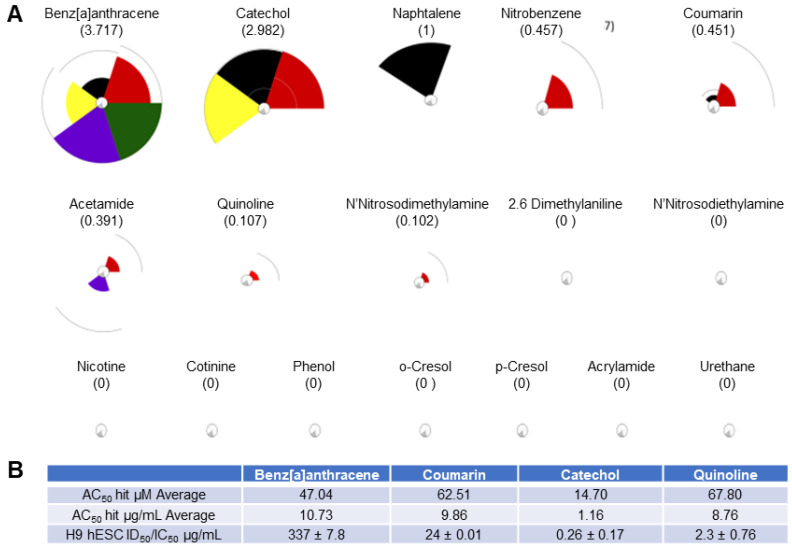
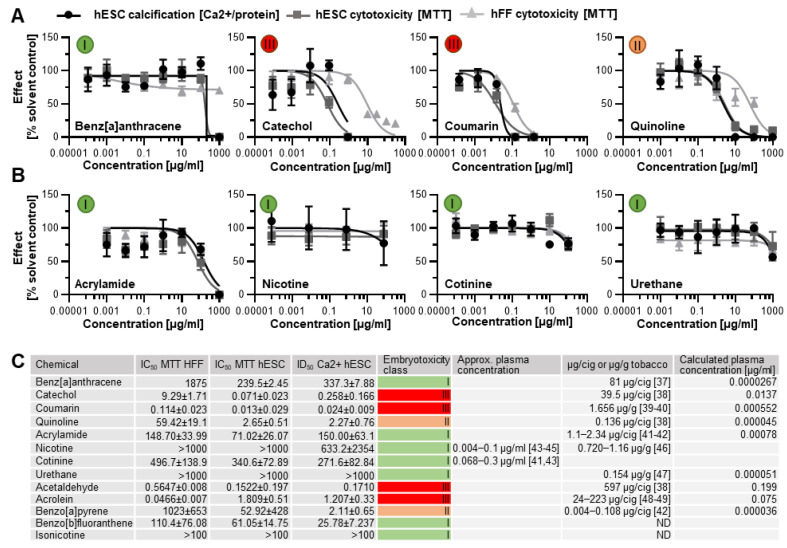
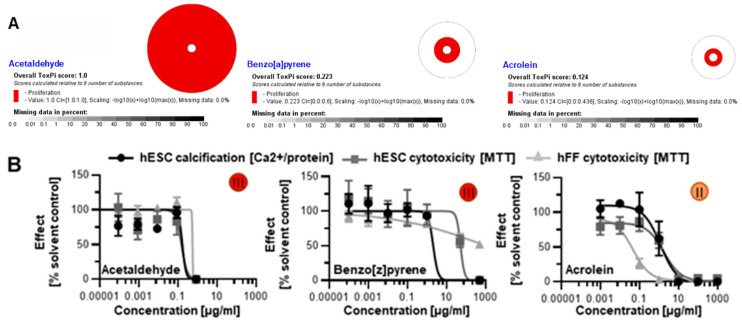
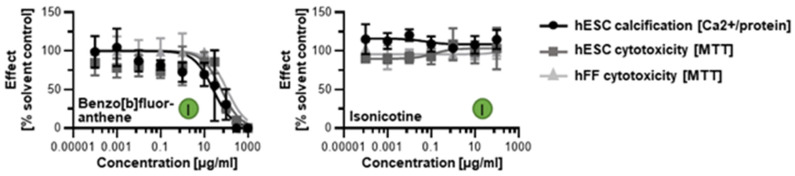
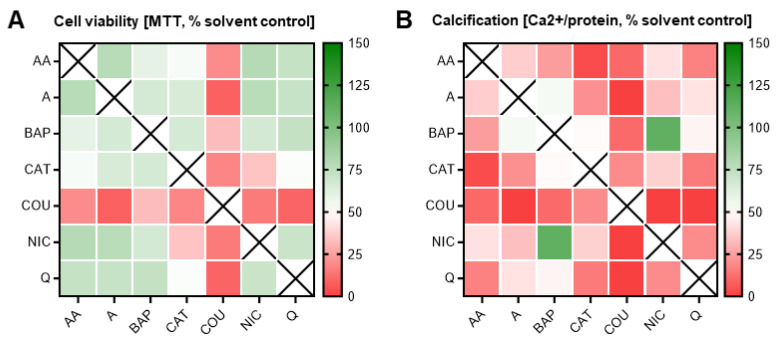
Tobacco smoke contains between 7000 and 10,000 constituents, and only an evanescently low number of which have been identified, let alone been evaluated for their toxicity. Recently, the Food and Drug Administration has published a list of 93 chemical tobacco constituents that are harmful or potentially harmful to a number of cellular processes. However, their effect on developing skeletal cells is unknown. In this study, we used ToxPI, a computational tool, to prioritize constituents on this list for screening in osteogenically differentiating human embryonic stem cells and fibroblasts. In selected endpoint assays, we evaluated the potential of these chemicals to inhibit osteogenic differentiation success as well as their cytotoxicity. Six of these chemicals, which were ascribed an embryotoxic potential in our screen, as well as nicotine, which was not found to be osteotoxic in vitro, were then evaluated in combinatorial exposures, either in pairs of two or three. No one single chemical could be pinpointed as the culprit of reduced calcification in response to tobacco exposure. Combining chemicals at their half-maximal inhibitory concentration of differentiation often elicited expected decreases in calcification over the individual exposures; however, cytotoxicity was improved in many of the dual combinations. A reverse response was also noted, in which calcification output improved in combinatorial exposures. Results from ternary combinations reflected those from double combinations. Thus, the results from this study suggest that it may be difficult to isolate single chemicals as the primary drivers of skeletal embryotoxicity and that the full combination of chemicals in tobacco smoke may produce the hypomineralization phenotype that we have so far observed in vitro in human embryonic stem cells as well as in vivo in zebrafish.
烟草烟雾含有7000到10000种成分,其中只有极少一部分已被鉴定出来,更不用说对其毒性进行评估了。最近,美国食品药品监督管理局公布了一份包含93种烟草化学成分的清单,这些成分对许多细胞过程有害或潜在有害。然而,它们对骨骼发育细胞的影响尚不清楚。在本研究中,我们使用了一种计算工具ToxPI,对该清单上的成分进行优先级排序,以便在人胚胎干细胞和成纤维细胞的成骨分化过程中进行筛选。在选定的终点试验中,我们评估了这些化学物质抑制成骨分化成功的潜力及其细胞毒性。然后,对在我们的筛选中被认定具有胚胎毒性潜力的六种化学物质,以及在体外未发现具有骨毒性的尼古丁,进行了两种或三种组合的联合暴露评估。没有一种单一的化学物质可以被确定为烟草暴露后钙化减少的罪魁祸首。将化学物质以其分化的半数最大抑制浓度进行组合,通常会导致钙化相对于单独暴露预期的减少;然而,许多双重组合中的细胞毒性有所改善。还观察到了一种相反的反应,即联合暴露时钙化输出有所改善。三元组合的结果反映了双重组合的结果。因此,本研究结果表明,可能难以分离出单一化学物质作为骨骼胚胎毒性的主要驱动因素,并且烟草烟雾中化学物质的完整组合可能会产生我们迄今为止在体外人胚胎干细胞以及体内斑马鱼中观察到的矿化不足表型。