Zamora Paul O, Altay Gabriel, Santamaria Ulisses, Dwarshuis Nathan, Donthi Hari, Moon Chang In, Bakalar Dana, Zamora Matthew
MoCo Makers, Gaithersburg, MD 20879, USA.
HacDC, Washington, DC 20010, USA.
Cancers (Basel). 2023 Dec 12;15(24):5811. doi: 10.3390/cancers15245811.
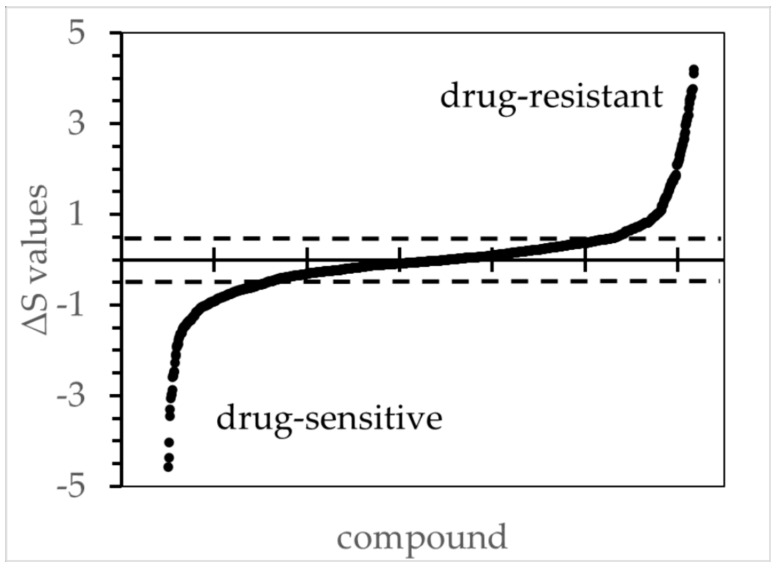
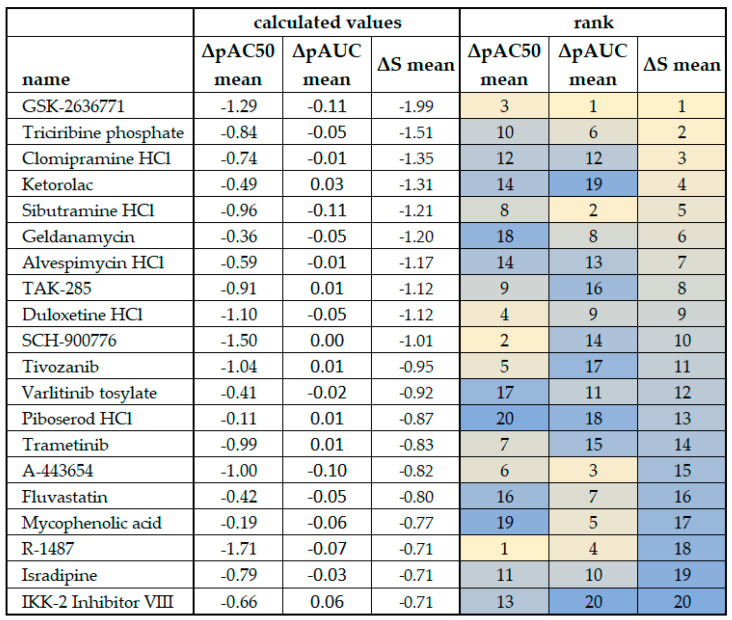
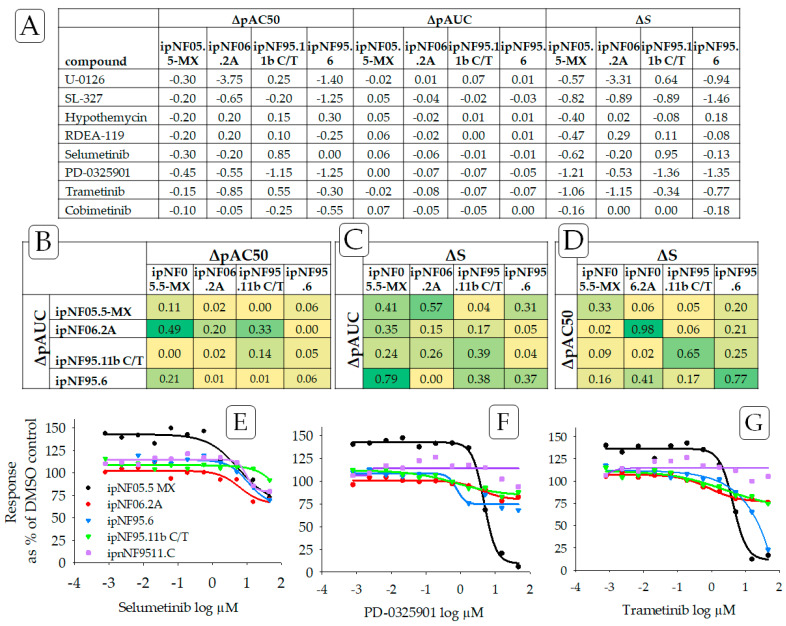
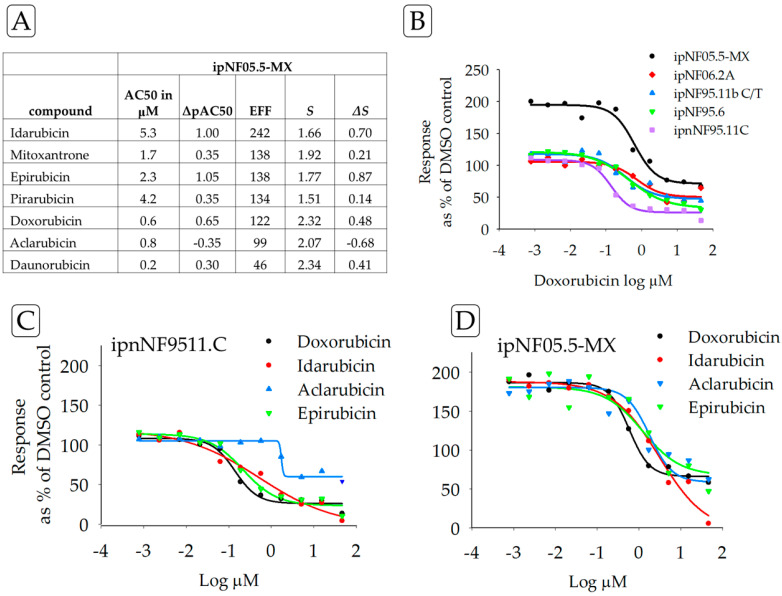
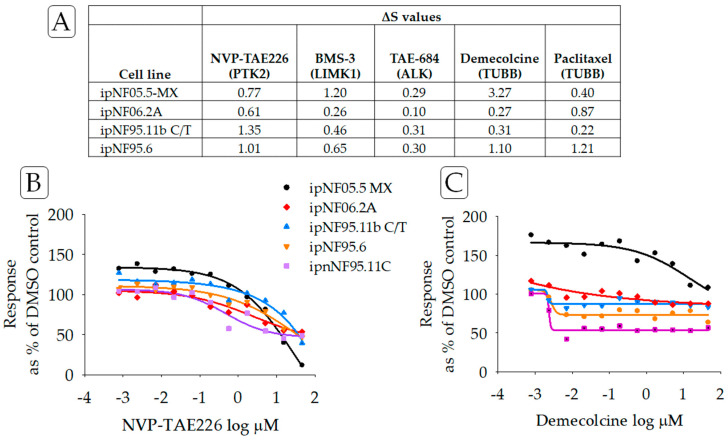
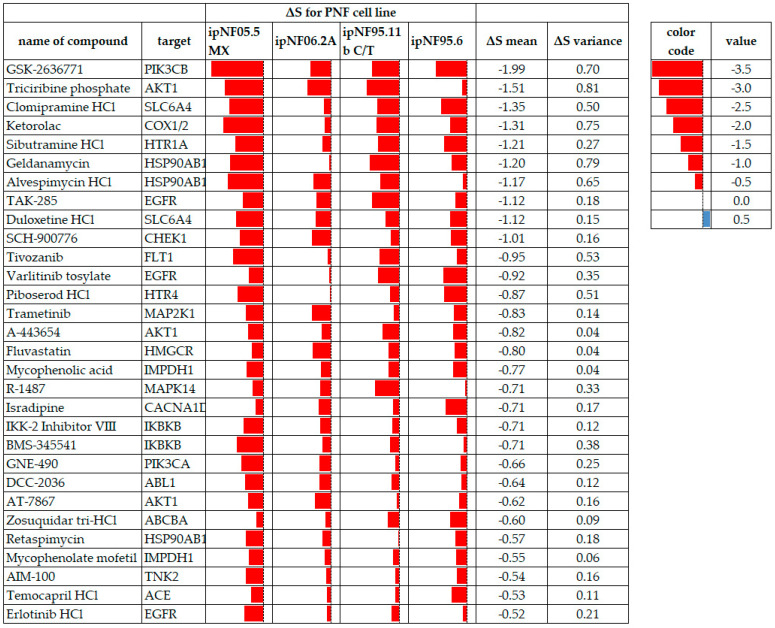
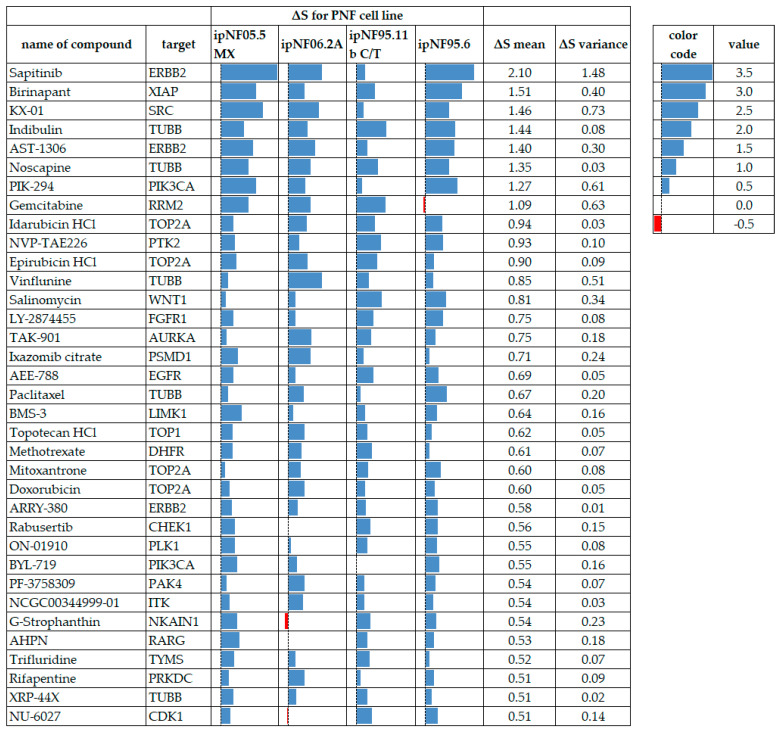
: Neurofibromatosis type 1 (NF1) is a genetic disorder characterized by heterozygous germline gene mutations that predispose patients to developing plexiform neurofibromas, which are benign but often disfiguring tumors of the peripheral nerve sheath induced by loss of heterozygosity at the locus. These can progress to malignant peripheral nerve sheath tumors (MPNSTs). There are no approved drug treatments for adults with NF1-related inoperable plexiform neurofibromas, and only one drug (selumetinib), which is an FDA-approved targeted therapy for the treatment of symptomatic pediatric plexiform neurofibromas, highlighting the need for additional drug screening and development. In high-throughput screening, the effectiveness of drugs against cell lines is often assessed by measuring in vitro potency (AC50) or the area under the curve (AUC). However, the variability of dose-response curves across drugs and cell lines and the frequency of partial effectiveness suggest that these measures alone fail to provide a full picture of overall efficacy. : Using concentration-response data, we combined response effectiveness (EFF) and potency (AC50) into (a) a score characterizing the effect of a compound on a single cell line, = log[EFF/AC50], and (b) a relative score, , characterizing the relative difference between a reference (e.g., non-tumor) and test (tumor) cell line. was applied to data from high-throughput screening (HTS) of a drug panel tested on tumor cells, using immortalized non-tumor cells as a reference. : We identified drugs with sensitivity, targeting expected pathways, such as MAPK-ERK and PI3K-AKT, as well as serotonin-related targets, among others. The technique used here, in tandem with a supplemental web tool, simplifies HTS analysis and may provide a springboard for further investigations into drug response in NF1-related cancers. The tool may also prove useful for drug development in a variety of other cancers.
1型神经纤维瘤病(NF1)是一种遗传性疾病,其特征是种系基因杂合突变,使患者易患丛状神经纤维瘤,这些肿瘤是良性的,但通常会导致容貌毁损,是由该位点杂合性缺失诱导的外周神经鞘肿瘤。这些肿瘤可进展为恶性外周神经鞘瘤(MPNST)。对于患有NF1相关不可手术切除丛状神经纤维瘤的成年人,目前尚无获批的药物治疗方法,只有一种药物(司美替尼),它是美国食品药品监督管理局(FDA)批准的用于治疗有症状儿童丛状神经纤维瘤的靶向疗法,这突出表明需要进行更多的药物筛选和研发。在高通量筛选中,通常通过测量体外效力(AC50)或曲线下面积(AUC)来评估药物对细胞系的有效性。然而,不同药物和细胞系的剂量反应曲线存在变异性,且部分有效性的频率表明,仅这些指标无法全面反映总体疗效。
利用浓度反应数据,我们将反应有效性(EFF)和效力(AC50)合并为:(a)一个表征化合物对单个细胞系作用效果的分数,S = log[EFF/AC50];(b)一个相对分数,ΔS,表征参考(如非肿瘤)细胞系和测试(肿瘤)细胞系之间的相对差异。ΔS应用于对一组在肿瘤细胞上进行测试的药物的高通量筛选(HTS)数据,使用永生化非肿瘤细胞作为参考。
我们鉴定出了具有敏感性的药物,其靶向预期的信号通路,如MAPK-ERK和PI3K-AKT,以及血清素相关靶点等。此处使用的ΔS技术,与一个补充性的ΔS网络工具一起,简化了高通量筛选分析,并可能为进一步研究NF1相关癌症中的药物反应提供一个跳板。该工具可能对多种其他癌症的药物研发也有用。