Wiśnicki Krzysztof, Donizy Piotr, Hałoń Agnieszka, Wawrzonkowski Patryk, Janczak Dariusz, Krajewska Magdalena, Banasik Mirosław
Department of Nephrology and Transplantation Medicine, Wroclaw Medical University, 50-367 Wroclaw, Poland.
Department of Clinical and Experimental Pathology, Wroclaw Medical University, 50-367 Wroclaw, Poland.
J Clin Med. 2023 Dec 6;12(24):7531. doi: 10.3390/jcm12247531.
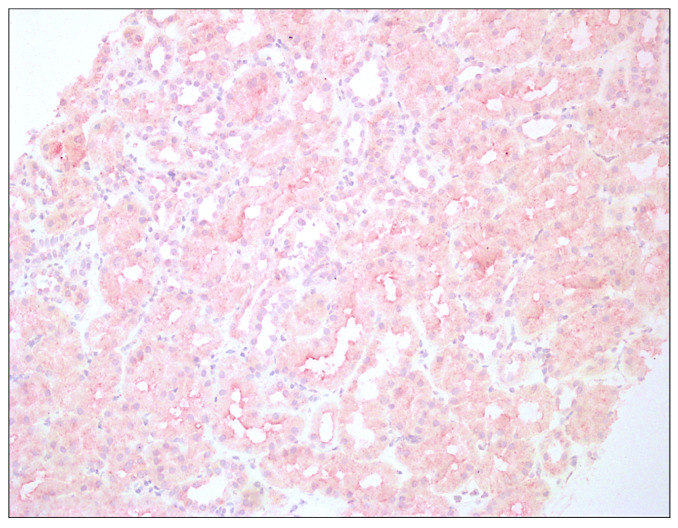
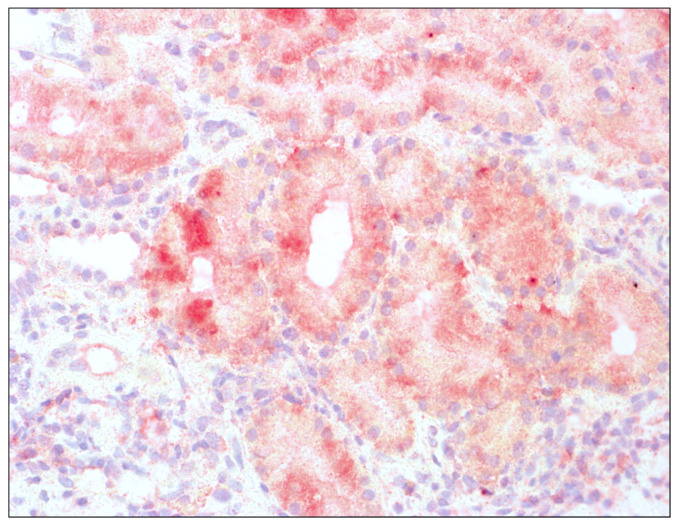
Kidney transplantation is a crucial treatment for end-stage kidney disease, with immunosuppressive drugs helping to reduce acute rejection rates. However, kidney graft longevity remains a concern. This study explores the role of indoleamine 2,3-dioxygenase 1 (IDO1) in kidney transplant immunology. IDO1 breaks down tryptophan, affecting immune cell behavior, primarily T-cells. The research focuses on both cellular and antibody-mediated immune responses, often causing graft damage. The study assessed IDO1 expression in renal transplant biopsies from patients with graft function decline, examining its connection to clinical parameters. A total of 121 biopsy samples were evaluated for IDO1 expression using immunohistochemistry. Patients were categorized as IDO1(+) positive or IDO1(-) negative based on immunoreactivity in tubular epithelium. Results showed a significant link between IDO1 expression and rejection incidence. IDO1(+) positive patients had lower rejection rates (32.9%) compared to IDO1(-) negative ones (62.2%) [ = 0.0017], with substantial differences in antibody-mediated rejection (AMR) (5.2% vs. 20%) [ = 0.0085] and T-cell mediated rejection (TCMR) (31.6% vs. 57.8%). These associations suggest that IDO1 may play a protective role in kidney transplant rejection. IDO1 modulation could offer novel therapeutic avenues to enhance graft survival. The study underscores IDO1 as a potential marker for rejection risk assessment, with its potential applications in personalized interventions and improved patient outcomes. Further research is needed to fully comprehend the mechanisms behind IDO1's immunomodulatory functions and its potential clinical translation.
肾移植是终末期肾病的关键治疗方法,免疫抑制药物有助于降低急性排斥反应发生率。然而,肾移植的长期存活仍然是一个令人担忧的问题。本研究探讨吲哚胺2,3-双加氧酶1(IDO1)在肾移植免疫学中的作用。IDO1分解色氨酸,影响免疫细胞行为,主要是T细胞。该研究聚焦于细胞介导和抗体介导的免疫反应,这些反应常常导致移植肾损伤。该研究评估了移植肾功能下降患者肾移植活检组织中IDO1的表达,检查其与临床参数的关联。使用免疫组织化学对总共121份活检样本进行IDO1表达评估。根据肾小管上皮的免疫反应性,将患者分类为IDO1(+)阳性或IDO1(-)阴性。结果显示IDO1表达与排斥反应发生率之间存在显著关联。与IDO1(-)阴性患者(62.2%)相比,IDO1(+)阳性患者的排斥率较低(32.9%)[ = 0.0017],在抗体介导的排斥反应(AMR)方面存在显著差异(5.2%对20%)[ = 0.0085],在T细胞介导的排斥反应(TCMR)方面也存在显著差异(31.6%对57.8%)。这些关联表明IDO1可能在肾移植排斥反应中发挥保护作用。调节IDO1可能提供新的治疗途径以提高移植肾存活率。该研究强调IDO1作为排斥反应风险评估的潜在标志物,其在个性化干预和改善患者预后方面具有潜在应用价值。需要进一步研究以全面理解IDO1免疫调节功能背后的机制及其潜在的临床转化。