Department of Microbiology and Immunology, Center for Molecular Medicine and Stem Cell Research, Faculty of Medical Sciences, University of Kragujevac, 69 Svetozar Markovic Street, Kragujevac, Serbia.
Department of Genetics, Faculty of Medical Sciences, University of Kragujevac, 69 Svetozar Markovic Street, Kragujevac, Serbia.
Theranostics. 2019 Aug 14;9(20):5976-6001. doi: 10.7150/thno.33959. eCollection 2019.
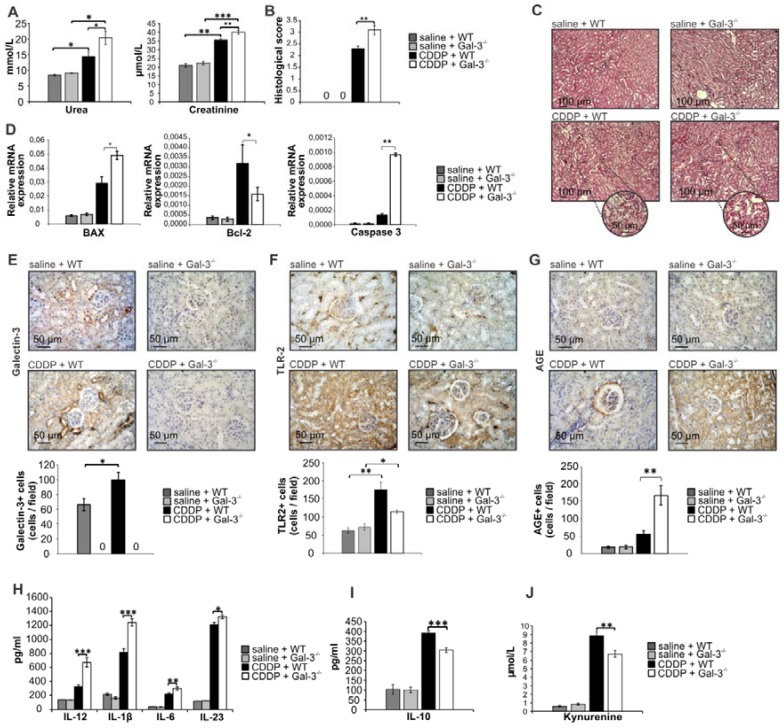
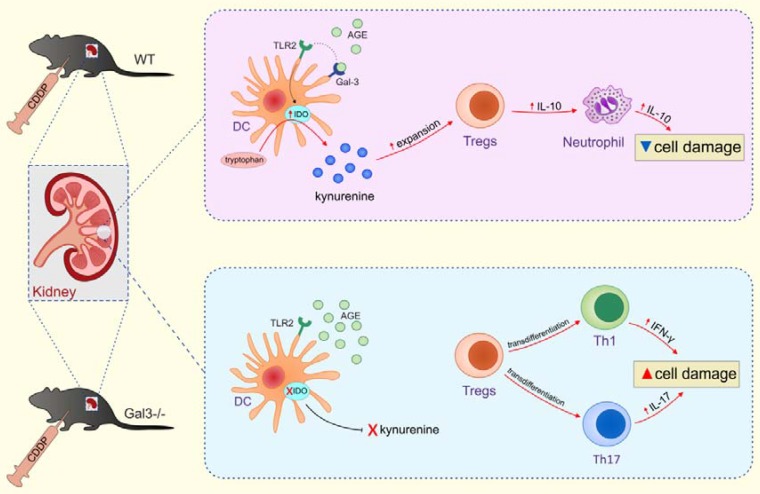
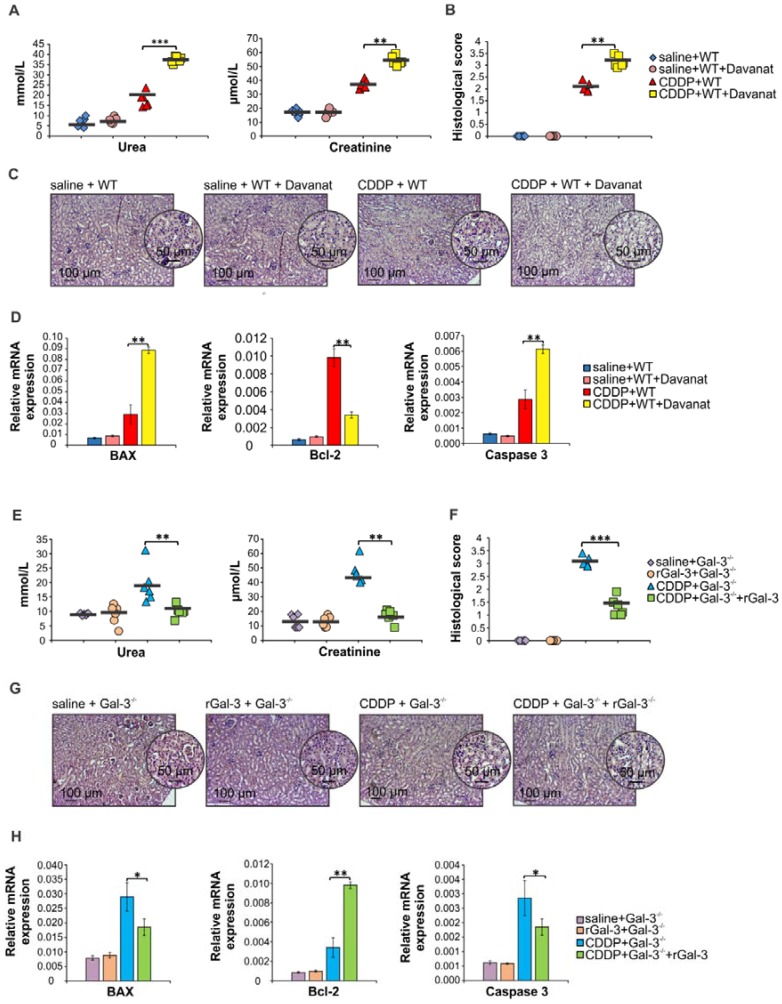
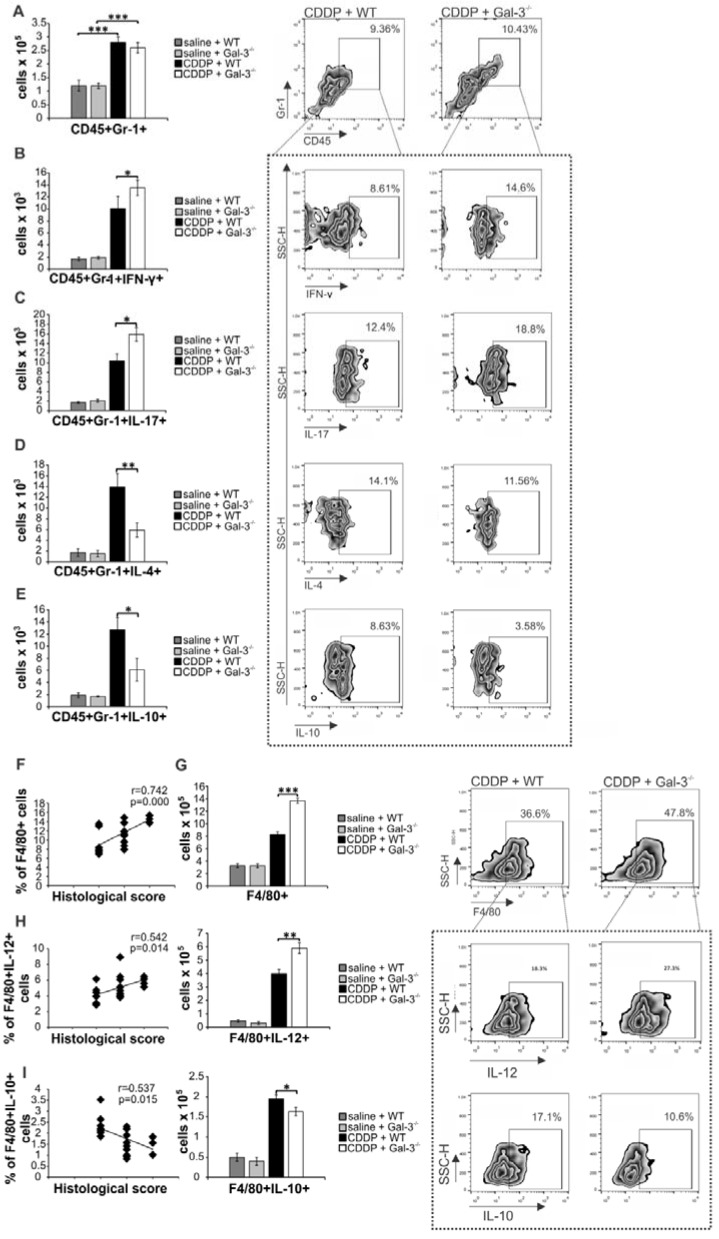
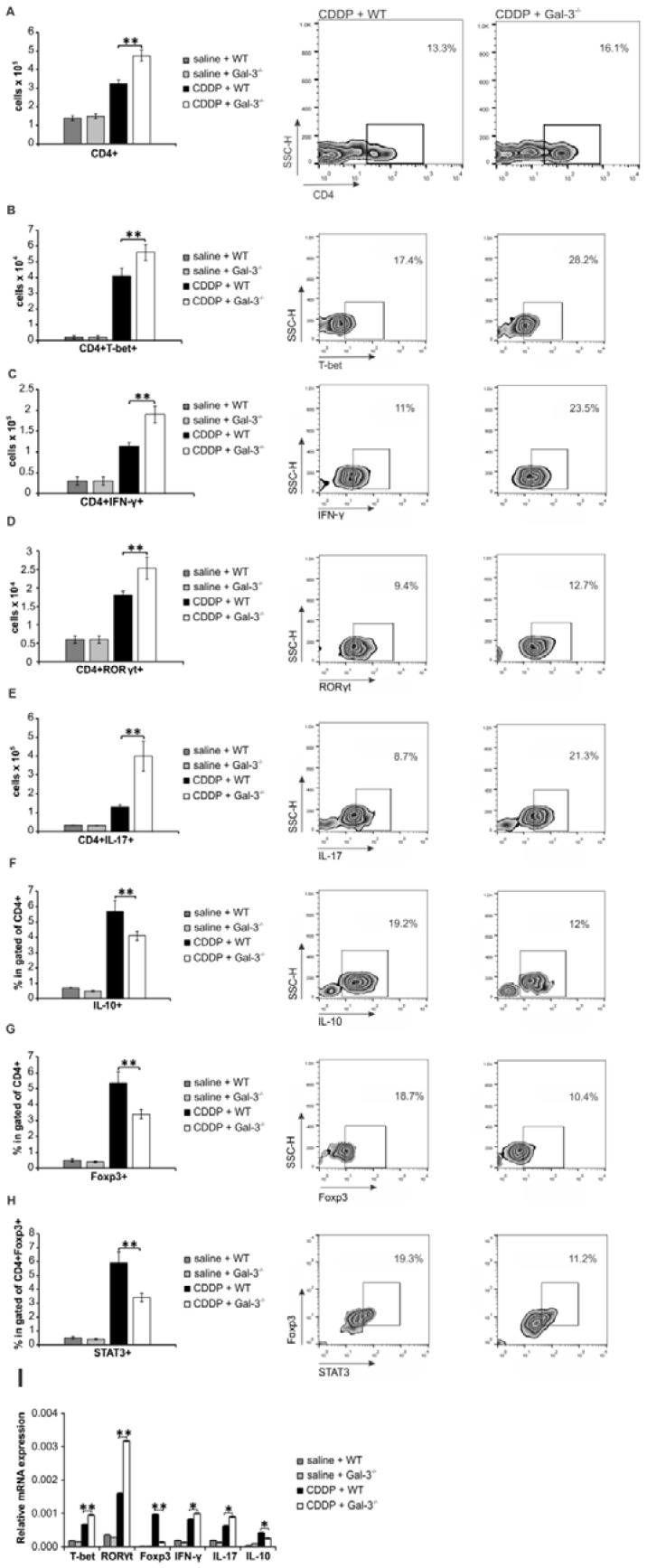
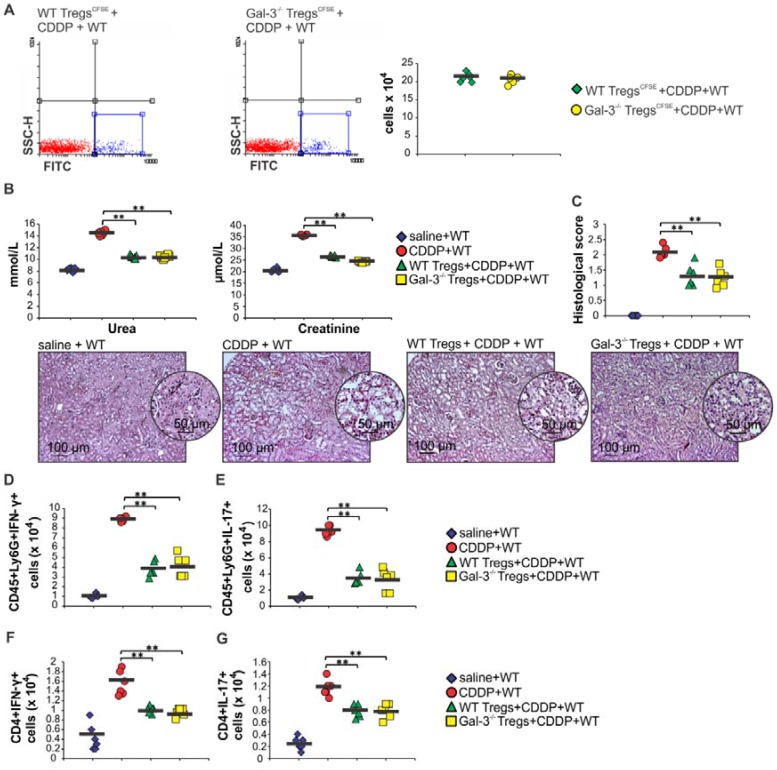
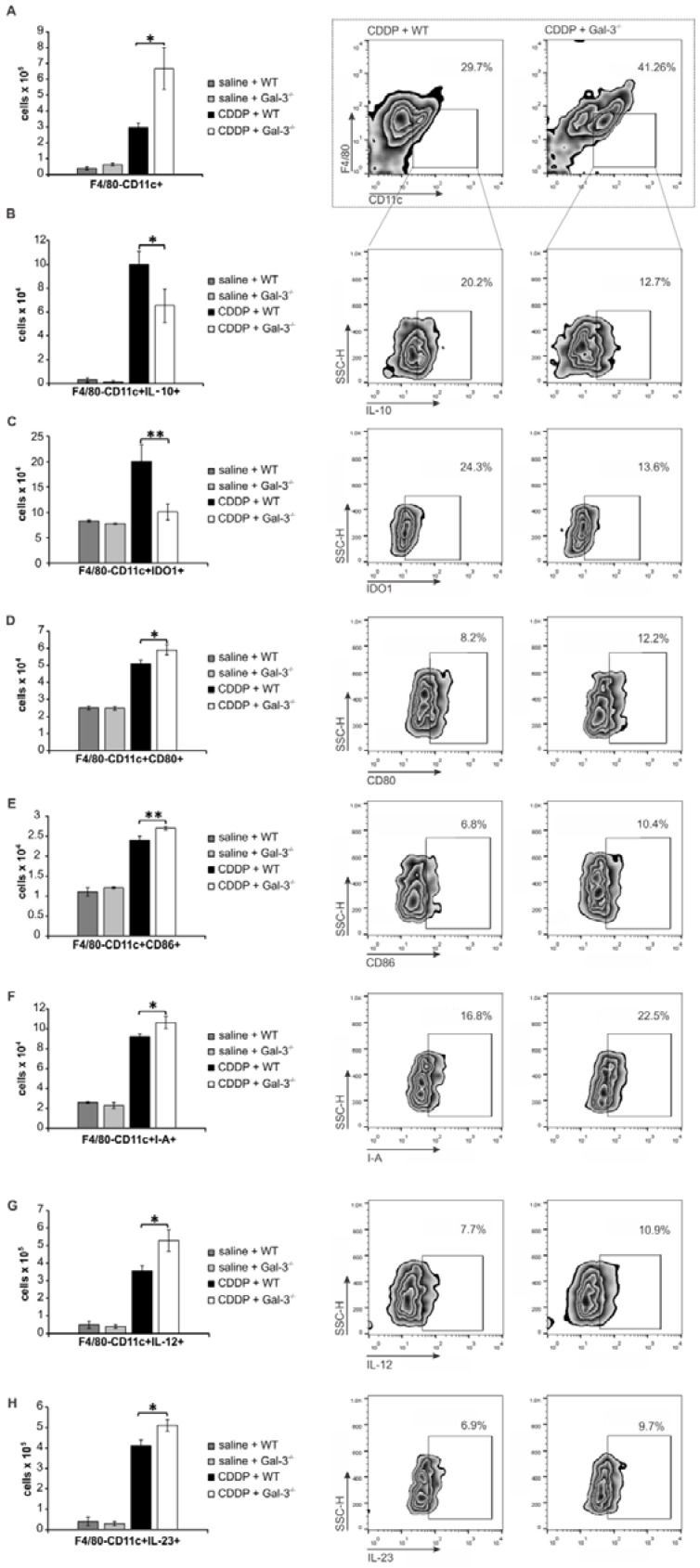
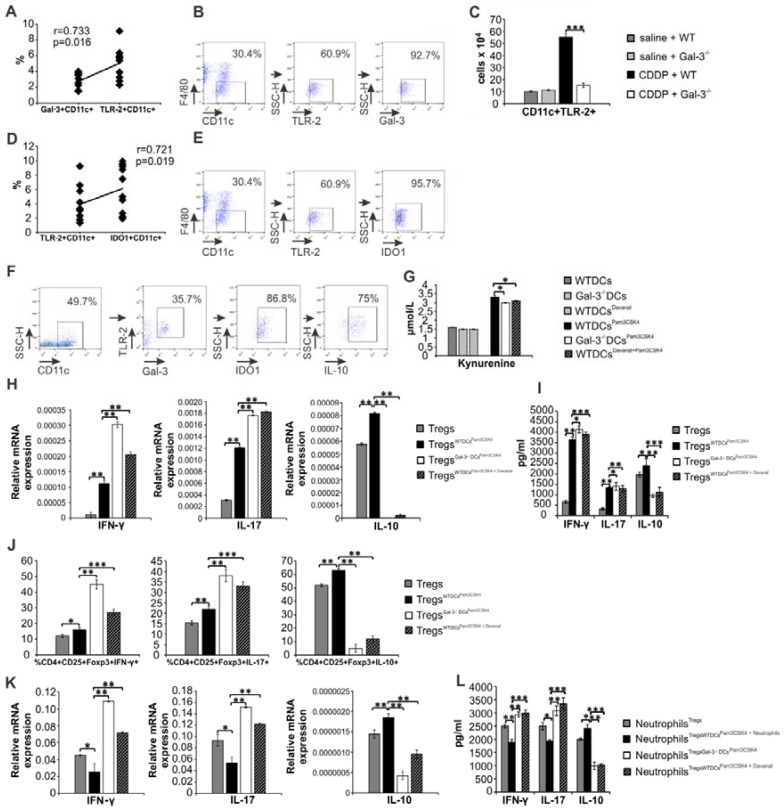
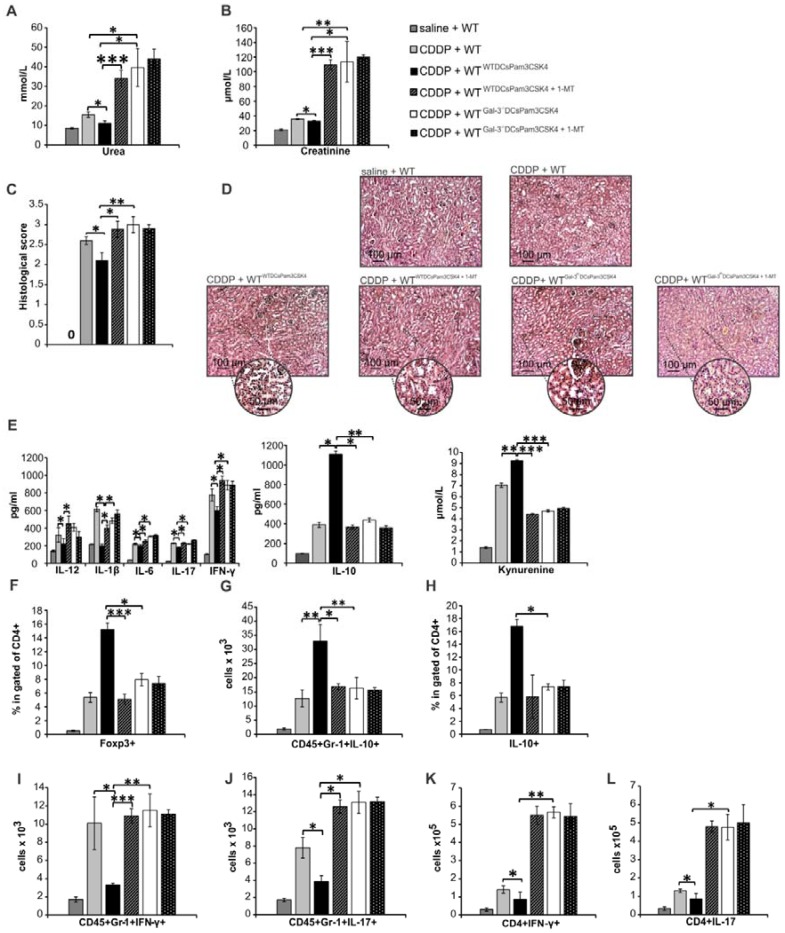
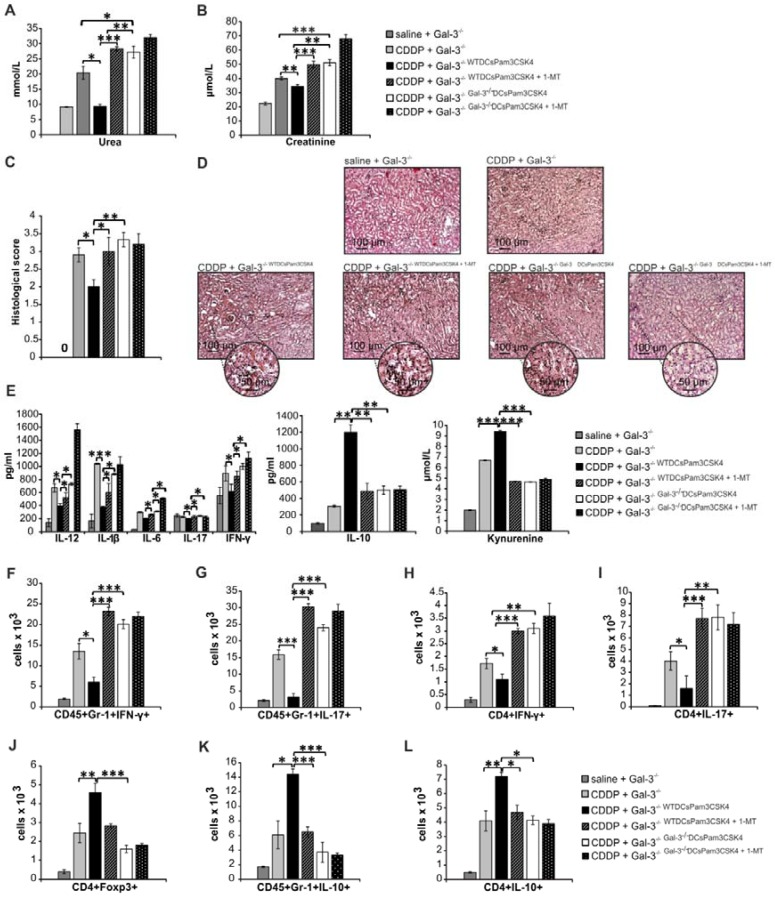
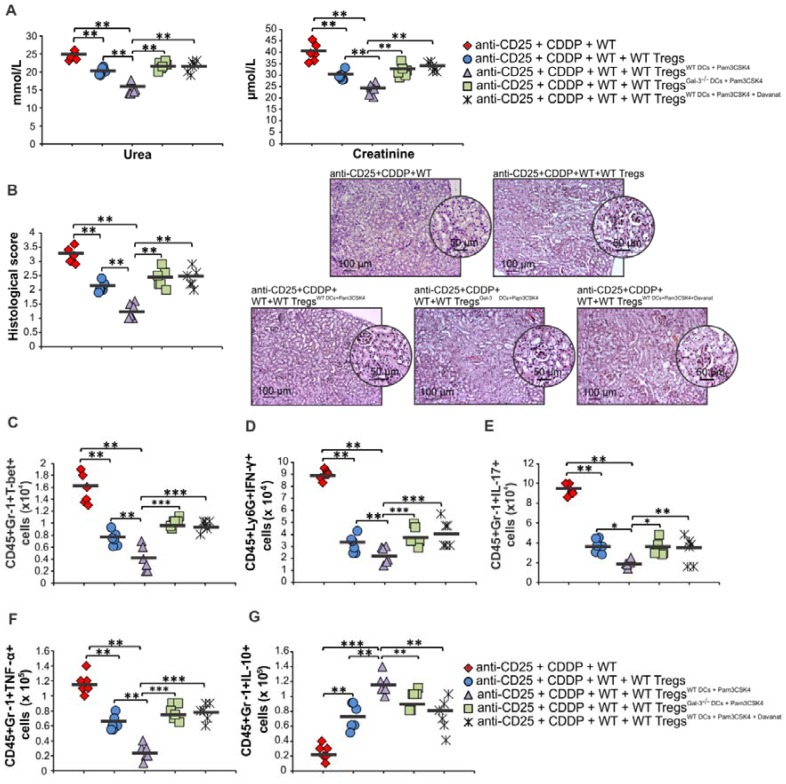
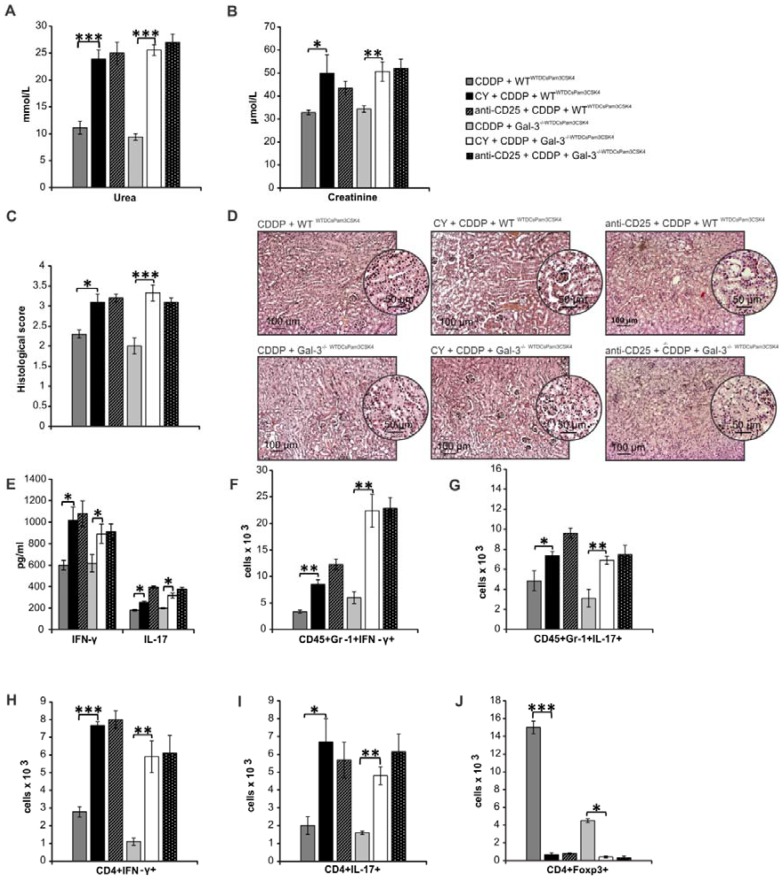
Strategies targeting cross-talk between immunosuppressive renal dendritic cells (DCs) and T regulatory cells (Tregs) may be effective in treating cisplatin (CDDP)-induced acute kidney injury (AKI). Galectin 3 (Gal-3), expressed on renal DCs, is known as a crucial regulator of immune response in the kidneys. In this study, we investigated the role of Gal-3 for DCs-mediated expansion of Tregs in the attenuation of CDDP-induced AKI. : AKI was induced in CDDP-treated wild type (WT) C57BL/6 and Gal-3 deficient (Gal-3) mice. Biochemical, histological analysis, enzyme-linked immunosorbent assay (ELISA), immunohistochemistry, real-time PCR, magnetic cell sorting, flow cytometry and intracellular staining of renal-infiltrated immune cells were used to determine the differences between CDDP-treated WT and Gal-3 mice. Newly synthesized selective inhibitor of Gal-3 (Davanat) was used for pharmacological inhibition of Gal-3. Recombinant Gal-3 was used to demonstrate the effects of exogenously administered soluble Gal-3 on AKI progression. Pam3CSK4 was used for activation of Toll-like receptor (TLR)-2 in DCs. Cyclophosphamide or anti-CD25 antibody were used for the depletion of Tregs. 1-Methyl Tryptophan (1-MT) was used for pharmacological inhibition of Indoleamine 2,3-dioxygenase-1 (IDO1) in TLR-2-primed DCs which were afterwards used in passive transfer experiments. : CDDP-induced nephrotoxicity was significantly more aggravated in Gal-3 mice. Significantly reduced number of immunosuppressive TLR-2 and IDO1-expressing renal DCs, lower serum levels of KYN, decreased presence of IL-10-producing Tregs and significantly higher number of inflammatory IFN-γ and IL-17-producing neutrophils, Th1 and Th17 cells were observed in the CDDP-injured kidneys of Gal-3 mice. Pharmacological inhibitor of Gal-3 aggravated CDDP-induced AKI in WT animals while recombinant Gal-3 attenuated renal injury and inflammation in CDDP-treated Gal-3 mice. CDDP-induced apoptosis, driven by Bax and caspase-3, was aggravated in Gal-3 animals and in WT mice that received Gal-3 inhibitor (CDDP+Davanat-treated mice). Recombinant Gal-3 managed to completely attenuate CDDP-induced apoptosis in CDDP-injured kidneys of Gal-3 mice. Genetic deletion as well as pharmacological inhibition of Gal-3 in renal DCs remarkably reduced TLR-2-dependent activation of IDO1/KYN pathway in these cells diminishing their capacity to prevent transdifferentiation of Tregs in inflammatory Th1 and Th17 cells. Additionally, Tregs generated by Gal-3 deficient DCs were not able to suppress production of IFN-γ and IL-17 in activated neutrophils. TLR-2-primed DCs significantly enhanced capacity of Tregs for attenuation of CDDP-induced AKI and inflammation and expression of Gal-3 on TLR-2-primed DCs was crucially important for their capacity to enhance nephroprotective and immunosuppressive properties of Tregs. Adoptive transfer of TLR-2-primed WTDCs significantly expanded Tregs in the kidneys of CDDP-treated WT and Gal-3 recipients resulting in the suppression of IFN-γ and IL-17-driven inflammation and alleviation of AKI. Importantly, this phenomenon was not observed in CDDP-treated WT and Gal-3 recipients of TLR-2-primed Gal-3DCs. Gal-3-dependent nephroprotective and immunosuppressive effects of renal DCs was due to the IDO1-induced expansion of renal Tregs since either inhibition of IDO1 activity in TLR-2-primed DCs or depletion of Tregs completely diminished DCs-mediated attenuation of CDDP-induced AKI. : Gal-3 protects from CDDP-induced AKI by promoting TLR-2-dependent activation of IDO1/KYN pathway in renal DCs resulting in increased expansion of immunosuppressive Tregs in injured kidneys. Activation of Gal-3:TLR-2:IDO1 pathway in renal DCs should be further explored as new therapeutic approach for DC-based immunosuppression of inflammatory renal diseases.
Galectin-3 通过促进 TLR2 依赖的 IDO1/KYN 通路激活抑制 DC 向 Treg 分化减轻顺铂诱导的急性肾损伤
Galectin-3(Gal-3)在肾树突状细胞(DC)上表达,被认为是肾脏免疫反应的关键调节剂。本研究旨在探讨 Gal-3 在 DC 介导的 Treg 扩增对顺铂(CDDP)诱导的急性肾损伤(AKI)中的作用。
采用 CDDP 处理野生型(WT)C57BL/6 和 Gal-3 缺陷(Gal-3)小鼠建立 AKI 模型。通过生物化学、组织学分析、酶联免疫吸附试验(ELISA)、免疫组织化学、实时 PCR、磁珠细胞分选、流式细胞术和肾浸润免疫细胞的细胞内染色,确定 CDDP 处理的 WT 和 Gal-3 小鼠之间的差异。新合成的 Gal-3 选择性抑制剂(Davanat)用于 Gal-3 的药理学抑制。重组 Gal-3 用于证明外源性给予可溶性 Gal-3 对 AKI 进展的影响。Pam3CSK4 用于激活 DC 中的 Toll 样受体(TLR)-2。环磷酰胺或抗 CD25 抗体用于耗尽 Treg。1-甲基色氨酸(1-MT)用于 TLR-2 激活的 DC 中的吲哚胺 2,3-双加氧酶-1(IDO1)的药理学抑制,随后用于被动转移实验。
Gal-3 小鼠的 CDDP 诱导的肾毒性明显更严重。Gal-3 小鼠 CDDP 损伤肾脏中 TLR-2 和 IDO1 表达的免疫抑制性 DC 数量显著减少,血清中 KYN 水平降低,IL-10 产生的 Treg 减少,IFN-γ 和 IL-17 产生的炎症性中性粒细胞、Th1 和 Th17 细胞明显增多。Gal-3 小鼠 CDDP 损伤肾脏中,Gal-3 抑制剂加重了 CDDP 诱导的 AKI,而重组 Gal-3 减轻了 CDDP 处理的 Gal-3 小鼠的肾损伤和炎症。Gal-3 小鼠中 Bax 和 caspase-3 驱动的 CDDP 诱导的细胞凋亡加剧,WT 动物接受 Gal-3 抑制剂(CDDP+Davanat 处理的小鼠)也加剧了这种情况。重组 Gal-3 完全减轻了 Gal-3 小鼠 CDDP 损伤肾脏中的细胞凋亡。Gal-3 敲除或 Gal-3 抑制剂在肾 DC 中的应用显著减少了 TLR-2 依赖性 IDO1/KYN 通路的激活,降低了 DC 防止 Treg 向炎症性 Th1 和 Th17 细胞转化的能力。此外,Gal-3 缺陷的 DC 产生的 Treg 不能抑制激活的中性粒细胞中 IFN-γ 和 IL-17 的产生。TLR-2 激活的 DC 显著增强了 Treg 减轻 CDDP 诱导的 AKI 和炎症的能力,TLR-2 激活的 DC 上 Gal-3 的表达对于增强 Treg 的肾保护和免疫抑制特性至关重要。TLR-2 激活的 WTDC 的过继转移显著增加了 CDDP 处理的 WT 和 Gal-3 受体者的肾脏中的 Treg,从而抑制了 IFN-γ 和 IL-17 驱动的炎症,并缓解了 AKI。重要的是,这种现象在 TLR-2 激活的 Gal-3DC 的 CDDP 处理的 WT 和 Gal-3 受体者中没有观察到。Gal-3 依赖的肾 DC 的肾保护和免疫抑制作用是由于 IDO1 诱导的肾 Treg 扩增所致,因为 TLR-2 激活的 DC 中 IDO1 活性的抑制或 Treg 的耗竭完全消除了 DC 介导的 CDDP 诱导的 AKI 减轻。
Gal-3 通过促进 TLR-2 依赖的 IDO1/KYN 通路在肾 DC 中的激活来保护免受 CDDP 诱导的 AKI,导致损伤肾脏中免疫抑制性 Treg 的扩增增加。Gal-3:TLR-2:IDO1 通路的激活应作为基于 DC 的炎症性肾脏疾病免疫抑制的新治疗方法进一步探索。