Pediatric Emergency Unit, IRCCS Azienda Ospedaliero-Universitaria di Bologna, 40138 Bologna, Italy.
Specialty School of Paediatrics, Alma Mater Studiorum, University of Bologna, 40138 Bologna, Italy.
Nutrients. 2023 Dec 12;15(24):5079. doi: 10.3390/nu15245079.
Hypertension (HTN) is a well-established cardiovascular (CV) risk factor in adults. The presence of HTN in children appears to predict its persistence into adulthood. Early diagnosis of HTN is crucial to reduce CV morbidity before the onset of organ damage.
The aim of this study is to investigate cardiac damage in HTN, its risk factors (RFs), and evolution.
We conducted a prospective/retrospective study involving children referred to the Childhood Hypertension Outpatient Clinic. This study included clinical and echocardiographic assessments of cardiac morphology and function at three time points: enrollment (T0) and follow-up (T1 and T2).
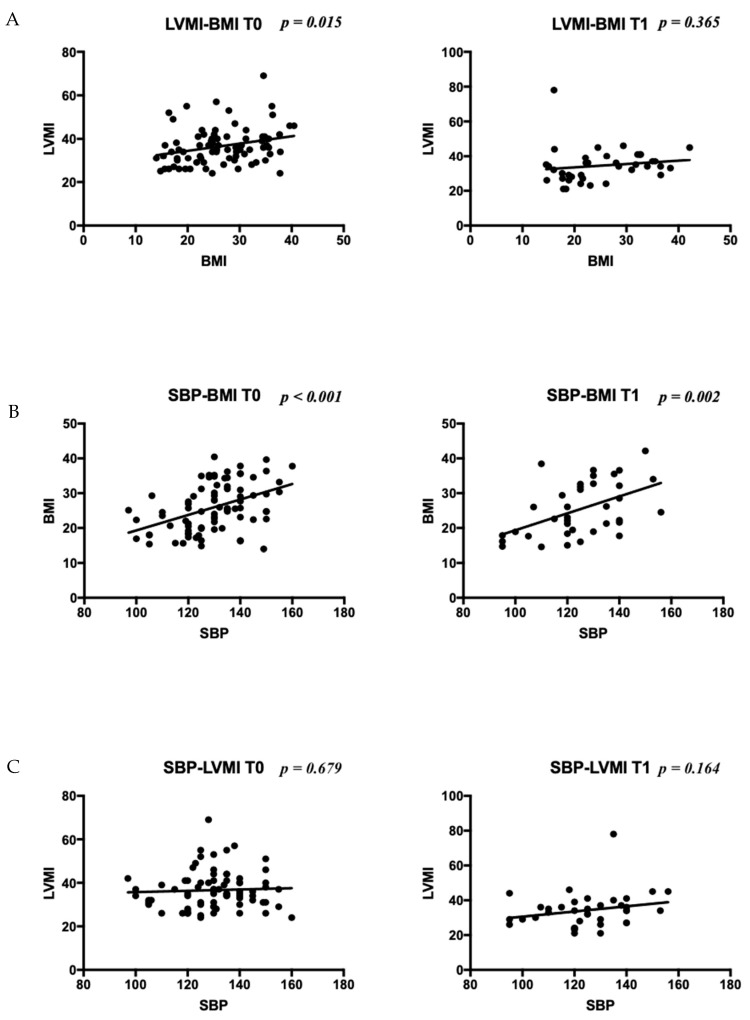
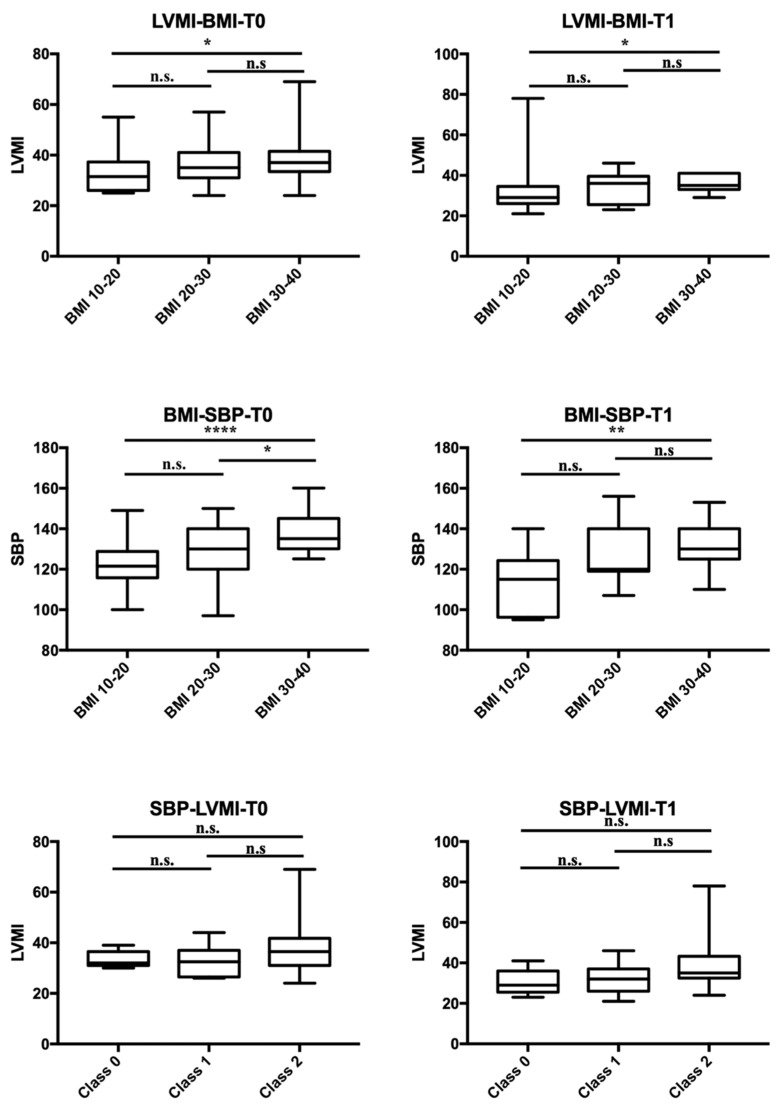
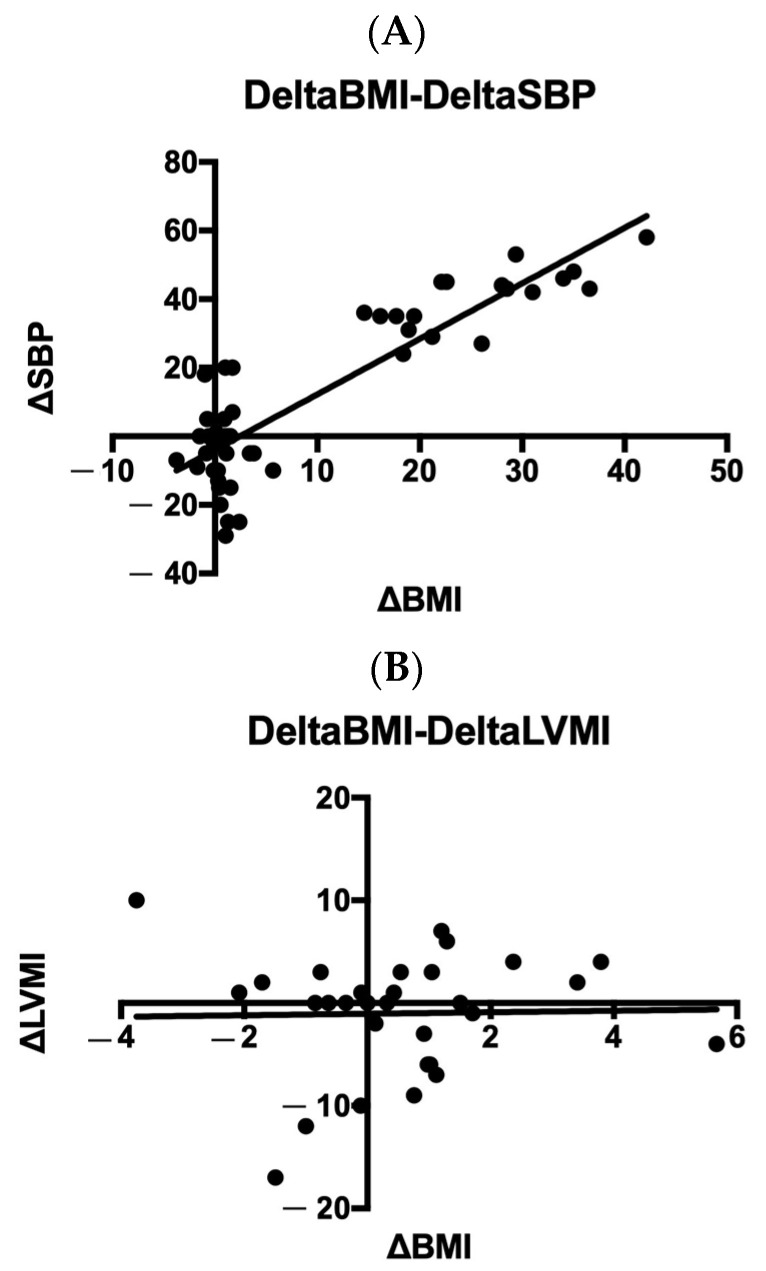
Ninety-two patients (mean age 11.4 ± 3 years) were enrolled. Cardiac eccentric and concentric hypertrophy were present in 17.9% and 9%, respectively, with remodeling in 10.5%. Overweight/obese subjects exhibited significantly higher systolic blood pressure (SBP), frequency of HTN, and body mass index (BMI) at T0 compared with patients with chronic kidney disease (CKD). SBP and BMI persisted more during follow-up. Normal-weight vs. overweight/obese patients were significantly more likely to have normal geometry. Positive correlations were found between BMI and left ventricular (LV) mass at T0, BMI and SBP at T0 and T1. Gender, BMI, SBP, and diastolic blood pressure (DBP) significantly predicted LV mass index (LVMI), but only BMI added significance to the prediction. During follow-up, the variation of BMI positively correlated with the variation of SBP, but not with LVMI.
In our cohort, body weight is strongly associated with HTN and cardiac mass. Importantly, the variation in body weight has a more significant impact on the consensual variation of cardiac mass than blood pressure (BP) values. A strict intervention on weight control through diet and a healthy lifestyle from early ages might reduce the burden of CV morbidity in later years.
高血压(HTN)是成人心血管(CV)的一个既定风险因素。儿童时期存在高血压似乎预示着其会持续到成年期。早期诊断高血压对于在器官损伤发生前降低 CV 发病率至关重要。
本研究旨在探讨高血压中的心脏损伤及其危险因素(RFs)和演变。
我们进行了一项前瞻性/回顾性研究,涉及到儿童高血压门诊诊所的儿童。该研究包括在三个时间点进行临床和超声心动图评估心脏形态和功能:入组时(T0)和随访时(T1 和 T2)。
共纳入 92 例患者(平均年龄 11.4±3 岁)。17.9%存在心脏偏心性肥厚,9%存在心脏向心性肥厚,10.5%存在心脏重构。超重/肥胖患者的收缩压(SBP)、高血压频率和体质量指数(BMI)在 T0 时显著高于慢性肾脏病(CKD)患者。超重/肥胖患者的 SBP 和 BMI 在随访期间持续升高。与超重/肥胖患者相比,正常体重患者的心脏几何形状更正常。T0 时 BMI 与左心室(LV)质量、T0 和 T1 时 BMI 与 SBP 之间存在正相关。性别、BMI、SBP 和舒张压(DBP)均显著预测 LV 质量指数(LVMI),但只有 BMI 对预测有显著意义。随访期间,BMI 的变化与 SBP 的变化呈正相关,与 LVMI 的变化无关。
在我们的队列中,体重与高血压和心脏质量密切相关。重要的是,体重的变化对心脏质量的共识变化的影响比血压(BP)值更为显著。通过早期饮食和健康生活方式对体重进行严格控制,可能会降低日后 CV 发病率的负担。