Riaz Mahmood, Mahmood Muhammad Hamid, Ashraf Muhammad Nauman, Sultan Muhammad, Sajjad Uzair, Hamid Khalid, Farooq Muhammad, Wang Faming
Department of Agricultural Engineering, Faculty of Agricultural Sciences & Technology, Bahauddin Zakariya University, Multan, 60800, Pakistan.
Department of Energy and Refrigerating Air-Conditioning Engineering, National Taipei University of Technology, Taipei, 10608, Taiwan.
Heliyon. 2023 Nov 29;9(12):e23038. doi: 10.1016/j.heliyon.2023.e23038. eCollection 2023 Dec.
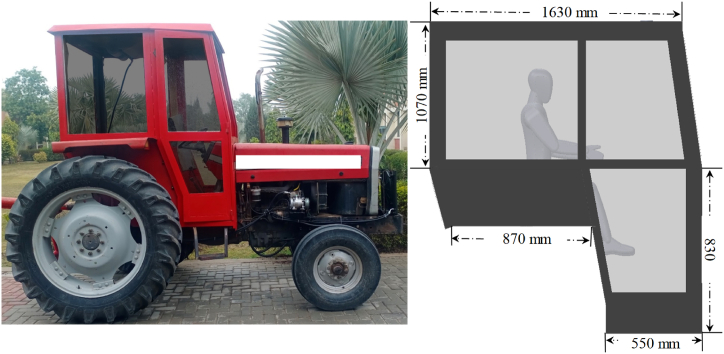
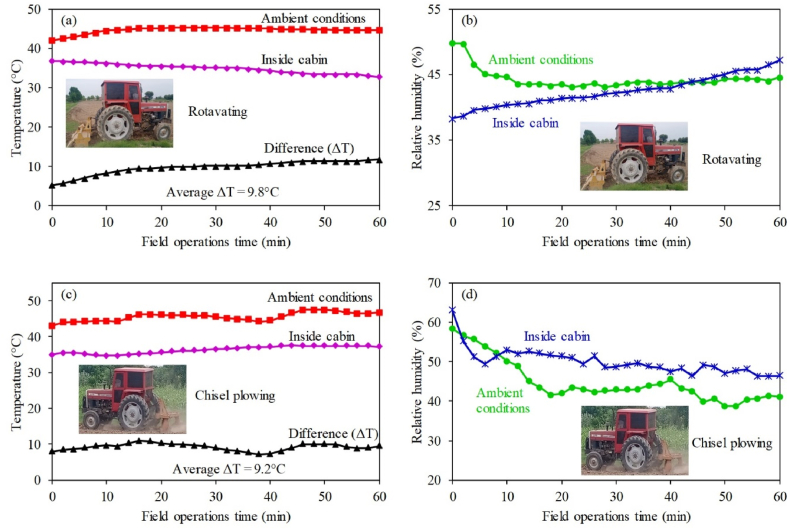
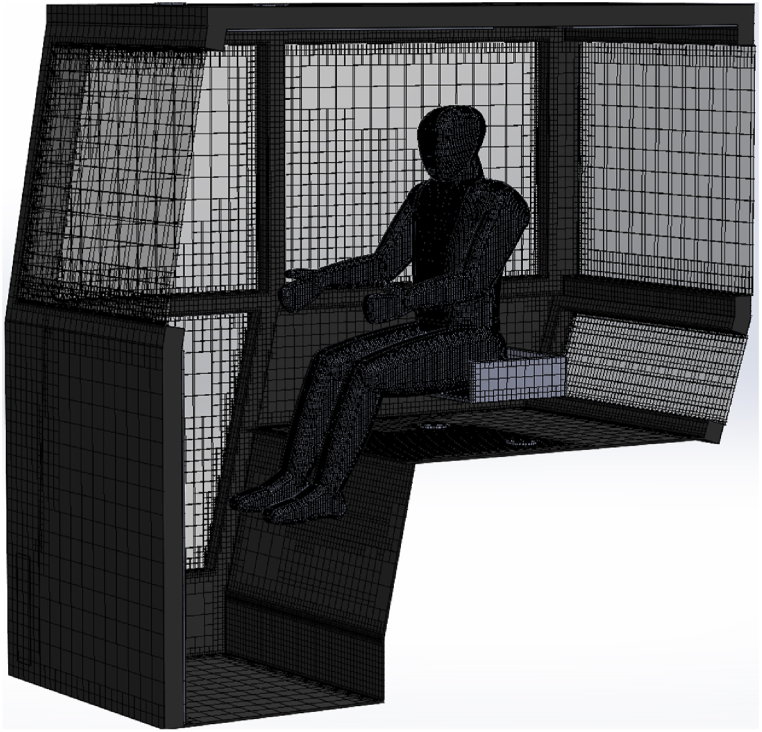
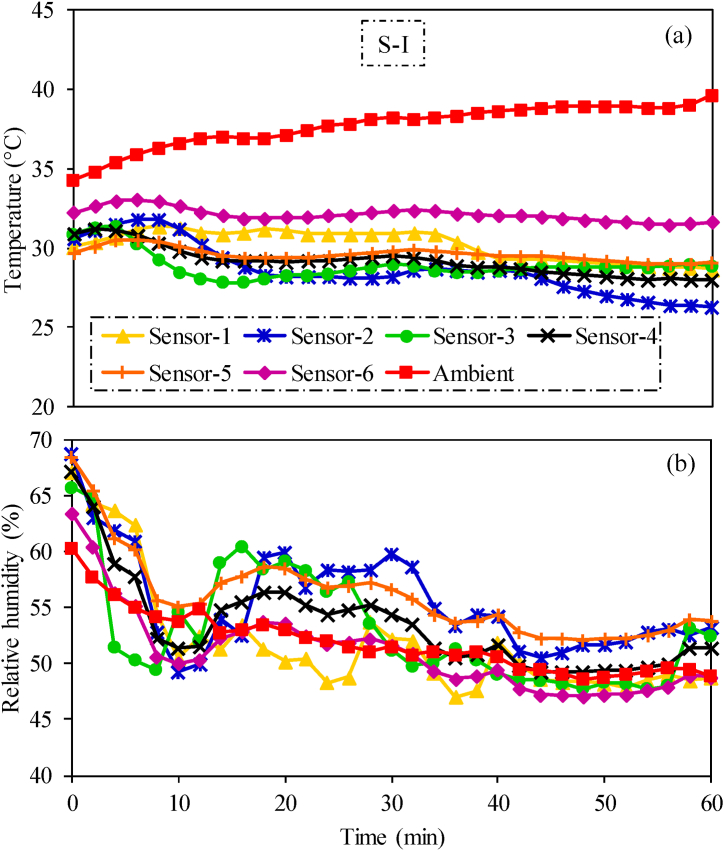
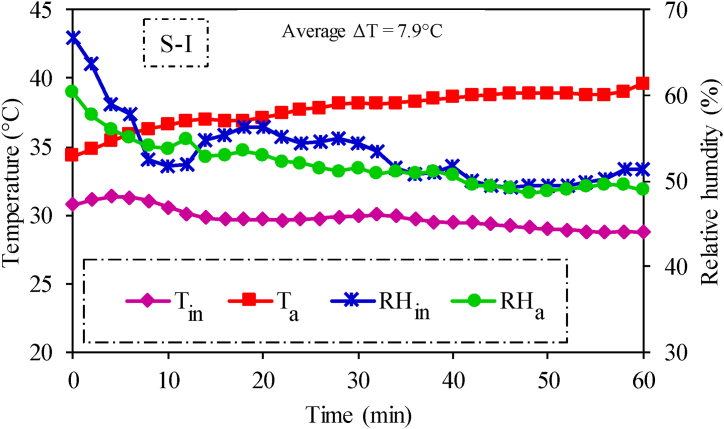
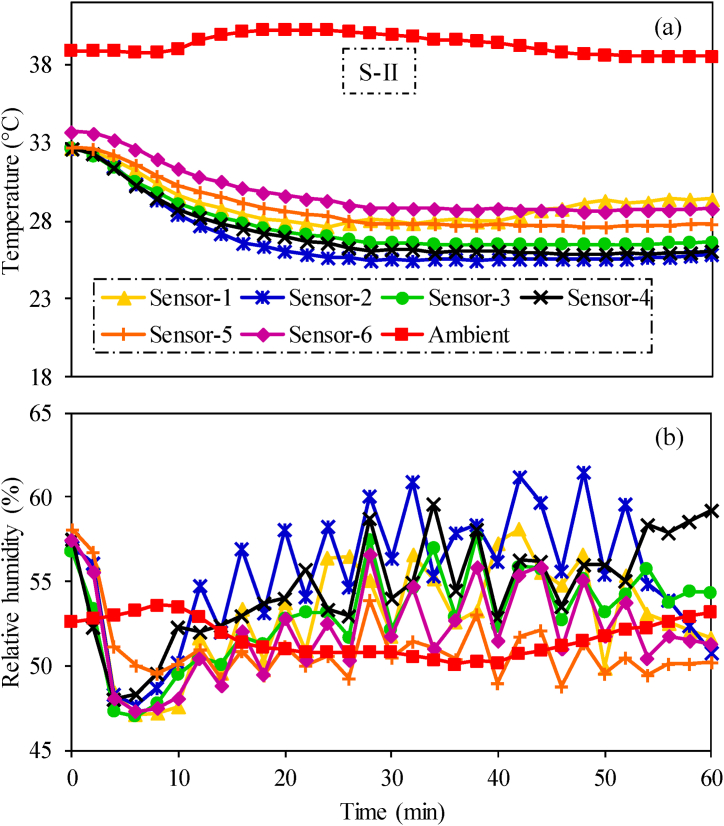
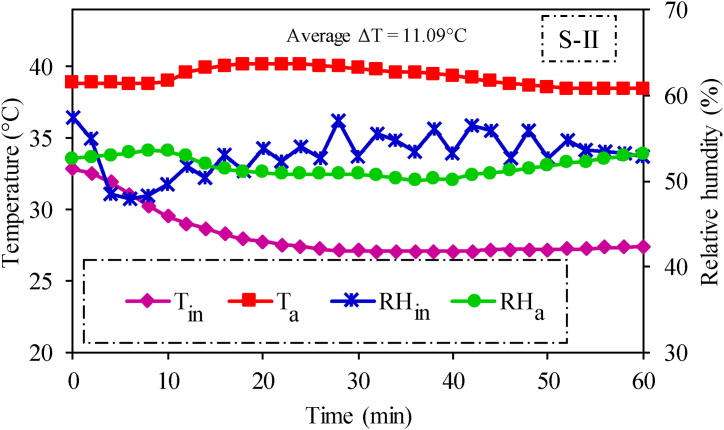
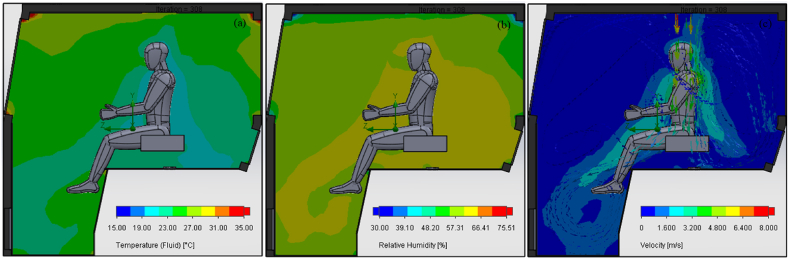
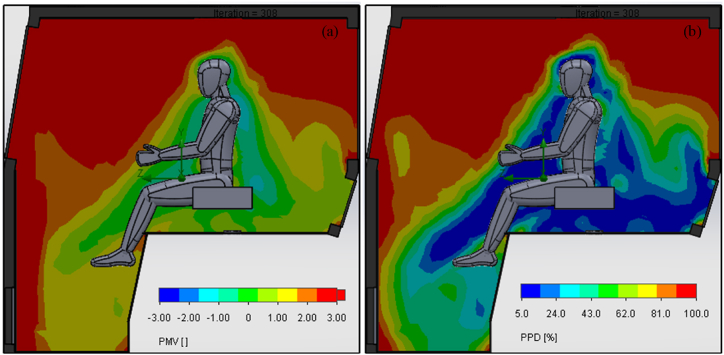
Tractors are manufactured without air-conditioned cabins in Pakistan. This leads to thermal discomfort for tractor operators working under direct solar exposure. Therefore, this study aimed to design and install an air-conditioned cabin on a tractor. Experiments were undertaken to evaluate the installed cabin performance under two scenarios i.e., conventional (S-I) and enhanced (S-II) air distribution. Computational fluid dynamics (CFD) simulations were used to analyze airflow and calculate thermal comfort indices. The results showed that the air-conditioned cabin attained optimum thermal conditions under the enhanced air distribution scenario (S-II). In this scenario, the inside cabin temperature was an average of 27.4 °C, compared with 30.4 °C in S-I. The relative humidity remained similar in both scenarios, around 53 %. The temperature difference between the cabin and the ambient environment was 11.09 °C in S-II, aligning with the thermal comfort conditions outlined in ISO 14269-2. Furthermore, the CFD simulations showed a predicted mean vote (PMV) index of 0.61 and the percentage people dissatisfied (PPD) index of 26.5 %. These results also confirm the provision of optimum thermal conditions for operator inside the cabin. The simulations also demonstrated good agreement with experimental data, with a small difference in air temperature (2 °C) and relative humidity (5.8 %). In the light of these findings, this study recommends installation of air-conditioned cabin on tractors with enhanced air distribution (S-II) in Pakistan to improve thermal comfort of operators.
在巴基斯坦,拖拉机制造时没有配备空调驾驶室。这使得在阳光直射下工作的拖拉机操作员感到热不适。因此,本研究旨在设计并在拖拉机上安装一个空调驾驶室。进行了实验,以评估在两种情况下安装的驾驶室性能,即传统(S-I)和增强(S-II)空气分布。使用计算流体动力学(CFD)模拟来分析气流并计算热舒适指数。结果表明,在增强空气分布方案(S-II)下,空调驾驶室达到了最佳热条件。在这种情况下,驾驶室内平均温度为27.4°C,而在S-I中为30.4°C。两种情况下相对湿度保持相似,约为53%。在S-II中,驾驶室与周围环境的温差为11.09°C,符合ISO 14269-2中规定的热舒适条件。此外,CFD模拟显示预测平均投票(PMV)指数为0.61,不满意人员百分比(PPD)指数为26.5%。这些结果也证实了为驾驶室内的操作员提供了最佳热条件。模拟结果与实验数据也显示出良好的一致性,气温(2°C)和相对湿度(5.8%)的差异较小。根据这些发现,本研究建议在巴基斯坦为拖拉机安装具有增强空气分布(S-II)的空调驾驶室,以提高操作员的热舒适度。