National Center for Respiratory Medicine, National Clinical Research Center for Respiratory Disease, State Key Laboratory of Respiratory Disease, Guangzhou Institute of Respiratory Health, The First Affiliated Hospital of Guangzhou Medical University, Guangzhou, China.
Department of Pulmonary and Critical Care Medicine, Fujian Provincial Hospital, Fujian Medical University, Fuzhou, China.
BMC Infect Dis. 2024 Jan 2;24(1):2. doi: 10.1186/s12879-023-08929-y.
In the context of increasing population aging, ongoing drug-resistant pathogens and the COVID-19 epidemic, the changes in the epidemiological and clinical characteristics of patients with pneumonia remain unclear. This study aimed to assess the trends in hospitalization, case fatality, comorbidities, and isolated pathogens of pneumonia-related adult inpatients in Guangzhou during the last decade.
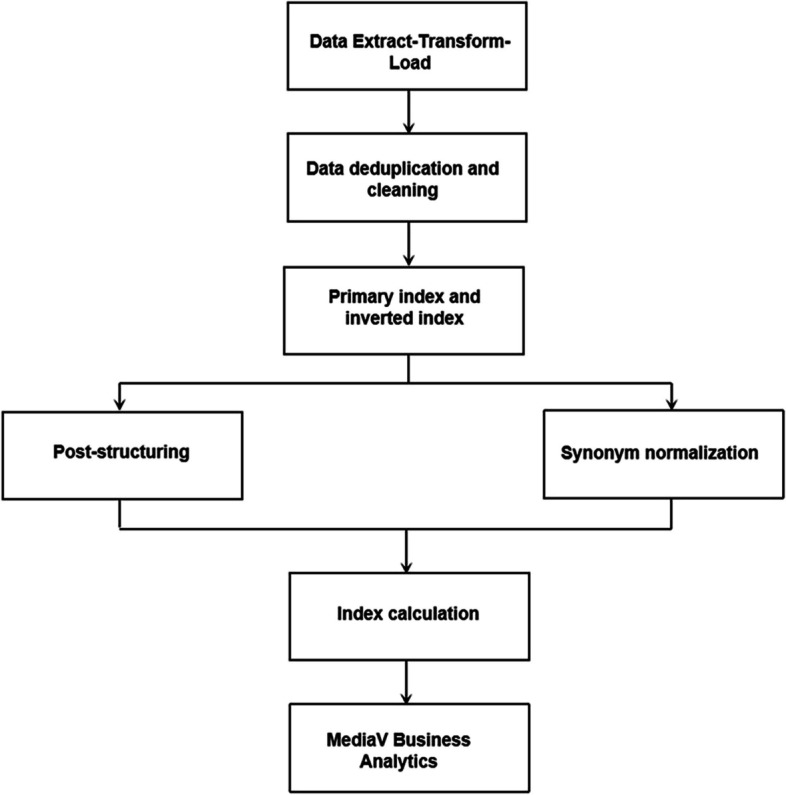
We retrospectively enrolled hospitalized adults who had doctor-diagnosed pneumonia in the First Affiliated Hospital of Guangzhou Medical University from January 1, 2013 to December 31, 2022. A natural language processing system was applied to automatically extract the clinical data from electronic health records. We evaluated the proportion of pneumonia-related hospitalizations in total hospitalizations, pneumonia-related in-hospital case fatality, comorbidities, and species of isolated pathogens during the last decade. Binary logistic regression analysis was used to assess predictors for patients with prolonged length of stay (LOS).
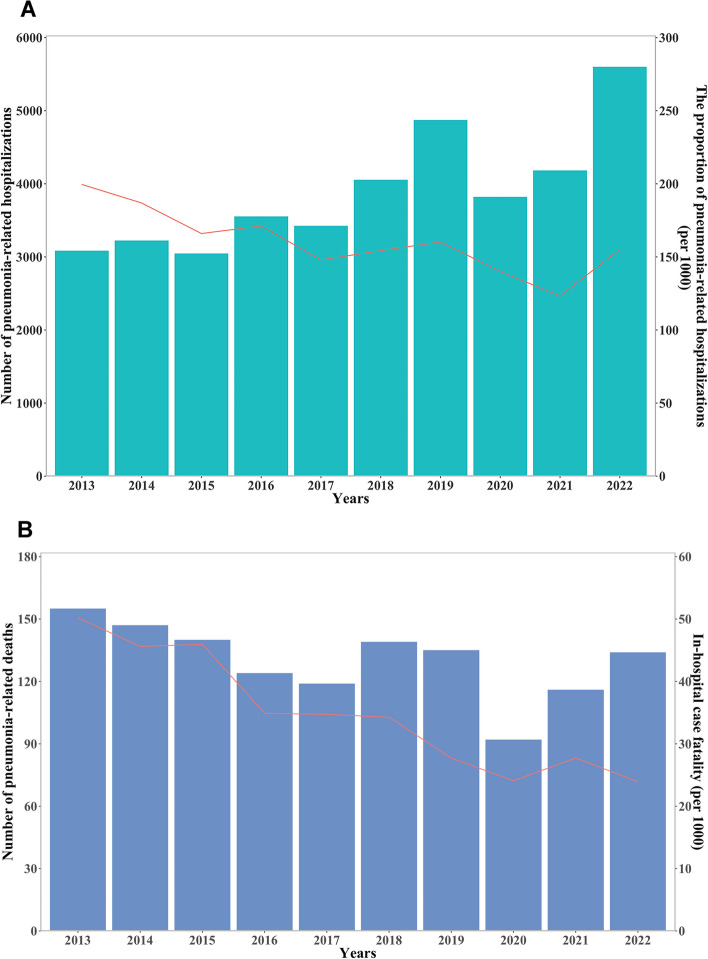
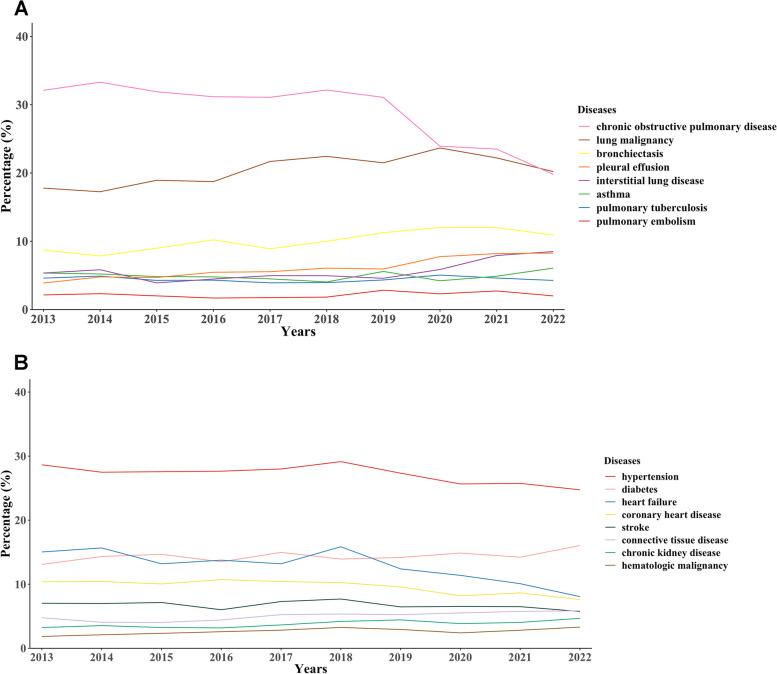
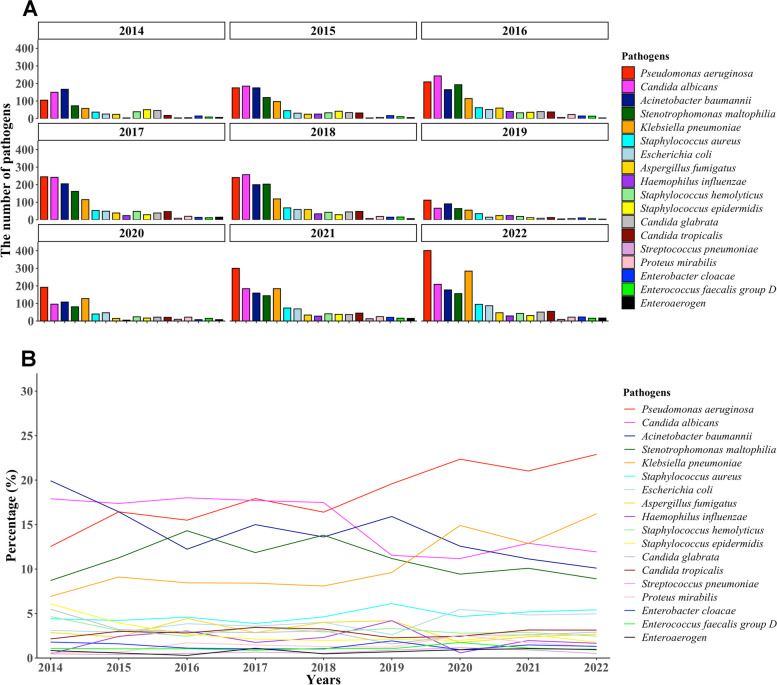
A total of 38,870 cases were finally included in this study, with 70% males, median age of 64 (53, 73) years and median LOS of 7.9 (5.1, 12.8) days. Although the number of pneumonia-related hospitalizations showed an upward trend, the proportion of pneumonia-related hospitalizations decreased from 199.6 per 1000 inpatients in 2013 to 123.4 per 1000 in 2021, and the case fatality decreased from 50.2 per 1000 in 2013 to 23.9 per 1000 in 2022 (all P < 0.05). The most common comorbidities were chronic obstructive pulmonary disease, lung malignancy, cardiovascular diseases and diabetes. The most common pathogens were Pseudomonas aeruginosa, Candida albicans, Acinetobacter baumannii, Stenotrophomonas maltophilia, Klebsiella pneumoniae, and Staphylococcus aureus. Glucocorticoid use during hospitalization (Odd Ratio [OR] = 1.86, 95% Confidence Interval (CI): 1.14-3.06), immunosuppressant use during hospitalization (OR = 1.99, 1.14-3.46), ICU admission (OR = 16.23, 95%CI: 11.25-23.83), receiving mechanical ventilation (OR = 3.58, 95%CI: 2.60-4.97), presence of other underlying diseases (OR = 1.54, 95%CI: 1.15-2.06), and elevated procalcitonin (OR = 1.61, 95%CI: 1.19-2.19) were identified as independent predictors for prolonged LOS.
The proportion of pneumonia-related hospitalizations and the in-hospital case fatality showed downward trends during the last decade. Pneumonia inpatients were often complicated by chronic underlying diseases and isolated with gram-negative bacteria. ICU admission was a significant predictor for prolonged LOS in pneumonia inpatients.
在人口老龄化、不断出现耐药病原体和 COVID-19 大流行的背景下,肺炎患者的流行病学和临床特征变化尚不清楚。本研究旨在评估过去十年间广州成人肺炎相关住院患者的住院、病死率、合并症和分离病原体的变化趋势。
我们回顾性纳入了 2013 年 1 月 1 日至 2022 年 12 月 31 日期间在广州医科大学附属第一医院就诊的被医生诊断为肺炎的住院成人患者。我们应用自然语言处理系统从电子病历中自动提取临床数据。我们评估了过去十年间肺炎相关住院患者在总住院患者中的比例、肺炎相关院内病死率、合并症以及分离病原体的种类。采用二项逻辑回归分析评估患者住院时间延长的预测因素。
本研究最终纳入 38870 例患者,其中男性占 70%,中位年龄为 64(53,73)岁,中位住院时间为 7.9(5.1,12.8)天。尽管肺炎相关住院患者的数量呈上升趋势,但肺炎相关住院患者的比例从 2013 年的每千名住院患者 199.6 例下降至 2021 年的每千名住院患者 123.4 例,病死率从 2013 年的每千名住院患者 50.2 例下降至 2022 年的每千名住院患者 23.9 例(均 P<0.05)。最常见的合并症为慢性阻塞性肺疾病、肺部恶性肿瘤、心血管疾病和糖尿病。最常见的病原体为铜绿假单胞菌、白色念珠菌、鲍曼不动杆菌、嗜麦芽窄食单胞菌、肺炎克雷伯菌和金黄色葡萄球菌。住院期间使用糖皮质激素(比值比 [OR] = 1.86,95%置信区间 [CI]:1.14-3.06)、住院期间使用免疫抑制剂(OR = 1.99,1.14-3.46)、入住 ICU(OR = 16.23,95%CI:11.25-23.83)、接受机械通气(OR = 3.58,95%CI:2.60-4.97)、存在其他基础疾病(OR = 1.54,95%CI:1.15-2.06)和降钙素原升高(OR = 1.61,95%CI:1.19-2.19)是肺炎患者住院时间延长的独立预测因素。
过去十年间,肺炎相关住院患者的比例和院内病死率呈下降趋势。肺炎住院患者常伴有慢性基础疾病,且常分离出革兰阴性菌。入住 ICU 是肺炎患者住院时间延长的重要预测因素。