State Key Laboratory of Respiratory Disease, National Clinical Research Center for Respiratory Disease, Guangzhou Institute of Respiratory Health, the First Affiliated Hospital of Guangzhou Medical University, Guangzhou, People's Republic of China.
Guangzhou Tianpeng Technology Co., Ltd., Guangzhou, People's Republic of China.
Emerg Microbes Infect. 2021 Dec;10(1):450-460. doi: 10.1080/22221751.2021.1894902.
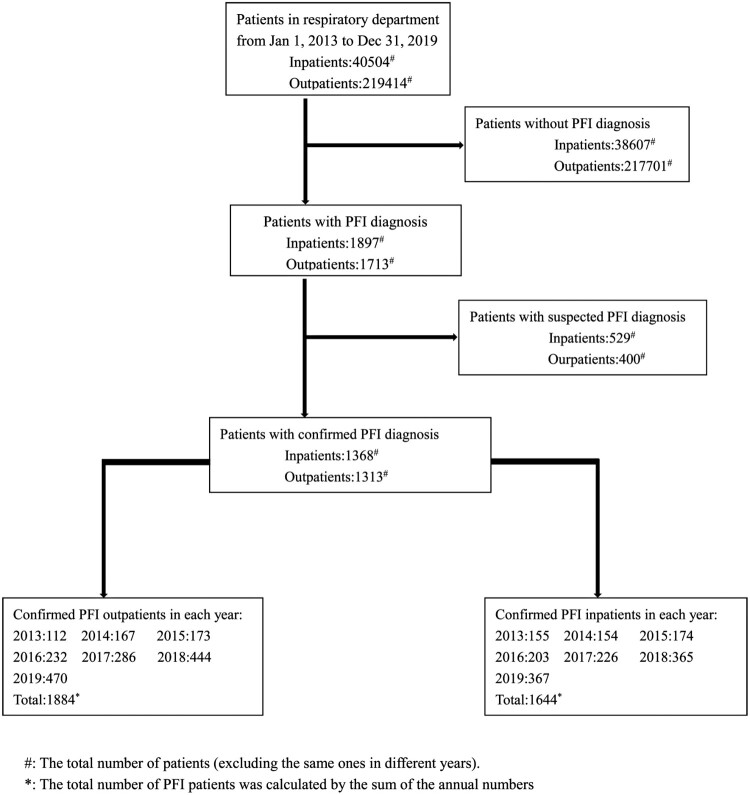
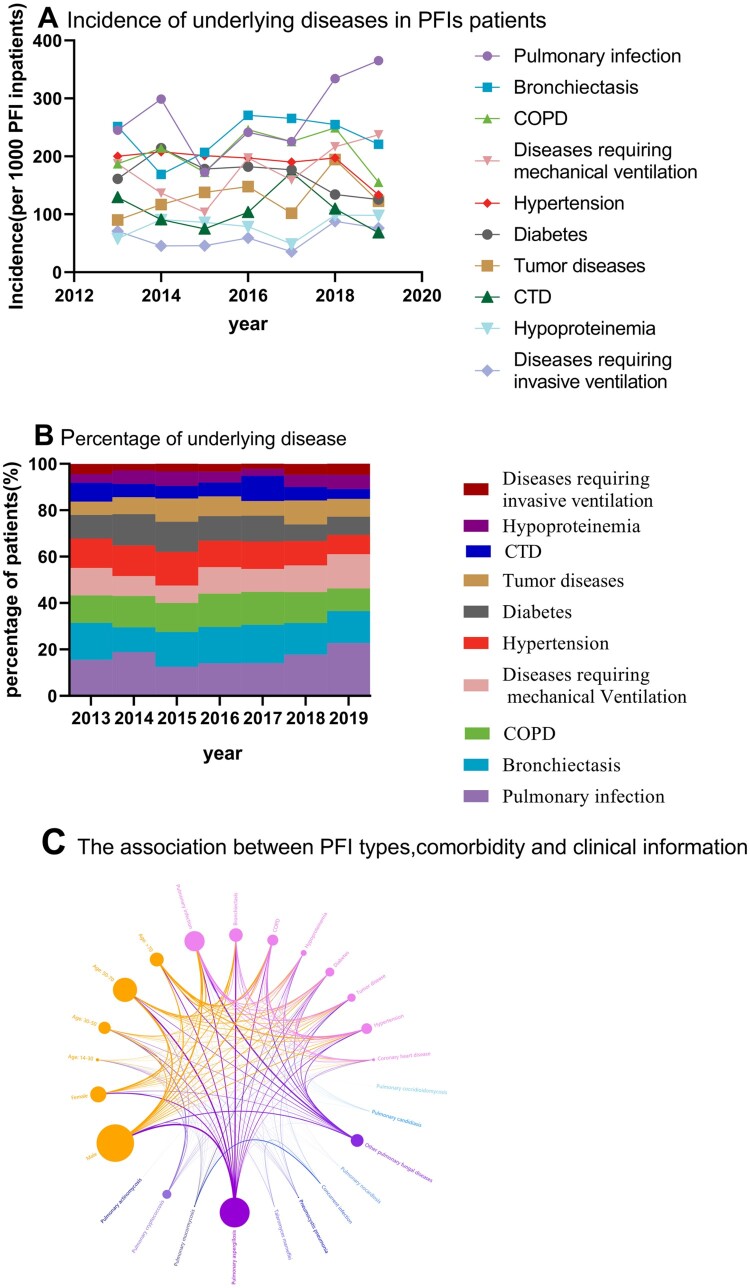
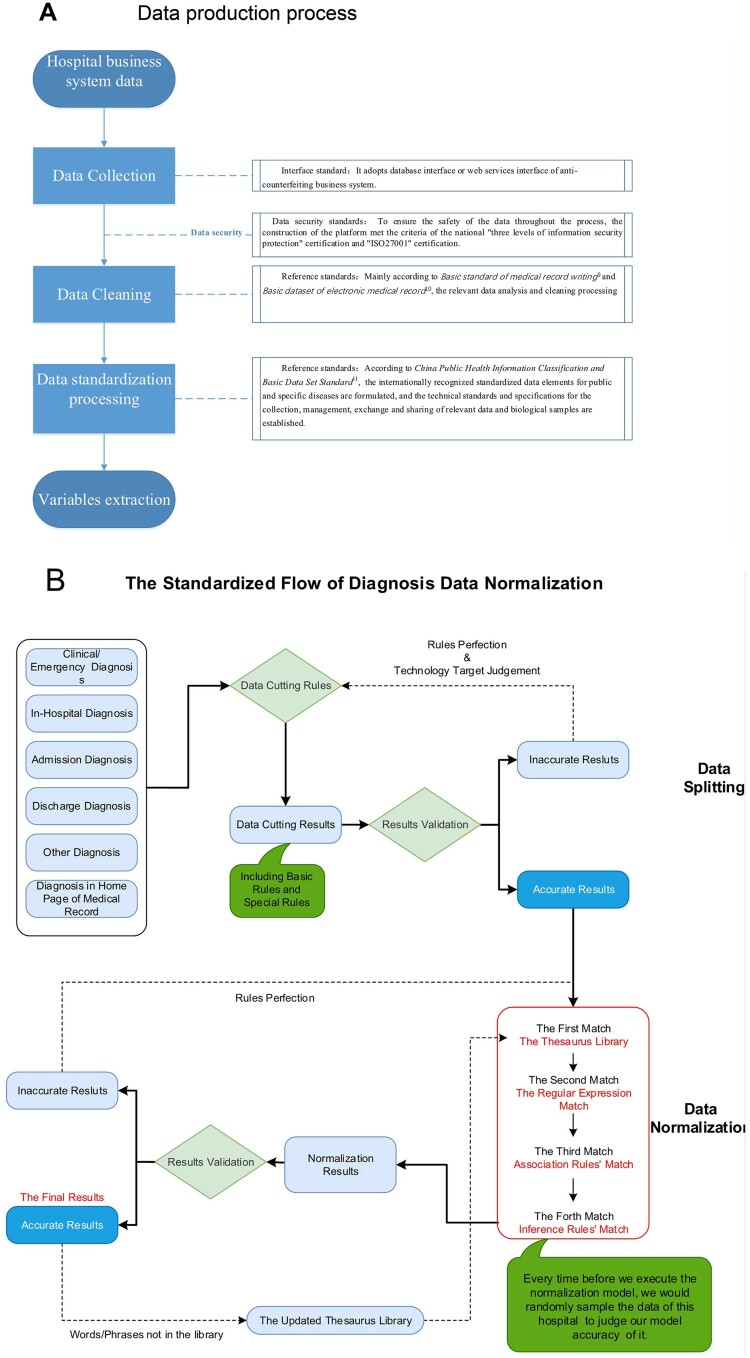
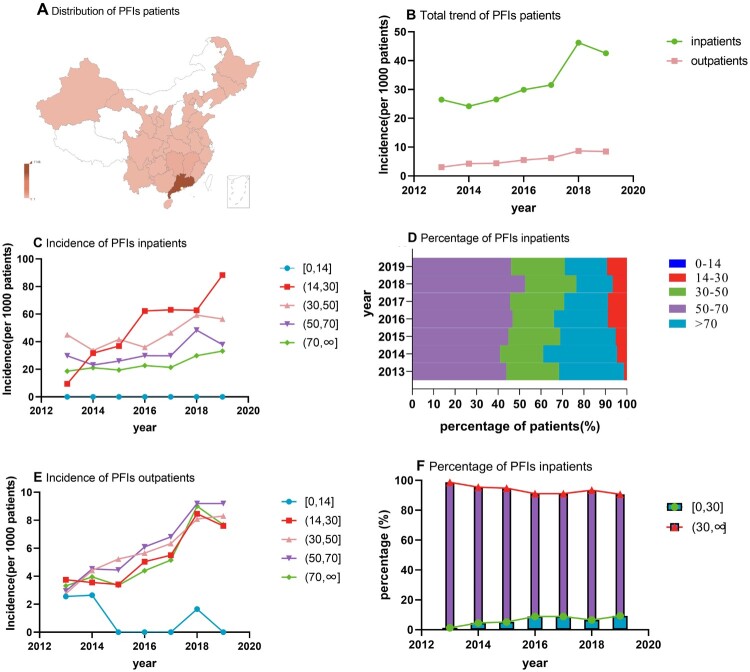
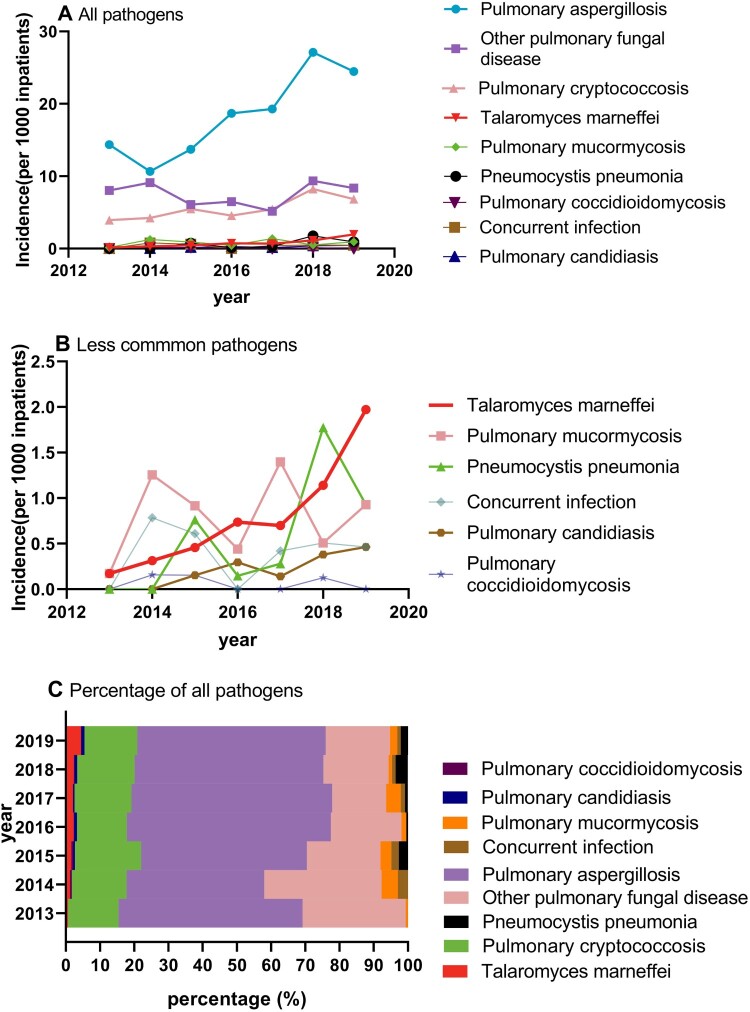
Recently, the prevalence trend of pulmonary fungal infection (PFI) has rapidly increased. Changes in the risk factors for, distributions of underlying diseases associated with and clinical characteristics of some individual PFIs have been reported in the past decade. However, data regarding PFIs remain uncertain. This study reports the epidemiological characteristics and trends of PFIs over time in recent years. We applied an automated natural language processing (NLP) system to extract clinically relevant information from the electronic health records (EHRs) of PFI patients at the First Affiliated Hospital of Guangzhou Medical University. Then, a trend analysis was performed. From January 1, 2013, to December 31, 2019, 40,504 inpatients and 219,414 outpatients with respiratory diseases were screened, in which 1368 inpatients and 1313 outpatients with PFI were identified. These patients were from throughout the country, but most patients were from southern China. Upward trends in PFIs were observed in both hospitalized patients and outpatients (<0.05). The stratification by age showed that the incidence of hospitalized patients aged 14-30 years exhibited the most obvious upward trend, increasing from 9.5 per 1000 patients in 2013 to 88.3 per 1000 patients in 2019. Aspergillosis (56.69%) was the most common PFI, but notably, the incidence rates of , which used to be considered uncommon, exhibited the most rapid increases. In younger PFI patients, the incidence and trend of PFIs have increased. Infection by previously uncommon pathogens has also gradually increased. Increased attention should be paid to young PFI patients and uncommon PFI pathogen infections.
近年来,肺部真菌感染(PFI)的流行趋势迅速上升。在过去十年中,报道了一些个体 PFIs 的危险因素、基础疾病分布和临床特征的变化。然而,有关 PFIs 的数据仍然不确定。本研究报告了近年来 PFIs 的流行病学特征和随时间的变化趋势。我们应用自动化自然语言处理(NLP)系统从广州医科大学第一附属医院 PFI 患者的电子健康记录(EHR)中提取临床相关信息。然后进行趋势分析。从 2013 年 1 月 1 日到 2019 年 12 月 31 日,筛选了 40504 名住院患者和 219414 名门诊呼吸系统疾病患者,其中确定了 1368 名住院和 1313 名门诊 PFI 患者。这些患者来自全国各地,但大多数患者来自中国南方。住院患者和门诊患者的 PFI 呈上升趋势(<0.05)。按年龄分层显示,14-30 岁住院患者的发病率呈最明显的上升趋势,从 2013 年的每千名患者 9.5 例增加到 2019 年的每千名患者 88.3 例。曲霉菌病(56.69%)是最常见的 PFI,但值得注意的是,以前认为不常见的病原体的发病率增长最快。在年轻的 PFI 患者中,PFI 的发病率和趋势呈上升趋势。以前不太常见的病原体感染也逐渐增加。应更加关注年轻的 PFI 患者和不常见的 PFI 病原体感染。