Wagner Adam, Kapounková Kateřina, Struhár Ivan
Department of Sport Performance and Exercise Testing Promotion, Faculty of Sport Studies, Masaryk University, Kamenice 5, 625 00, Brno, Czech Republic.
Department of Physical Activities and Health Sciences, Faculty of Sport Studies, Masaryk University, Kamenice 5, 625 00, Brno, Czech Republic.
BMC Sports Sci Med Rehabil. 2024 Jan 2;16(1):4. doi: 10.1186/s13102-023-00791-4.
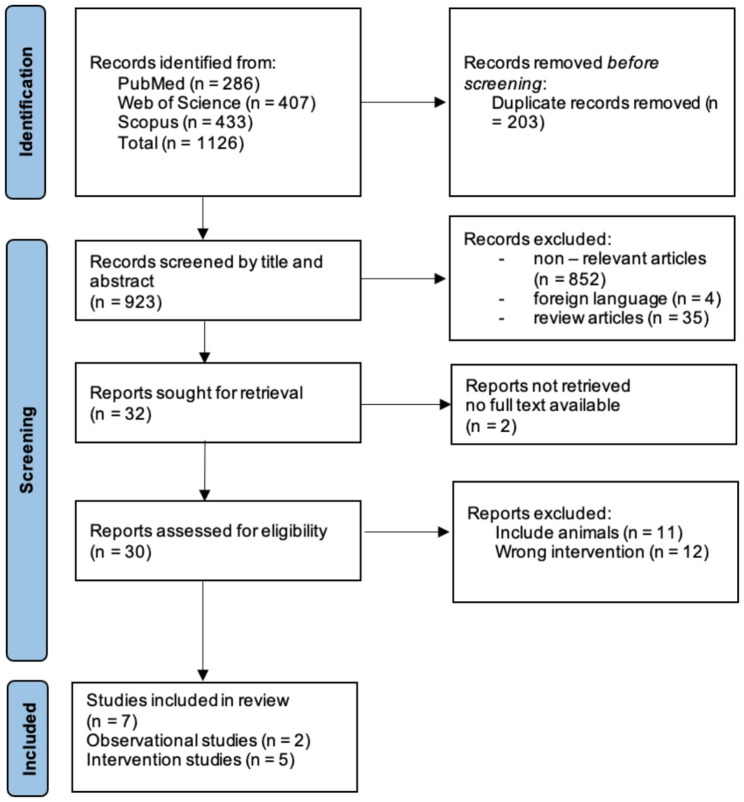
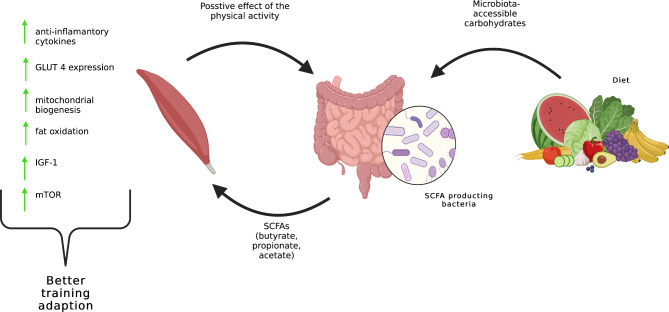
The human gut microbiome is attracting increasing attention because of its overall effect on health. Several reviews have investigated the impact of physical activity on the gut microbiome; however, these predominantly concentrate on either endurance or a combination of physical activities. This study aims to describe the effect of resistance or strength training on the gut microbiome of a human population. This rapid review follows the guidelines of the Cochrane Rapid Reviews Guidance along with PRISMA. A review of the literature was carried out using articles indexed by PubMed, Scopus, and Web of Science published in the last 12 years. None of the seven studies included find significant change in the gut microbiome in terms of bacterial taxa composition or overall diversity, though the results show that resistance training might decrease the zonulin level and increase mucin production and thereby reduce inflammation in the gut. Interestingly, two studies point to a gut-muscle axis connection and this is discussed in our paper. However, due to the small number of existing studies and certain methodological disagreements, it was hard to find a consensus on the relationship between the gut microbiome and resistance training.
由于人类肠道微生物群对健康的整体影响,它正受到越来越多的关注。已有几篇综述研究了体育活动对肠道微生物群的影响;然而,这些研究主要集中在耐力运动或多种体育活动的综合影响上。本研究旨在描述抗阻训练或力量训练对人群肠道微生物群的影响。本快速综述遵循Cochrane快速综述指南以及PRISMA。通过检索过去12年在PubMed、Scopus和Web of Science上索引的文章进行文献综述。纳入的七项研究均未发现肠道微生物群在细菌分类组成或总体多样性方面有显著变化,不过结果表明抗阻训练可能会降低zonulin水平并增加粘蛋白生成,从而减轻肠道炎症。有趣的是,两项研究指出了肠道与肌肉轴的联系,本文对此进行了讨论。然而,由于现有研究数量较少且存在某些方法学上的分歧,很难就肠道微生物群与抗阻训练之间的关系达成共识。