Division of Rheumatology, Mayo Clinic School of Graduate Medical Education, Mayo Clinic College of Medicine and Science, 13400 E Shea Boulevard, Scottsdale, AZ, 85259, USA.
Division of Rheumatology, Mayo Clinic, Jacksonville, FL, USA.
Arthritis Res Ther. 2024 Jan 2;26(1):4. doi: 10.1186/s13075-023-03227-z.
Antineutrophil cytoplasmic antibody (ANCA)-associated vasculitis (AAV) is a group of illnesses that cause inflammation and alterations to small vessels in the body. Some of the most common and detrimental manifestations, including alveolar hemorrhage and glomerulonephritis, are caused by this capillary inflammation. We sought to clarify whether patients with AAV would have abnormal nailfold capillaries when evaluated with nailfold videocapillaroscopy.
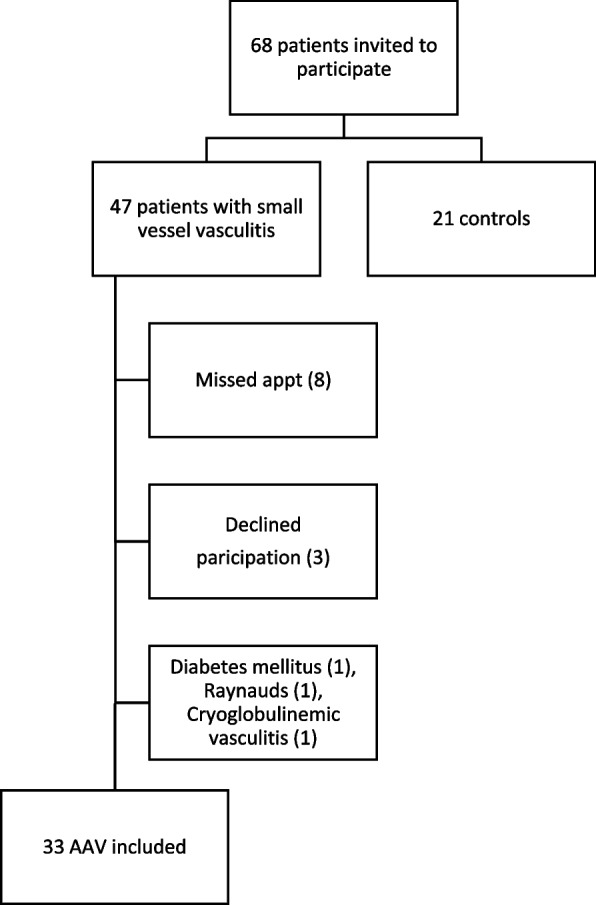
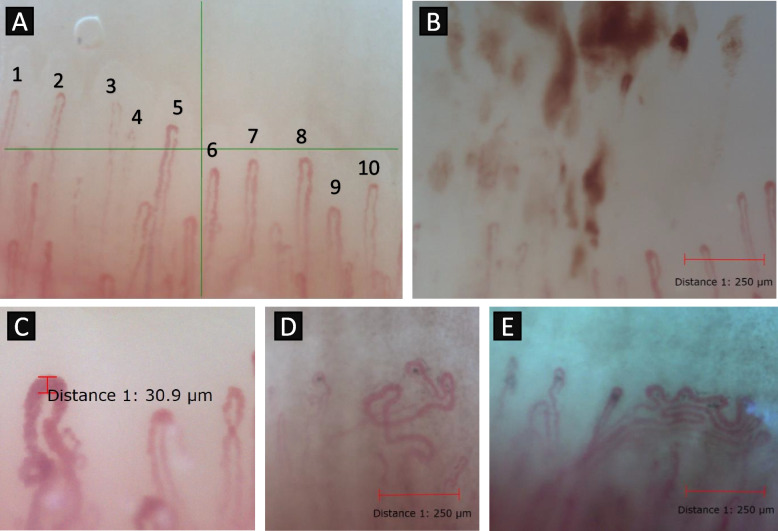
Patients with a current diagnosis of AAV and a control group were identified for enrollment. Nailfold videocapillaroscopy images were used for a semiquantitative analysis on capillary density, morphology, dilation, and microhemorrhage after review by 2 rheumatologists. Disease characteristics, occurrence of recent disease flare, and presence of ANCA were recorded.
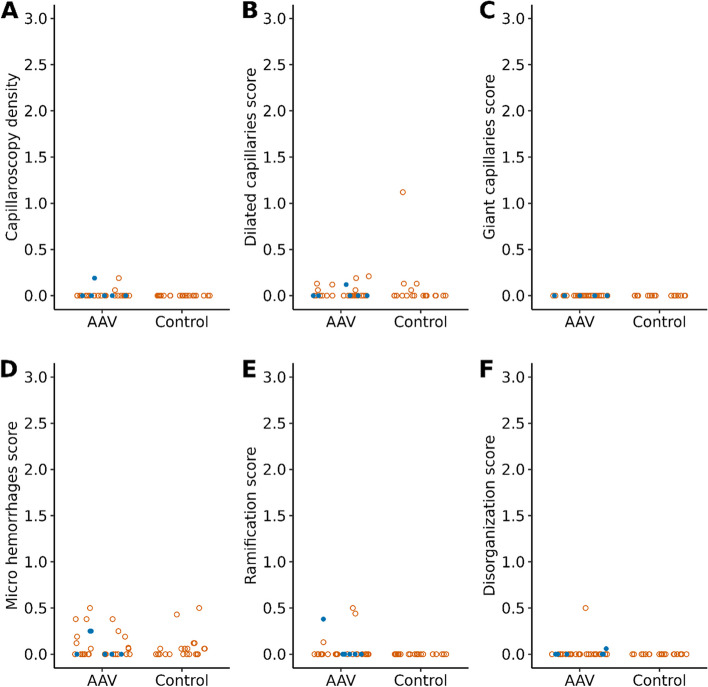
Thirty-three patients with a diagnosis of AAV and 21 controls were recruited. The AAV group had a median age of 59 and 17 (52%) were women. Granulomatosis with polyangiitis was the most common diagnosis (19 [58%]), followed by eosinophilic granulomatosis with polyangiitis (7 [21%]) and microscopic polyangiitis (7 [21%]). Twenty-seven patients (82%) had positive ANCA tests. After assessment of capillary density, dilation, morphology, microhemorrhages, and disorganization, there were no statistically significant differences between the 2 groups.
There was no evidence of differences in nailfold capillaroscopy abnormalities between those diagnosed with AAV and the control group. While this cohort was relatively small, we did not find a high enough prevalence or specific phenotype of capillary abnormalities that could aid in diagnosis or prognostication of these diseases in the clinical setting.
抗中性粒细胞胞浆抗体(ANCA)相关性血管炎(AAV)是一组导致体内小血管炎症和改变的疾病。一些最常见和最具危害性的表现,包括肺泡出血和肾小球肾炎,是由这种毛细血管炎症引起的。我们试图阐明在使用甲襞微血管镜检查评估时,AAV 患者是否会出现异常的甲襞毛细血管。
确定了当前诊断为 AAV 的患者和对照组进行入组。经过两位风湿病学家的审查,使用甲襞微血管镜图像对毛细血管密度、形态、扩张和微出血进行半定量分析。记录疾病特征、近期疾病发作的发生和 ANCA 的存在。
共招募了 33 名诊断为 AAV 的患者和 21 名对照组。AAV 组的中位年龄为 59 岁,17 名(52%)为女性。肉芽肿性多血管炎是最常见的诊断(19 例[58%]),其次是嗜酸性肉芽肿性多血管炎(7 例[21%])和显微镜下多血管炎(7 例[21%])。27 名患者(82%)的 ANCA 检测呈阳性。在评估毛细血管密度、扩张、形态、微出血和组织紊乱后,两组之间没有统计学上的显著差异。
在诊断为 AAV 的患者和对照组之间,甲襞微血管镜检查异常没有证据表明存在差异。虽然该队列相对较小,但我们没有发现足够高的毛细血管异常患病率或特定表型,无法在临床环境中帮助诊断或预测这些疾病。