Daugelat Melissa-Claire, Kimmerle Joachim, Hagmann Daniela, Schag Kathrin, Giel Katrin Elisabeth
Department of Psychosomatic Medicine and Psychotherapy, Medical University Hospital Tübingen, Osianderstr. 5, 72076, Tübingen, Germany.
Centre of Excellence for Eating Disorders Tübingen (KOMET), University of Tübingen, Tübingen, Germany.
J Eat Disord. 2024 Jan 2;12(1):1. doi: 10.1186/s40337-023-00960-3.
Patients with eating disorders (ED) typically report delays between the onset of symptoms and engagement with treatment services. Personal barriers including stigma, shame, and guilt, as well as the availability of social support may influence patients' decisions to engage with treatment services. Patient narratives are personalized stories discussing the illness and recovery of previously affected persons. Such narratives can reduce self-stigma and provide current patients with hope for their own recovery.
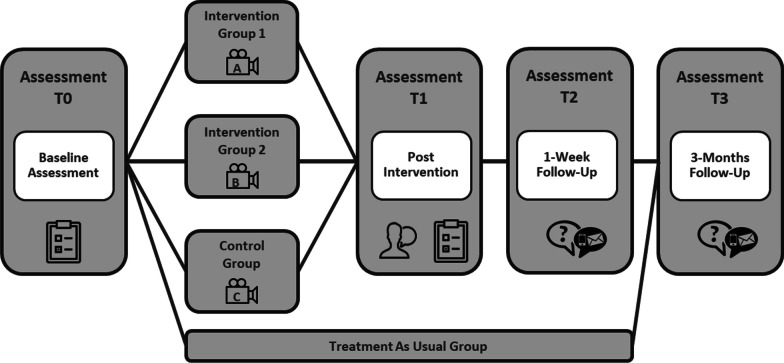
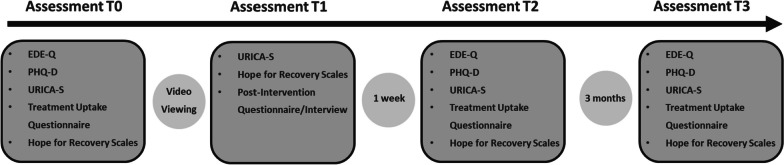
This pilot study will examine the effects of patient narrative videos on the treatment motivation and uptake of treatment services for patients with ED. Three narrative videos were developed from the perspectives of (a) a former patient with an ED, (b) an ED specialist, and (c) the same former patient discussing a somatic condition unrelated to ED. Patients will be randomized into three video viewing and one treatment-as-usual group. Effects on treatment motivation will be assessed using the University of Rhode Island Change Assessment Scale (URICA-S) immediately after viewing the videos, as well as one-week and three-month follow-ups. Treatment uptake will be assessed during follow-up using a questionnaire listing possible treatment interactions. A post-intervention questionnaire and semi-structured interviews will be used to assess the feasibility and acceptability of patient narrative videos for this population.
There is an urgent need to encourage patients with ED to engage with specialized treatments as soon as possible. Patient narratives may be a pivotal approach to implementing cost effective and easy to disseminate early intervention programs to future patients with ED.
饮食失调(ED)患者通常报告称,从症状出现到开始接受治疗服务之间存在延迟。包括耻辱感、羞耻感和内疚感在内的个人障碍,以及社会支持的可获得性,可能会影响患者寻求治疗服务的决定。患者叙事是讲述先前患者疾病和康复经历的个人化故事。此类叙事可以减少自我耻辱感,并为当前患者提供康复的希望。
这项试点研究将考察患者叙事视频对ED患者治疗动机和治疗服务接受度的影响。从以下三个视角制作了三段叙事视频:(a)一位曾患ED的患者,(b)一位ED专家,以及(c)同一位曾患ED的患者讨论一种与ED无关的躯体状况。患者将被随机分为三个视频观看组和一个常规治疗组。观看视频后立即使用罗德岛大学改变评估量表(URICA-S),以及在一周和三个月随访时评估对治疗动机的影响。在随访期间,使用一份列出可能治疗互动的问卷评估治疗接受度。干预后问卷和半结构化访谈将用于评估患者叙事视频对该人群的可行性和可接受性。
迫切需要鼓励ED患者尽快接受专业治疗。患者叙事可能是一种关键方法,可为未来的ED患者实施具有成本效益且易于传播的早期干预项目。