Department of Pharmacy, Faculty of Medicine, Mbarara University of Science and Technology, P.O.Box 1410, Mbarara, Uganda.
Department of Clinical Pharmacy and Pharmacy Practice, Kampala International University, Ishaka, Uganda.
BMC Pharmacol Toxicol. 2024 Jan 2;25(1):2. doi: 10.1186/s40360-023-00719-1.
Drug-drug interactions (DDIs) influence the effectiveness of medication and thus determine the treatment outcomes of diseases managed with pharmacotherapy. This study aimed to determine the prevalence, severity, and factors associated with potential drug-drug interactions in prescriptions presented at private pharmacies in Mbarara city.
DDIs were identified and classified basing on risk and severity using Lexicomp drug interaction database. STATA version 13 was used to analyze the collected data. Descriptive statistics were used to summarize the severity of potential DDIs identified. Bivariate and multivariate logistic regression was employed to identify different factors associated with the presence of potential DDIs.
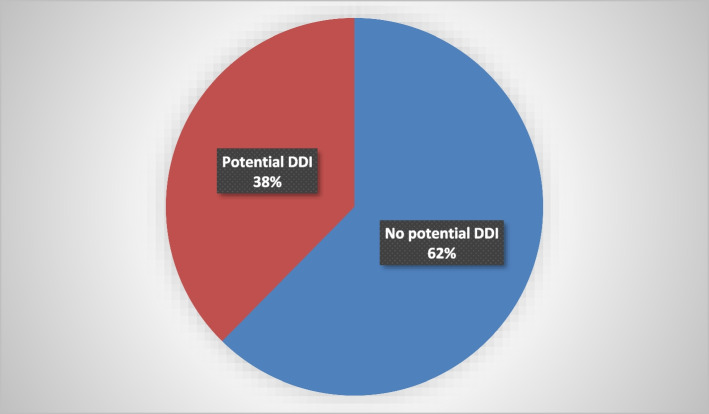
A total of 295 prescriptions from 18 private pharmacies were studied and the prevalence of clinically significant potential DDIs was 37.6%. About half (149, 50.5%) of the patients were females, the majority (199, 67.5%) were adults 18-59 years of age whereas most (208, 70.5%) had a comorbid condition. Over one half (162, 54.9%) of the prescriptions were received from hospitals and majority of the prescriptions had 4 drugs prescribed (n = 175, 59.32%). Having one or more comorbidities and prescribing of therapeutic drug categories including anti-fungal, antihypertensives, analgesics, or corticosteroids were significantly associated with potential DDIs.
The prevalence of potential drug-drug interactions in outpatient setting in Mbarara city was high and majority of the potential DDIs were of moderate severity. Having 1 or more comorbidities and prescribing of therapeutic drug categories including antifungals, antihypertensives, analgesics, or corticosteroids were significantly associated with potential DDIs.
药物-药物相互作用(DDIs)会影响药物的疗效,从而决定了通过药物治疗管理的疾病的治疗结果。本研究旨在确定在姆巴拉拉市私人药店提供的处方中潜在药物-药物相互作用的流行率、严重程度和相关因素。
根据 Lexicomp 药物相互作用数据库,基于风险和严重程度确定药物-药物相互作用,并进行分类。使用 STATA 版本 13 分析收集的数据。使用描述性统计来总结所确定的潜在药物-药物相互作用的严重程度。采用二变量和多变量逻辑回归来确定与潜在药物-药物相互作用存在相关的不同因素。
共研究了来自 18 家私人药店的 295 份处方,临床上显著的潜在药物-药物相互作用的发生率为 37.6%。大约一半(149,50.5%)的患者为女性,大多数(199,67.5%)为 18-59 岁的成年人,大多数(208,70.5%)有合并症。超过一半(162,54.9%)的处方来自医院,大多数处方开具了 4 种药物(n=175,59.32%)。有一个或多个合并症和开具抗真菌药、降压药、镇痛药或皮质类固醇等治疗性药物类别与潜在药物-药物相互作用显著相关。
姆巴拉拉市门诊环境中潜在药物-药物相互作用的发生率较高,且大多数潜在药物-药物相互作用的严重程度为中度。有一个或多个合并症和开具抗真菌药、降压药、镇痛药或皮质类固醇等治疗性药物类别与潜在药物-药物相互作用显著相关。