Dehkordi Siavash Raeisi, Wong Ivy Tsz-Lo, Ni Jing, Luebeck Jens, Zhu Kaiyuan, Prasad Gino, Krockenberger Lena, Xu Guanghui, Chowdhury Biswanath, Rajkumar Utkrisht, Caplin Ann, Muliaditan Daniel, Coruh Ceyda, Jin Qiushi, Turner Kristen, Teo Shu Xian, Pang Andy Wing Chun, Alexandrov Ludmil B, Chua Christelle En Lin, Furnari Frank B, Paulson Thomas G, Law Julie A, Chang Howard Y, Yue Feng, DasGupta Ramanuj, Zhao Jean, Mischel Paul S, Bafna Vineet
Department of Computer Science and Engineering, University of California San Diego, San Diego, CA, USA.
Department of Pathology, Stanford University School of Medicine, Stanford, CA, USA.
bioRxiv. 2023 Dec 13:2023.12.12.571349. doi: 10.1101/2023.12.12.571349.
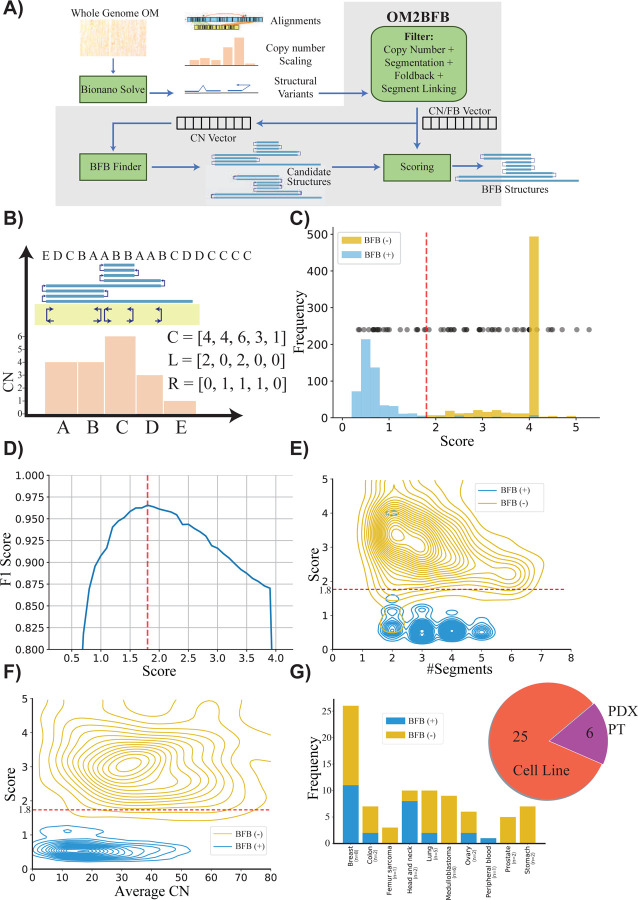
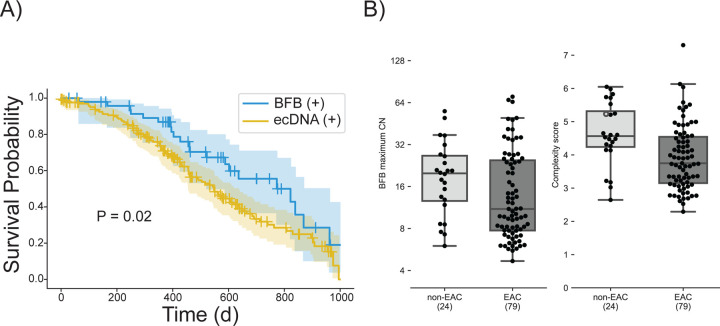
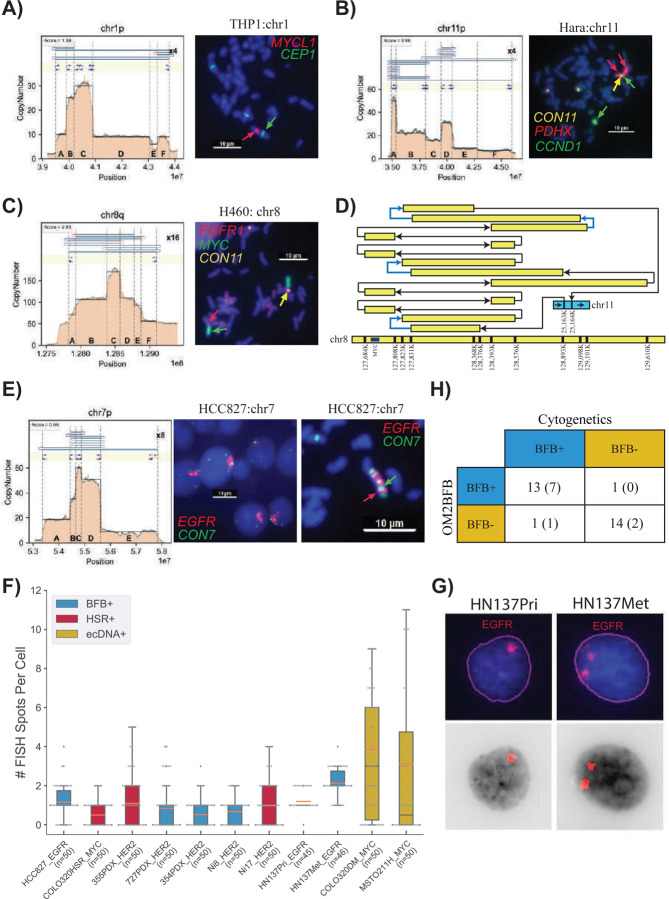
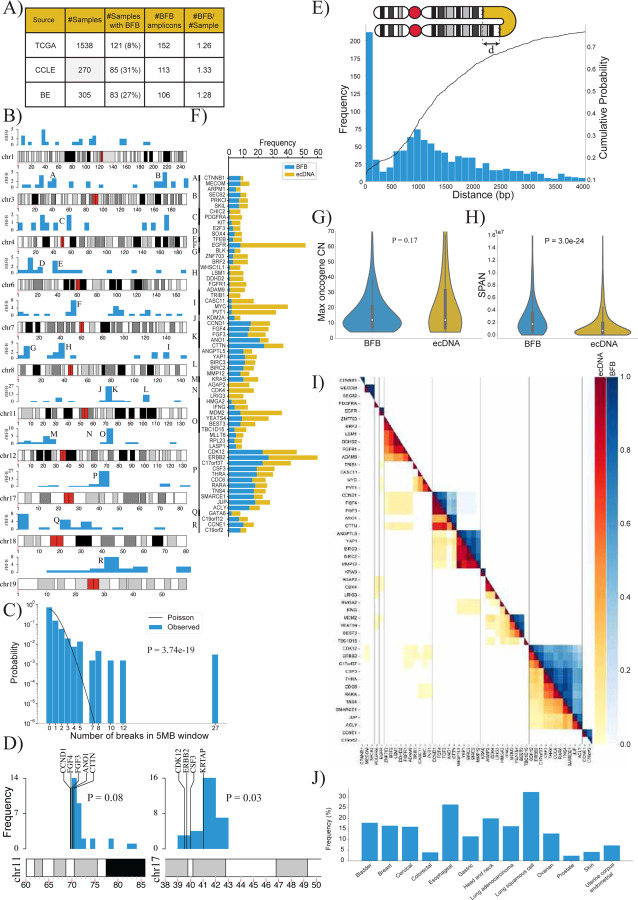
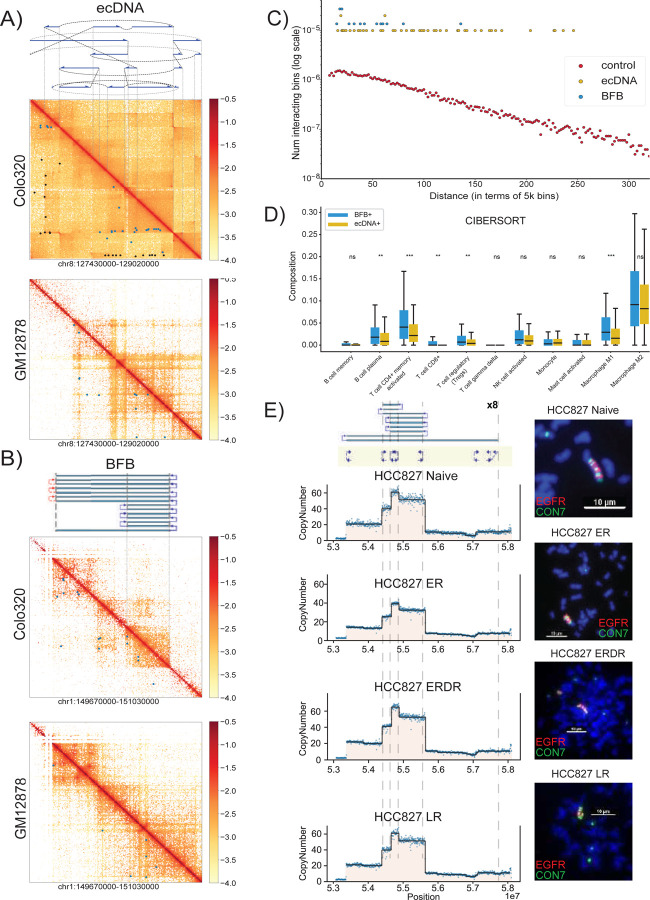
Oncogene amplification is a major driver of cancer pathogenesis. Breakage fusion bridge (BFB) cycles, like extrachromosomal DNA (ecDNA), can lead to high copy numbers of oncogenes, but their impact on intratumoral heterogeneity, treatment response, and patient survival are not well understood due to difficulty in detecting them by DNA sequencing. We describe a novel algorithm that detects and reconstructs BFB amplifications using optical genome maps (OGMs), called OM2BFB. OM2BFB showed high precision (>93%) and recall (92%) in detecting BFB amplifications in cancer cell lines, PDX models and primary tumors. OM-based comparisons demonstrated that short-read BFB detection using our AmpliconSuite (AS) toolkit also achieved high precision, albeit with reduced sensitivity. We detected 371 BFB events using whole genome sequences from 2,557 primary tumors and cancer lines. BFB amplifications were preferentially found in cervical, head and neck, lung, and esophageal cancers, but rarely in brain cancers. BFB amplified genes show lower variance of gene expression, with fewer options for regulatory rewiring relative to ecDNA amplified genes. BFB positive (BFB (+)) tumors showed reduced heterogeneity of amplicon structures, and delayed onset of resistance, relative to ecDNA(+) tumors. EcDNA and BFB amplifications represent contrasting mechanisms to increase the copy numbers of oncogene with markedly different characteristics that suggest different routes for intervention.
癌基因扩增是癌症发病机制的主要驱动因素。断裂融合桥(BFB)循环,如染色体外DNA(ecDNA),可导致癌基因的高拷贝数,但由于通过DNA测序检测它们存在困难,其对肿瘤内异质性、治疗反应和患者生存的影响尚不清楚。我们描述了一种新算法,称为OM2BFB,它使用光学基因组图谱(OGM)检测和重建BFB扩增。OM2BFB在检测癌细胞系、PDX模型和原发性肿瘤中的BFB扩增时显示出高精度(>93%)和召回率(92%)。基于OM的比较表明,使用我们的扩增子套件(AS)工具包进行短读长BFB检测也能达到高精度,尽管灵敏度有所降低。我们使用来自2557个原发性肿瘤和癌症系的全基因组序列检测到371个BFB事件。BFB扩增在宫颈癌、头颈癌、肺癌和食管癌中优先发现,但在脑癌中很少见。与ecDNA扩增基因相比,BFB扩增基因的基因表达方差较低,调控重排的选择较少。相对于ecDNA(+)肿瘤,BFB阳性(BFB(+))肿瘤的扩增子结构异质性降低,耐药性出现延迟。EcDNA和BFB扩增代表了增加癌基因拷贝数的不同机制,其具有明显不同的特征,提示了不同的干预途径。