Wright Eric B, Lannigan Deborah A
Department Biomedical Engineering, Vanderbilt University, Nashville, TN, United States.
Department Pathology, Vanderbilt University Medical Center, Nashville, TN, United States.
Front Cell Dev Biol. 2023 Dec 19;11:1297292. doi: 10.3389/fcell.2023.1297292. eCollection 2023.
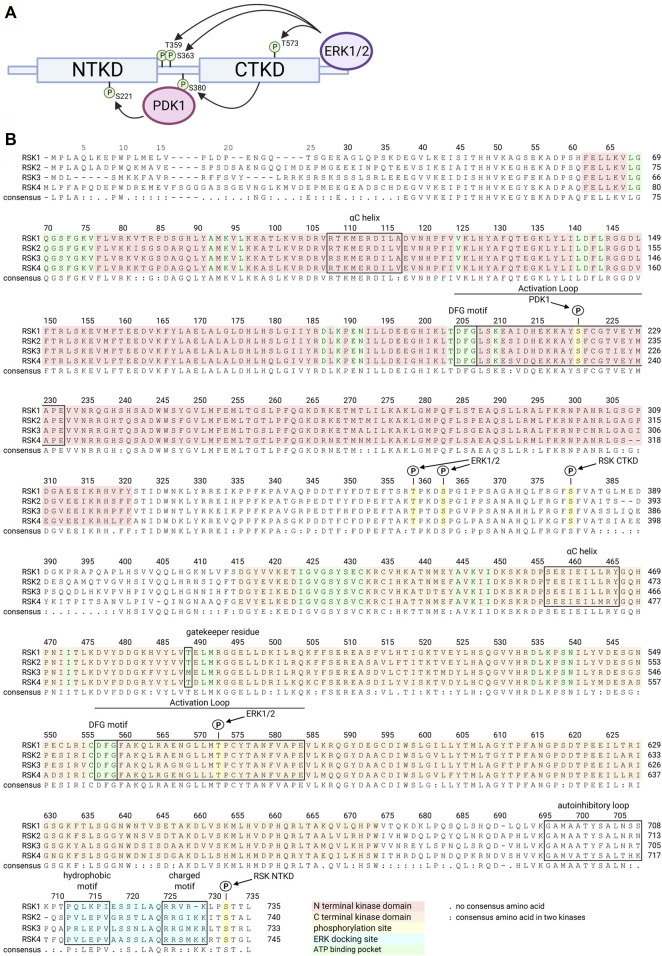
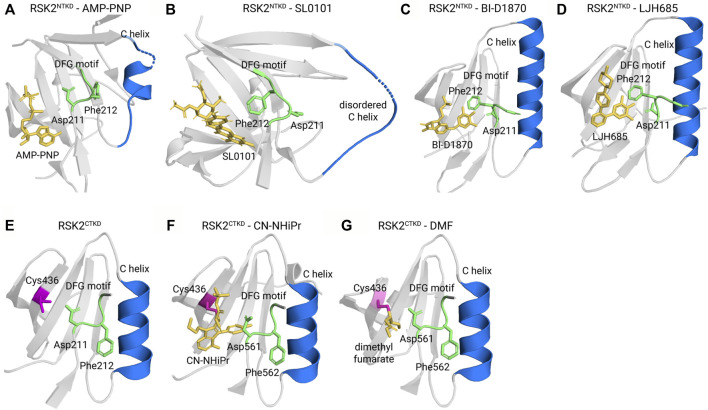
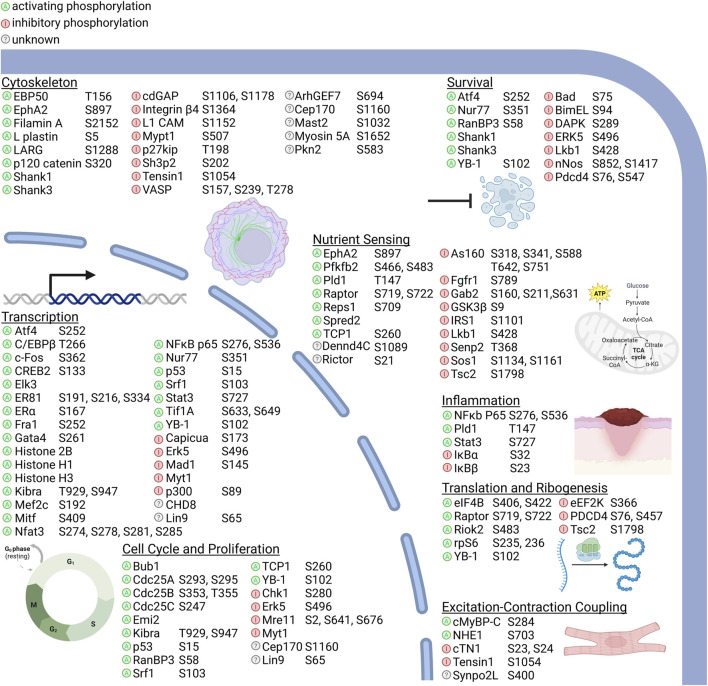
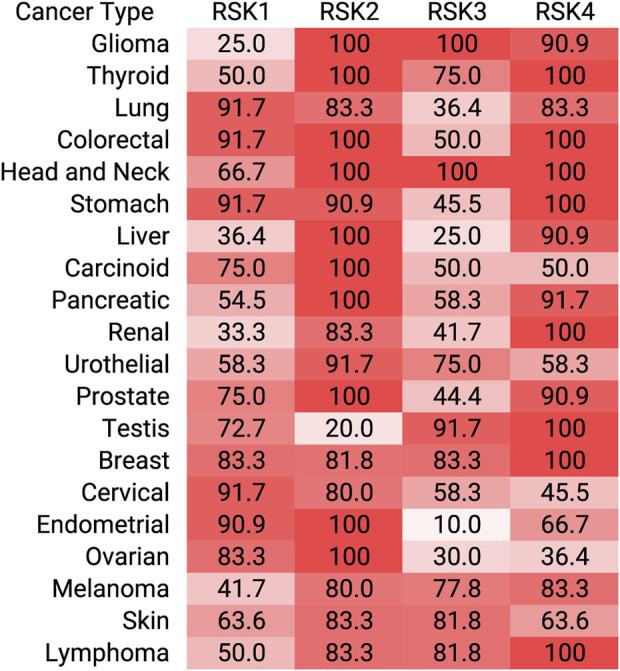
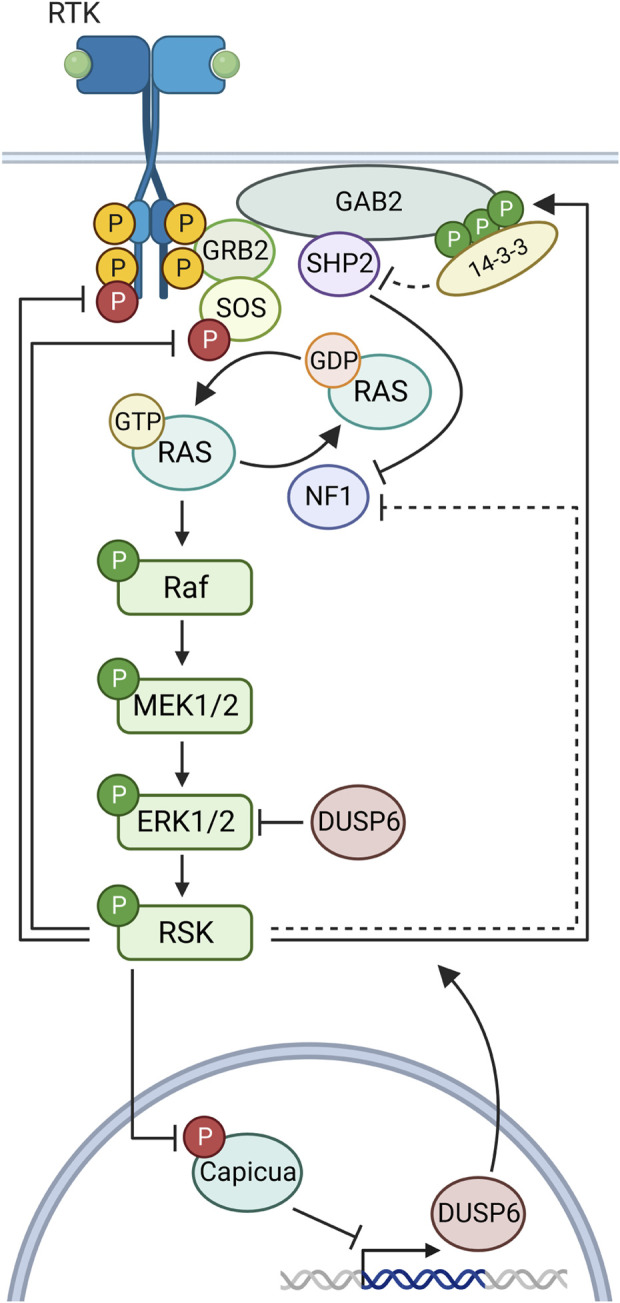
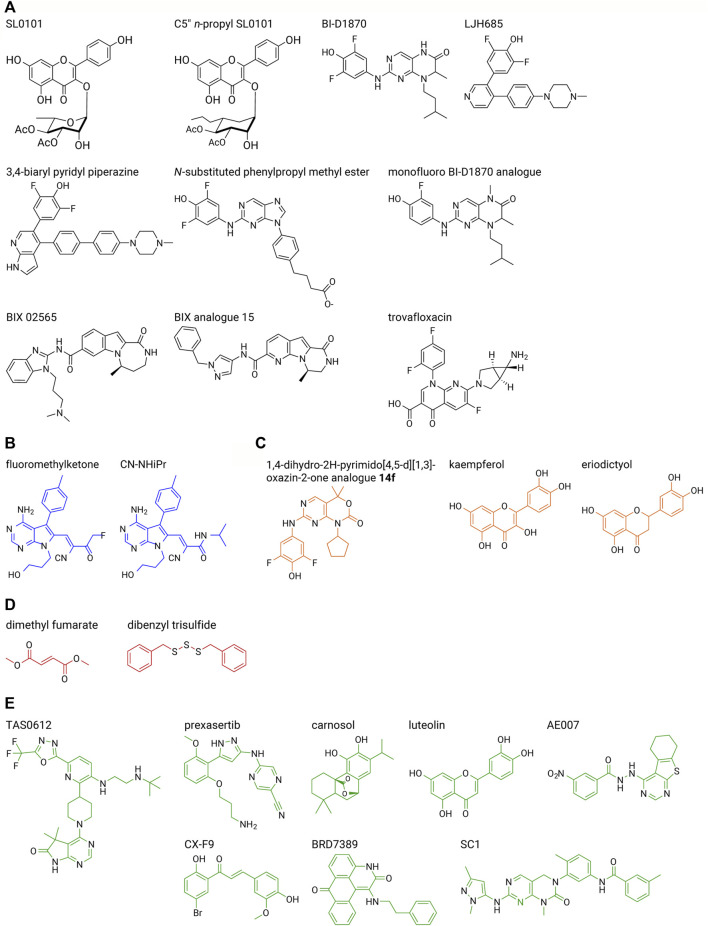
The Serine/Threonine protein kinase family, p90 ribosomal S6 kinases (RSK) are downstream effectors of extracellular signal regulated kinase 1/2 (ERK1/2) and are activated in response to tyrosine kinase receptor or G-protein coupled receptor signaling. RSK contains two distinct kinase domains, an N-terminal kinase (NTKD) and a C-terminal kinase (CTKD). The sole function of the CTKD is to aid in the activation of the NTKD, which is responsible for substrate phosphorylation. RSK regulates various homeostatic processes including those involved in transcription, translation and ribosome biogenesis, proliferation and survival, cytoskeleton, nutrient sensing, excitation and inflammation. RSK also acts as a major negative regulator of ERK1/2 signaling. RSK is associated with numerous cancers and has been primarily studied in the context of transformation and metastasis. The development of specific RSK inhibitors as cancer therapeutics has lagged behind that of other members of the mitogen-activated protein kinase signaling pathway. Importantly, a pan-RSK inhibitor, PMD-026, is currently in phase I/1b clinical trials for metastatic breast cancer. However, there are four members of the RSK family, which have overlapping and distinct functions that can vary in a tissue specific manner. Thus, a problem for transitioning a RSK inhibitor to the clinic may be the necessity to develop isoform specific inhibitors, which will be challenging as the NTKDs are very similar to each other. CTKD inhibitors have limited use as therapeutics as they are not able to inhibit the activity of the NTKD but could be used in the development of proteolysis-targeting chimeras.
丝氨酸/苏氨酸蛋白激酶家族中的p90核糖体S6激酶(RSK)是细胞外信号调节激酶1/2(ERK1/2)的下游效应物,可响应酪氨酸激酶受体或G蛋白偶联受体信号而被激活。RSK包含两个不同的激酶结构域,一个N端激酶(NTKD)和一个C端激酶(CTKD)。CTKD的唯一功能是协助激活负责底物磷酸化的NTKD。RSK调节各种稳态过程,包括那些参与转录、翻译和核糖体生物发生、增殖和存活、细胞骨架、营养感知、兴奋和炎症的过程。RSK还作为ERK1/2信号的主要负调节因子。RSK与多种癌症相关,并且主要在转化和转移的背景下进行研究。作为癌症治疗药物的特异性RSK抑制剂的开发落后于丝裂原活化蛋白激酶信号通路的其他成员。重要的是,一种泛RSK抑制剂PMD-026目前正在进行转移性乳腺癌的I/1b期临床试验。然而,RSK家族有四个成员,它们具有重叠且不同的功能,这些功能可能因组织特异性而异。因此,将RSK抑制剂推向临床的一个问题可能是需要开发亚型特异性抑制剂,这将具有挑战性,因为NTKD彼此非常相似。CTKD抑制剂作为治疗药物的用途有限,因为它们无法抑制NTKD的活性,但可用于开发蛋白酶靶向嵌合体。