School of Medical Sciences, The Faculty of Medicine and Health, The University of Sydney, Camperdown, Australia.
School of Life and Environmental Sciences, Faculty of Science, The University of Sydney, Camperdown, Australia.
J Neuroinflammation. 2024 Jan 4;21(1):7. doi: 10.1186/s12974-023-02951-2.
Widescale evidence points to the involvement of glia and immune pathways in the progression of Alzheimer's disease (AD). AD-associated iPSC-derived glial cells show a diverse range of AD-related phenotypic states encompassing cytokine/chemokine release, phagocytosis and morphological profiles, but to date studies are limited to cells derived from PSEN1, APOE and APP mutations or sporadic patients. The aim of the current study was to successfully differentiate iPSC-derived microglia and astrocytes from patients harbouring an AD-causative PSEN2 (N141I) mutation and characterise the inflammatory and morphological profile of these cells.
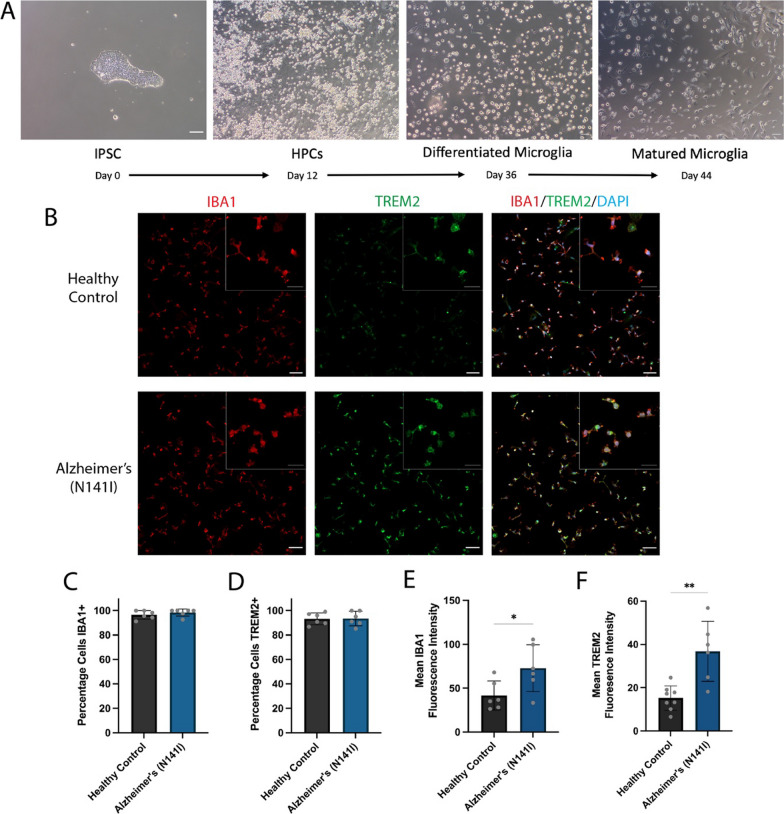
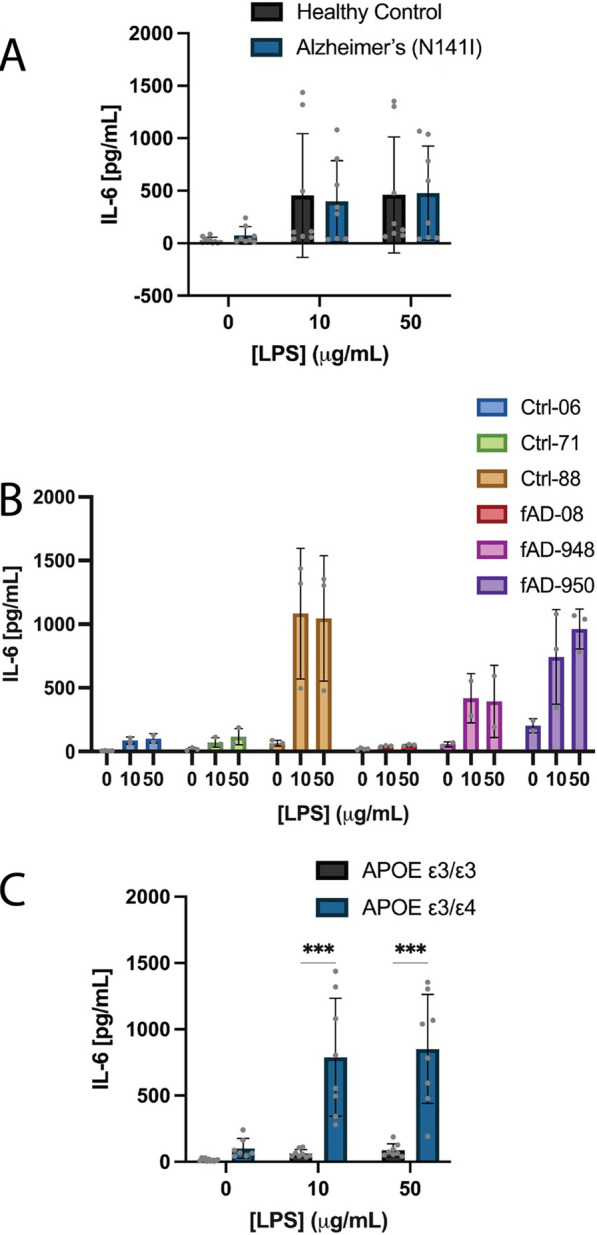
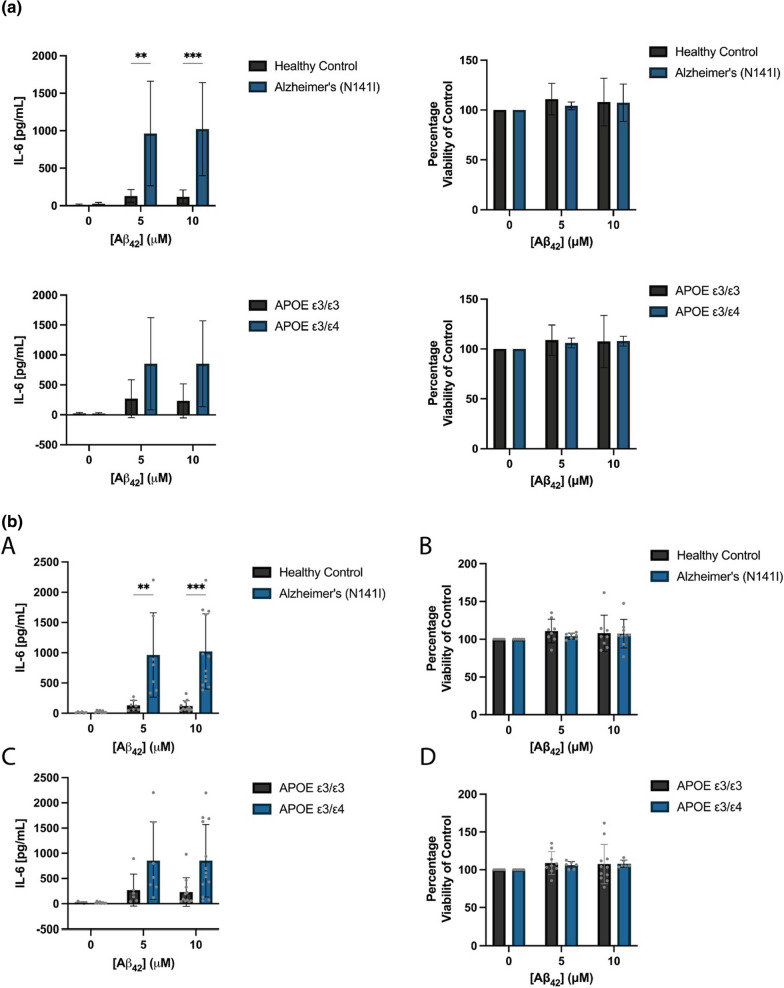
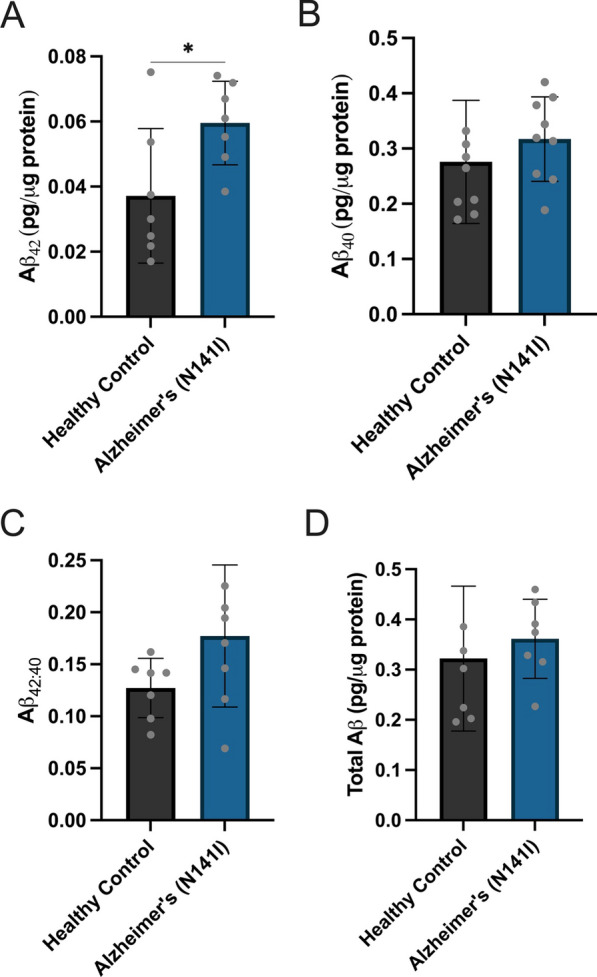
iPSCs from three healthy control individuals and three familial AD patients harbouring a heterozygous PSEN2 (N141I) mutation were used to derive astrocytes and microglia-like cells and cell identity and morphology were characterised through immunofluorescent microscopy. Cellular characterisation involved the stimulation of these cells by LPS and Aβ and analysis of cytokine/chemokine release was conducted through ELISAs and multi-cytokine arrays. The phagocytic capacity of these cells was then indexed by the uptake of fluorescently-labelled fibrillar Aβ.
AD-derived astrocytes and microglia-like cells exhibited an atrophied and less complex morphological appearance than healthy controls. AD-derived astrocytes showed increased basal expression of GFAP, S100β and increased secretion and phagocytosis of Aβ while AD-derived microglia-like cells showed decreased IL-8 secretion compared to healthy controls. Upon immunological challenge AD-derived astrocytes and microglia-like cells showed exaggerated secretion of the pro-inflammatory IL-6, CXCL1, ICAM-1 and IL-8 from astrocytes and IL-18 and MIF from microglia.
Our study showed, for the first time, the differentiation and characterisation of iPSC-derived astrocytes and microglia-like cells harbouring a PSEN2 (N141I) mutation. PSEN2 (N141I)-mutant astrocytes and microglia-like cells presented with a 'primed' phenotype characterised by reduced morphological complexity, exaggerated pro-inflammatory cytokine secretion and altered Aβ production and phagocytosis.
大量证据表明神经胶质细胞和免疫途径参与了阿尔茨海默病(AD)的进展。与 AD 相关的 iPSC 衍生神经胶质细胞表现出多种与 AD 相关的表型状态,包括细胞因子/趋化因子释放、吞噬作用和形态学特征,但迄今为止的研究仅限于源自 PSEN1、APOE 和 APP 突变或散发性患者的细胞。本研究的目的是成功地从携带 AD 致病 PSEN2(N141I)突变的患者中分化 iPSC 衍生的小胶质细胞和星形胶质细胞,并描述这些细胞的炎症和形态特征。
使用来自三个健康对照个体和三个携带杂合 PSEN2(N141I)突变的家族性 AD 患者的 iPSC 衍生星形胶质细胞和小胶质细胞样细胞,并通过免疫荧光显微镜对细胞特性和形态进行鉴定。细胞鉴定涉及 LPS 和 Aβ 对这些细胞的刺激,通过 ELISA 和多细胞因子阵列分析细胞因子/趋化因子的释放。然后通过荧光标记的纤维状 Aβ的摄取来评估这些细胞的吞噬能力。
AD 衍生的星形胶质细胞和小胶质细胞样细胞表现出萎缩和形态复杂性降低的形态。AD 衍生的星形胶质细胞表现出 GFAP、S100β 的基础表达增加以及 Aβ 的分泌和吞噬增加,而 AD 衍生的小胶质细胞样细胞与健康对照组相比,IL-8 的分泌减少。在免疫挑战下,AD 衍生的星形胶质细胞和小胶质细胞样细胞表现出促炎细胞因子 IL-6、CXCL1、ICAM-1 和星形胶质细胞的 IL-8 以及小胶质细胞的 IL-18 和 MIF 的过度分泌。
我们的研究首次显示了携带 PSEN2(N141I)突变的 iPSC 衍生星形胶质细胞和小胶质细胞样细胞的分化和特征。携带 PSEN2(N141I)突变的星形胶质细胞和小胶质细胞样细胞表现出“致敏”表型,其特征是形态复杂性降低、促炎细胞因子分泌过度以及 Aβ 产生和吞噬作用改变。