Department of Endodontics, Faculty of Dentistry, Erciyes University, Turhan Baytop Street, No. 1, Yenidoğan District, Talas, Kayseri, 38280, Turkey.
Department of Mechatronics Engineering, Faculty of Engineering, Erciyes University, Kayseri, Turkey.
Odontology. 2024 Jul;112(3):798-810. doi: 10.1007/s10266-023-00882-1. Epub 2024 Jan 6.
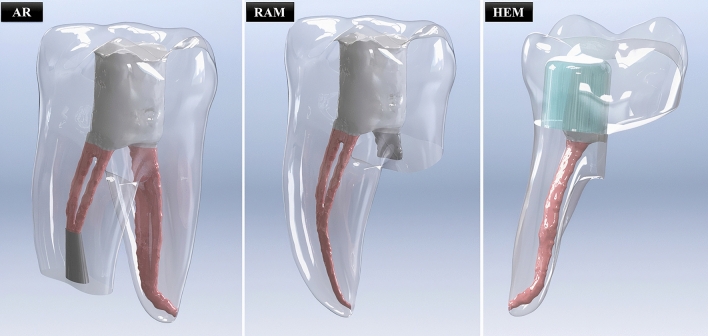
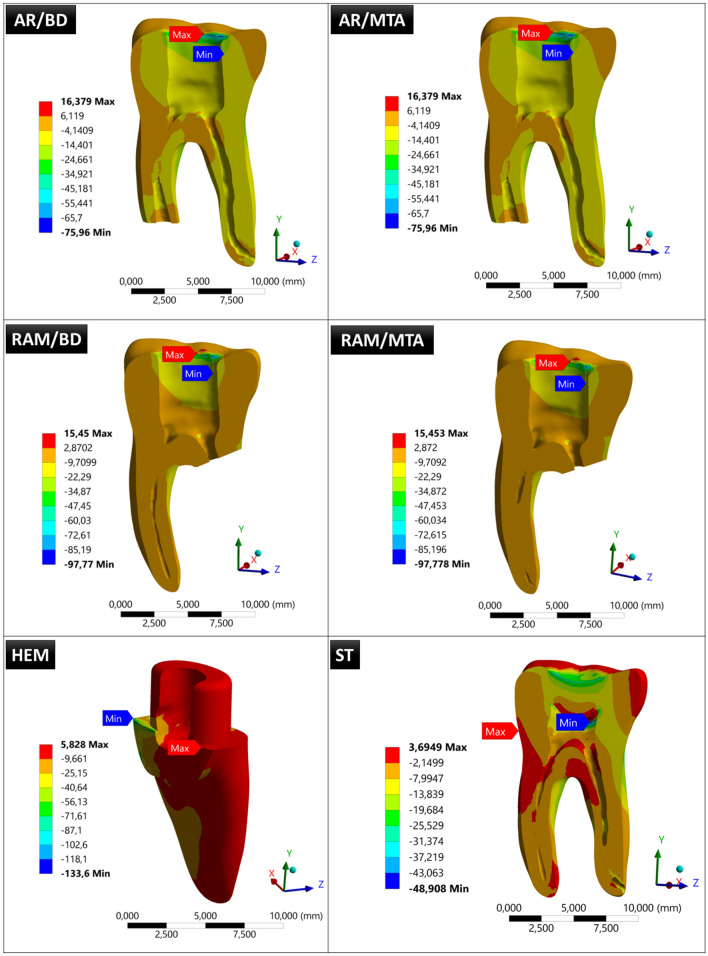
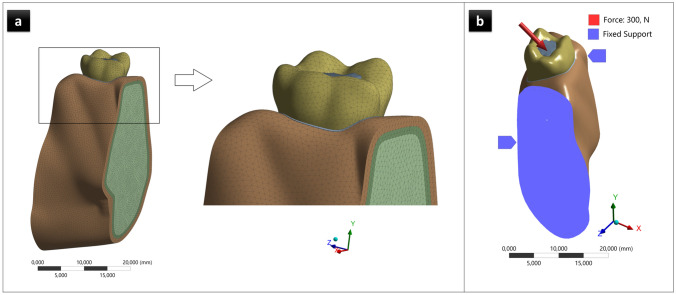
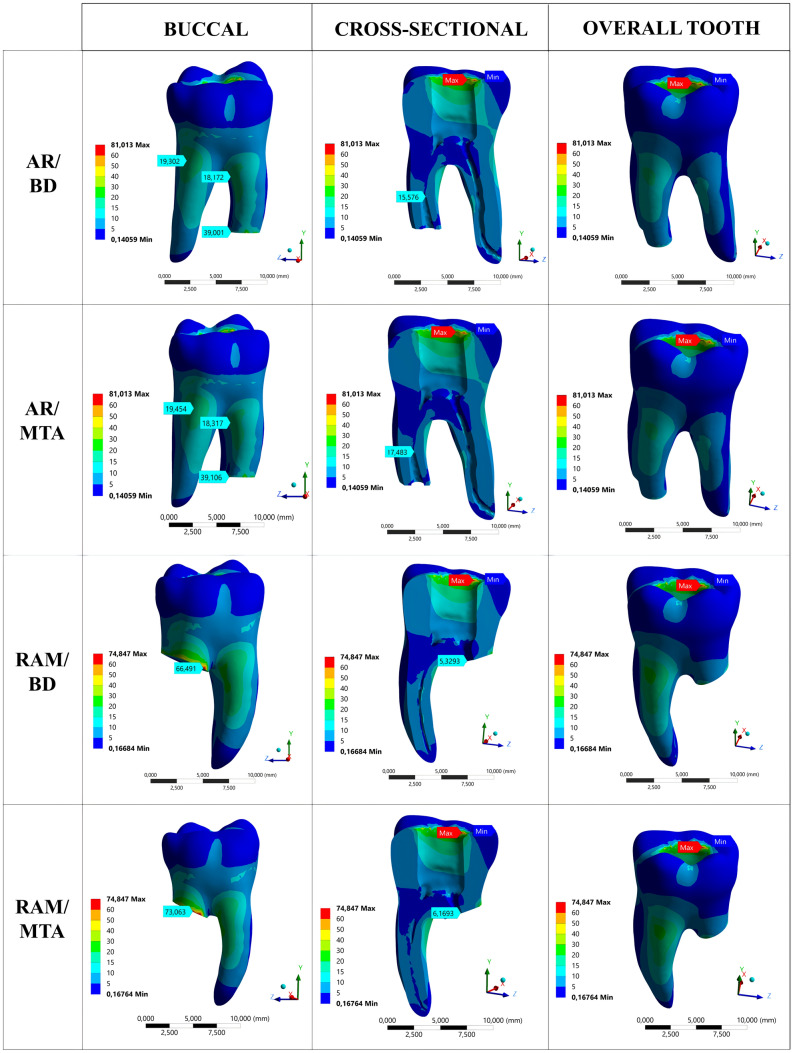
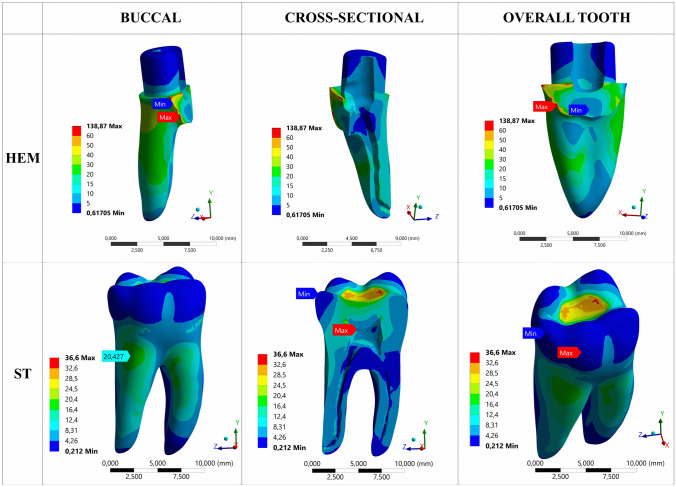
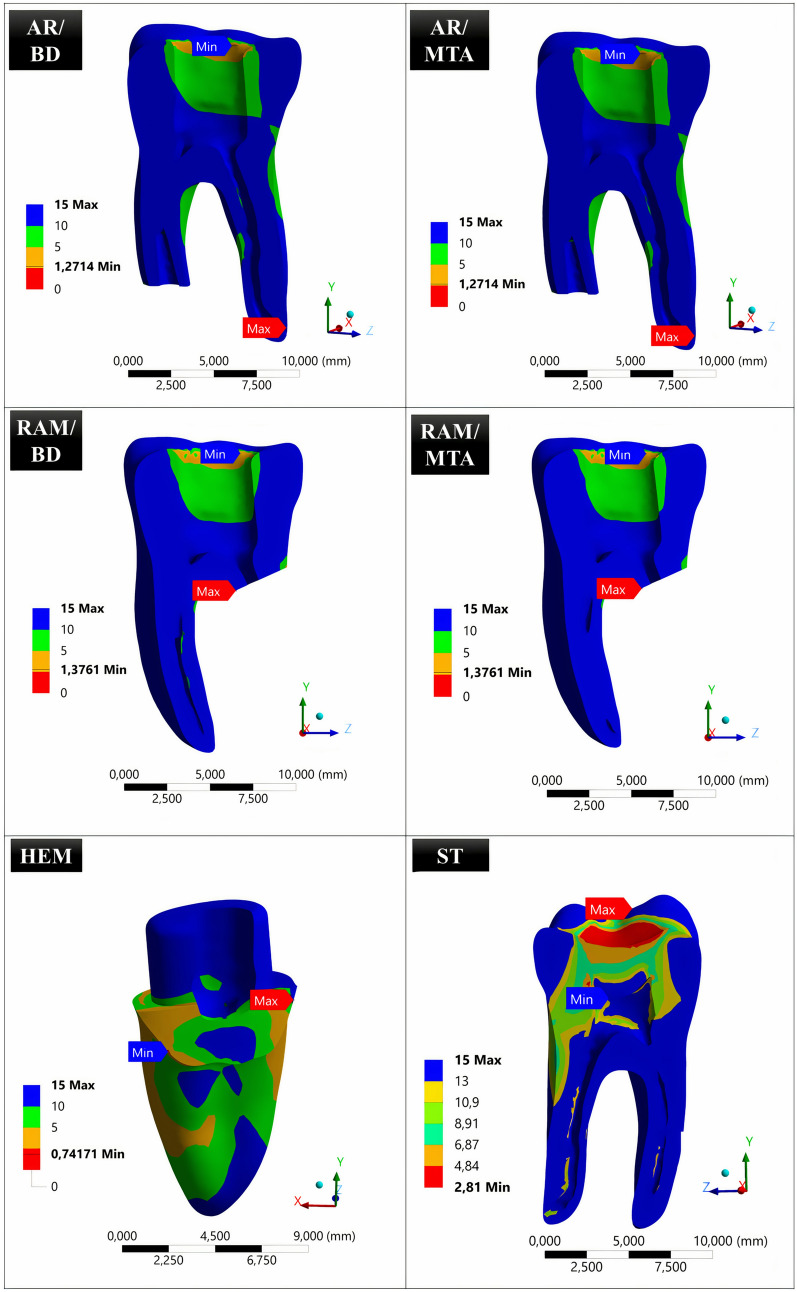
The aim was to compare the effect of different endodontic surgical treatments on the stress distributions in dentin of a simulated first mandibular molar tooth using the finite element analysis method. Three surgical endodontic procedures (apical resection, root amputation, and hemisection) were simulated in a first mandibular molar. Biodentine or mineral-trioxide-aggregate was used to repair the surgery site in apical resection and root amputation models; the remaining root canal spaces were filled with gutta-percha. Access cavities were restored using resin composite. In hemisection model, root canal was filled with gutta-percha, and coronal restoration was finished with a monolithic zirconia crown. A sound tooth model was created as a control model. An oblique force of 300 N angled at 45° to the occlusal plane was simulated. Maximum von Mises stresses were evaluated in dentin near the surgery regions and the entire tooth. Apical resection/Biodentine and apical resection/mineral-trioxide-aggregate models generated maximum von Mises stresses of 39.001 MPa and 39.106 MPa, respectively. The recorded maximum von Mises stresses in root amputation models were 66.491 MPa for root amputation/Biodentine and 73.063 MPa for root amputation/mineral-trioxide-aggregate models. The highest maximum von Mises stress value among all models was observed in the hemisection model, measuring 138.87 MPa. Hemisection induced the highest von Mises stresses in dentin, followed by root amputation and apical resection. In apical resection, Biodentine and mineral-trioxide-aggregate did not show a significant difference in stress distribution. Biodentine in root amputation may lead to lower stresses compared to mineral-trioxide-aggregate.
采用有限元分析法比较不同根管外科治疗方法对模拟下颌第一磨牙牙本质内应力分布的影响。模拟下颌第一磨牙的三种根管外科手术(根尖切除术、根管切断术和半切术)。在根尖切除术和根管切断术模型中,使用生物水泥或三氧化矿物凝聚体修复手术部位;剩余的根管空间用牙胶填充。使用树脂复合材料修复髓腔入口。在半切术模型中,根管用牙胶填充,冠部修复用整体氧化锆冠完成。以正常牙模型作为对照模型。模拟一个 300N、与咬合面成 45°角的斜向力。在手术区域和整个牙齿附近的牙本质中评估最大 von Mises 应力。根尖切除/生物水泥和根尖切除/三氧化矿物凝聚体模型的最大 von Mises 应力分别为 39.001 MPa 和 39.106 MPa。根管切断/生物水泥和根管切断/三氧化矿物凝聚体模型的最大 von Mises 应力分别为 66.491 MPa 和 73.063 MPa。所有模型中最大 von Mises 应力值最高的是半切术模型,为 138.87 MPa。半切术引起的牙本质 von Mises 应力最高,其次是根管切断术和根尖切除术。在根尖切除术中,生物水泥和三氧化矿物凝聚体的应力分布没有显著差异。与三氧化矿物凝聚体相比,根管切断术中使用生物水泥可能会导致较低的应力。