School of Sport, Exercise and Rehabilitation Sciences, University of Birmingham, Birmingham, United Kingdom.
School of Psychology, University of Nottingham, Nottingham, United Kingdom.
J Neurophysiol. 2024 Feb 1;131(2):360-378. doi: 10.1152/jn.00369.2023. Epub 2024 Jan 10.
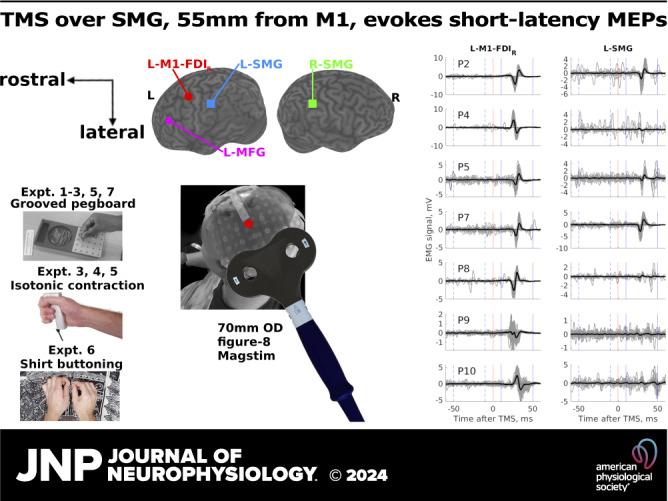
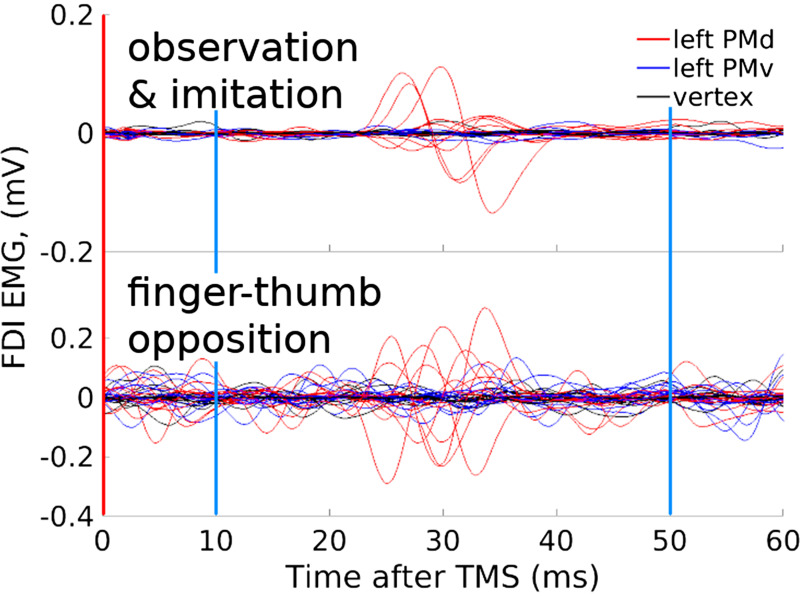
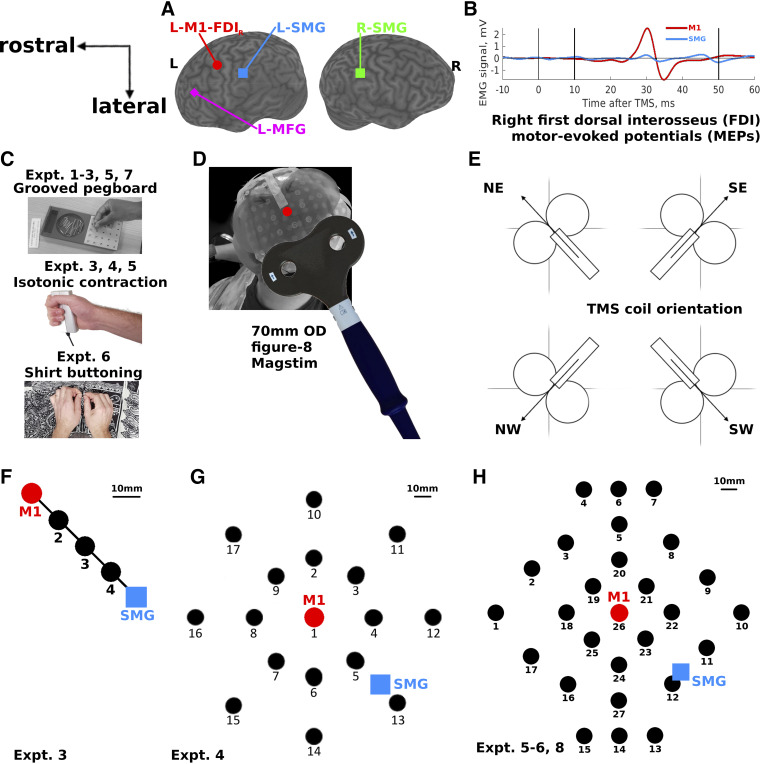
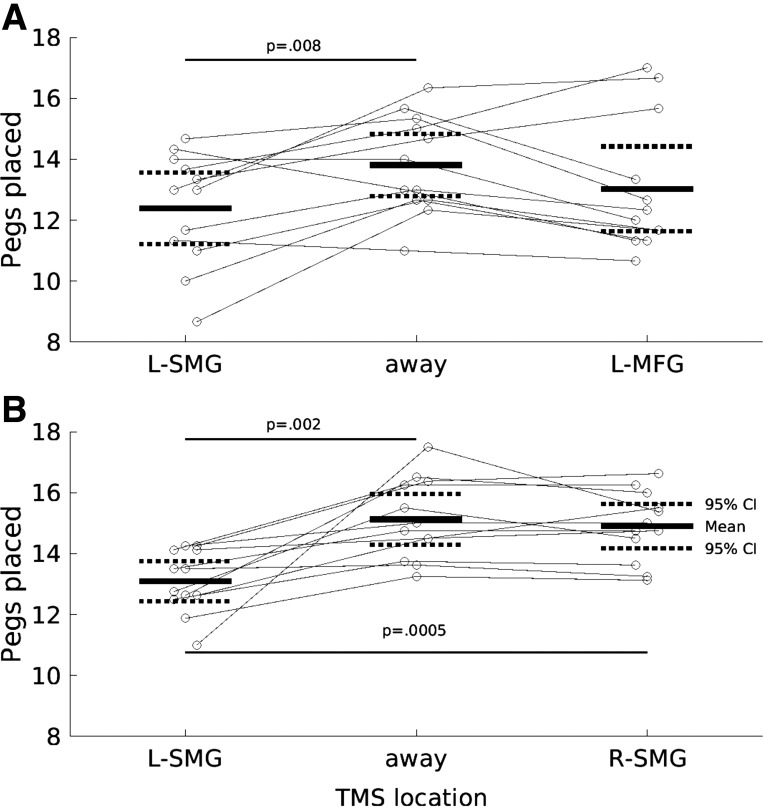
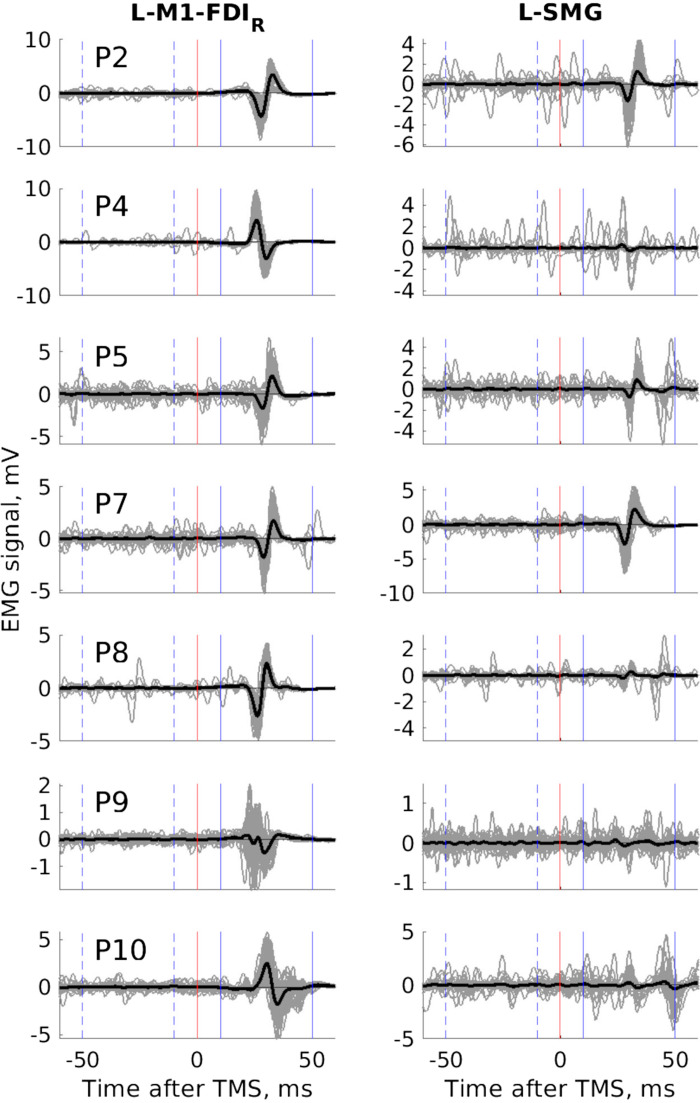
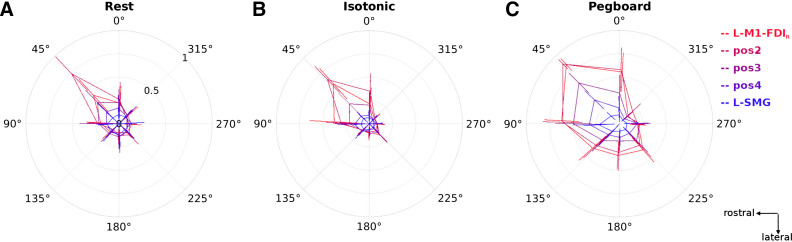
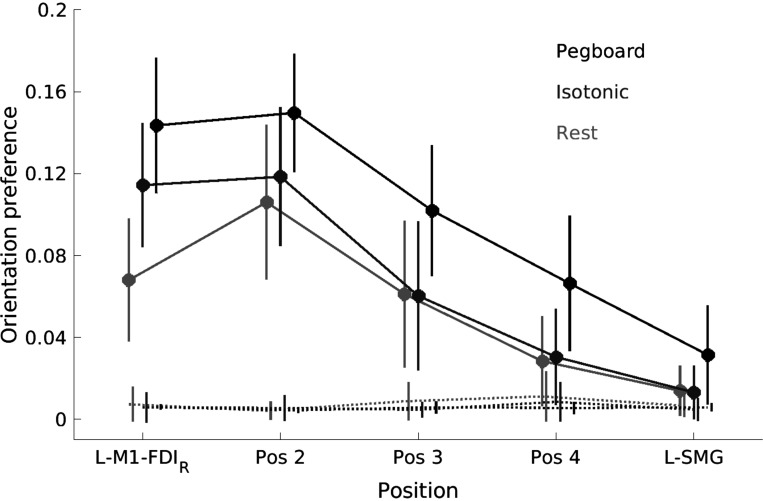
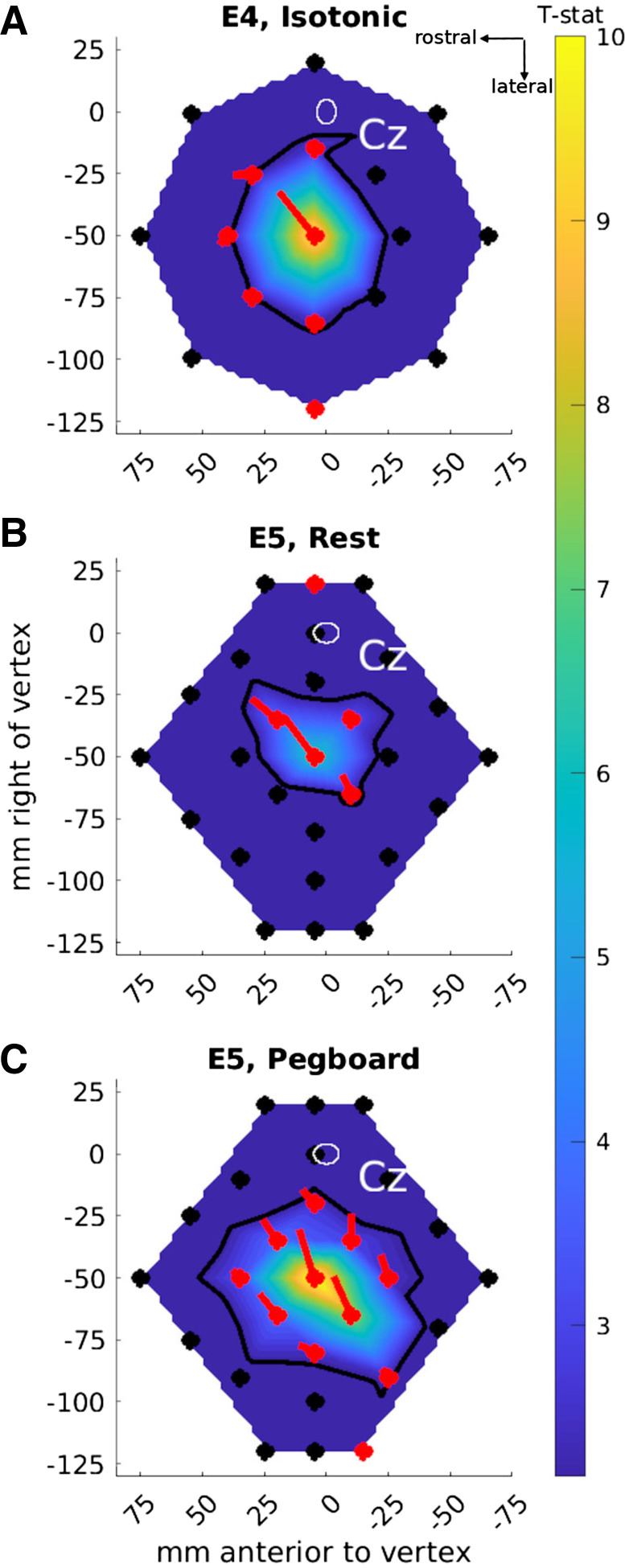
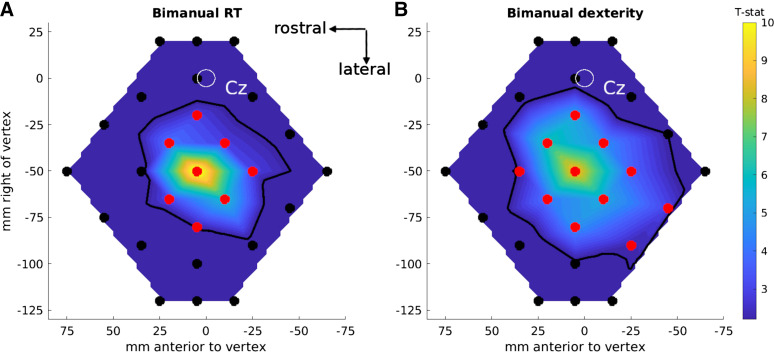
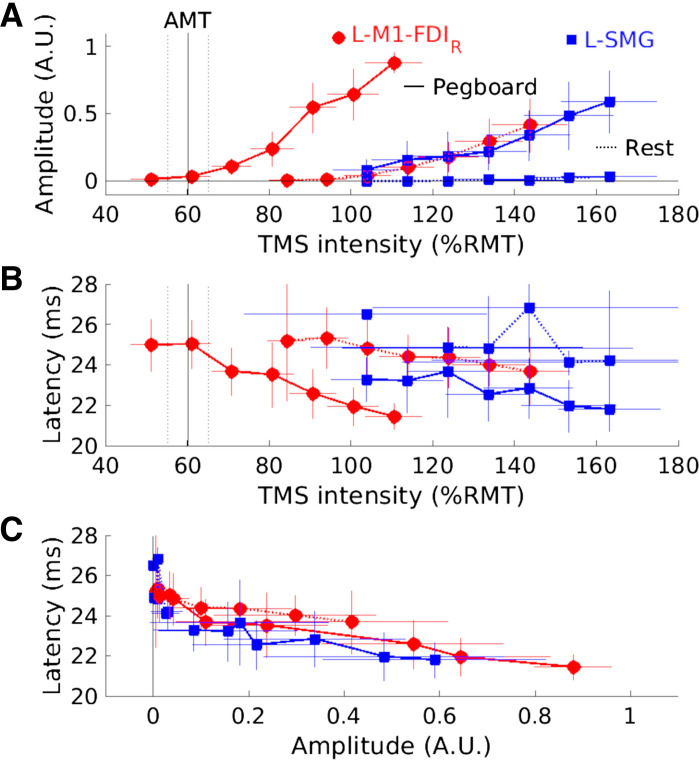
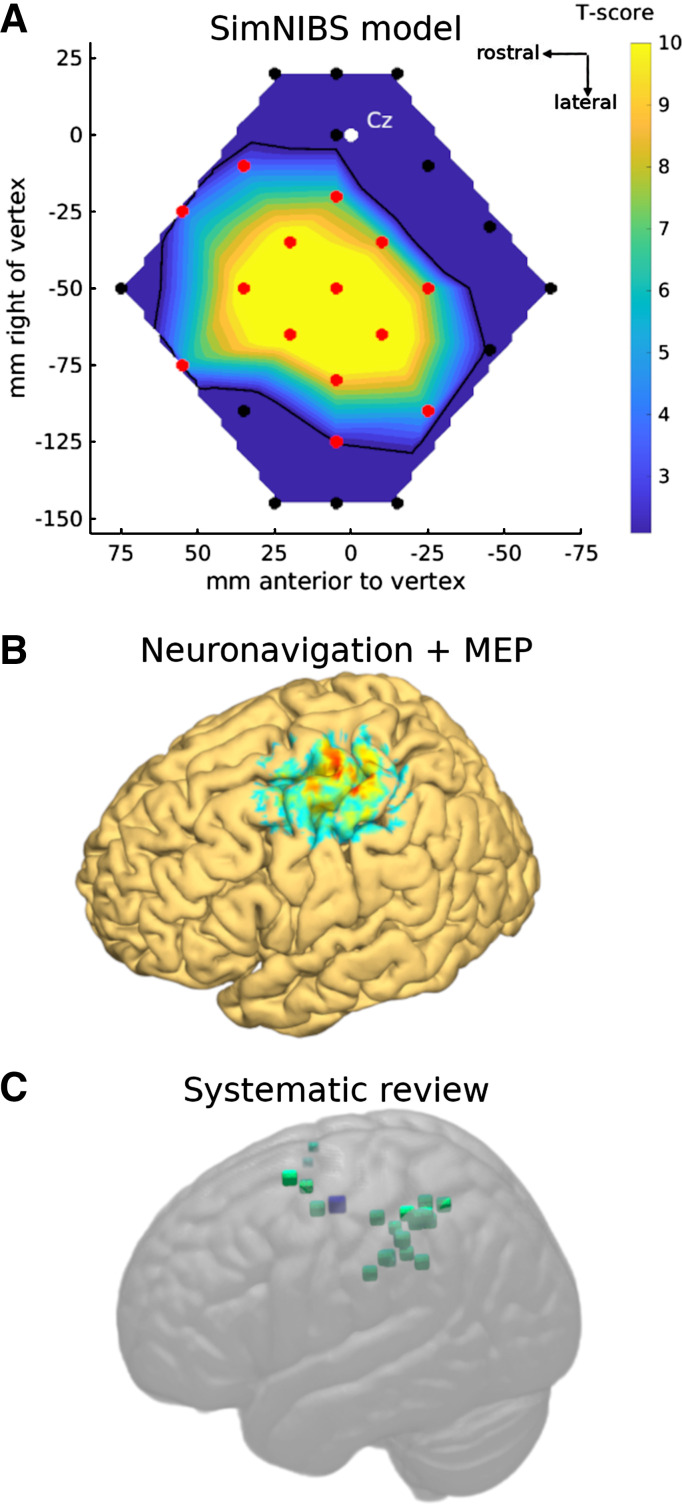
Based on human motor cortex, the effective spatial resolution of transcranial magnetic stimulation (TMS) is often described as 5-20 mm, because small changes in TMS coil position can have large effects on motor-evoked potentials (MEPs). MEPs are often studied at rest, with muscles relaxed. During muscle contraction and movement, corticospinal excitability is higher, thresholds for effective stimulation are lower, and MEPs can be evoked from larger regions of scalp, so the effective spatial resolution of TMS is larger. We found that TMS over the supramarginal gyrus (SMG) impaired manual dexterity in the grooved pegboard task. It also resulted in short-latency MEPs in hand muscles, despite the coil being 55 mm away from the motor cortex hand area (M1). MEPs might be evoked by either a specific corticospinal connection from SMG or a remote but direct electromagnetic stimulation of M1. To distinguish these alternatives, we mapped MEPs across the scalp during rest, isotonic contraction, and manual dexterity tasks and ran electric field simulations to model the expected M1 activation from 27 scalp locations and four coil orientations. We also systematically reviewed studies using TMS during movement. Across five experiments, TMS over SMG reliably evoked MEPs during hand movement. These MEPs were consistent with direct M1 stimulation and substantially decreased corticospinal thresholds during natural movement. Systematic review suggested that 54 published experiments may have suffered from similar motor activation confounds. Our results have implications for the assumed spatial resolution of TMS, and especially when TMS is presented within 55 mm of the motor cortex. Transcranial magnetic stimulation (TMS) is often described as having an effective spatial resolution of ∼10 mm, because of the limited area of the scalp on which TMS produces motor-evoked potentials (MEPs) in resting muscles. We find that during natural hand movement TMS evokes MEPs from a much larger scalp area, in particular when stimulating over the supramarginal gyrus 55 mm away. Our results show that TMS can be effective at much larger distances than generally assumed.
基于人类运动皮层,经颅磁刺激(TMS)的有效空间分辨率通常被描述为 5-20 毫米,因为 TMS 线圈位置的微小变化可能会对运动诱发电位(MEPs)产生很大影响。MEPs 通常在肌肉放松的休息状态下进行研究。在肌肉收缩和运动过程中,皮质脊髓兴奋性更高,有效刺激的阈值更低,并且可以从头皮更大的区域诱发 MEPs,因此 TMS 的有效空间分辨率更大。我们发现,刺激缘上回(SMG)会损害在槽钉板任务中的手灵巧度。尽管线圈距离运动皮层手部区域(M1)有 55 毫米远,但它也会在手肌肉中产生短潜伏期 MEPs。MEPs 可能是由来自 SMG 的特定皮质脊髓连接或 M1 的远程但直接的电磁刺激引起的。为了区分这些替代方案,我们在休息、等长收缩和手灵巧度任务期间在头皮上绘制 MEPs,并进行电场模拟,以从 27 个头皮位置和四个线圈方向模拟预期的 M1 激活。我们还系统地回顾了在运动过程中使用 TMS 的研究。在五个实验中,SMG 上的 TMS 在手部运动期间可靠地诱发了 MEPs。这些 MEPs 与直接 M1 刺激一致,并在自然运动过程中大大降低了皮质脊髓阈值。系统评价表明,54 个已发表的实验可能存在类似的运动激活混淆。我们的结果对 TMS 的假定空间分辨率有影响,尤其是当 TMS 在距运动皮层 55 毫米内进行时。经颅磁刺激(TMS)通常被描述为具有约 10 毫米的有效空间分辨率,因为 TMS 在休息状态的肌肉上产生运动诱发电位(MEPs)的头皮区域有限。我们发现,在自然手部运动过程中,TMS 可以从更大的头皮区域诱发 MEPs,尤其是在距离 55 毫米的缘上回刺激时。我们的结果表明,TMS 可以在比通常假设的距离远得多的距离上有效。