Department of Neuroscience, Dorris Neuroscience Center, Scripps Research Institute, La Jolla, CA 92037.
Proc Natl Acad Sci U S A. 2024 Jan 16;121(3):e2316542121. doi: 10.1073/pnas.2316542121. Epub 2024 Jan 10.
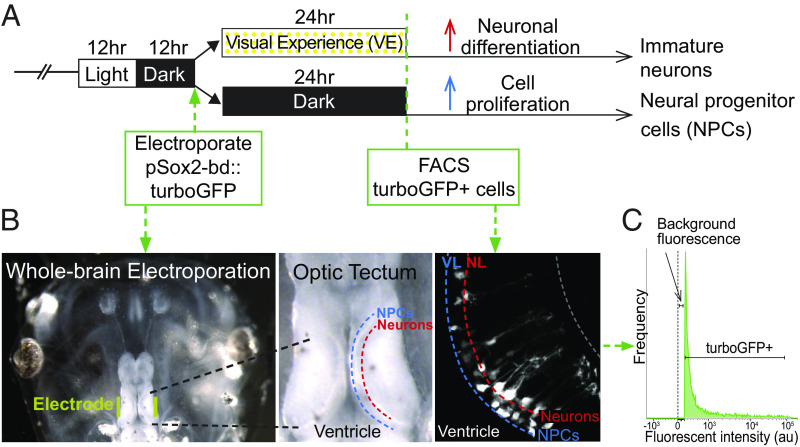
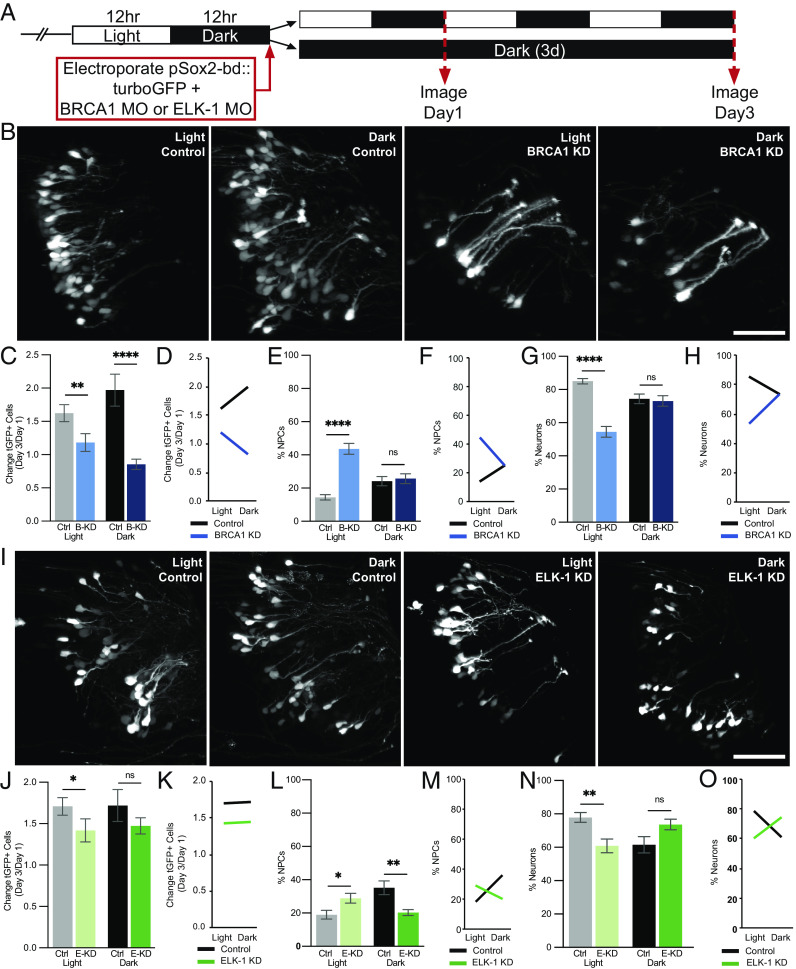
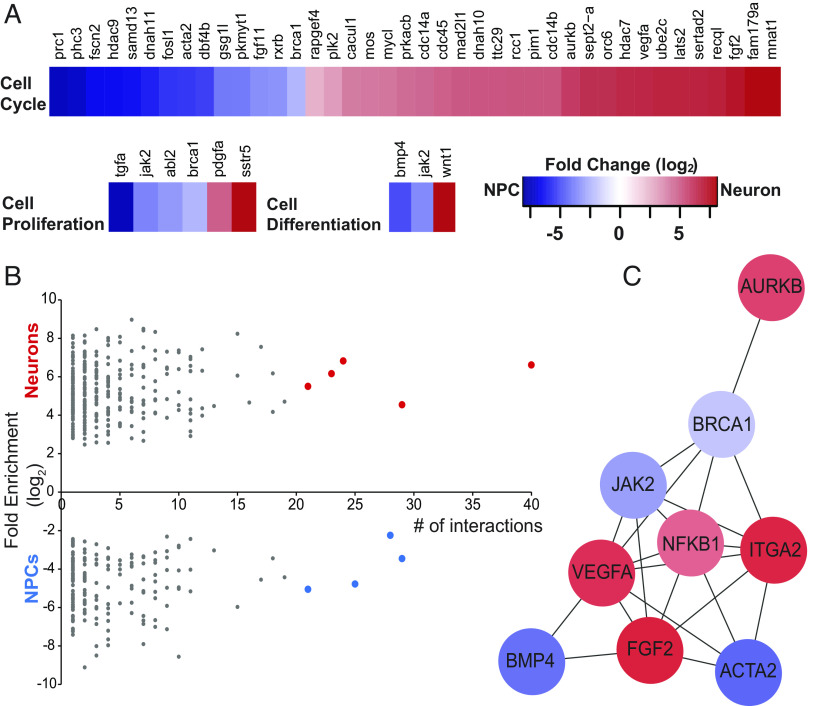
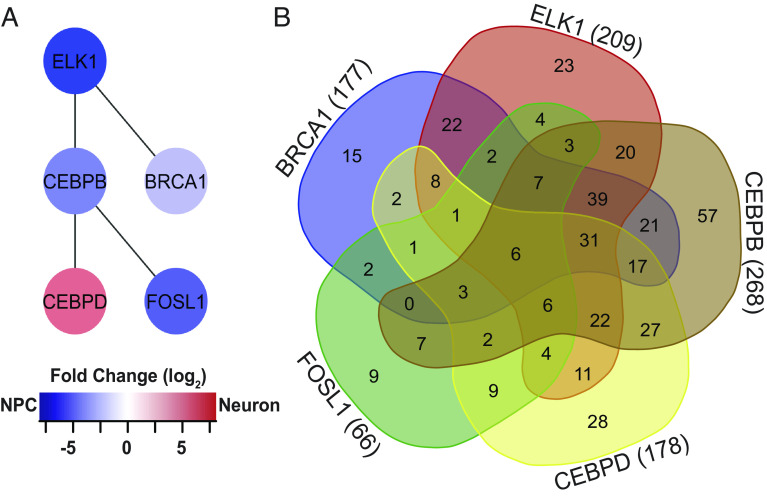
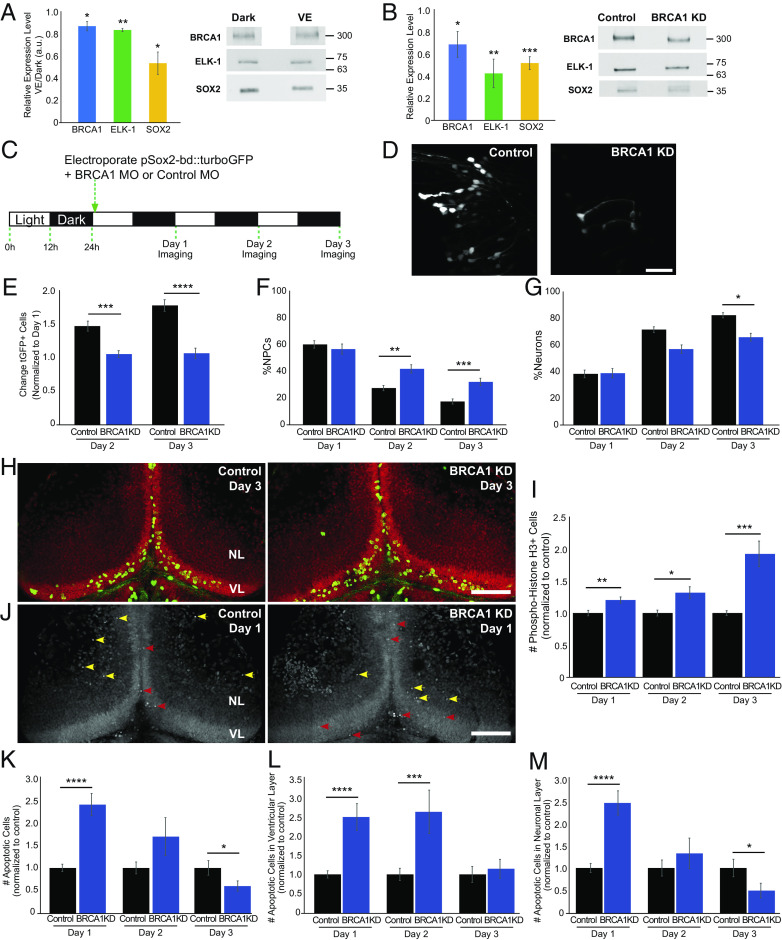
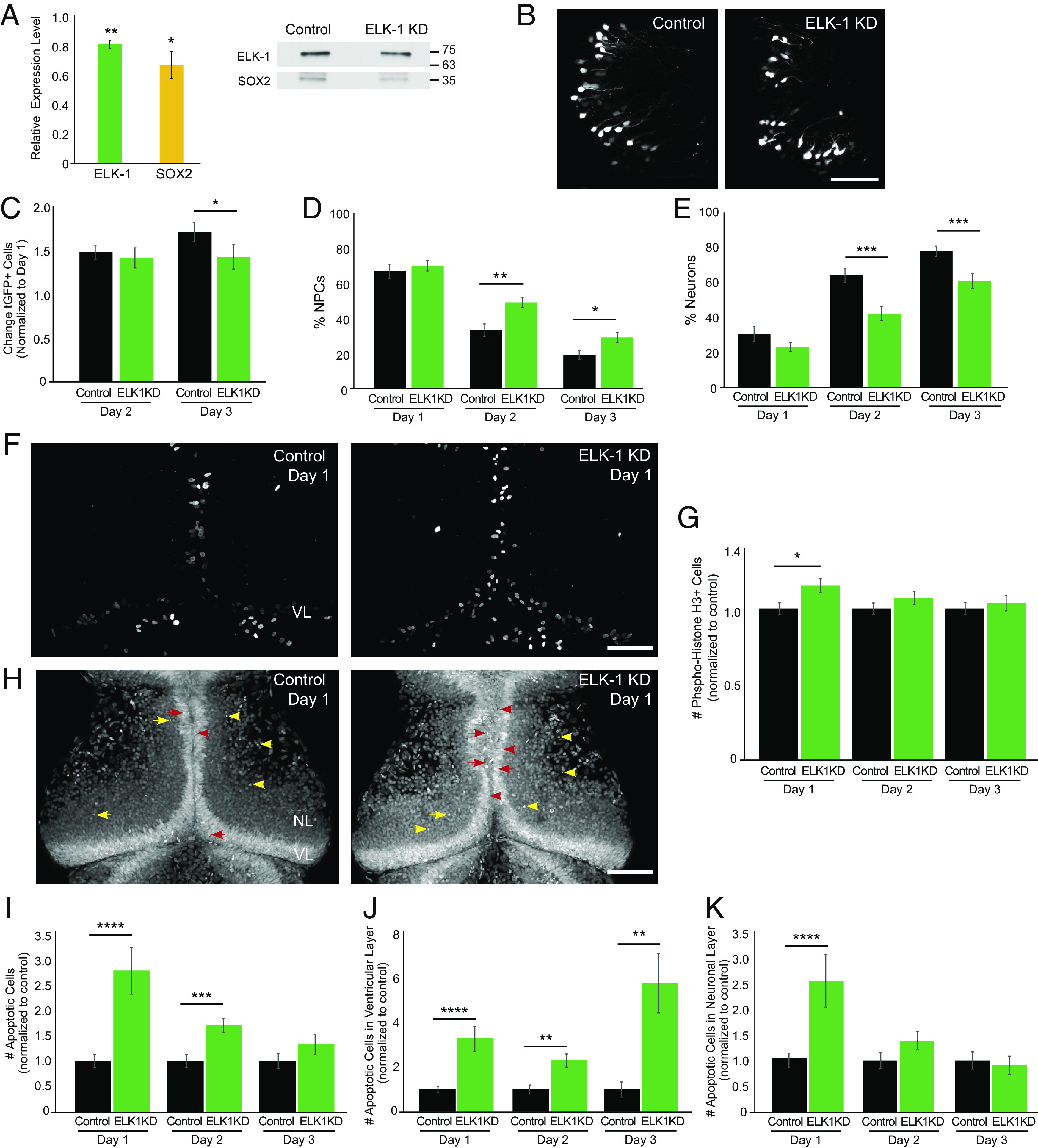
In developing Xenopus tadpoles, the optic tectum begins to receive patterned visual input while visuomotor circuits are still undergoing neurogenesis and circuit assembly. This visual input regulates neural progenitor cell fate decisions such that maintaining tadpoles in the dark increases proliferation, expanding the progenitor pool, while visual stimulation promotes neuronal differentiation. To identify regulators of activity-dependent neural progenitor cell fate, we profiled the transcriptomes of proliferating neural progenitor cells and newly differentiated neurons using RNA-Seq. We used advanced bioinformatic analysis of 1,130 differentially expressed transcripts to identify six differentially regulated transcriptional regulators, including Breast Cancer 1 (BRCA1) and the ETS-family transcription factor, ELK-1, which are predicted to regulate the majority of the other differentially expressed transcripts. BRCA1 is known for its role in cancers, but relatively little is known about its potential role in regulating neural progenitor cell fate. ELK-1 is a multifunctional transcription factor which regulates immediate early gene expression. We investigated the potential functions of BRCA1 and ELK-1 in activity-regulated neurogenesis in the tadpole visual system using in vivo time-lapse imaging to monitor the fate of GFP-expressing SOX2+ neural progenitor cells in the optic tectum. Our longitudinal in vivo imaging analysis showed that knockdown of either BRCA1 or ELK-1 altered the fates of neural progenitor cells and furthermore that the effects of visual experience on neurogenesis depend on BRCA1 and ELK-1 expression. These studies provide insight into the potential mechanisms by which neural activity affects neural progenitor cell fate.
在发育中的非洲爪蟾幼体中,视顶盖开始接收有图案的视觉输入,而视动回路仍在经历神经发生和回路组装。这种视觉输入调节神经祖细胞命运决定,例如将幼体保持在黑暗中会增加增殖,扩大祖细胞池,而视觉刺激则促进神经元分化。为了鉴定活动依赖性神经祖细胞命运的调节因子,我们使用 RNA-Seq 对增殖中的神经祖细胞和新分化的神经元进行了转录组分析。我们使用 1130 个差异表达转录本的高级生物信息学分析,鉴定了六个差异调节的转录调节因子,包括乳腺癌 1(BRCA1)和 ETS 家族转录因子 ELK-1,它们被预测调节大多数其他差异表达的转录本。BRCA1 以其在癌症中的作用而闻名,但关于其调节神经祖细胞命运的潜在作用相对较少。ELK-1 是一种多功能转录因子,调节即刻早期基因的表达。我们使用体内延时成像来监测 GFP 表达的 SOX2+神经祖细胞在视顶盖中的命运,研究了 BRCA1 和 ELK-1 在活动调节神经发生中的潜在功能。我们的纵向体内成像分析表明,BRCA1 或 ELK-1 的敲低改变了神经祖细胞的命运,此外,视觉经验对神经发生的影响依赖于 BRCA1 和 ELK-1 的表达。这些研究为神经活动如何影响神经祖细胞命运的潜在机制提供了深入了解。