
根治性结肠癌切除患者中转移淋巴结比率的预后价值及影响淋巴结获取量的因素分析
Prognostic Value of Metastatic Lymph Node Ratio and Identification of Factors Influencing the Lymph Node Yield in Patients Undergoing Curative Colon Cancer Resection.
作者信息
Mroczkowski Paweł, Kim Samuel, Otto Ronny, Lippert Hans, Zajdel Radosław, Zajdel Karolina, Merecz-Sadowska Anna
机构信息
Department for General and Colorectal Surgery, Medical University of Lodz, Pl. Hallera 1, 90-647 Lodz, Poland.
Institute for Quality Assurance in Operative Medicine Ltd., Otto-von-Guericke-University, Leipziger Str. 44, 39120 Magdeburg, Germany.
出版信息
Cancers (Basel). 2024 Jan 2;16(1):218. doi: 10.3390/cancers16010218.
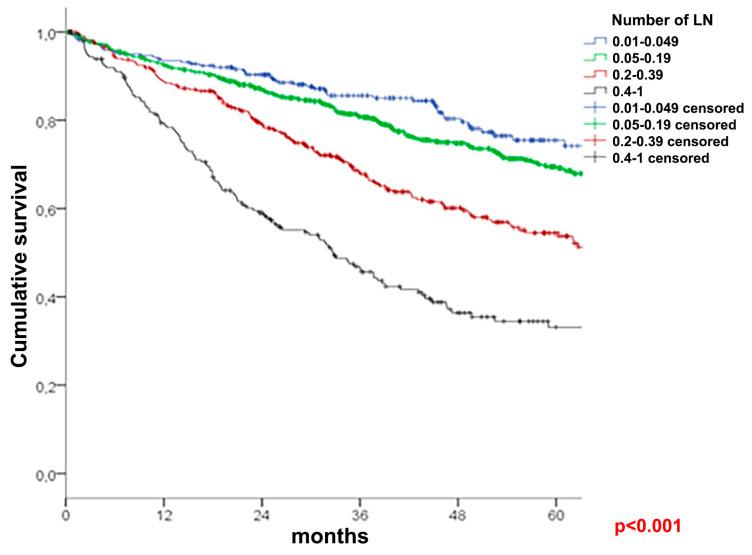
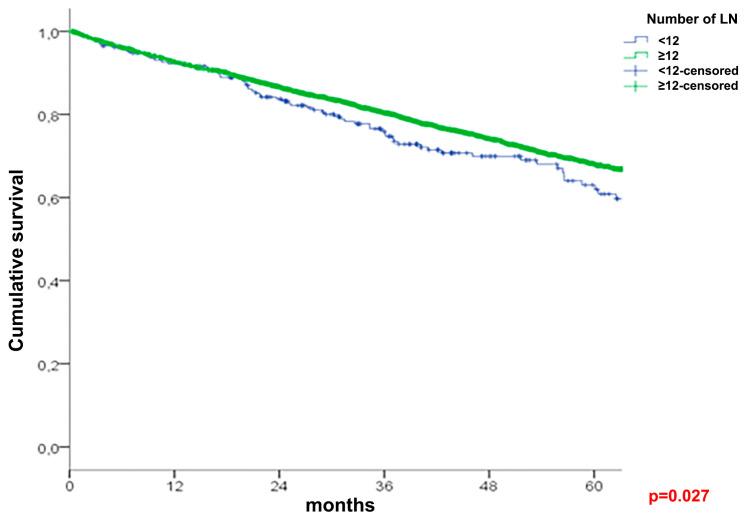
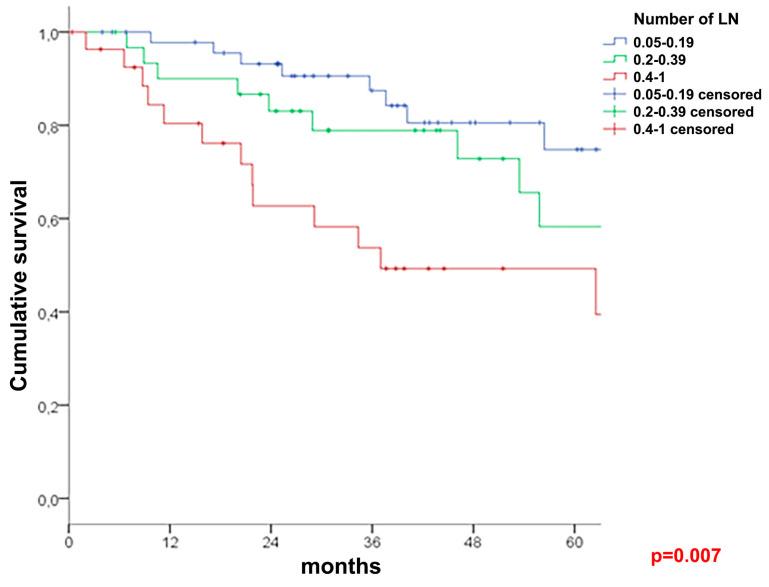
Due to the impact of nodal metastasis on colon cancer prognosis, adequate regional lymph node resection and accurate pathological evaluation are required. The ratio of metastatic to examined nodes may bring an additional prognostic value to the actual staging system. This study analyzes the identification of factors influencing a high lymph node yield and its impact on survival. The lymph node ratio was determined in patients with fewer than 12 or at least 12 evaluated nodes. The study included patients after radical colon cancer resection in UICC stages II and III. For the lymph node ratio (LNR) analysis, node-positive patients were divided into four categories: i.e., LNR 1 (<0.05), LNR 2 (≥0.05; <0.2), LNR 3 (≥0.2; <0.4), and LNR 4 (≥0.4), and classified into two groups: i.e., those with <12 and ≥12 evaluated nodes. The study was conducted on 7012 patients who met the set criteria and were included in the data analysis. The mean number of examined lymph nodes was 22.08 (SD 10.64, median 20). Among the study subjects, 94.5% had 12 or more nodes evaluated. These patients were more likely to be younger, women, with a lower ASA classification, pT3 and pN2 categories. Also, they had no risk factors and frequently had a right-sided tumor. In the multivariate analysis, a younger age, ASA classification of II and III, high pT and pN categories, absence of risk factors, and right-sided location remained independent predictors for a lymph node yield ≥12. The univariate survival analysis of the entire cohort demonstrated a better five-year overall survival (OS) in patients with at least 12 lymph nodes examined (68% vs. 63%, = 0.027). The LNR groups showed a significant association with OS, reaching from 75.5% for LNR 1 to 33.1% for LNR 4 ( < 0.001) in the ≥12 cohort, and from 74.8% for LNR2 to 49.3% for LNR4 ( = 0.007) in the <12 cohort. This influence remained significant and independent in multivariate analyses. The hazard ratios ranged from 1.016 to 2.698 for patients with less than 12 nodes, and from 1.248 to 3.615 for those with at least 12 nodes. The LNR allowed for a more precise estimation of the OS compared with the pN classification system. The metastatic lymph node ratio is an independent predictor for survival and should be included in current staging and therapeutic decision-making processes.
由于淋巴结转移对结肠癌预后有影响,因此需要进行充分的区域淋巴结切除和准确的病理评估。转移淋巴结与检查淋巴结的比例可能会给实际分期系统带来额外的预后价值。本研究分析了影响高淋巴结检出率的因素及其对生存的影响。对评估淋巴结少于12个或至少12个的患者确定淋巴结比例。该研究纳入了国际抗癌联盟(UICC)II期和III期结肠癌根治术后的患者。对于淋巴结比例(LNR)分析,淋巴结阳性患者分为四类:即LNR 1(<0.05)、LNR 2(≥0.05;<0.2)、LNR 3(≥0.2;<0.4)和LNR 4(≥0.4),并分为两组:即评估淋巴结<12个和≥12个的患者。该研究对7012例符合设定标准并纳入数据分析的患者进行。检查的淋巴结平均数量为22.08个(标准差10.64,中位数20个)。在研究对象中,94.5%的患者评估了12个或更多淋巴结。这些患者更可能较年轻、为女性、ASA分级较低、处于pT3和pN2类别。此外,他们没有危险因素且经常患有右侧肿瘤。在多变量分析中,较年轻的年龄、ASA分级为II和III级、高pT和pN类别、无危险因素以及右侧位置仍然是淋巴结检出率≥12个的独立预测因素。对整个队列的单变量生存分析表明,检查至少12个淋巴结的患者五年总生存率(OS)更好(68%对63%,P = 0.027)。LNR组与OS显示出显著关联,在≥12个淋巴结的队列中,LNR 1为75.5%至LNR 4为33.1%(P < 0.001),在<12个淋巴结的队列中,LNR2为74.8%至LNR4为49.3%(P = 0.007)。在多变量分析中,这种影响仍然显著且独立。淋巴结少于12个的患者风险比范围为1.016至2.698,淋巴结至少12个者风险比范围为1.248至3.615。与pN分类系统相比,LNR能够更精确地估计OS。转移淋巴结比例是生存的独立预测因素,应纳入当前的分期和治疗决策过程。
 Zotero 插件