Kashcheyeva Ekaterina I, Korchagina Anna A, Gismatulina Yulia A, Gladysheva Evgenia K, Budaeva Vera V, Sakovich Gennady V
Bioconversion Laboratory, Institute for Problems of Chemical and Energetic Technologies, Siberian Branch of the Russian Academy of Sciences (IPCET SB RAS), 659322 Biysk, Russia.
Polymers (Basel). 2023 Dec 21;16(1):42. doi: 10.3390/polym16010042.
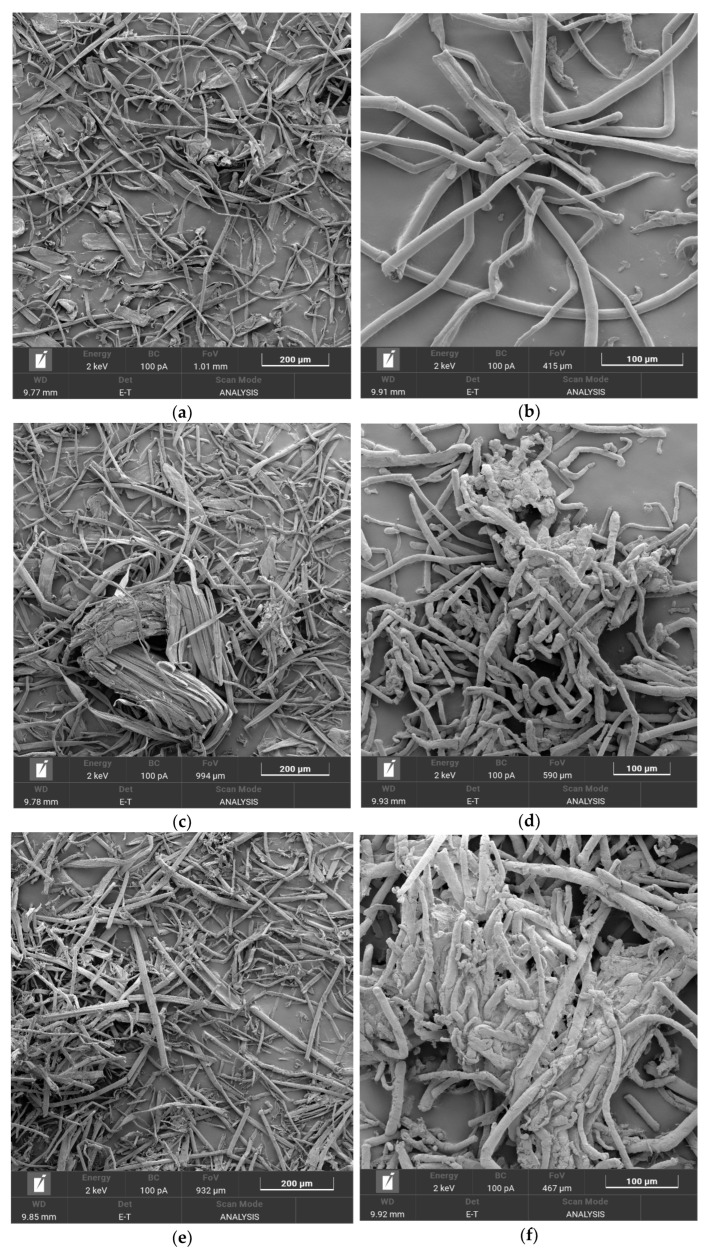
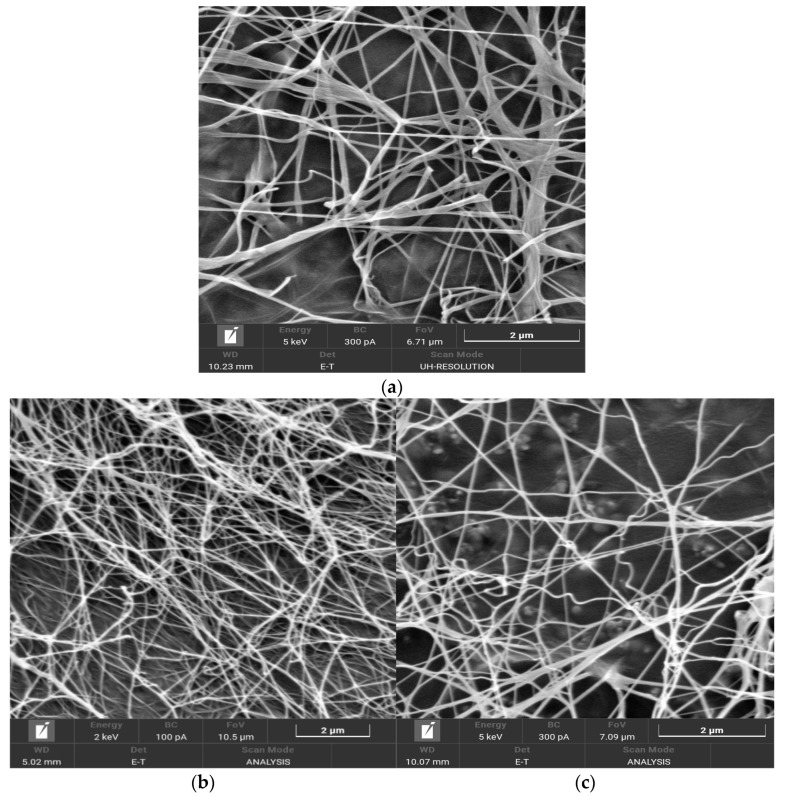
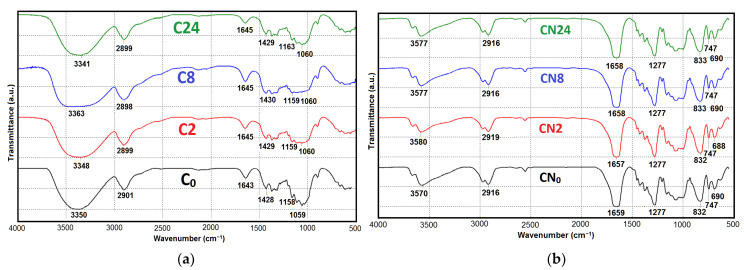
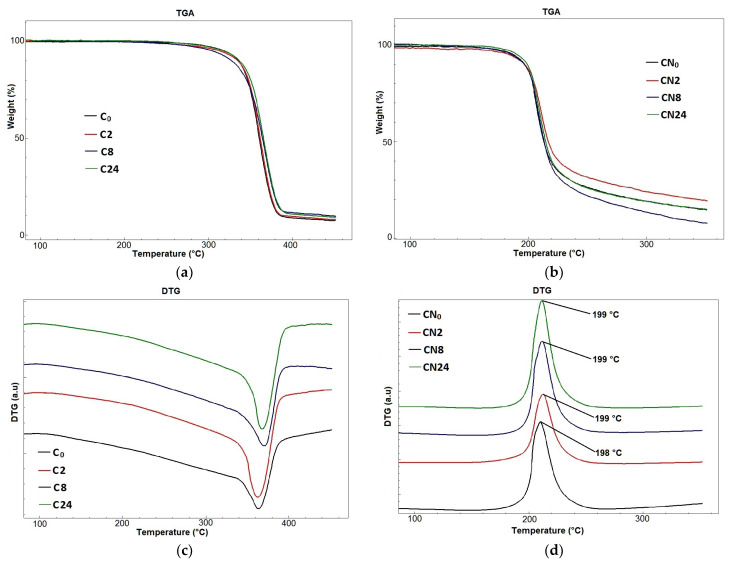
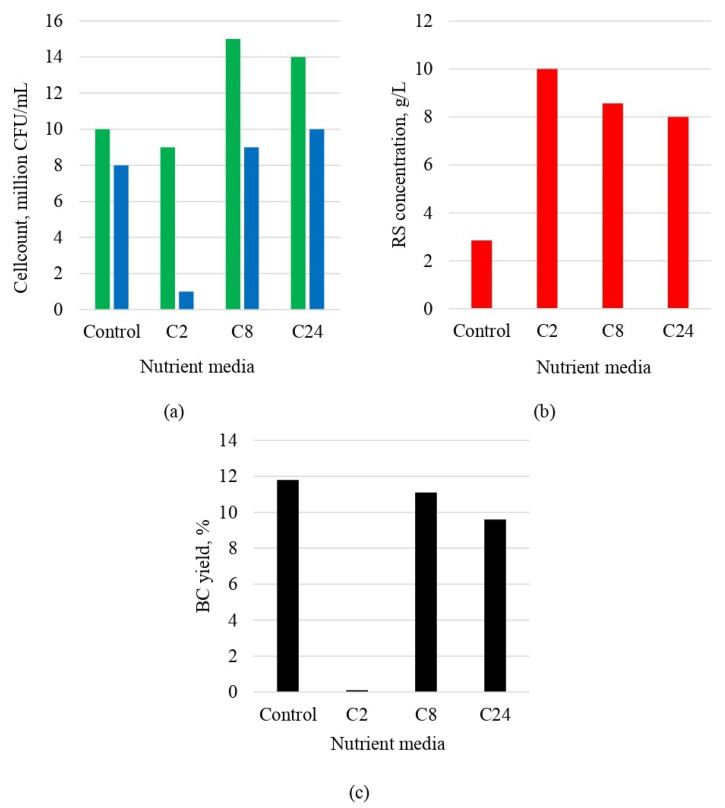
This study is focused on exploring the feasibility of simultaneously producing the two products, cellulose nitrates (CNs) and bacterial cellulose (BC), from . The starting cellulose for them was isolated by successive treatments of the feedstock with HNO and NaOH solutions. The cellulose was subjected to enzymatic hydrolysis for 2, 8, and 24 h. The cellulose samples after the hydrolysis were distinct in structure from the starting sample (degree of polymerization (DP) 1770, degree of crystallinity (DC) 64%) and between each other (DP 1510-1760, DC 72-75%). The nitration showed that these samples and the starting cellulose could successfully be nitrated to furnish acetone-soluble CNs. Extending the hydrolysis time from 2 h to 24 h led to an enhanced yield of CNs from 116 to 131%, with the nitrogen content and the viscosity of the CN samples increasing from 11.35 to 11.83% and from 94 to 119 mPa·s, respectively. The SEM analysis demonstrated that CNs retained the fiber shape. The IR spectroscopy confirmed that the synthesized material was specifically CNs, as evidenced by the characteristic frequencies of 1657-1659, 1277, 832-833, 747, and 688-690 cm. Nutrient media derived from the hydrolyzates obtained in 8 h and 24 h were of good quality for the synthesis of BC, with yields of 11.1% and 9.6%, respectively. The BC samples had a reticulate structure made of interlaced microfibrils with 65 and 81 nm widths and DPs of 2100 and 2300, respectively. It is for the first time that such an approach for the simultaneous production of CNs and BC has been employed.
本研究聚焦于探索从……同时生产两种产品——硝酸纤维素(CNs)和细菌纤维素(BC)的可行性。它们的起始纤维素是通过用硝酸(HNO)和氢氧化钠(NaOH)溶液对原料进行连续处理而分离得到的。将纤维素进行2、8和24小时的酶水解。水解后的纤维素样品在结构上与起始样品(聚合度(DP)1770,结晶度(DC)64%)不同,且彼此之间也不同(DP 1510 - 1760,DC 72 - 75%)。硝化反应表明,这些样品和起始纤维素能够成功硝化以提供丙酮可溶的CNs。将水解时间从2小时延长至24小时,使得CNs的产率从116%提高到131%,CN样品的氮含量和粘度分别从11.35%增加到11.83%,从94 mPa·s增加到119 mPa·s。扫描电子显微镜(SEM)分析表明,CNs保留了纤维形状。红外光谱证实合成的材料确实是CNs,1657 - 1659、1277、832 - 833、747和688 - 690 cm的特征频率证明了这一点。源自8小时和24小时水解产物的营养培养基对于合成BC质量良好,产率分别为11.1%和9.6%。BC样品具有由交错微纤维构成的网状结构,微纤维宽度分别为65和81 nm,DP分别为2100和2300。首次采用了这种同时生产CNs和BC的方法。