Moreno Florez Ana Isabel, Malagon Sarita, Ocampo Sebastian, Leal-Marin Sara, Gil González Jesús Humberto, Diaz-Cano Andres, Lopera Alex, Paucar Carlos, Ossa Alex, Glasmacher Birgit, Peláez-Vargas Alejandro, Garcia Claudia
Grupo de Cerámicos y Vítreos, Universidad Nacional de Colombia sede Medellín, Medellín 050034, Colombia.
Faculty of Dentistry, Universidad Cooperativa de Colombia sede Medellín, Medellín 055422, Colombia.
Heliyon. 2023 Dec 18;10(1):e23955. doi: 10.1016/j.heliyon.2023.e23955. eCollection 2024 Jan 15.
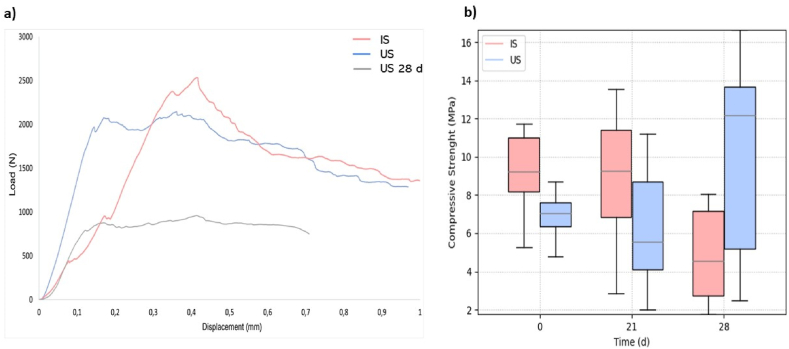
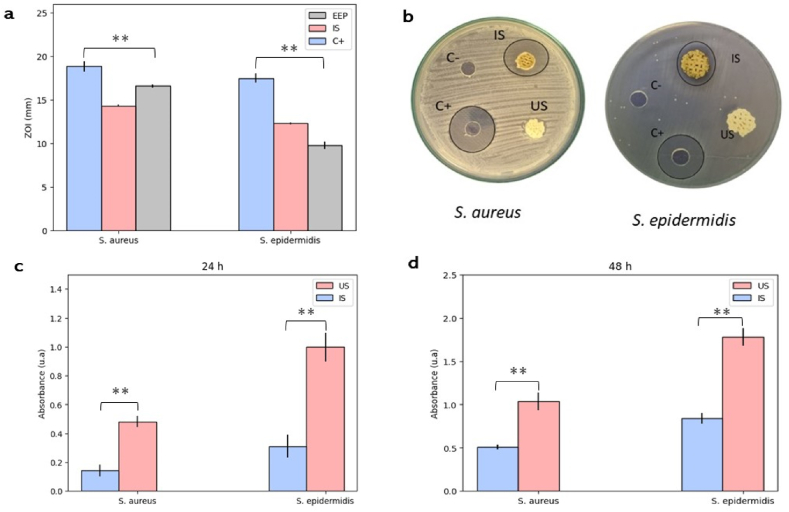
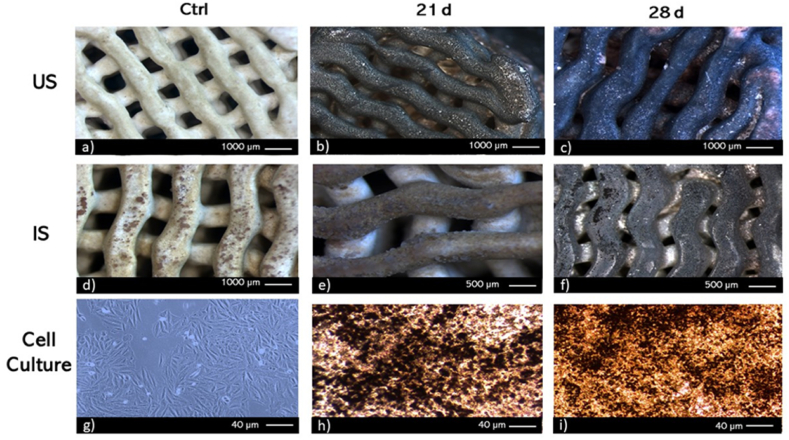
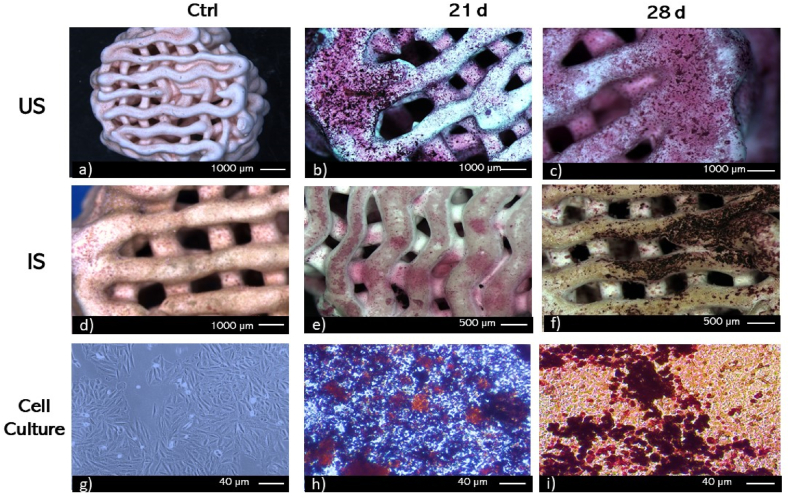
Biocompatible ceramic scaffolds offer a promising approach to address the challenges in bone reconstruction. Wollastonite, well-known for its exceptional biocompatibility, has attracted significant attention in orthopedics and craniofacial fields. However, the antimicrobial properties of wollastonite have contradictory findings, necessitating further research to enhance its antibacterial characteristics. This study aimed to explore a new approach to improve biological response in terms of antimicrobial activity and cell proliferation by taking advantage of additive manufacturing for the development of scaffolds with complex geometries by 3D printing using propolis-modified wollastonite. The scaffolds were designed with a TPMS (Triply Periodic Minimal Surface) gyroid geometric shape and 3D printed prior to impregnation with propolis extract. The paste formulation was characterized by rheometric measurements, and the presence of propolis was confirmed by FTIR spectroscopy. The scaffolds were comprehensively assessed for their mechanical strength. The biological characterization involved evaluating the antimicrobial effects against and , employing Minimum Inhibitory Concentration (MIC), Zone of Inhibition (ZOI), and biofilm formation assays. Additionally, SaOs-2 cultures were used to study cell proliferation (Alamar blue assay), and potential osteogenic was tested (von Kossa, Alizarin Red, and ALP stainings) at different time points. Propolis impregnation did not compromise the mechanical properties of the scaffolds, which exhibited values comparable to human trabecular bone. Propolis incorporation conferred antibacterial activity against both and . The implementation of TPMS gyroid geometry in the scaffold design demonstrated favorable cell proliferation with increased metabolic activity and osteogenic potential after 21 days of cell cultures.
生物相容性陶瓷支架为解决骨重建中的挑战提供了一种有前景的方法。硅灰石以其卓越的生物相容性而闻名,在骨科和颅面领域引起了广泛关注。然而,硅灰石的抗菌性能存在相互矛盾的研究结果,因此需要进一步研究以增强其抗菌特性。本研究旨在探索一种新方法,通过利用增材制造技术,采用蜂胶改性硅灰石进行3D打印来开发具有复杂几何形状的支架,从而在抗菌活性和细胞增殖方面改善生物学反应。支架设计为TPMS(三重周期最小表面)类螺旋几何形状,并在浸渍蜂胶提取物之前进行3D打印。通过流变学测量对糊剂配方进行表征,并通过FTIR光谱法确认蜂胶的存在。对支架的机械强度进行了全面评估。生物学特性评估包括采用最低抑菌浓度(MIC)、抑菌圈(ZOI)和生物膜形成试验,评估对金黄色葡萄球菌和大肠杆菌的抗菌效果。此外,使用SaOs-2细胞培养物研究细胞增殖(Alamar蓝试验),并在不同时间点测试潜在的成骨能力(冯·科萨染色、茜素红染色和碱性磷酸酶染色)。蜂胶浸渍不会损害支架的机械性能,其表现出与人体松质骨相当的值。加入蜂胶赋予了对金黄色葡萄球菌和大肠杆菌的抗菌活性。在支架设计中采用TPMS类螺旋几何形状,在细胞培养21天后显示出良好的细胞增殖,代谢活性增加和成骨潜力增强。