Holloway James, Seeley Aidan, Cobbe Neville, Turkington Richard C, Longley Daniel B, Evergren Emma
Patrick G Johnston Centre for Cancer Research, Queen's University Belfast, 97 Lisburn Road, BT9 7AE, Belfast, UK.
Cell Death Dis. 2024 Jan 12;15(1):40. doi: 10.1038/s41419-023-06417-4.
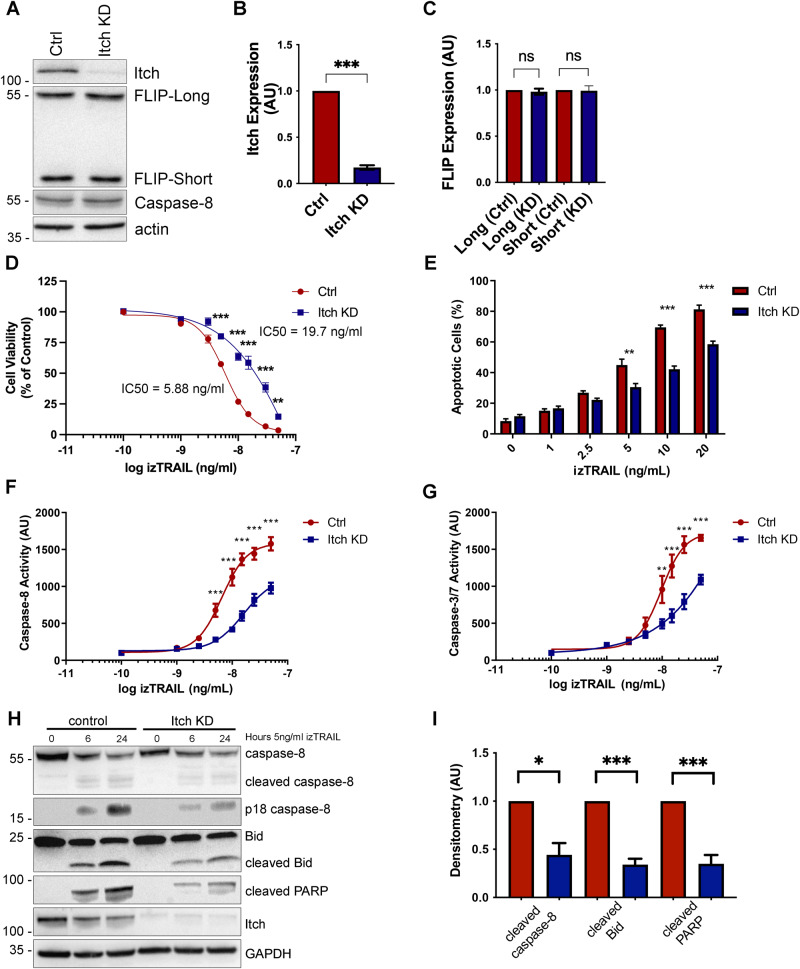
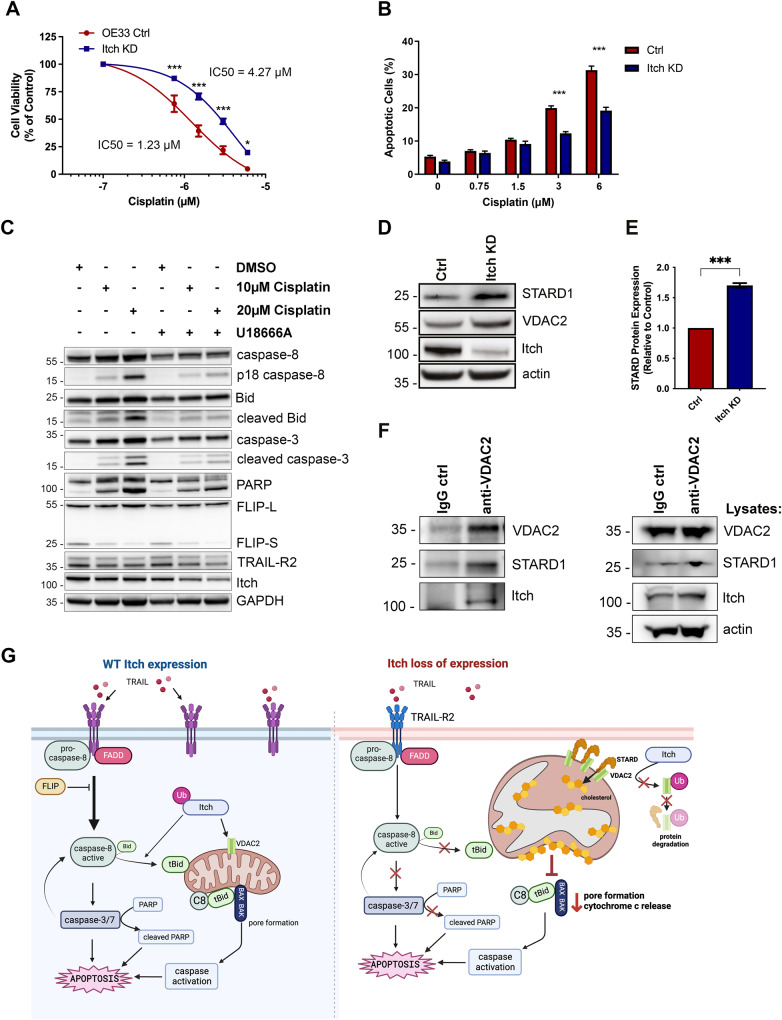
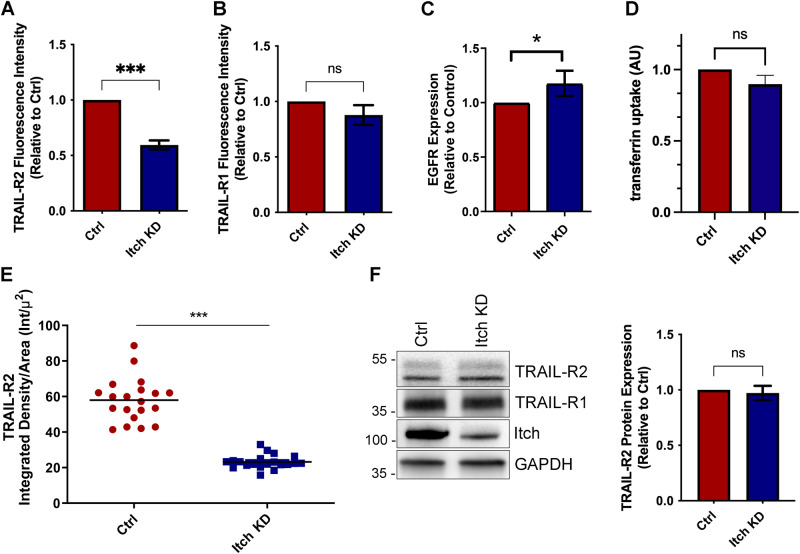
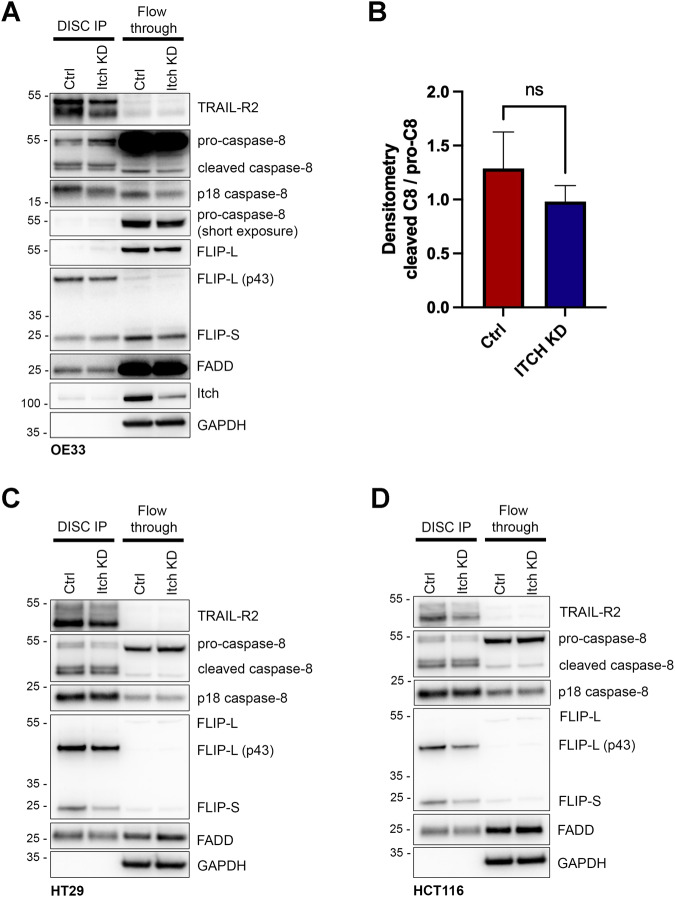
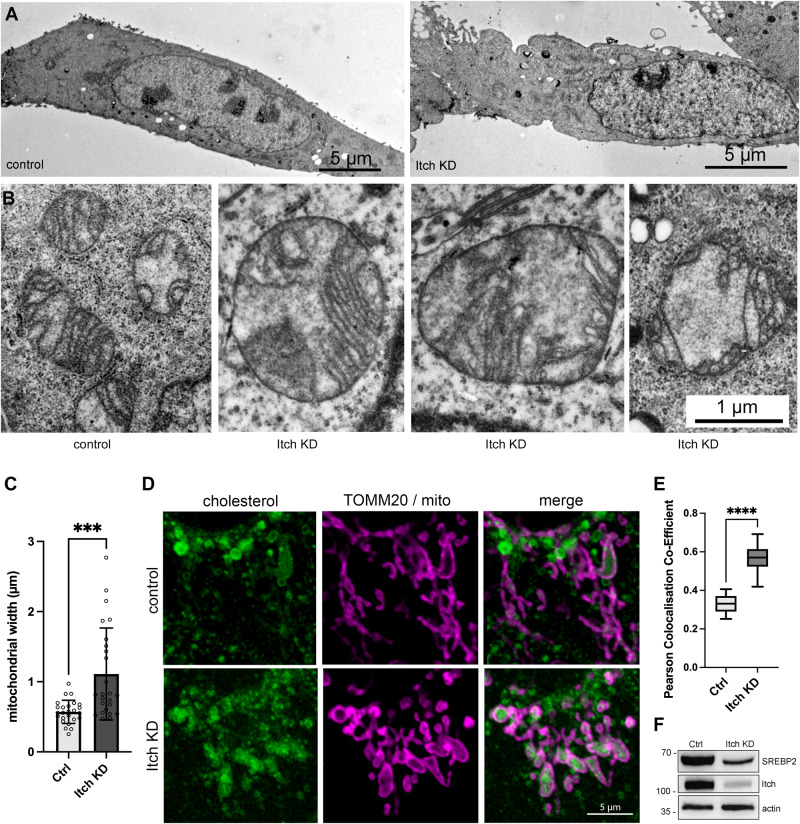
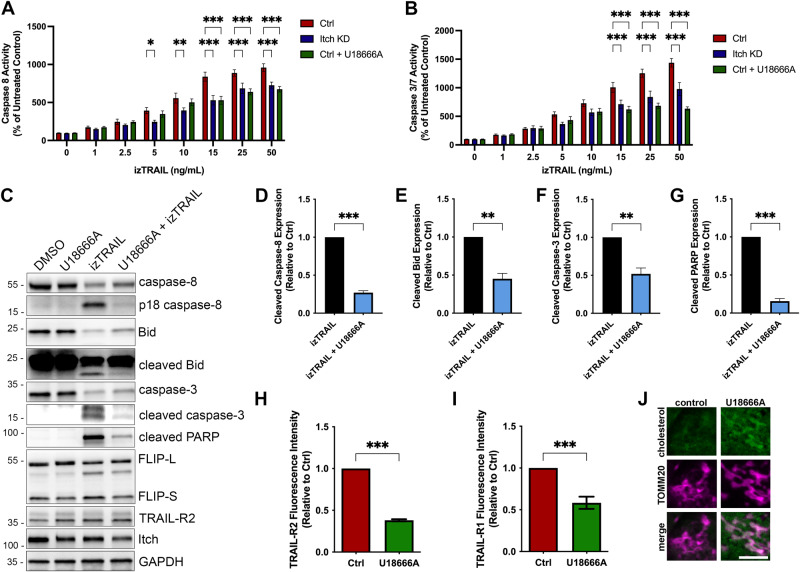
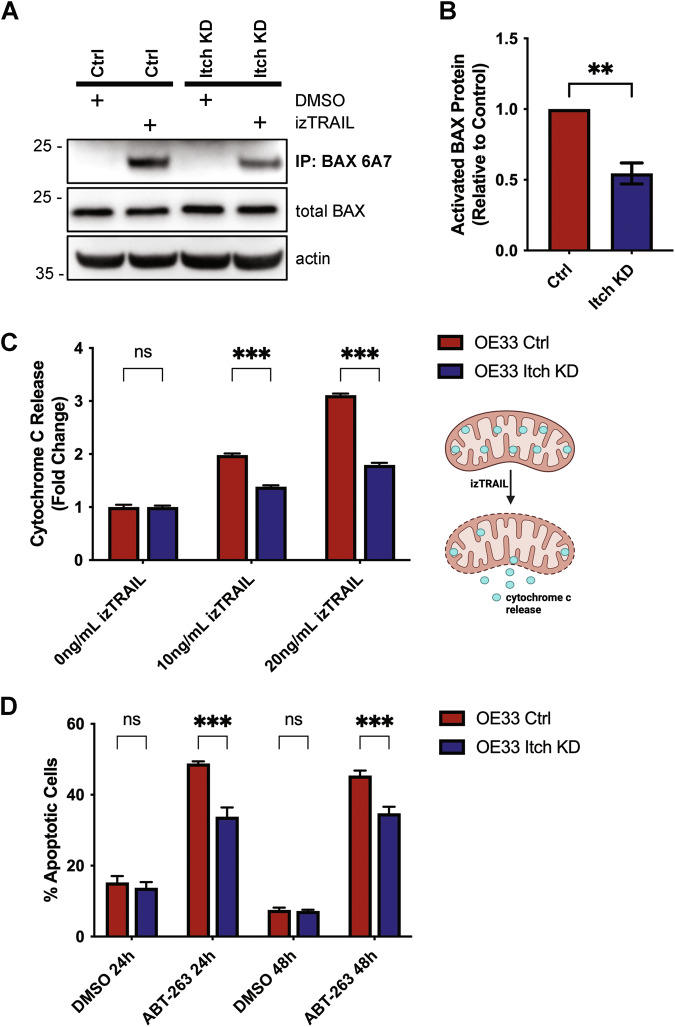
The activation of apoptosis signalling by TRAIL (TNF-related apoptosis-inducing ligand) through receptor binding is a fundamental mechanism of cell death induction and is often perturbed in cancer cells to enhance their cell survival and treatment resistance. Ubiquitination plays an important role in the regulation of TRAIL-mediated apoptosis, and here we investigate the role of the E3 ubiquitin ligase Itch in TRAIL-mediated apoptosis in oesophageal cancer cells. Knockdown of Itch expression results in resistance to TRAIL-induced apoptosis, caspase-8 activation, Bid cleavage and also promotes cisplatin resistance. Whilst the assembly of the death-inducing signalling complex (DISC) at the plasma membrane is not perturbed relative to the control, TRAIL-R2 is mis-localised in the Itch-knockdown cells. Further, we observe significant changes to mitochondrial morphology alongside an increased cholesterol content. Mitochondrial cholesterol is recognised as an important anti-apoptotic agent in cancer. Cells treated with a drug that increases mitochondrial cholesterol levels, U18666A, shows a protection from TRAIL-induced apoptosis, reduced caspase-8 activation, Bid cleavage and cisplatin resistance. We demonstrate that Itch knockdown cells are less sensitive to a Bcl-2 inhibitor, show impaired activation of Bax, cytochrome c release and an enhanced stability of the cholesterol transfer protein STARD1. We identify a novel protein complex composed of Itch, the mitochondrial protein VDAC2 and STARD1. We propose a mechanism where Itch regulates the stability of STARD1. An increase in STARD1 expression enhances cholesterol import to mitochondria, which inhibits Bax activation and cytochrome c release. Many cancer types display high mitochondrial cholesterol levels, and oesophageal adenocarcinoma tumours show a correlation between chemotherapy resistance and STARD1 expression which is supported by our findings. This establishes an important role for Itch in regulation of extrinsic and intrinsic apoptosis, mitochondrial cholesterol levels and provides insight to mechanisms that contribute to TRAIL, Bcl-2 inhibitor and cisplatin resistance in cancer cells.
肿瘤坏死因子相关凋亡诱导配体(TRAIL)通过与受体结合激活凋亡信号,是诱导细胞死亡的基本机制,癌细胞中该机制常被扰乱,以提高其细胞存活率和治疗抗性。泛素化在TRAIL介导的凋亡调控中起重要作用,在此我们研究E3泛素连接酶Itch在食管癌细胞TRAIL介导的凋亡中的作用。敲低Itch表达导致对TRAIL诱导的凋亡、半胱天冬酶-8激活、Bid裂解产生抗性,并且还促进顺铂抗性。虽然相对于对照,质膜上死亡诱导信号复合物(DISC)的组装未受干扰,但TRAIL-R2在Itch敲低细胞中定位错误。此外,我们观察到线粒体形态发生显著变化,同时胆固醇含量增加。线粒体胆固醇被认为是癌症中一种重要的抗凋亡因子。用增加线粒体胆固醇水平的药物U18666A处理的细胞表现出对TRAIL诱导的凋亡的保护作用,半胱天冬酶-8激活减少、Bid裂解减少和顺铂抗性降低。我们证明Itch敲低细胞对Bcl-2抑制剂不太敏感,Bax激活受损、细胞色素c释放受损以及胆固醇转运蛋白STARD1的稳定性增强。我们鉴定出一种由Itch、线粒体蛋白VDAC2和STARD1组成的新型蛋白复合物。我们提出一种机制,其中Itch调节STARD1的稳定性。STARD1表达增加会增强胆固醇向线粒体的导入,从而抑制Bax激活和细胞色素c释放。许多癌症类型显示出线粒体胆固醇水平较高,食管腺癌肿瘤显示出化疗抗性与STARD1表达之间的相关性,我们的研究结果支持了这一点。这确立了Itch在调节外源性和内源性凋亡、线粒体胆固醇水平方面的重要作用,并为癌细胞中TRAIL、Bcl-2抑制剂和顺铂抗性的机制提供了见解。