Quantlase Lab LLC, Unit 1-8, Masdar City, Abu Dhabi, UAE.
Molecular Biophysics Unit, Indian Institute of Science, Bangalore, 460012, India.
Cell Mol Biol Lett. 2024 Jan 16;29(1):13. doi: 10.1186/s11658-023-00528-8.
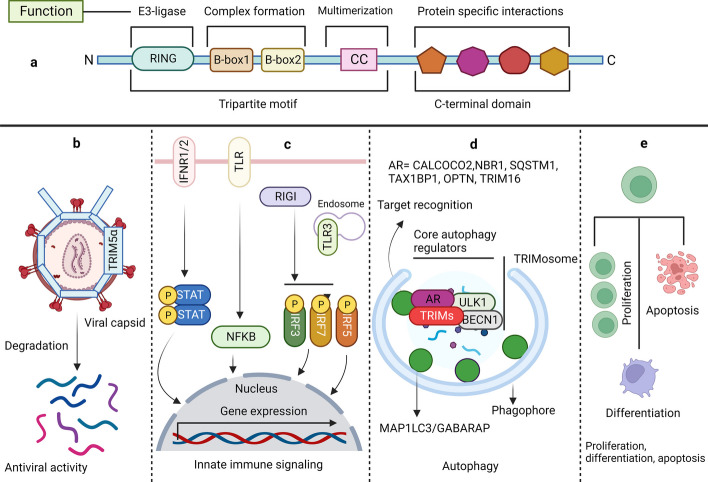
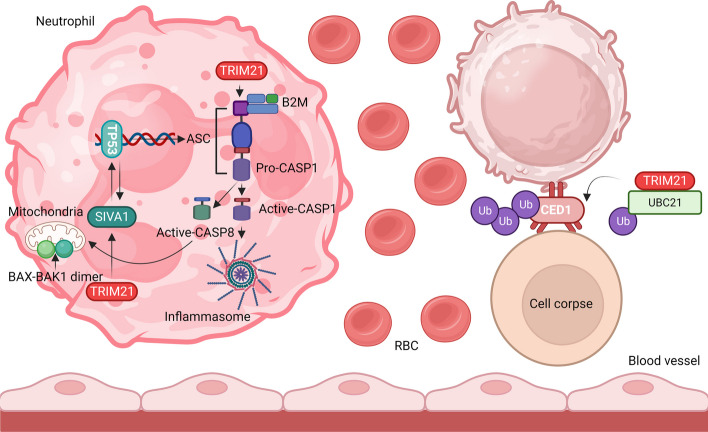
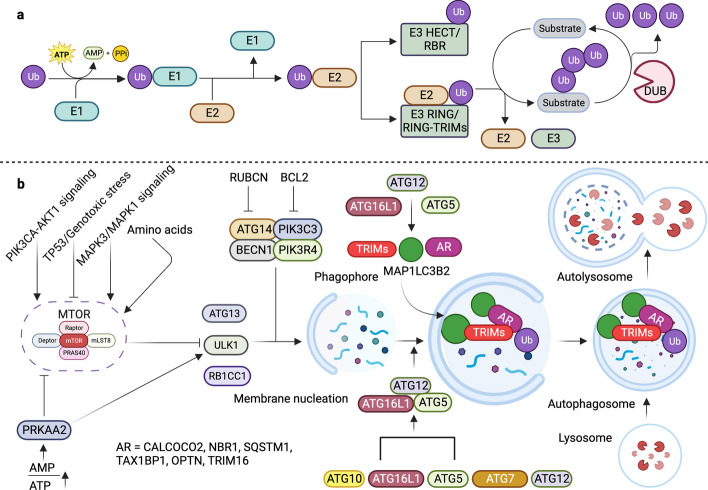
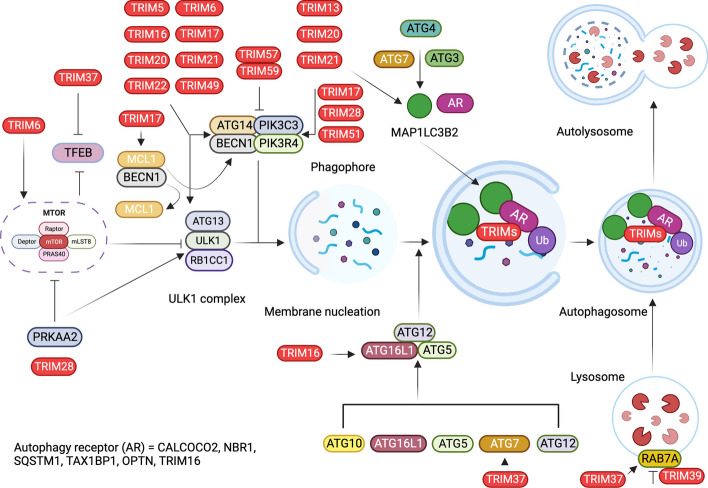
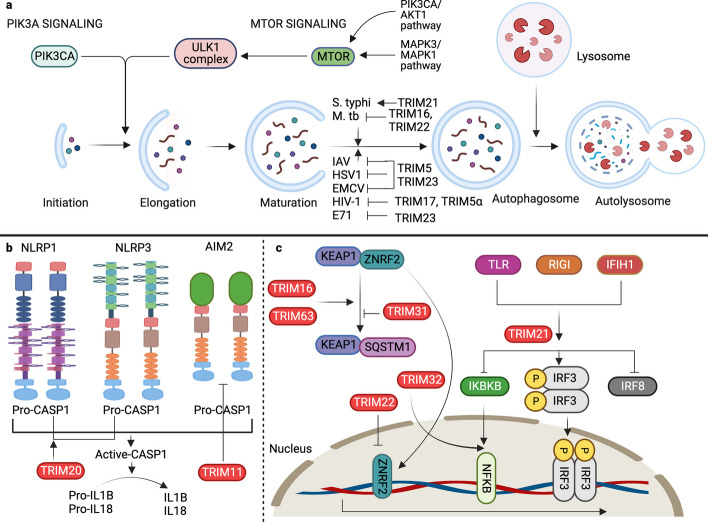
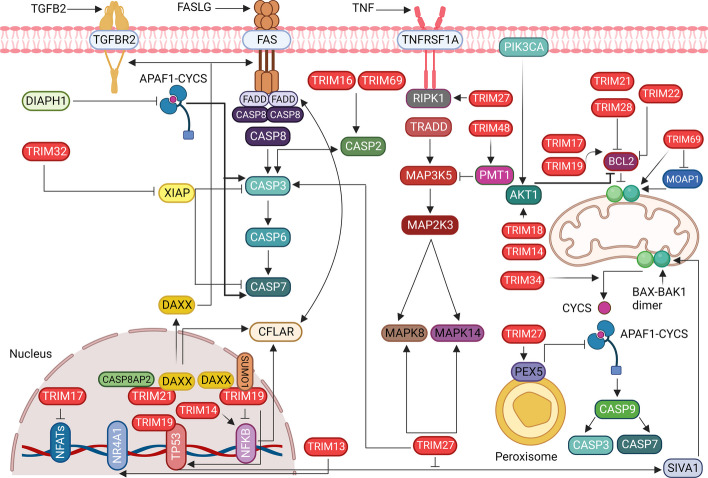
TRIM proteins are characterized by their conserved N-terminal RING, B-box, and coiled-coil domains. These proteins are efficient regulators of autophagy, apoptosis, and innate immune responses and confer immunity against viruses and bacteria. TRIMs function as receptors or scaffold proteins that target substrates for autophagy-mediated degradation. Most TRIMs interact with the BECN1-ULK1 complex to form TRIMosomes, thereby efficiently targeting substrates to autophagosomes. They regulate the functions of ATG proteins through physical interactions or ubiquitination. TRIMs affect the lipidation of MAP1LC3B1 to form MAP1LC3B2, which is a prerequisite for phagophore and autophagosome formation. In addition, they regulate MTOR kinase and TFEB, thereby regulating the expression of ATG genes. TRIM proteins are efficient regulators of apoptosis and are crucial for regulating cell proliferation and tumor formation. Many TRIM proteins regulate intrinsic and extrinsic apoptosis via the cell surface receptors TGFBR2, TNFRSF1A, and FAS. Mitochondria modulate the anti- and proapoptotic functions of BCL2, BAX, BAK1, and CYCS. These proteins use a multipronged approach to regulate the intrinsic and extrinsic apoptotic pathways, culminating in coordinated activation or inhibition of the initiator and executor CASPs. Furthermore, TRIMs can have a dual effect in determining cell fate and are therefore crucial for cellular homeostasis. In this review, we discuss mechanistic insights into the role of TRIM proteins in regulating autophagy and apoptosis, which can be used to better understand cellular physiology. These findings can be used to develop therapeutic interventions to prevent or treat multiple genetic and infectious diseases.
TRIM 蛋白的特征是其保守的 N 端 RING、B-box 和卷曲螺旋结构域。这些蛋白是自噬、细胞凋亡和先天免疫反应的有效调节剂,并赋予了抗病毒和抗细菌的免疫能力。TRIM 作为受体或支架蛋白,可将底物靶向自噬介导的降解。大多数 TRIM 与 BECN1-ULK1 复合物相互作用形成 TRIMosome,从而有效地将底物靶向自噬体。它们通过物理相互作用或泛素化调节 ATG 蛋白的功能。TRIM 影响 MAP1LC3B1 的脂质化形成 MAP1LC3B2,这是噬菌斑和自噬体形成的前提。此外,它们还调节 MTOR 激酶和 TFEB,从而调节 ATG 基因的表达。TRIM 蛋白是细胞凋亡的有效调节剂,对于调节细胞增殖和肿瘤形成至关重要。许多 TRIM 蛋白通过细胞表面受体 TGFBR2、TNFRSF1A 和 FAS 调节内在和外在的细胞凋亡。线粒体调节 BCL2、BAX、BAK1 和 CYCS 的抗凋亡和促凋亡功能。这些蛋白通过多管齐下的方法调节内在和外在的凋亡途径,最终协调起始和执行 CASPs 的激活或抑制。此外,TRIM 可以在决定细胞命运方面产生双重作用,因此对细胞内稳态至关重要。在这篇综述中,我们讨论了 TRIM 蛋白在调节自噬和细胞凋亡中的作用的机制见解,这有助于更好地理解细胞生理学。这些发现可用于开发治疗干预措施,以预防或治疗多种遗传和传染性疾病。