Baker Katherine, Burd Laura, Figueroa Roger
Division of Nutritional Sciences, Cornell University, Ithaca, NY, USA.
Sol Price School of Public Policy, University of Southern California, Los Angeles, CA, USA.
Arch Public Health. 2024 Jan 15;82(1):7. doi: 10.1186/s13690-023-01231-y.
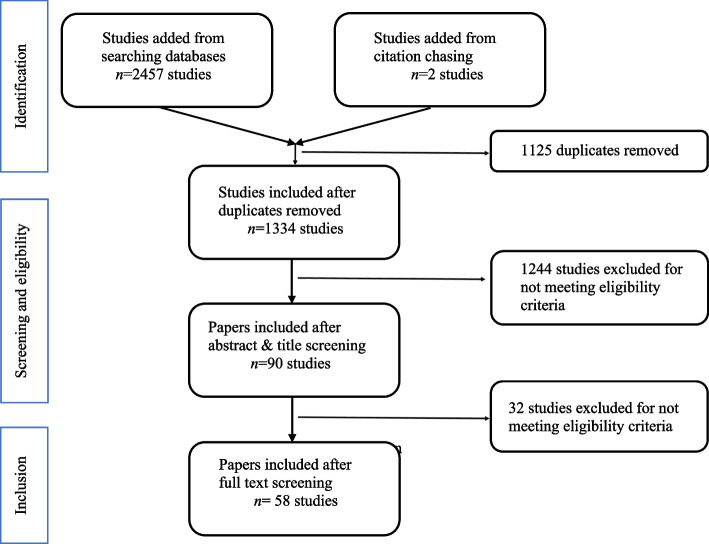
Consumer nutrition environments are defined as places in which consumers interact with the food they eat; these food choices can impact human and planetary health. Assessment measures for consumer nutrition environments are numerous, and vary widely on what, and how, they assess the food environment. The objective of this scoping review was to synthesize existing evidence on nutrition environment measurements and their capacity to assess nutrient-dense food access and food sustainability capacity. Eligibility criteria were developed to capture relevant peer-reviewed literature about auditing measures designed to assess nutrient-dense foods and food sustainability capacity in the consumer nutrition environment. A search strategy was conducted to collect articles published between January 1, 2002-June 4, 2022, using PubMed, Web of Science, Scopus, PsycINFO and the Cochrane library electronic databases. After screening 2457 manuscripts, 58 met inclusion criteria. Study aims, funding source(s), types of retailers assessed, assessment format and name, constructs measured, food categories measured, assessment of validity and/or reliability, and other relevant data were extracted from each manuscript. Results showed that most measures use checklists, surveys, questionnaires or similar methods to assess availability, quality, and price of select food items as assessment constructs. Most do not assess nutrient-dense food availability, and even fewer assess food sustainability. Development of comprehensive, reliable, and valid consumer nutrition environment measures that assess nutrient-dense food availability and food sustainability is important for research, planning, evaluation and advocacy aimed at improving consumer food environments for human and planetary health.
消费者营养环境被定义为消费者与他们所食用的食物进行互动的场所;这些食物选择会影响人类健康和地球健康。消费者营养环境的评估方法众多,在评估内容和评估方式上差异很大。本范围综述的目的是综合现有关于营养环境测量及其评估营养丰富食物可及性和食物可持续性能力的证据。制定了纳入标准,以收集有关旨在评估消费者营养环境中营养丰富食物和食物可持续性能力的审核措施的相关同行评审文献。采用检索策略,利用PubMed、科学网、Scopus、PsycINFO和考克兰图书馆电子数据库收集2002年1月1日至2022年6月4日期间发表的文章。在筛选了2457篇手稿后,58篇符合纳入标准。从每篇手稿中提取研究目的、资金来源、评估的零售商类型、评估形式和名称、测量的构念、测量的食物类别、有效性和/或可靠性评估以及其他相关数据。结果表明,大多数测量方法使用清单、调查、问卷或类似方法来评估选定食品的可获得性、质量和价格作为评估构念。大多数方法不评估营养丰富食物的可获得性,评估食物可持续性的更少。开发全面、可靠且有效的消费者营养环境测量方法,以评估营养丰富食物的可获得性和食物可持续性,对于旨在改善消费者食物环境以促进人类健康和地球健康的研究、规划、评估和宣传至关重要。