Department of Mini-Invasive Spinal Surgery, The Third People's Hospital of Henan Province, Zhengzhou, 450006, Henan, China.
Department of Clinical Laboratory, Luohe Central Hospital, Luohe, 462300, Henan, China.
Sci Rep. 2024 Jan 16;14(1):1386. doi: 10.1038/s41598-024-51732-1.
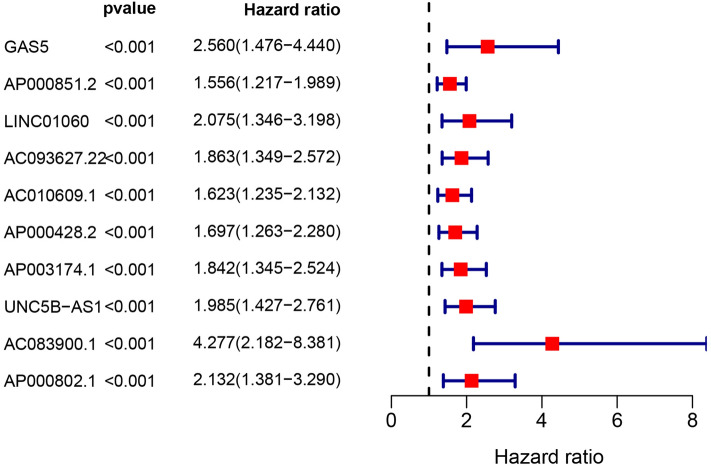
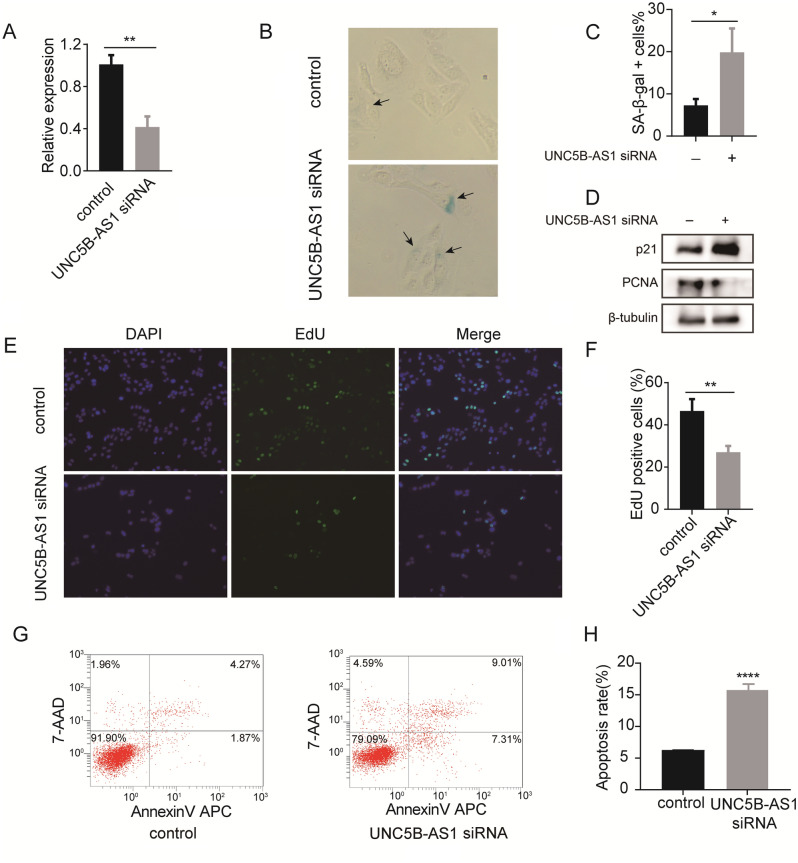
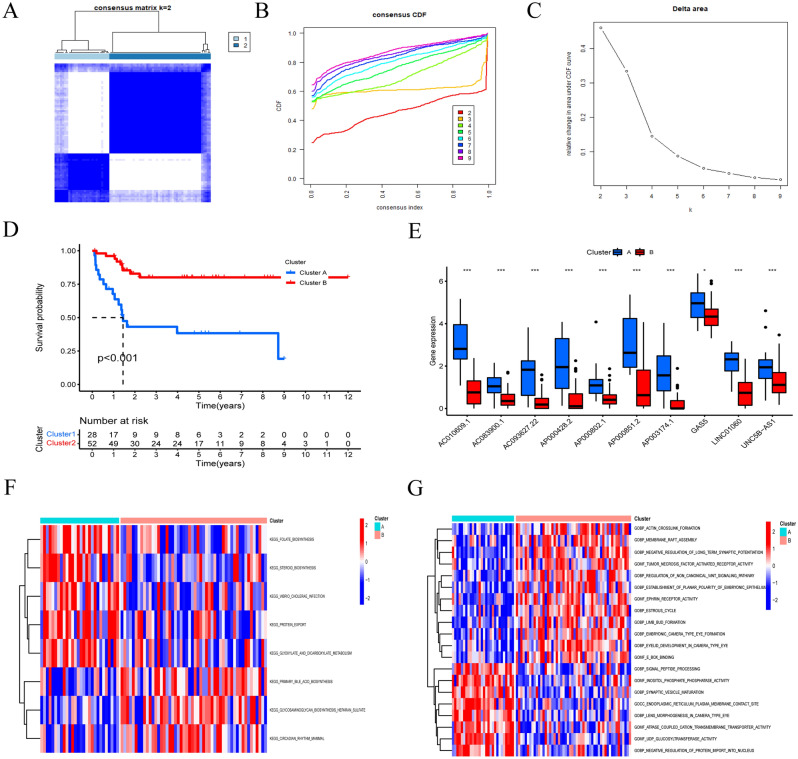
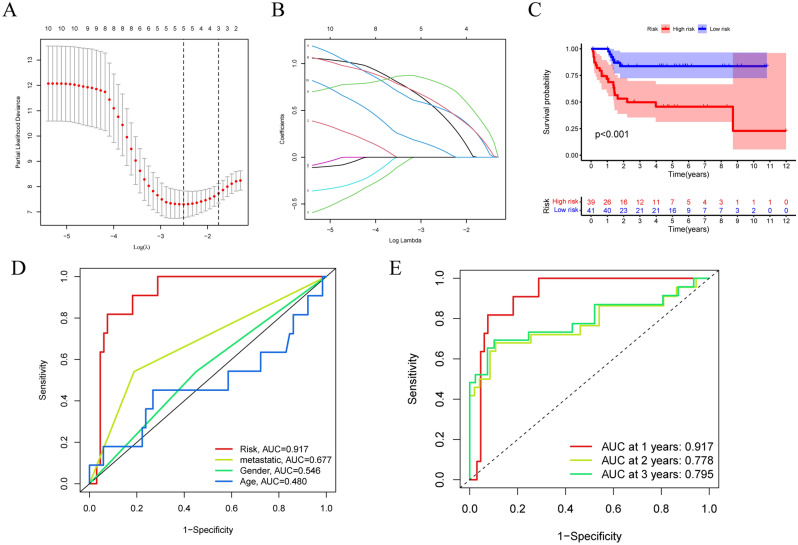
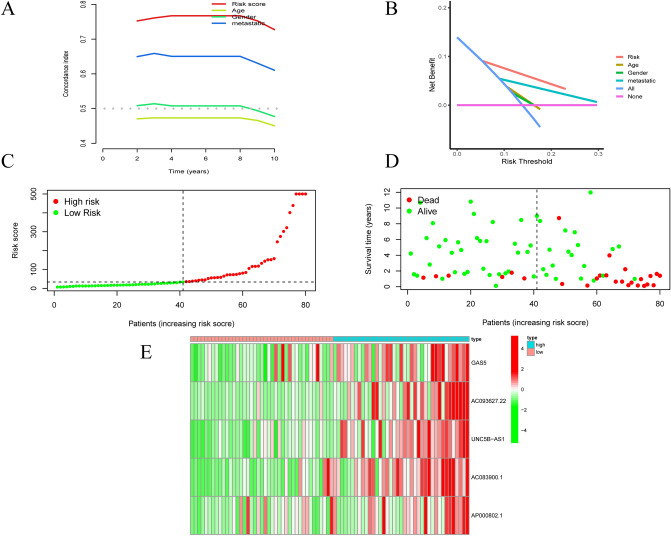
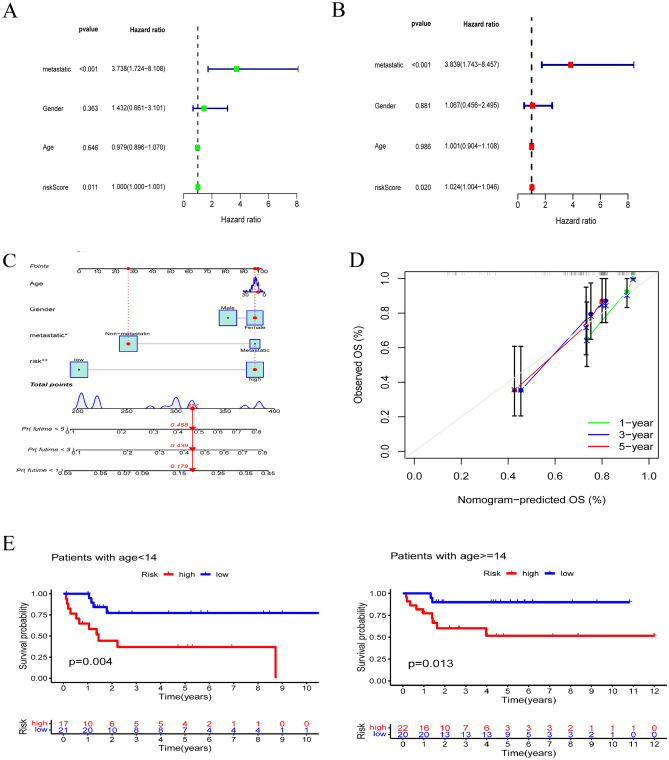
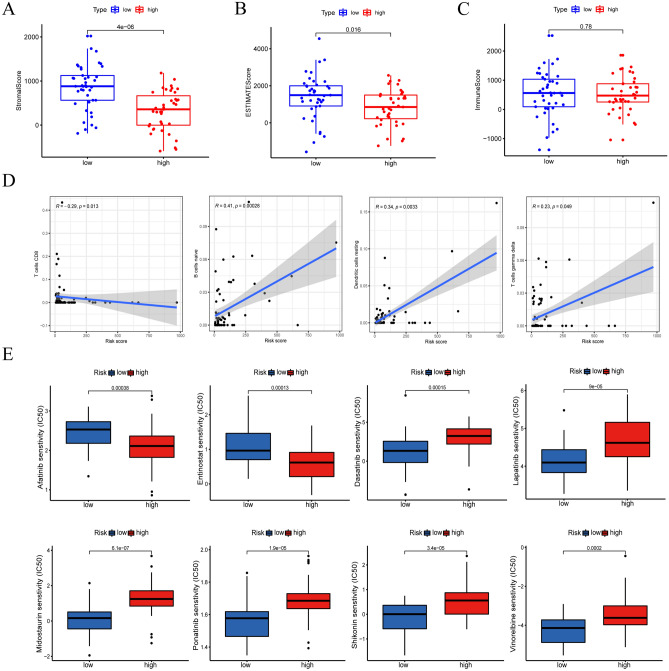
Osteosarcoma (OS) is one of the most prevalent bone tumors in adolescents, and the correlation between aging and OS remains unclear. Currently, few accurate and reliable biomarkers have been determined for OS prognosis. To address this issue, we carried out a detailed bioinformatics analysis based on OS with data from the Cancer Genome Atlas data portal and Human Aging Genomic Resources database, as well as in vitro experiments. A total of 88 OS samples with gene expression profiles and corresponding clinical characteristics were obtained. Through univariate Cox regression analysis and survival analysis, 10 aging-associated survival lncRNAs (AASRs) were identified to be associated with the overall survival of OS patients. Based on the expression levels of the 10 AASRs, the OS patients were classified into two clusters (Cluster A and Cluster B). Cluster A had a worse prognosis, while Cluster B had a better prognosis. Then, 5 AASRs were ultimately included in the signature through least absolute shrinkage and selection operator-Cox regression analysis. Kaplan‒Meier survival analysis verified that the high-risk group exhibited a worse prognosis than the low-risk group. Furthermore, univariate and multivariate Cox regression analyses confirmed that the riskScore was an independent prognostic factor for OS patients. Subsequently, we discovered that the risk signature was correlated with the properties of the tumor microenvironment and immune cell infiltration. Specifically, there was a positive association between the risk model and naïve B cells, resting dendritic cells and gamma delta T cells, while it was negatively related to CD8 T cells. Finally, in vitro experiments, we found that UNC5B-AS1 inhibited OS cells from undergoing cellular senescence and apoptosis, thereby promoting OS cells proliferation. In conclusion, we constructed and verified a 5 AASR-based signature, that exhibited excellent performance in evaluating the overall survival of OS patients. In addition, we found that UNC5B-AS1 might inhibit the senescence process, thus leading to the development and progression of OS. Our findings may provide novel insights into the treatment of OS patients.
骨肉瘤(OS)是青少年中最常见的骨肿瘤之一,衰老与 OS 之间的相关性尚不清楚。目前,针对 OS 预后,尚未确定准确可靠的生物标志物。为了解决这一问题,我们基于从癌症基因组图谱数据门户和人类衰老基因组资源数据库以及体外实验中获得的 OS 数据进行了详细的生物信息学分析。共获得了 88 个具有基因表达谱和相应临床特征的 OS 样本。通过单变量 Cox 回归分析和生存分析,确定了 10 个与 OS 患者总生存率相关的衰老相关的长链非编码 RNA(AASR)。基于这 10 个 AASR 的表达水平,将 OS 患者分为两个聚类(Cluster A 和 Cluster B)。Cluster A 的预后较差,而 Cluster B 的预后较好。然后,通过最小绝对收缩和选择算子-Cox 回归分析,最终有 5 个 AASR 被纳入该特征。Kaplan-Meier 生存分析验证了高风险组的预后比低风险组差。此外,单变量和多变量 Cox 回归分析证实,风险评分是 OS 患者的独立预后因素。随后,我们发现风险签名与肿瘤微环境和免疫细胞浸润的特性相关。具体来说,风险模型与幼稚 B 细胞、静息树突状细胞和γδT 细胞呈正相关,而与 CD8 T 细胞呈负相关。最后,在体外实验中,我们发现 UNC5B-AS1 抑制 OS 细胞发生细胞衰老和凋亡,从而促进 OS 细胞增殖。总之,我们构建并验证了一个基于 5 个 AASR 的特征,该特征在评估 OS 患者的总生存率方面表现出优异的性能。此外,我们发现 UNC5B-AS1 可能抑制衰老过程,从而导致 OS 的发生和发展。我们的研究结果可能为 OS 患者的治疗提供新的思路。