Department of Biological Sciences, Science Centre, School of Health, Science and Wellbeing, Staffordshire University, Leek Road, Stoke-on-Trent ST4 2DF, UK.
Faculty of Medicine, Health and Life Sciences, Institute for Global Food Security (IGFS), School of Biological Sciences, Queen's University Belfast, 19 Chlorine Gardens, Belfast BT9 5DL, UK.
Genes (Basel). 2022 Jan 24;13(2):208. doi: 10.3390/genes13020208.
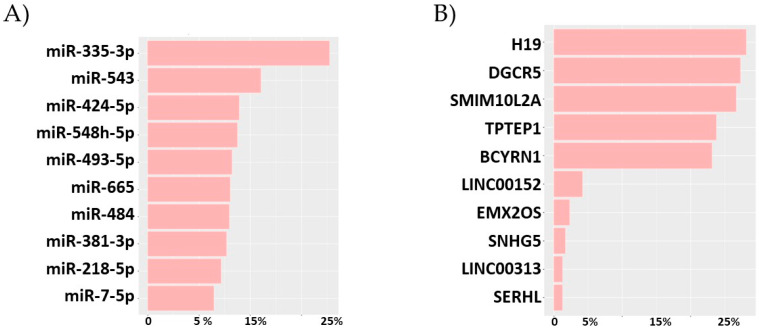
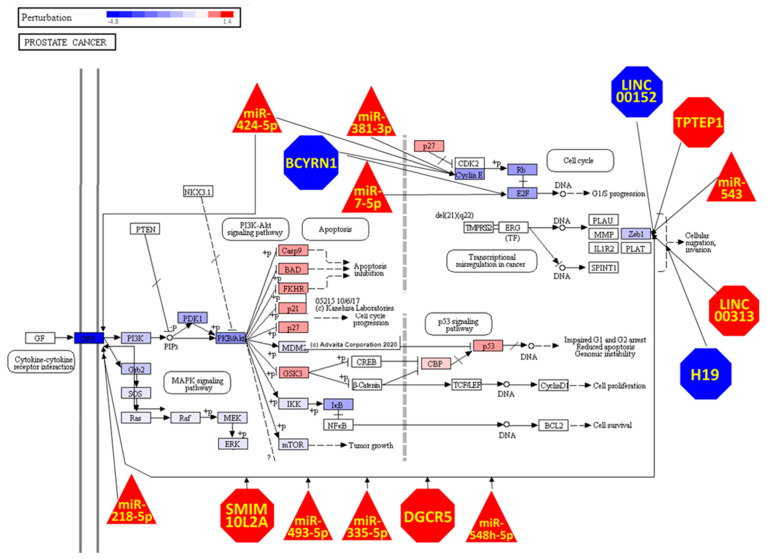
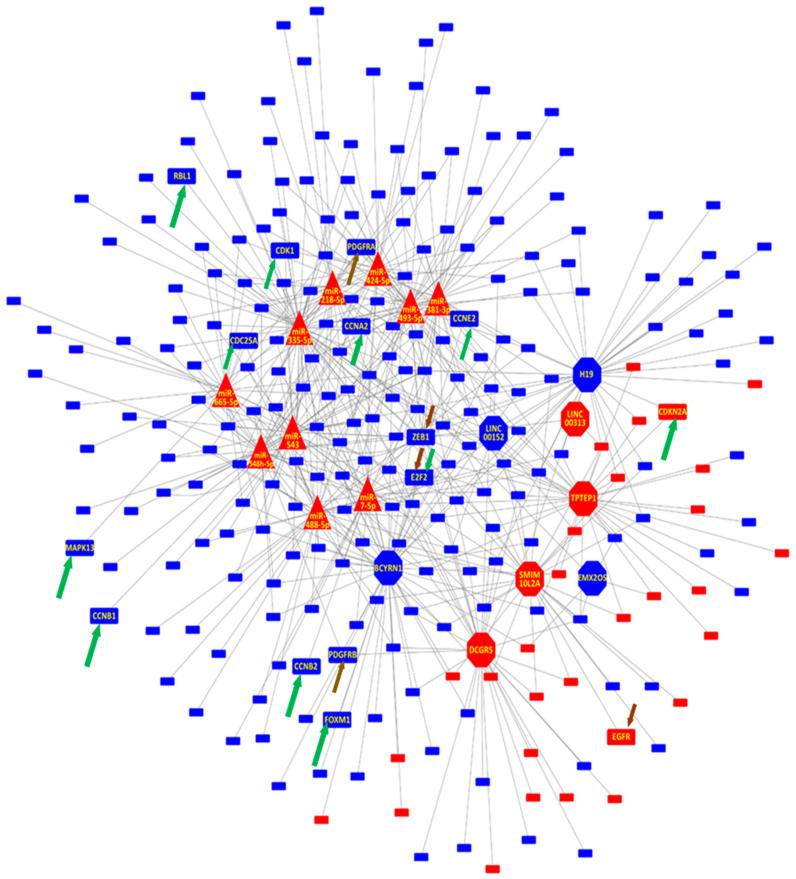
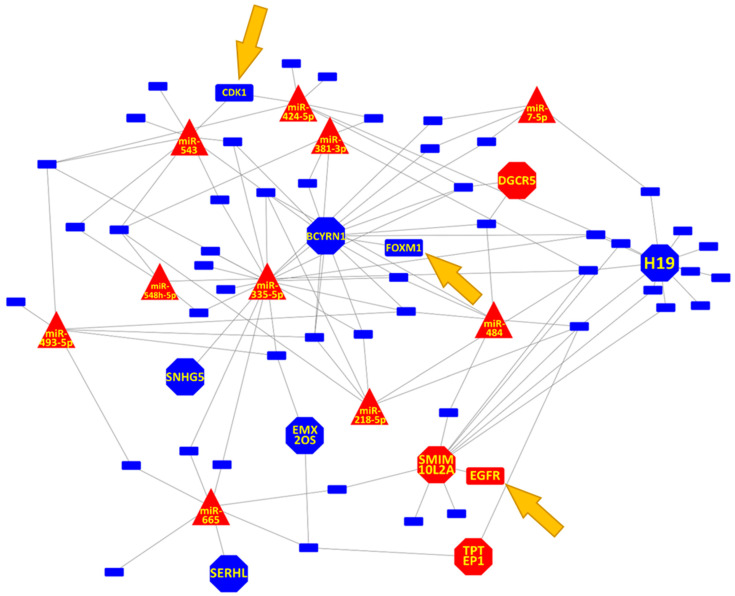
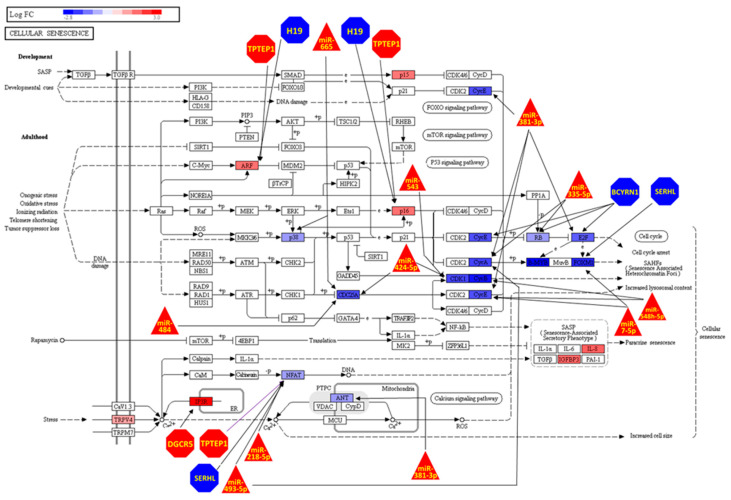
Cellular senescence is a state of permanent growth arrest that arises once cells reach the limit of their proliferative capacity. It creates an inflammatory microenvironment favouring the initiation and progression of various age-related diseases, including prostate cancer. Non-coding RNAs (ncRNAs) have emerged as important regulators of cellular gene expression. Nonetheless, very little is known about the interplay of microRNAs (miRNAs) and long non-coding RNAs (lncRNAs) and how deregulation of ncRNA networks promotes cellular senescence. To investigate this, human prostate epithelial cells were cultured through different passages until senescent, and their RNA was extracted and sequenced using RNA sequencing (RNAseq) and microRNA sequencing (miRNA-seq) miRNAseq. Differential expression (DE) gene analysis was performed to compare senescent and proliferating cells with Limma, miRNA-target interactions with multiMiR, lncRNA-target interactions using TCGA data and network evaluation with miRmapper. We found that miR-335-3p, miR-543 and the lncRNAs H19 and SMIM10L2A all play central roles in the regulation of cell cycle and DNA repair processes. Expression of most genes belonging to these pathways were down-regulated by senescence. Using the concept of network centrality, we determined the top 10 miRNAs and lncRNAs, with miR-335-3p and H19 identified as the biggest hubs for miRNAs and lncRNA respectively. These ncRNAs regulate key genes belonging to pathways involved in cell senescence and prostate cancer demonstrating their central role in these processes and opening the possibility for their use as biomarkers or therapeutic targets to mitigate against prostate ageing and carcinogenesis.
细胞衰老(cellular senescence)是一种细胞生长停止的状态,一旦细胞达到其增殖能力的极限,就会出现这种状态。它会产生一种炎症微环境,有利于各种与年龄相关的疾病(包括前列腺癌)的发生和发展。非编码 RNA(ncRNAs)已成为细胞基因表达的重要调控因子。然而,关于 microRNA(miRNAs)和长非编码 RNA(lncRNAs)的相互作用以及 ncRNA 网络的失调如何促进细胞衰老,我们知之甚少。为了研究这一点,我们培养了人前列腺上皮细胞,通过不同的传代直到衰老,并使用 RNA 测序(RNAseq)和 microRNA 测序(miRNA-seq)对其 RNA 进行提取和测序。通过 Limma 进行差异表达(DE)基因分析,以比较衰老和增殖细胞,使用 multiMiR 进行 miRNA 靶标相互作用分析,使用 TCGA 数据进行 lncRNA 靶标相互作用分析,并使用 miRmapper 进行网络评估。我们发现,miR-335-3p、miR-543 和 lncRNAs H19 和 SMIM10L2A 都在调节细胞周期和 DNA 修复过程中发挥核心作用。这些途径的大多数基因的表达在衰老时被下调。使用网络中心性的概念,我们确定了前 10 个 miRNA 和 lncRNA,miR-335-3p 和 H19 分别被确定为 miRNA 和 lncRNA 的最大枢纽。这些 ncRNAs 调节属于细胞衰老和前列腺癌相关途径的关键基因,证明了它们在这些过程中的核心作用,并为它们作为生物标志物或治疗靶点的应用提供了可能性,以减轻前列腺衰老和癌变。