Department of Biochemistry, Weill Cornell Medical College, New York, New York, USA.
Science for Life Laboratory, Department of Women's and Children's Health, Karolinska Institutet, Solna, Sweden.
J Biol Chem. 2024 Feb;300(2):105649. doi: 10.1016/j.jbc.2024.105649. Epub 2024 Jan 16.
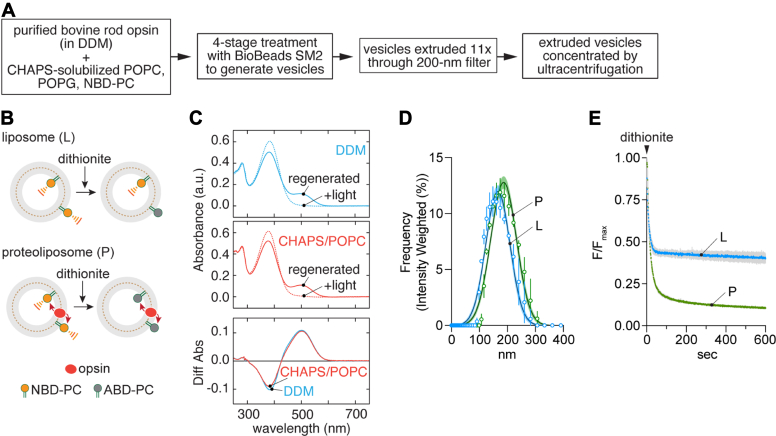
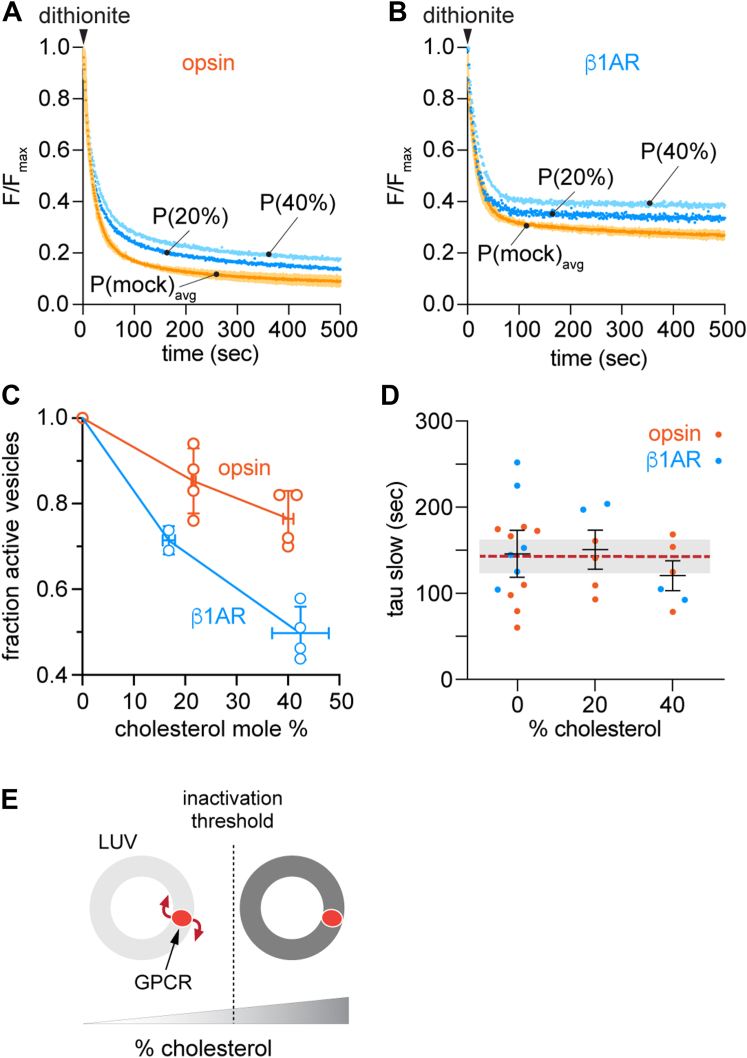
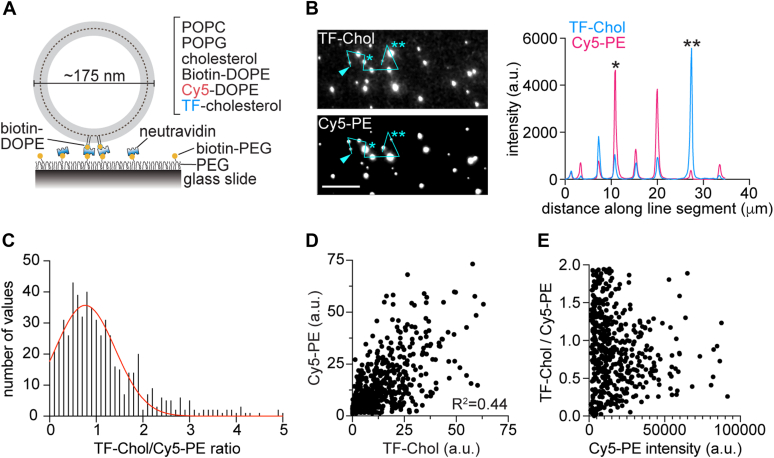
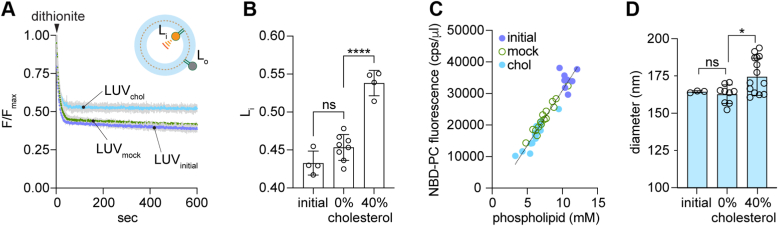
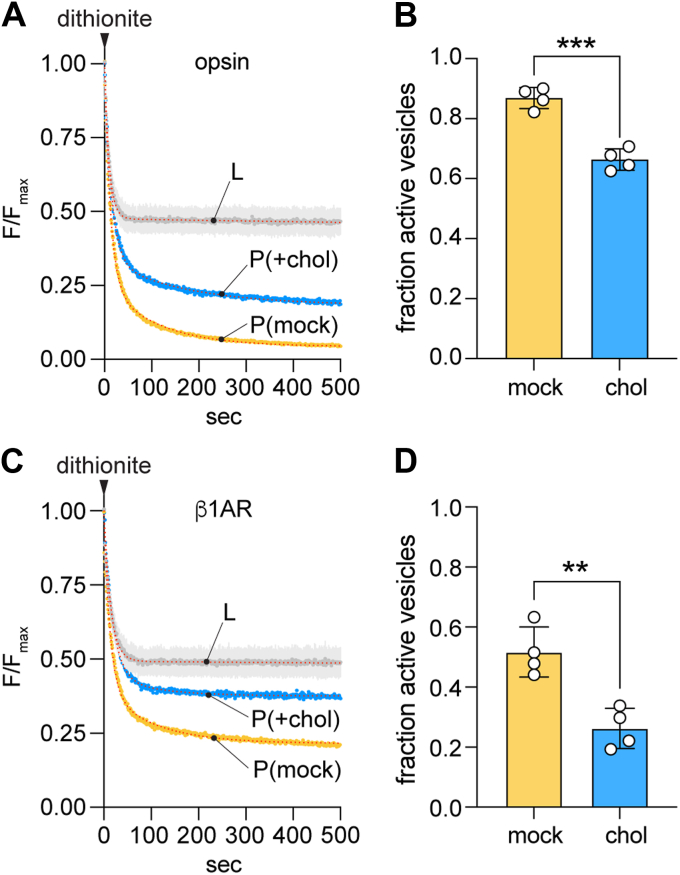
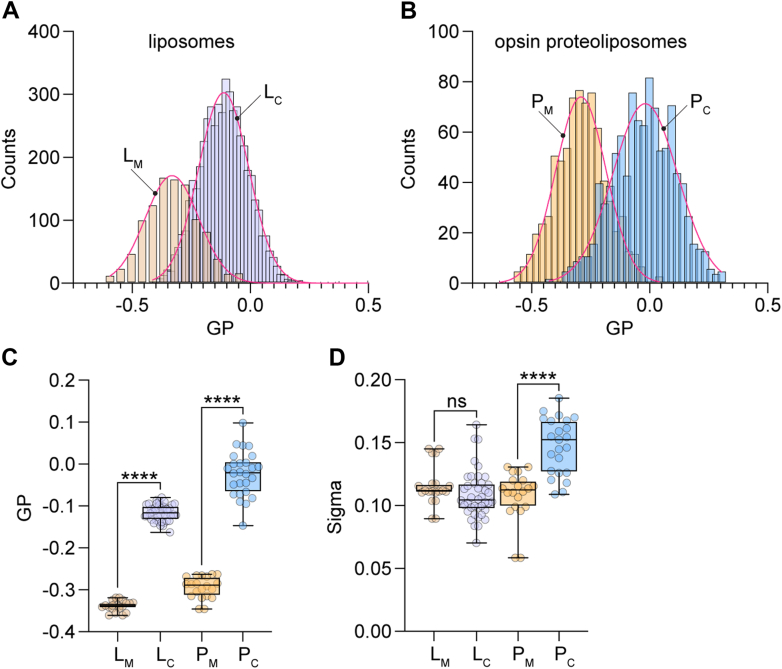
Class A G protein-coupled receptors (GPCRs), a superfamily of cell membrane signaling receptors, moonlight as constitutively active phospholipid scramblases. The plasma membrane of metazoan cells is replete with GPCRs yet has a strong resting trans-bilayer phospholipid asymmetry, with the signaling lipid phosphatidylserine confined to the cytoplasmic leaflet. To account for the persistence of this lipid asymmetry in the presence of GPCR scramblases, we hypothesized that GPCR-mediated lipid scrambling is regulated by cholesterol, a major constituent of the plasma membrane. We now present a technique whereby synthetic vesicles reconstituted with GPCRs can be supplemented with cholesterol to a level similar to that of the plasma membrane and show that the scramblase activity of two prototypical GPCRs, opsin and the β1-adrenergic receptor, is impaired upon cholesterol loading. Our data suggest that cholesterol acts as a switch, inhibiting scrambling above a receptor-specific threshold concentration to disable GPCR scramblases at the plasma membrane.
A 类 G 蛋白偶联受体 (GPCR) 是细胞膜信号转导受体的超家族,它们还兼职作为组成型活性磷脂翻转酶。真核细胞膜上充满了 GPCR,但具有强烈的静止跨双层磷脂不对称性,信号脂质磷脂酰丝氨酸局限于细胞质小叶。为了解释在存在 GPCR 翻转酶的情况下这种脂质不对称性的持续存在,我们假设 GPCR 介导的脂质翻转受到胆固醇的调节,胆固醇是质膜的主要成分。我们现在提出了一种技术,通过该技术可以用胆固醇补充用 GPCR 重建的合成囊泡,使其达到类似于质膜的水平,并表明两种典型 GPCR,视蛋白和β1-肾上腺素能受体的翻转酶活性在胆固醇加载时受到损害。我们的数据表明,胆固醇作为一种开关,在受体特异性阈值浓度以上抑制翻转,从而使质膜上的 GPCR 翻转酶失活。