Department of Oncology, Nanjing Drum Tower Hospital, Affiliated Hospital of Medical School, Nanjing University, Nanjing, China.
State Key Laboratory of Pharmaceutical Biotechnology, School of Life Sciences, Nanjing University, Nanjing, China.
EMBO Mol Med. 2024 Feb;16(2):251-266. doi: 10.1038/s44321-023-00012-y. Epub 2024 Jan 18.
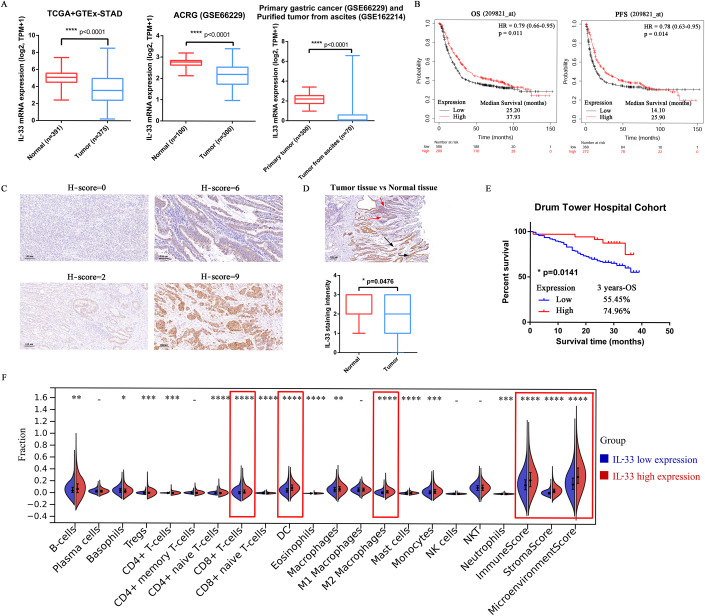
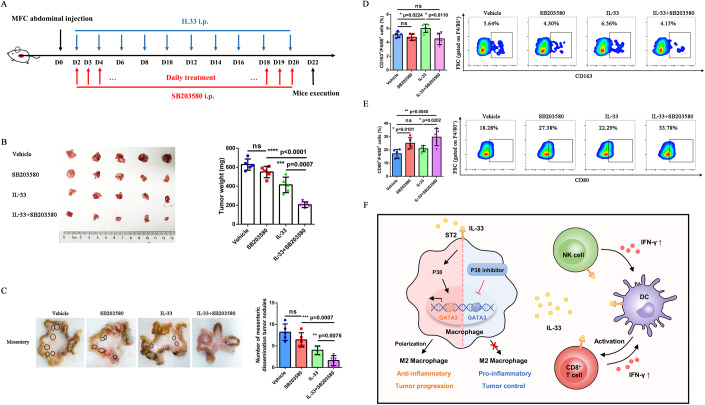
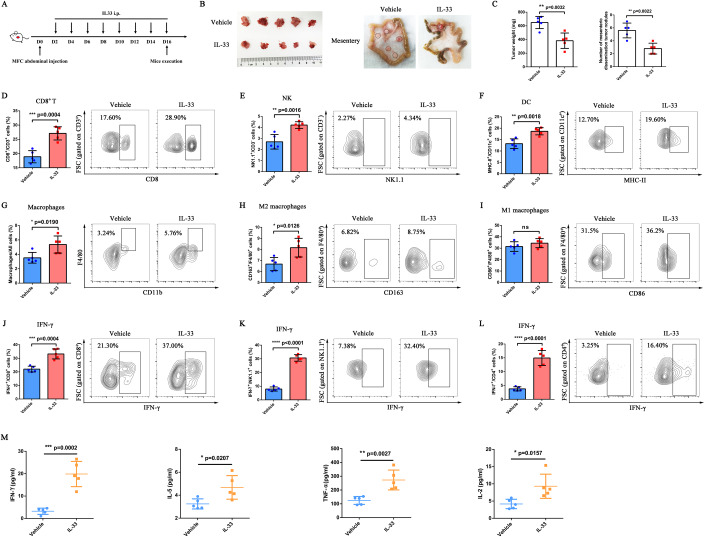
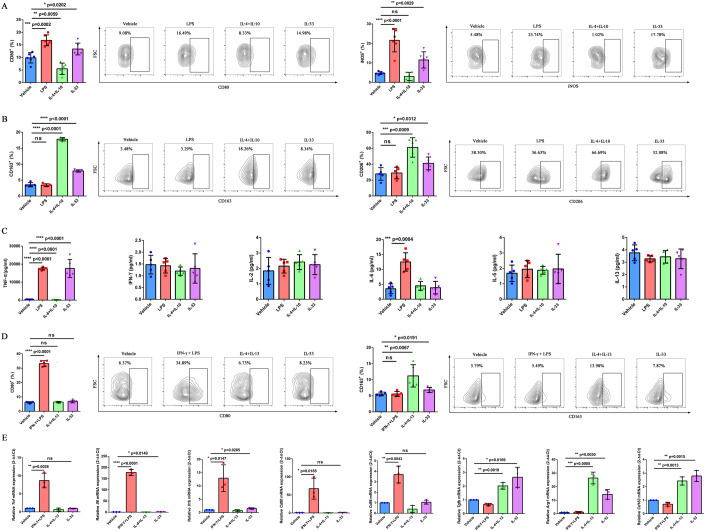
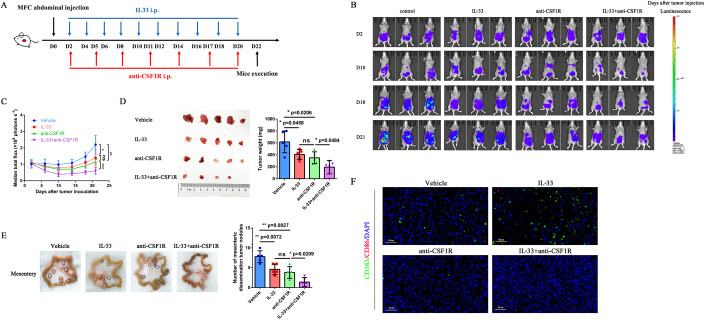
Peritoneal metastasis (PM) has a suppressive tumor immune microenvironment (TIME) that limits the effects of immunotherapy. This study aimed to investigate the immunomodulatory effects of intraperitoneal administration of IL-33, a cytokine that is reported to potentiate antitumor immunity and inhibit metastasis. We found survival was significantly prolonged in patients with high IL-33 mRNA expression. In immunocompetent mice, intraperitoneal administration of IL-33 could induce a celiac inflammatory environment, activate immunologic effector cells, and reverse the immunosuppressive tumor microenvironment, which effectively delayed tumor progression and PM of gastric cancer. Mechanistically, IL-33 could induce M2 polarization by activating p38-GATA-binding protein 3 signaling. IL-33 combined with anti-CSF1R or p38 inhibitor to regulate tumor-associated macrophages (TAMs) had a synergistic antitumor effect. Inducing a local inflammatory milieu by IL-33 administration provided a novel approach for treating peritoneal metastasis, which, when combined with TAM reprogramming to reshape TIME, can achieve better treatment efficacy.
腹膜转移(PM)具有抑制肿瘤免疫微环境(TIME)的作用,限制了免疫疗法的效果。本研究旨在探讨腹腔内给予白细胞介素 33(一种被报道能增强抗肿瘤免疫和抑制转移的细胞因子)的免疫调节作用。我们发现,IL-33 mRNA 表达水平高的患者的生存率显著延长。在免疫功能正常的小鼠中,腹腔内给予 IL-33 可以诱导腹腔炎症环境,激活免疫效应细胞,并逆转免疫抑制性肿瘤微环境,从而有效延缓胃癌的肿瘤进展和腹膜转移。从机制上讲,IL-33 可以通过激活 p38-GATA 结合蛋白 3 信号通路诱导 M2 极化。IL-33 联合抗 CSF1R 或 p38 抑制剂调节肿瘤相关巨噬细胞(TAMs)具有协同的抗肿瘤作用。通过 IL-33 给药诱导局部炎症微环境为治疗腹膜转移提供了一种新方法,当与 TAM 重编程重塑 TIME 结合时,可以获得更好的治疗效果。