Jia Yiting, Zhang Lu, Liu Ziyi, Mao Chenfeng, Ma Zihan, Li Wenqiang, Yu Fang, Wang Yingbao, Huang Yaqian, Zhang Weizhen, Zheng Jingang, Wang Xian, Xu Qingbo, Zhang Jian, Feng Wei, Yun Caihong, Liu Chuanju, Sun Jinpeng, Fu Yi, Cui Qinghua, Kong Wei
Department of Physiology and Pathophysiology, School of Basic Medical Sciences, Peking University; Key Laboratory of Molecular Cardiovascular Science, Ministry of Education, Beijing, China.
The Affiliated Hospital of Qingdao University, Qingdao, China.
Cell Discov. 2022 Mar 1;8(1):21. doi: 10.1038/s41421-021-00363-1.
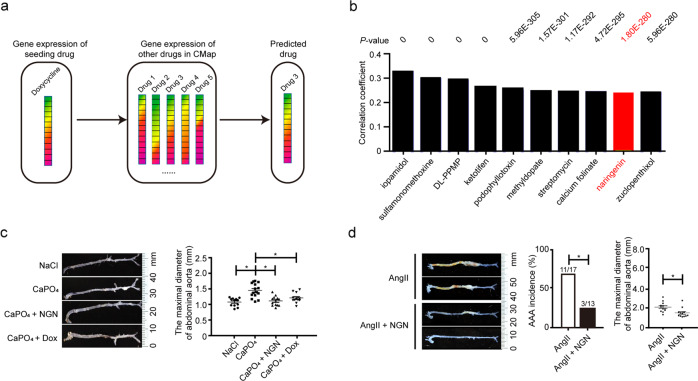
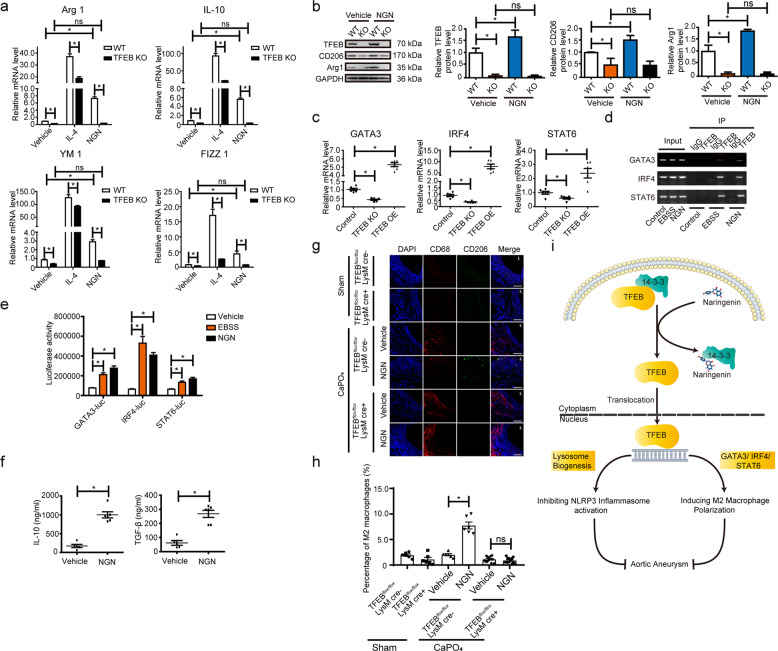
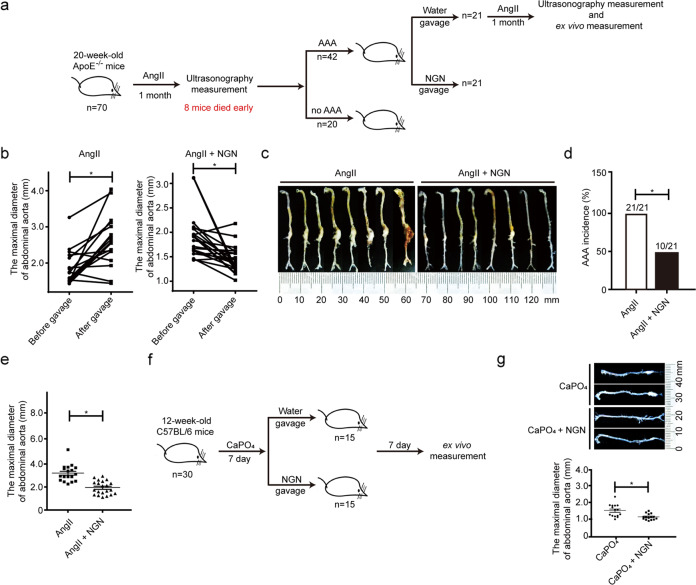
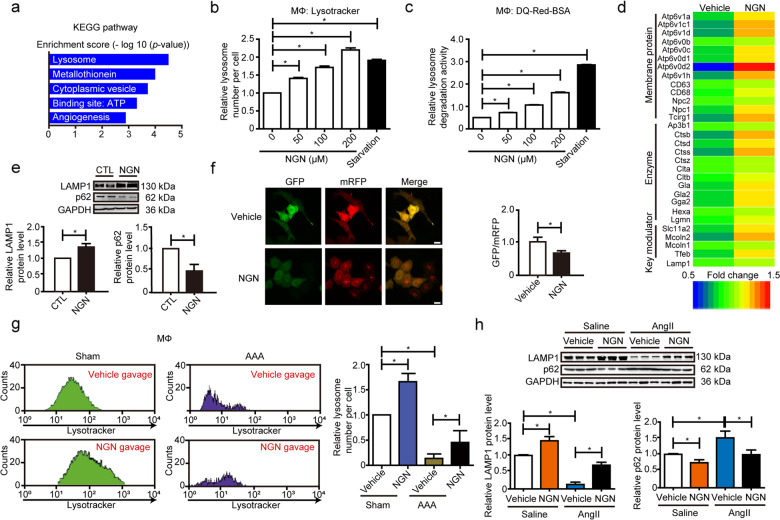
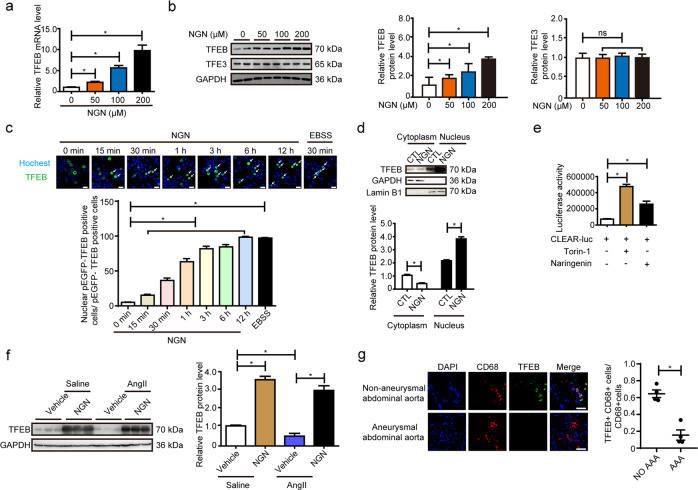
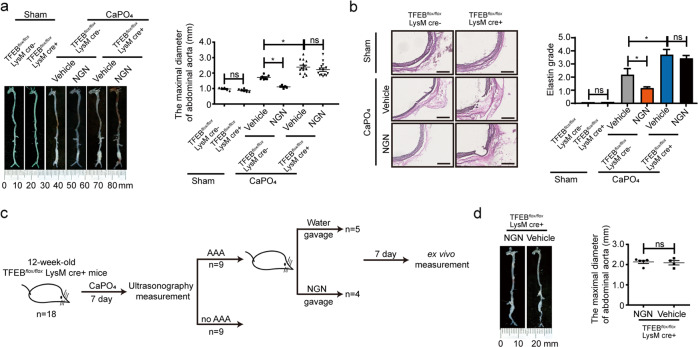
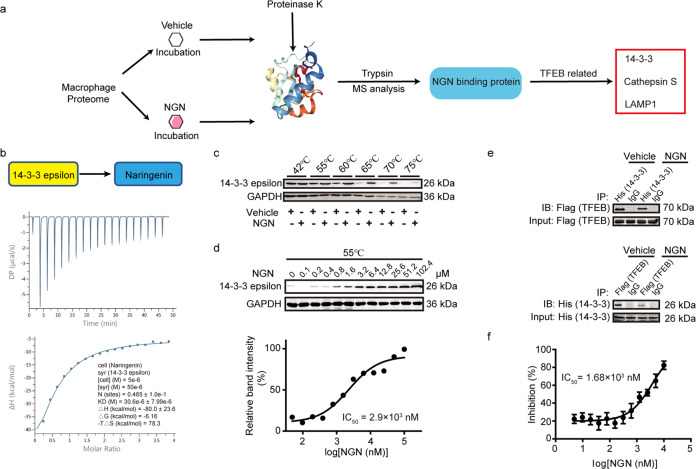
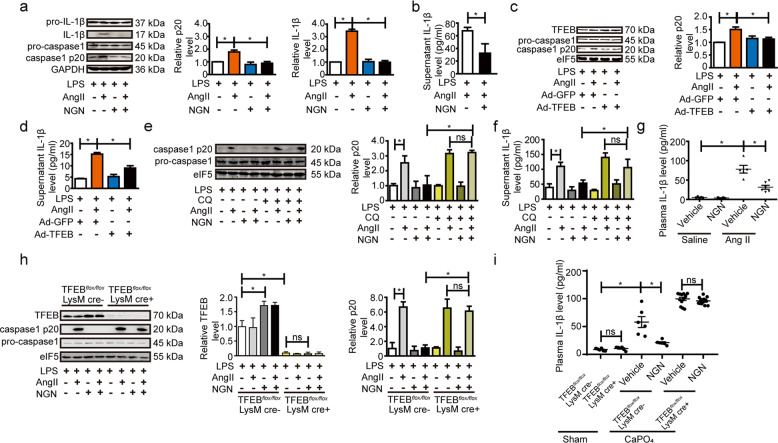
Abdominal aortic aneurysm (AAA) is a lethal cardiovascular disease, and there is no proven drug treatment for this condition. In this study, by using the Connectivity Map (CMap) approach, we explored naringenin, a naturally occurring citrus flavonoid, as a putative agent for inhibiting AAA. We then validated the prediction with two independent mouse models of AAA, calcium phosphate (CaPO)-induced C57BL/6J mice and angiotensin II-infused ApoE mice. Naringenin effectively blocked the formation of AAAs and the progression of established AAAs. Transcription factor EB (TFEB) is the master regulator of lysosome biogenesis. Intriguingly, the protective role of naringenin on AAA was abolished by macrophage-specific TFEB depletion in mice. Unbiased interactomics, combined with isothermal titration calorimetry (ITC) and cellular thermal shift assays (CETSAs), further revealed that naringenin is directly bound to 14-3-3 epsilon blocked the TFEB-14-3-3 epsilon interaction, and therefore promoted TFEB nuclear translocation and activation. On one hand, naringenin activated lysosome-dependent inhibition of the NLRP3 inflammasome and repressed aneurysmal inflammation. On the other hand, naringenin induced TFEB-dependent transcriptional activation of GATA3, IRF4, and STAT6 and therefore promoted reparative M2 macrophage polarization. In summary, naturally derived naringenin or macrophage TFEB activation shows promising efficacy for the treatment of AAA.
腹主动脉瘤(AAA)是一种致命的心血管疾病,目前尚无经证实有效的药物治疗方法。在本研究中,我们采用连通性图谱(CMap)方法,探索了天然存在的柑橘类黄酮柚皮素作为一种潜在的抑制AAA的药物。然后,我们使用两种独立的AAA小鼠模型,即磷酸钙(CaPO)诱导的C57BL/6J小鼠和输注血管紧张素II的ApoE小鼠,对这一预测进行了验证。柚皮素有效地阻断了AAA的形成以及已形成的AAA的进展。转录因子EB(TFEB)是溶酶体生物发生的主要调节因子。有趣的是,在小鼠中通过巨噬细胞特异性敲除TFEB消除了柚皮素对AAA的保护作用。无偏相互作用组学,结合等温滴定量热法(ITC)和细胞热位移分析(CETSA),进一步揭示柚皮素直接与14-3-3ε结合,阻断了TFEB与14-3-3ε的相互作用,从而促进了TFEB的核转位和激活。一方面,柚皮素激活了溶酶体依赖性的NLRP3炎性小体抑制作用,并抑制了动脉瘤炎症。另一方面,柚皮素诱导了GATA3、IRF4和STAT6的TFEB依赖性转录激活,从而促进了具有修复作用的M2巨噬细胞极化。总之,天然来源的柚皮素或巨噬细胞TFEB激活在治疗AAA方面显示出有前景的疗效。