Department of Haematology-Oncology, National University Cancer Institute, Singapore.
University Surgical Cluster, National University Health System, Singapore.
J Clin Oncol. 2022 Aug 20;40(24):2830. doi: 10.1200/JCO.21.02745. Epub 2022 Jun 1.
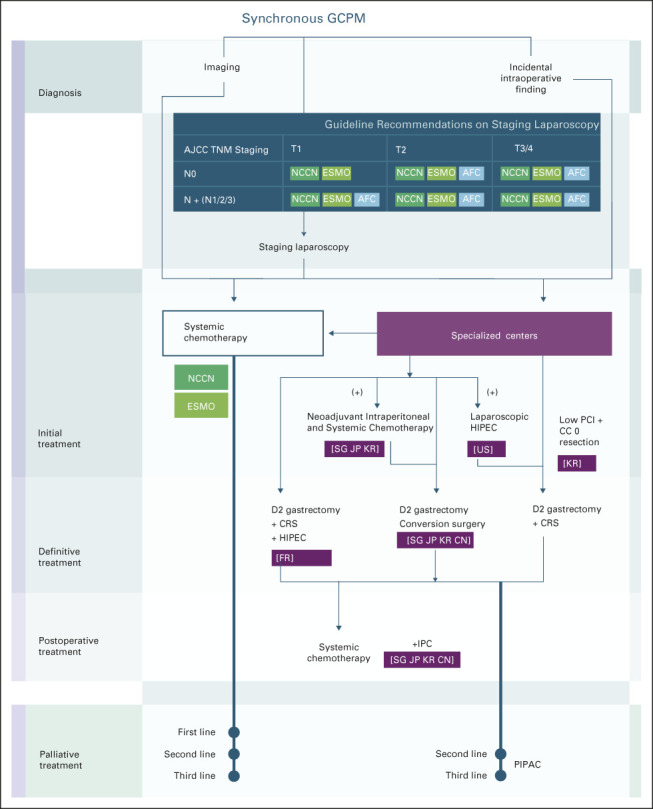
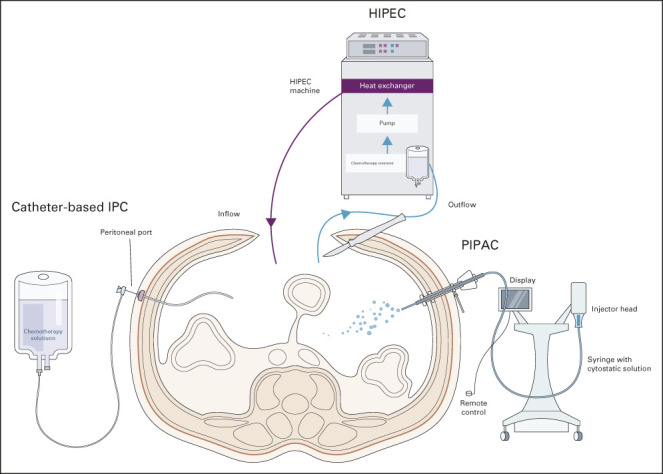
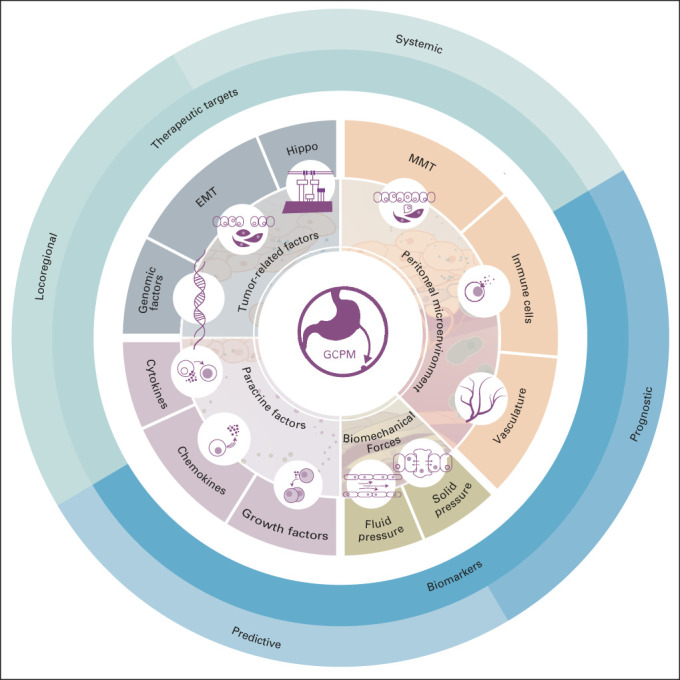
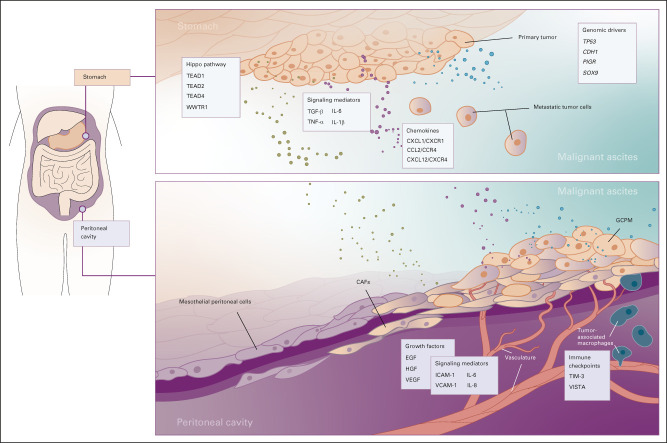
The peritoneum is a common site of metastasis in advanced gastric cancer (GC). Diagnostic laparoscopy is now routinely performed as part of disease staging, leading to an earlier diagnosis of synchronous peritoneal metastasis (PM). The biology of GCPM is unique and aggressive, leading to a dismal prognosis. These tumors tend to be resistant to traditional systemic therapy, and yet, this remains the current standard-of-care recommended by most international clinical guidelines. As this is an area of unmet clinical need, several translational studies and clinical trials have focused on addressing this specific disease state. Advances in genomic sequencing and molecular profiling have revealed several promising therapeutic targets and elucidated novel biology, particularly on the role of the surrounding tumor microenvironment in GCPM. Peritoneal-specific clinical trials are being designed with a combination of locoregional therapeutic strategies with systemic therapy. In this review, we summarize the new knowledge of cancer biology, advances in surgical techniques, and emergence of novel therapies as an integrated strategy emerges to address GCPM as a distinct clinical entity.
腹膜是晚期胃癌(GC)转移的常见部位。诊断性腹腔镜检查现在已常规用于疾病分期,从而更早地诊断出同步腹膜转移(PM)。GCPM 的生物学具有独特的侵袭性,导致预后不良。这些肿瘤往往对传统的系统治疗具有抗性,但这仍然是大多数国际临床指南推荐的当前标准治疗方法。由于这是一个未满足的临床需求领域,因此已经进行了几项转化研究和临床试验,以专门针对这种特定的疾病状态。基因组测序和分子分析的进展揭示了几个有前途的治疗靶点,并阐明了新的生物学,特别是周围肿瘤微环境在 GCPM 中的作用。正在设计针对腹膜的临床试验,将局部区域治疗策略与系统治疗相结合。在这篇综述中,我们总结了癌症生物学的新知识、手术技术的进步以及新型疗法的出现,这些都是作为一种综合策略来应对作为一种独特临床实体的 GCPM。