Lee Yea-Jin, Ahn Jin-Chul, Oh Chung-Hun
Department of Medicine, Dankook University, Cheonan-si, 31116, Republic of Korea.
Medical Laser Research Center, Graduate School of Medicine, Dankook University, Cheonan-si, 31116, Republic of Korea.
Nutr Metab (Lond). 2024 Jan 19;21(1):7. doi: 10.1186/s12986-024-00781-4.
Bone is continuously produced by osteoblasts and resorbed by osteoclasts to maintain homeostasis. Impaired bone resorption by osteoclasts causes bone diseases such as osteoporosis and arthritis. Most pharmacological treatment of osteoporosis focuses on inhibiting osteoclast differentiation, often to restore osteoclast/osteoclast balance. However, recent osteoporosis treatments have various side effects. According to a recent study, resveratrol, known as a stilbenoid family, is known to increase bone density, and the osteoclast inhibitory effect was confirmed using oxyresveratrol, a stilbenoid family. Here, we investigated the effect of oxyresveratrol on osteoclast differentiation and an ovariectomized mouse model.
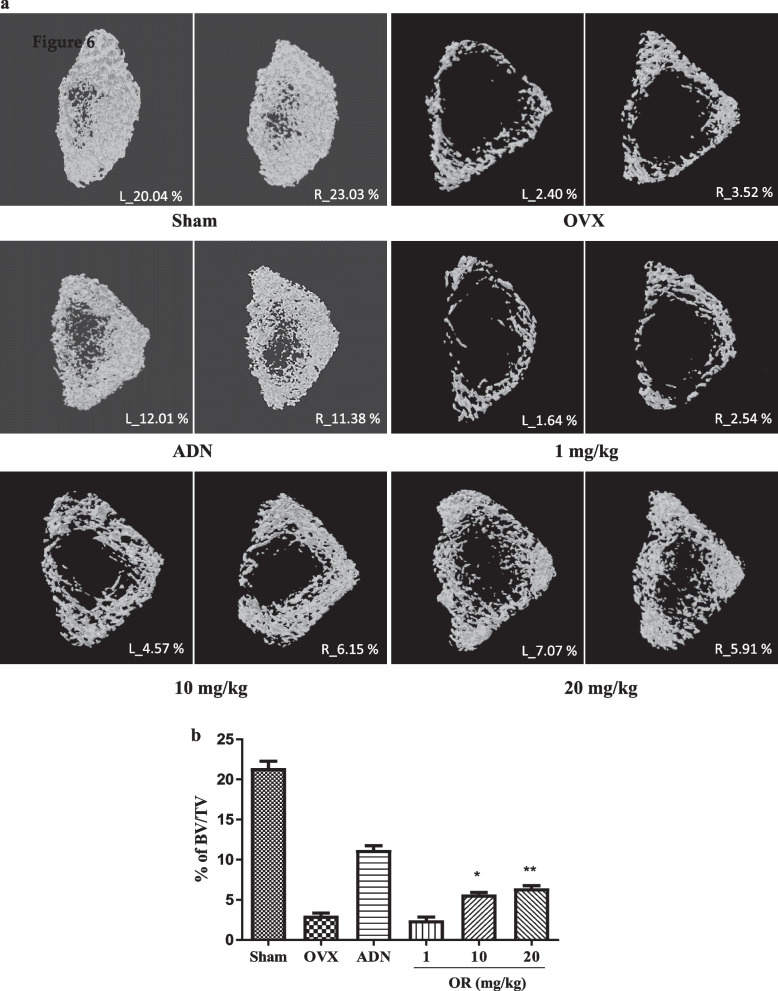
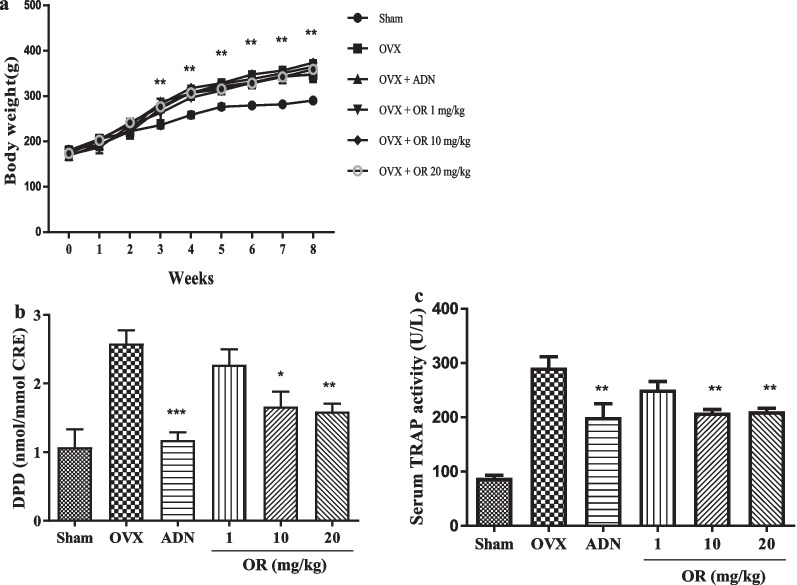
Mouse leukemia monocyte/macrophage cell line RAW 264.7 was treated with oxyresveratrol, and cell cytotoxicity was confirmed by measuring MTT assay. Tartrate-resistant acid phosphatase (TRAP), an enzyme marker for osteoclasts, was confirmed by staining. In addition, osteoclast differentiation markers and MAPK-related markers were confirmed at the mRNA level and protein expression. The effect of oxyresveratrol was confirmed using ovariectomized mice. Deoxypyridinoline (DPD) was measured using mouse urine and TRAP activity was observed using serum. Bone mineral density was also measured using Micro-CT.
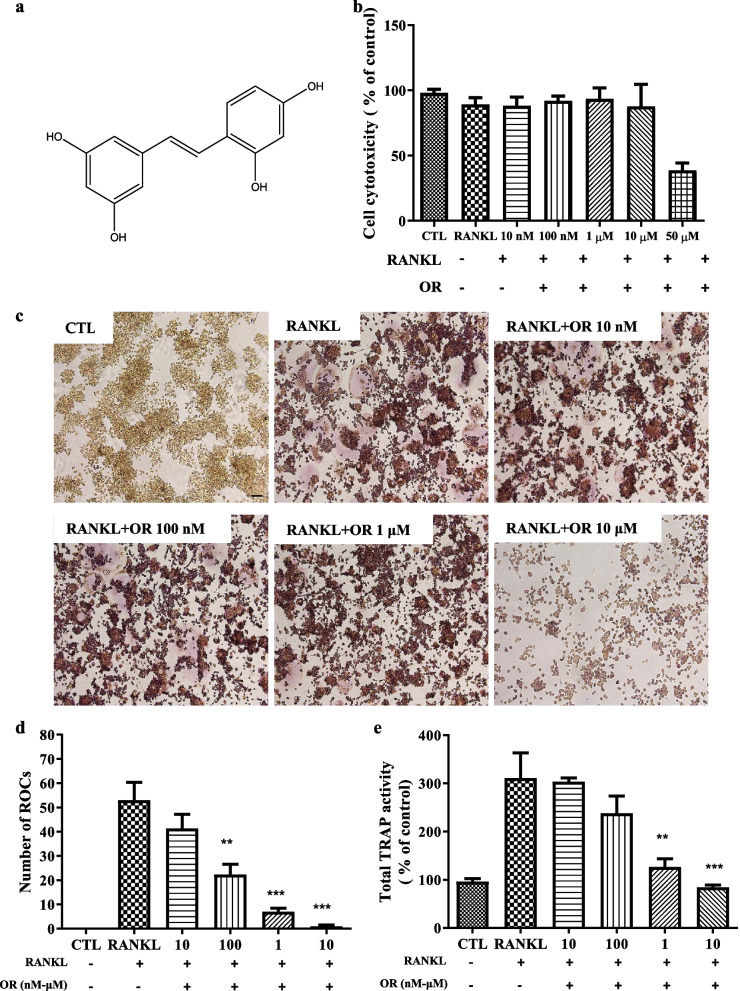
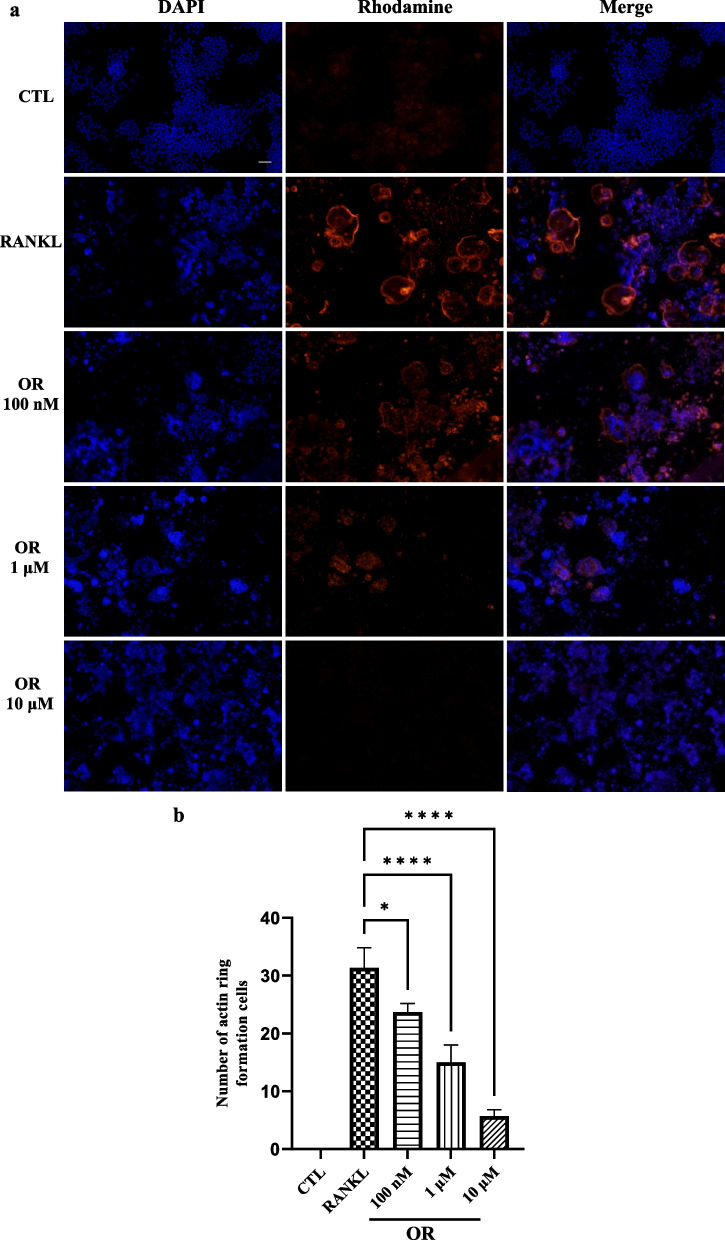
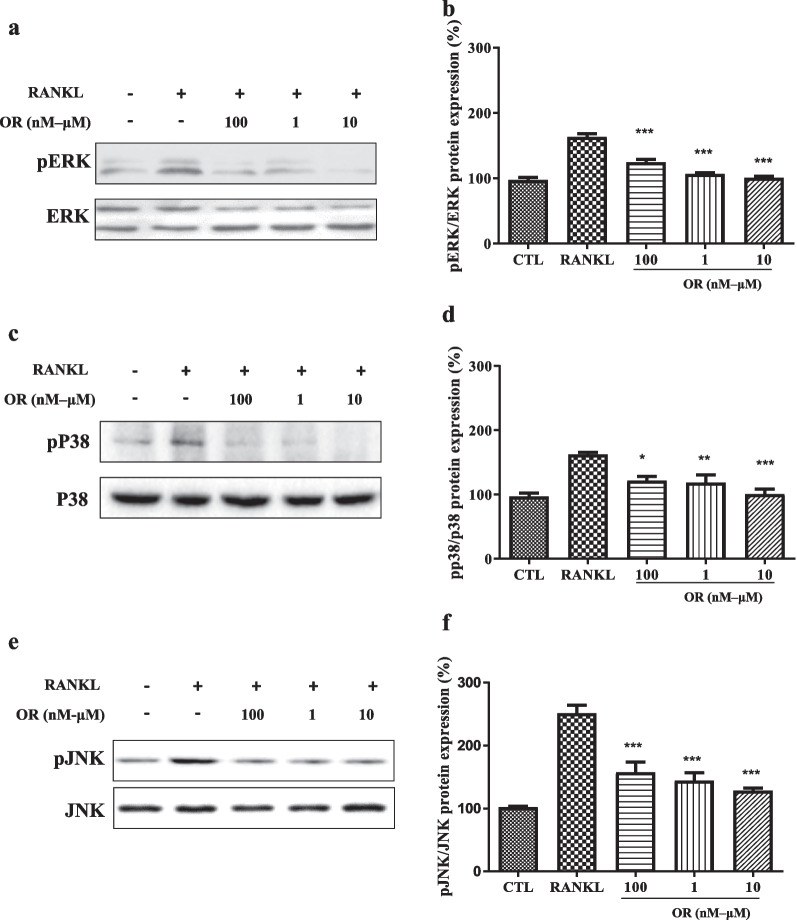
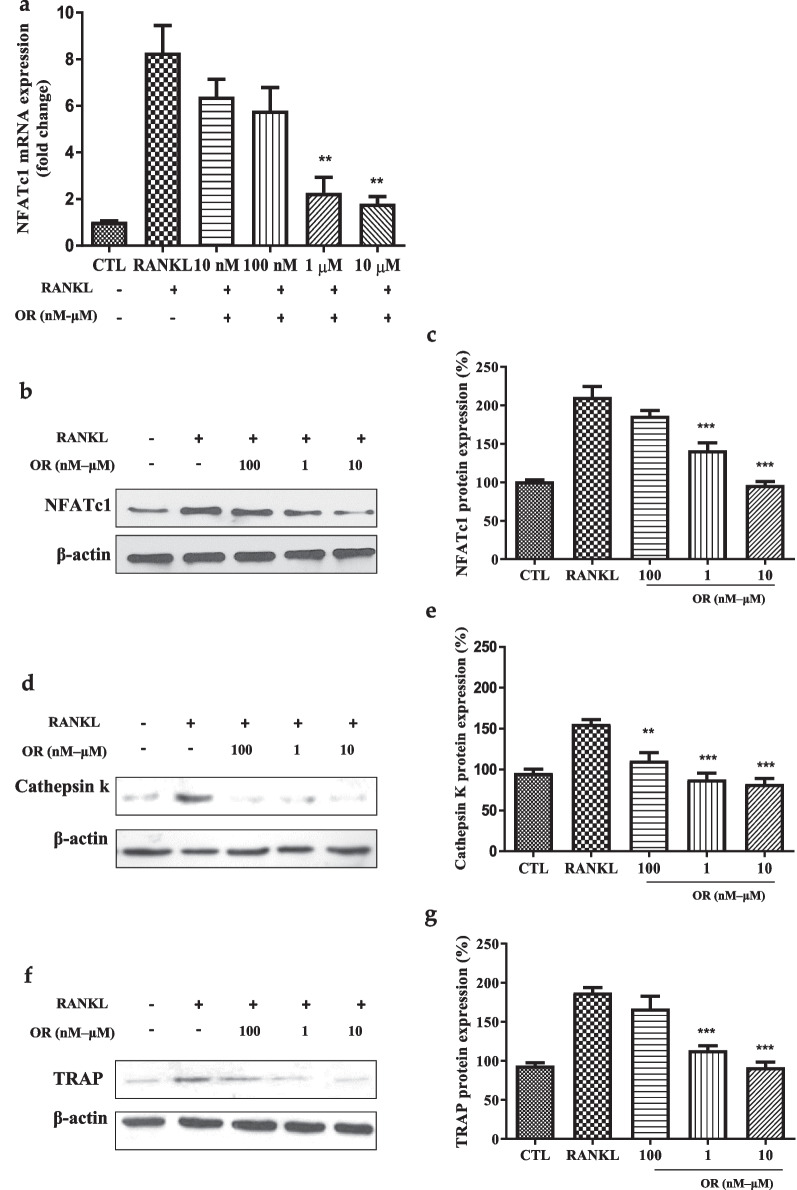
The polyphenol oxyresveratrol inhibited receptor activator of nuclear factor kappa-Β ligand (RANKL)-induced osteoclast differentiation of RAW 264.7 cells. Furthermore, oxyresveratrol inhibited TRAP activity and actin-ring formation. Moreover, oxyresveratrol suppressed the phosphorylation of the RANKL-induced mitogen-activated protein kinases (MAPKs) p38, JNK, and ERK and significantly reduced the expression of bone differentiation markers (NFATc1, cathepsin K, and TRAP).
Oxyresveratrol inhibits osteoclast differentiation via MAPK and increases bone density in ovariectomized rats, suggesting it has therapeutic potential for bone diseases such as osteoporosis. We confirmed the osteoporosis prevention effect of OR in Raw 264.7 cells, and future studies should confirm the effect of OR using rat bone marrow-derived cells.
骨骼由成骨细胞持续生成,并由破骨细胞进行吸收,以维持体内平衡。破骨细胞对骨吸收的损害会引发骨质疏松症和关节炎等骨骼疾病。大多数骨质疏松症的药物治疗侧重于抑制破骨细胞分化,通常是为了恢复破骨细胞/成骨细胞平衡。然而,近期的骨质疏松症治疗存在各种副作用。根据一项近期研究,白藜芦醇属于芪类化合物家族,已知其可增加骨密度,并且使用芪类化合物家族的氧化白藜芦醇证实了其对破骨细胞的抑制作用。在此,我们研究了氧化白藜芦醇对破骨细胞分化的影响以及对去卵巢小鼠模型的作用。
用氧化白藜芦醇处理小鼠白血病单核细胞/巨噬细胞系RAW 264.7,并通过MTT法检测细胞毒性来进行确认。通过染色确认抗酒石酸酸性磷酸酶(TRAP),这是破骨细胞的一种酶标志物。此外,在mRNA水平和蛋白质表达方面确认破骨细胞分化标志物和丝裂原活化蛋白激酶(MAPK)相关标志物。使用去卵巢小鼠确认氧化白藜芦醇的作用。用小鼠尿液检测脱氧吡啶啉(DPD),并使用血清观察TRAP活性。还使用微型计算机断层扫描(Micro-CT)测量骨密度。
多酚氧化白藜芦醇抑制核因子κB受体活化因子配体(RANKL)诱导的RAW 264.7细胞破骨细胞分化。此外,氧化白藜芦醇抑制TRAP活性和肌动蛋白环形成。而且,氧化白藜芦醇抑制RANKL诱导的丝裂原活化蛋白激酶(MAPKs)p38、JNK和ERK的磷酸化,并显著降低骨分化标志物(NFATc1、组织蛋白酶K和TRAP)的表达。
氧化白藜芦醇通过MAPK抑制破骨细胞分化,并增加去卵巢大鼠的骨密度,表明其对骨质疏松症等骨骼疾病具有治疗潜力。我们在RAW 264.7细胞中证实了氧化白藜芦醇对骨质疏松症的预防作用,未来的研究应使用大鼠骨髓来源的细胞来确认氧化白藜芦醇的作用。