Lin Pao-Chun, Chang Wei-Shan, Hsiao Kai-Yuan, Liu Hon-Man, Shia Ben-Chang, Chen Ming-Chih, Hsieh Po-Yu, Lai Tseng-Wei, Lin Feng-Huei, Chang Che-Cheng
Department of Biomedical Engineering, National Taiwan University, Taipei City 10617, Taiwan.
Department of Neurosurgery, Fu Jen Catholic University Hospital, Fu Jen Catholic University, New Taipei City 24352, Taiwan.
Diagnostics (Basel). 2024 Jan 6;14(2):134. doi: 10.3390/diagnostics14020134.
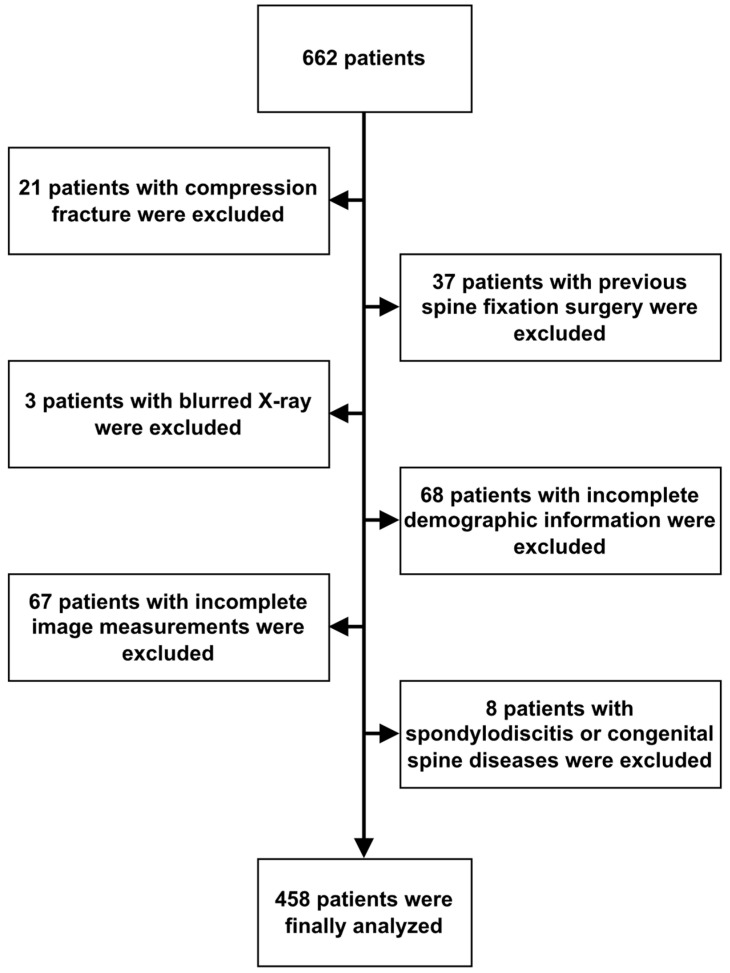
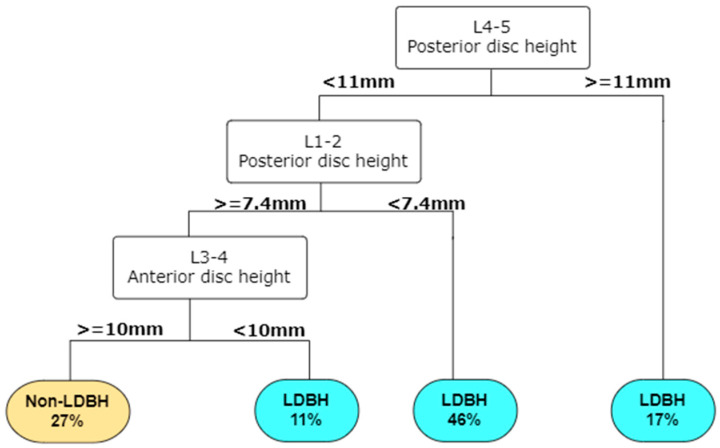
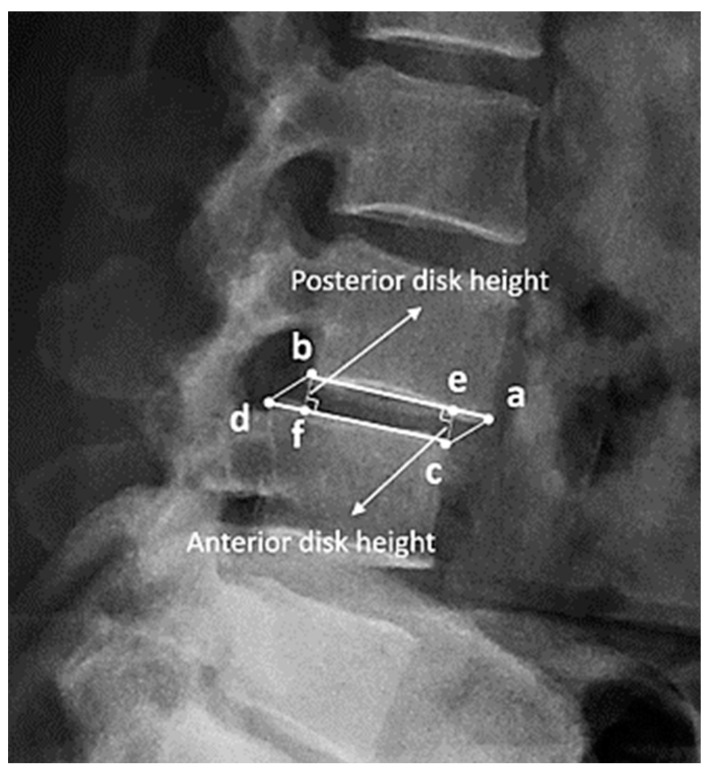
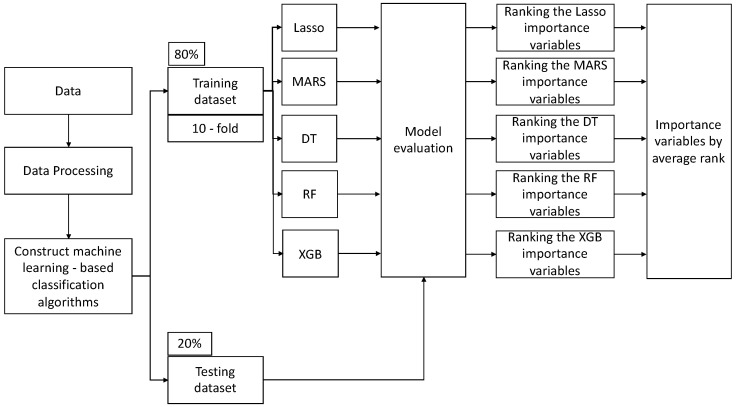
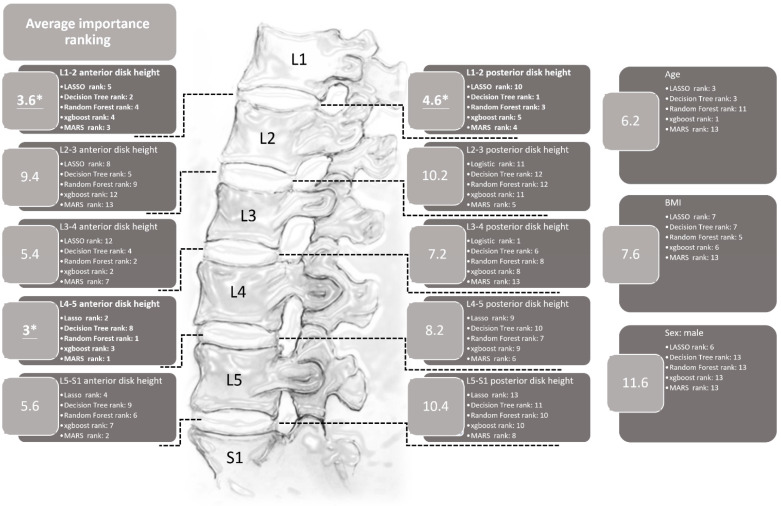
Lumbar disc bulging or herniation (LDBH) is one of the major causes of spinal stenosis and related nerve compression, and its severity is the major determinant for spine surgery. MRI of the spine is the most important diagnostic tool for evaluating the need for surgical intervention in patients with LDBH. However, MRI utilization is limited by its low accessibility. Spinal X-rays can rapidly provide information on the bony structure of the patient. Our study aimed to identify the factors associated with LDBH, including disc height, and establish a clinical diagnostic tool to support its diagnosis based on lumbar X-ray findings. In this study, a total of 458 patients were used for analysis and 13 clinical and imaging variables were collected. Five machine-learning (ML) methods, including LASSO regression, MARS, decision tree, random forest, and extreme gradient boosting, were applied and integrated to identify important variables for predicting LDBH from lumbar spine X-rays. The results showed L4-5 posterior disc height, age, and L1-2 anterior disc height to be the top predictors, and a decision tree algorithm was constructed to support clinical decision-making. Our study highlights the potential of ML-based decision tools for surgeons and emphasizes the importance of L1-2 disc height in relation to LDBH. Future research will expand on these findings to develop a more comprehensive decision-supporting model.
腰椎间盘膨出或突出(LDBH)是椎管狭窄和相关神经受压的主要原因之一,其严重程度是脊柱手术的主要决定因素。脊柱磁共振成像(MRI)是评估LDBH患者手术干预需求的最重要诊断工具。然而,MRI的利用率因其可及性低而受到限制。脊柱X光片可以快速提供患者骨骼结构的信息。我们的研究旨在确定与LDBH相关的因素,包括椎间盘高度,并基于腰椎X光片结果建立一种临床诊断工具以支持其诊断。在本研究中,共458例患者用于分析,并收集了13个临床和影像学变量。应用并整合了包括套索回归、多元自适应回归样条、决策树、随机森林和极限梯度提升在内的五种机器学习(ML)方法,以识别从腰椎X光片中预测LDBH的重要变量。结果显示,L4-5椎间盘后高度、年龄和L1-2椎间盘前高度是最重要的预测因素,并构建了决策树算法以支持临床决策。我们的研究突出了基于ML的决策工具对外科医生的潜在价值,并强调了L1-2椎间盘高度与LDBH的相关性。未来的研究将扩展这些发现,以开发更全面的决策支持模型。