Department of Geriatric Gastroenterology, Neuroendocrine Tumor Center, Jiangsu Province Hospital, The First Affiliated Hospital of Nanjing Medical University, Institute of Neuroendocrine Tumor, Nanjing Medical University, No. 300 Guangzhou Road, Nanjing, China.
Department of Gastroenterology, Jiangyin People's Hospital, Jiangyin, Jiangsu Province, China.
Cell Mol Life Sci. 2024 Jan 22;81(1):50. doi: 10.1007/s00018-023-05084-0.
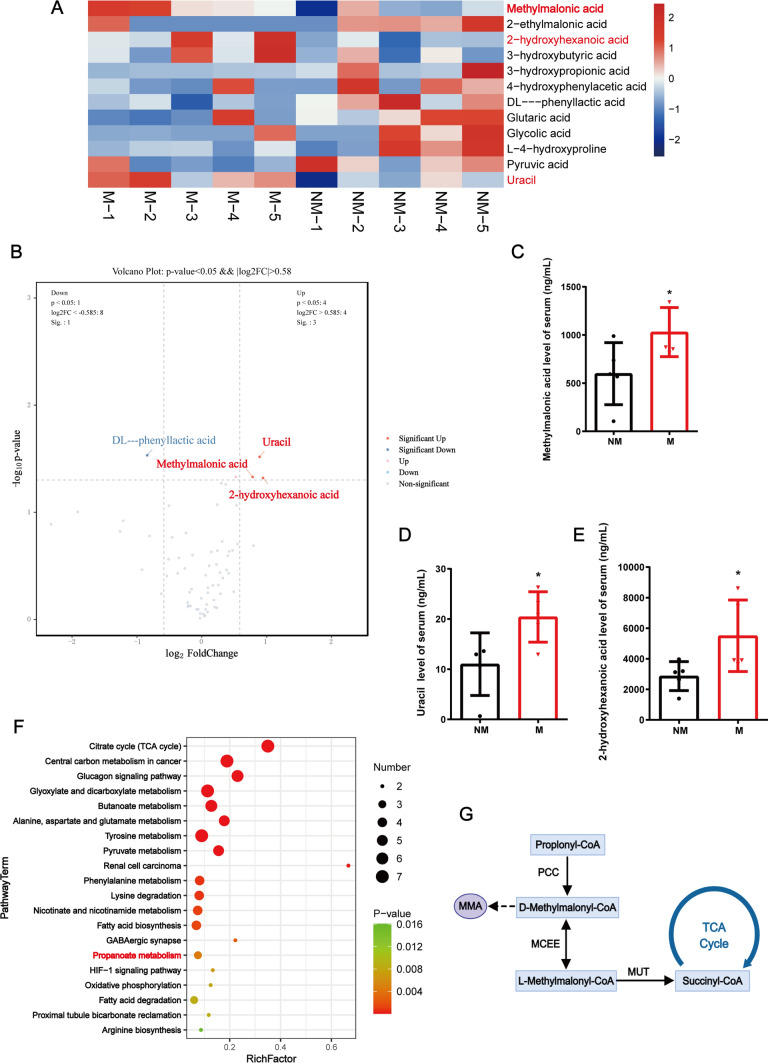
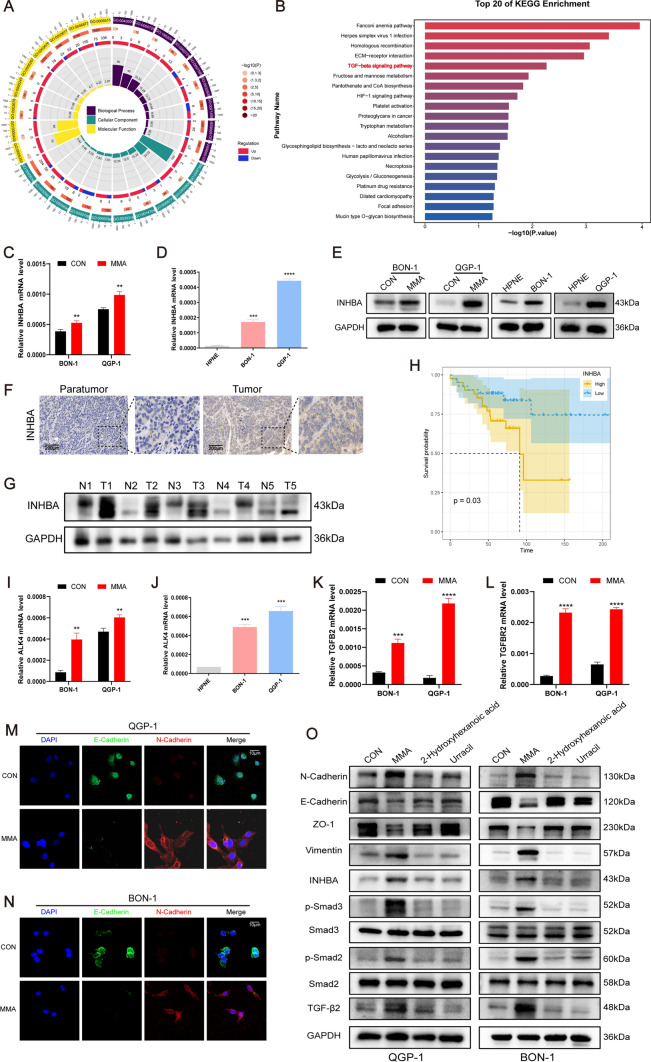
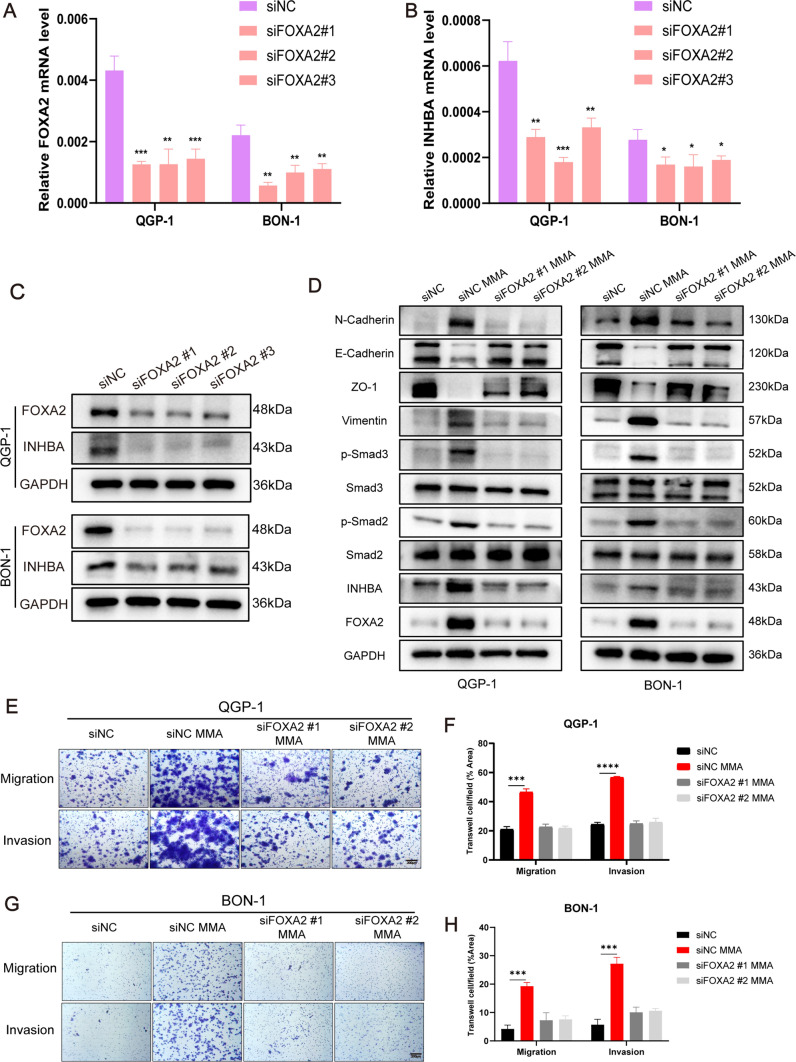
Pancreatic neuroendocrine neoplasms (PanNENs) are a group of highly heterogeneous neoplasms originating from the endocrine islet cells of the pancreas with characteristic neuroendocrine differentiation, more than 60% of which represent metastases when diagnosis, causing major tumor-related death. Metabolic alterations have been recognized as one of the hallmarks of tumor metastasis, providing attractive therapeutic targets. However, little is known about the molecular mechanism of metabolic changes regulating PanNEN progression. In this study, we first identified methylmalonic acid (MMA) as an oncometabolite for PanNEN progression, based on serum metabolomics of metastatic PanNEN compared with non-metastatic PanNEN patients. One of the key findings was the potentially novel mechanism of epithelial-mesenchymal transition (EMT) triggered by MMA. Inhibin βA (INHBA) was characterized as a key regulator of MMA-induced PanNEN progression according to transcriptomic analysis, which has been validated in vitro and in vivo. Mechanistically, INHBA was activated by FOXA2, a neuroendocrine (NE) specific transcription factor, which was initiated during MMA-induced progression. In addition, MMA-induced INHBA upregulation activated downstream MITF to regulate EMT-related genes in PanNEN cells. Collectively, these data suggest that activation of INHBA via FOXA2 promotes MITF-mediated EMT during MMA inducing PanNEN progression, which puts forward a novel therapeutic target for PanNENs.
胰腺神经内分泌肿瘤(PanNENs)是一组起源于胰腺内分泌胰岛细胞、具有特征性神经内分泌分化的高度异质性肿瘤,超过 60%的患者在诊断时已发生转移,导致主要的肿瘤相关性死亡。代谢改变已被认为是肿瘤转移的标志之一,为有吸引力的治疗靶点提供了依据。然而,关于调节 PanNEN 进展的代谢变化的分子机制知之甚少。在这项研究中,我们首先通过比较转移性 PanNEN 与非转移性 PanNEN 患者的血清代谢组学,确定了甲基丙二酸(MMA)是 PanNEN 进展的致癌代谢物。其中一个关键发现是 MMA 触发上皮间质转化(EMT)的潜在新机制。根据转录组分析,抑制素βA(INHBA)被鉴定为 MMA 诱导的 PanNEN 进展的关键调节因子,该因子已在体外和体内得到验证。从机制上讲,FOXA2 激活 INHBA,FOXA2 是一种神经内分泌(NE)特异性转录因子,在 MMA 诱导的进展过程中被激活。此外,MMA 诱导的 INHBA 上调激活下游 MITF,以调节 PanNEN 细胞中的 EMT 相关基因。总之,这些数据表明,通过 FOXA2 激活 INHBA 促进了 MMA 诱导的 PanNEN 进展中的 MITF 介导的 EMT,为 PanNENs 提出了一个新的治疗靶点。