Department of Thoracic Surgery, Renmin Hospital of Wuhan University, Wuhan, 430060, China.
Department of Thoracic Surgery, The First Hospital of Jilin University, Changchun, 130021, China.
Mol Med. 2024 Jan 22;30(1):14. doi: 10.1186/s10020-024-00782-2.
N6-Methyladenosine (m6A) methylation is the most prevalent post-transcriptional modification in mRNA, and plays significant roles in various diseases. Nevertheless, the precise functions of m6A modification in the formation of ALI remain unclear. In this study we explore the transcriptome distribution of m6A methylation and its probable roles of in ALI.
Lipopolysaccharide (LPS) was utilized to establish an ALI mouse model. Real-time qPCR, Western blotting and m6A dot blot were utilized to assess m6A methylation level and the expression of m6A methylation enzymes. MeRIP-Seq and RNA-seq were utilized to explore differential m6A modifications and differentially expressed genes in ALI mice. The hub genes and enriched pathways were assessed by Real-time qPCR and Western blotting.
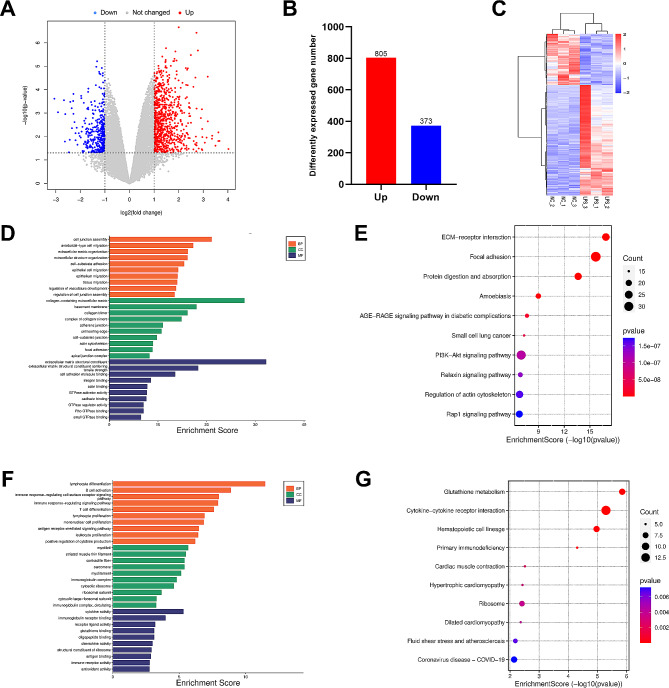
Our findings showed that overall m6A methylation level was increased in ALI mice lung tissues, accompanied by lower levels of METTL3 and FTO. Notably, the protein expression of these methylases were different in various cells. There were 772 differently expressed m6A peaks in ALI as compared to the control group, with 316 being hypermethylated and 456 being hypomethylated. GO and KEGG analyses demonstrated these differentially methylated genes were associated with the calcium signaling pathway and cAMP signaling pathway. Furthermore, we identified 50 genes with distinct m6A peaks and mRNA expressions by combined analysis of MeRIP-Seq and RNA-Seq. KEGG analysis also demonstrated that these overlapped genes were closely associated with the calcium signaling pathway, cGMP-PKG signaling pathway, etc. Besides, Western blotting results demonstrated that the protein expression of Fibronectin leucine-rich transmembrane protein 3 (Flrt3) as well as the calcium signaling pathway and cGMP-PKG signaling pathway, increased significantly after ALI.
m6A modification was paramount in the pathogenesis of ALI, and provided a foundation for the further investigation in the prevention and treatment of ALI.
N6-甲基腺苷(m6A)甲基化是 mRNA 中最普遍的转录后修饰,在各种疾病中发挥着重要作用。然而,m6A 修饰在ALI 形成中的精确功能仍不清楚。在这项研究中,我们探索了 m6A 甲基化的转录组分布及其在 ALI 中的可能作用。
利用脂多糖(LPS)建立 ALI 小鼠模型。实时 qPCR、Western blot 和 m6A 斑点印迹用于评估 m6A 甲基化水平和 m6A 甲基化酶的表达。MeRIP-Seq 和 RNA-seq 用于探索 ALI 小鼠中差异的 m6A 修饰和差异表达基因。通过实时 qPCR 和 Western blot 评估关键基因和富集途径。
我们的研究结果表明,ALI 小鼠肺组织中整体 m6A 甲基化水平升高,同时 METTL3 和 FTO 水平降低。值得注意的是,这些甲基转移酶的蛋白表达在不同的细胞中有所不同。与对照组相比,ALI 中有 772 个差异表达的 m6A 峰,其中 316 个为高甲基化,456 个为低甲基化。GO 和 KEGG 分析表明,这些差异甲基化基因与钙信号通路和 cAMP 信号通路有关。此外,通过 MeRIP-Seq 和 RNA-Seq 的联合分析,我们鉴定出 50 个具有不同 m6A 峰和 mRNA 表达的基因。KEGG 分析还表明,这些重叠基因与钙信号通路、cGMP-PKG 信号通路等密切相关。此外,Western blot 结果表明,ALI 后 Fibronectin leucine-rich transmembrane protein 3 (Flrt3) 的蛋白表达以及钙信号通路和 cGMP-PKG 信号通路显著增加。
m6A 修饰在 ALI 的发病机制中起着至关重要的作用,为进一步研究 ALI 的防治提供了基础。