Department of Dermatology, National Cheng Kung University Hospital, College of Medicine, National Cheng Kung University, Tainan, Taiwan.
International Center for Wound Repair and Regeneration (iWRR), National Cheng Kung University, Tainan, Taiwan.
J Biomed Sci. 2024 Jan 23;31(1):12. doi: 10.1186/s12929-024-01001-0.
Pathologic scars, including keloids and hypertrophic scars, represent a common form of exaggerated cutaneous scarring that is difficult to prevent or treat effectively. Additionally, the pathobiology of pathologic scars remains poorly understood. We aim at investigating the impact of TEM1 (also known as endosialin or CD248), which is a glycosylated type I transmembrane protein, on development of pathologic scars.
To investigate the expression of TEM1, we utilized immunofluorescence staining, Western blotting, and single-cell RNA-sequencing (scRNA-seq) techniques. We conducted in vitro cell culture experiments and an in vivo stretch-induced scar mouse model to study the involvement of TEM1 in TGF-β-mediated responses in pathologic scars.
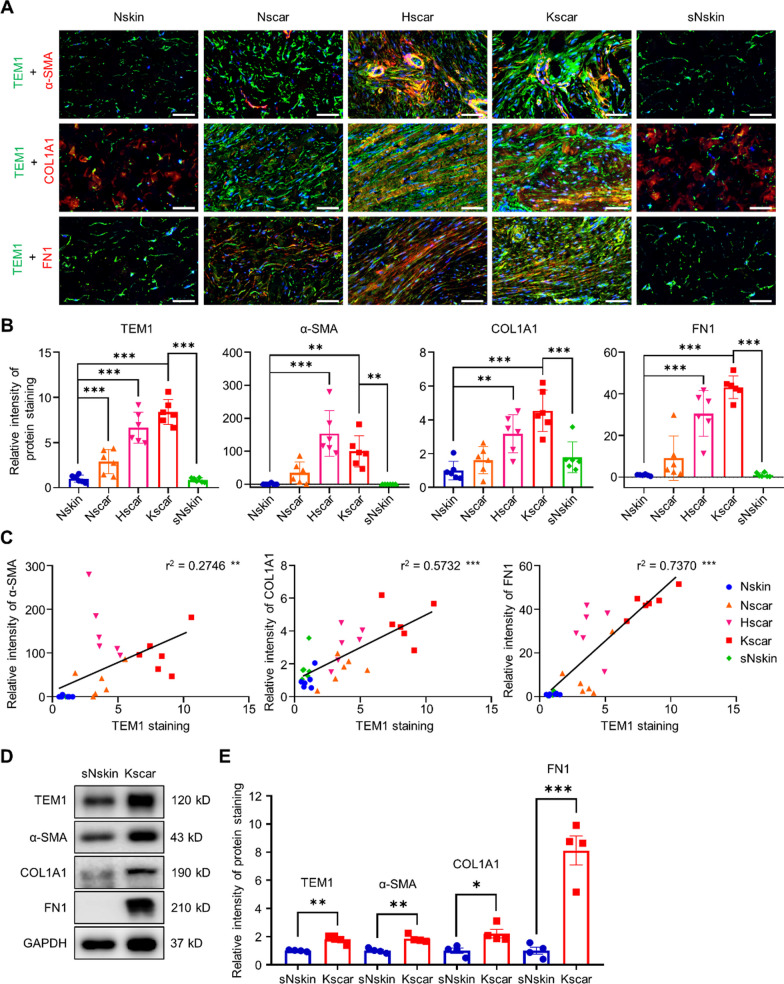
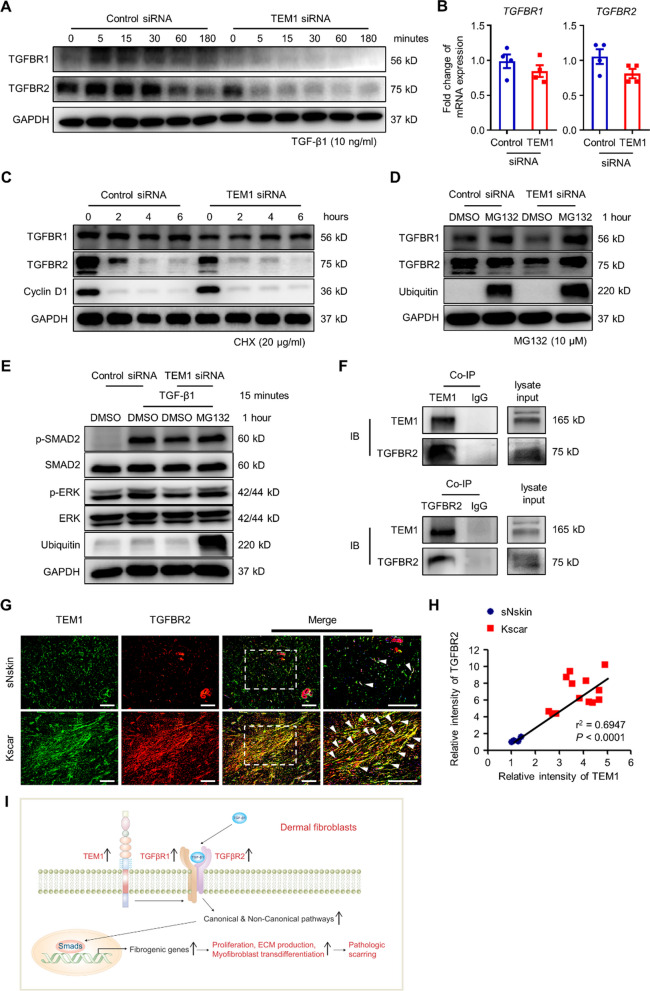
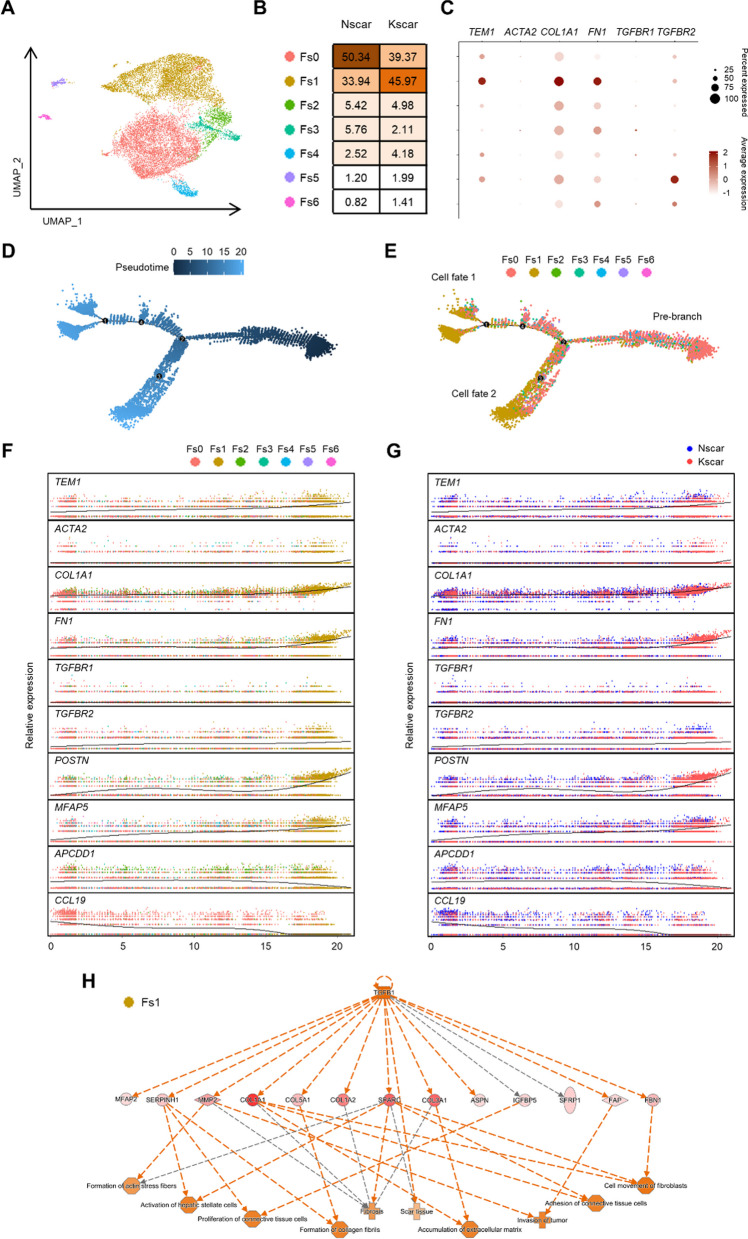
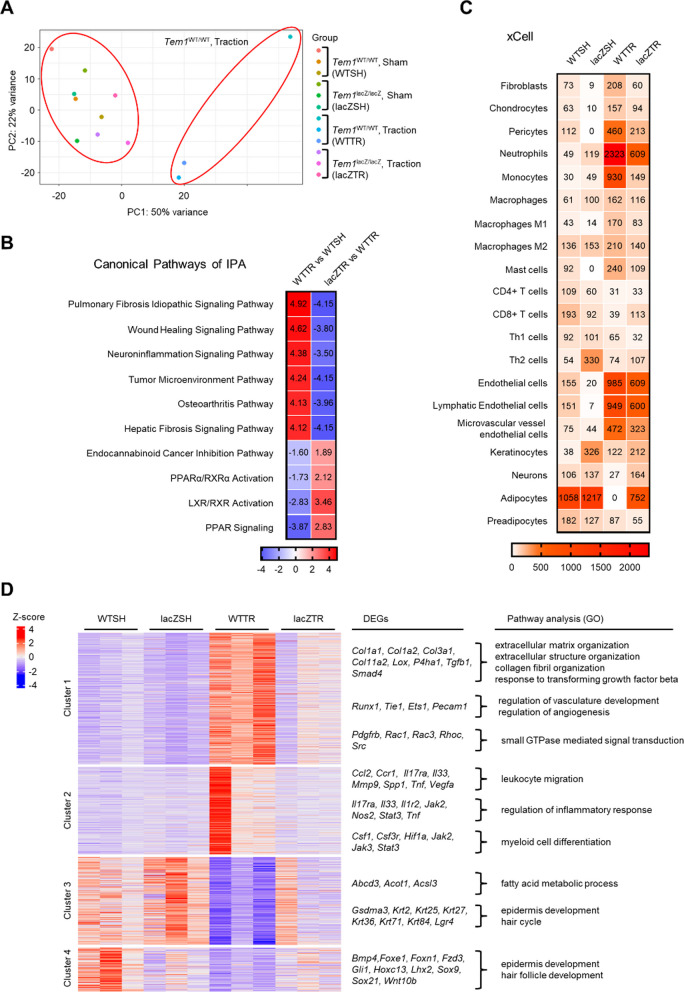
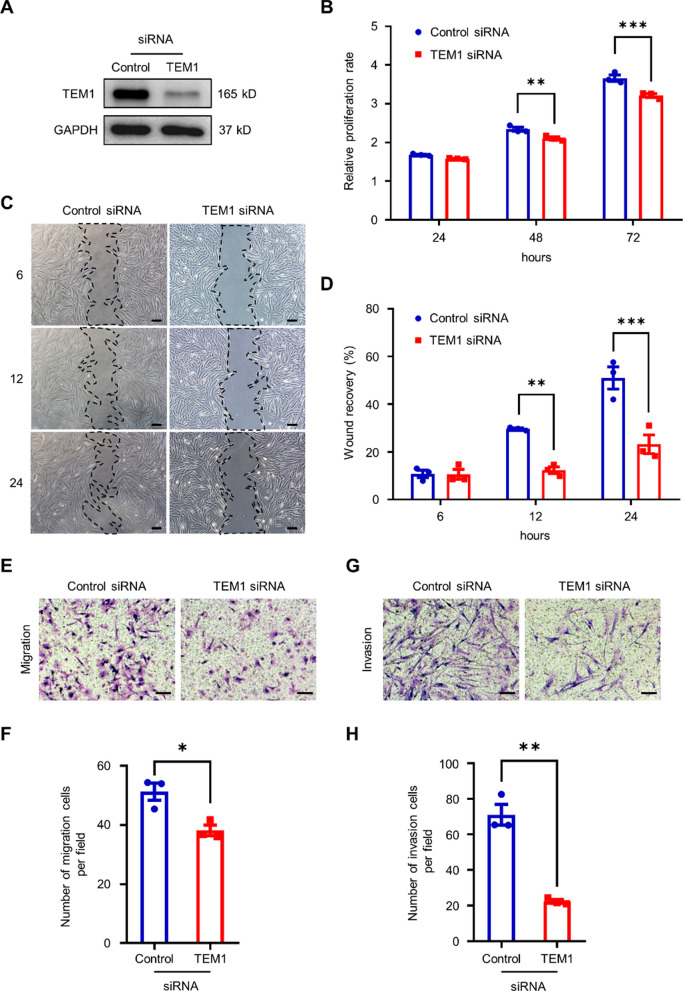
The levels of the protein TEM1 are elevated in both hypertrophic scars and keloids in comparison to normal skin. A re-analysis of scRNA-seq datasets reveals that a major profibrotic subpopulation of keloid and hypertrophic scar fibroblasts greatly expresses TEM1, with expression increasing during fibroblast activation. TEM1 promotes activation, proliferation, and ECM production in human dermal fibroblasts by enhancing TGF-β1 signaling through binding with and stabilizing TGF-β receptors. Global deletion of Tem1 markedly reduces the amount of ECM synthesis and inflammation in a scar in a mouse model of stretch-induced pathologic scarring. The intralesional administration of ontuxizumab, a humanized IgG monoclonal antibody targeting TEM1, significantly decreased both the size and collagen density of keloids.
Our data indicate that TEM1 plays a role in pathologic scarring, with its synergistic effect on the TGF-β signaling contributing to dermal fibroblast activation. Targeting TEM1 may represent a novel therapeutic approach in reducing the morbidity of pathologic scars.
病理性瘢痕,包括瘢痕疙瘩和增生性瘢痕,是一种常见的过度皮肤瘢痕形成形式,难以有效预防或治疗。此外,病理性瘢痕的病理生物学仍知之甚少。我们旨在研究 TEM1(也称为内唾液酸或 CD248)对病理性瘢痕形成的影响。
为了研究 TEM1 的表达,我们使用免疫荧光染色、Western blot 和单细胞 RNA 测序(scRNA-seq)技术。我们进行了体外细胞培养实验和体内拉伸诱导瘢痕小鼠模型,以研究 TEM1 在 TGF-β 介导的病理性瘢痕反应中的作用。
与正常皮肤相比,TEM1 蛋白的水平在增生性瘢痕和瘢痕疙瘩中均升高。对 scRNA-seq 数据集的重新分析表明,瘢痕疙瘩和增生性瘢痕成纤维细胞的主要致纤维化亚群高度表达 TEM1,随着成纤维细胞激活,表达增加。TEM1 通过与 TGF-β 受体结合并稳定 TGF-β 受体,增强 TGF-β1 信号转导,促进人真皮成纤维细胞的激活、增殖和 ECM 产生。Tem1 基因敲除在拉伸诱导的病理性瘢痕形成的小鼠模型中显著减少 ECM 合成和炎症。在体内,ONTUXIZUMAB(一种针对 TEM1 的人源化 IgG 单克隆抗体)的瘤内给药显著降低了瘢痕疙瘩的大小和胶原密度。
我们的数据表明,TEM1 在病理性瘢痕形成中起作用,其与 TGF-β 信号的协同作用促进真皮成纤维细胞的激活。靶向 TEM1 可能代表一种减少病理性瘢痕发病率的新治疗方法。