Ling Emi, Nemesh James, Goldman Melissa, Kamitaki Nolan, Reed Nora, Handsaker Robert E, Genovese Giulio, Vogelgsang Jonathan S, Gerges Sherif, Kashin Seva, Ghosh Sulagna, Esposito John M, French Kiely, Meyer Daniel, Lutservitz Alyssa, Mullally Christopher D, Wysoker Alec, Spina Liv, Neumann Anna, Hogan Marina, Ichihara Kiku, Berretta Sabina, McCarroll Steven A
Stanley Center for Psychiatric Research, Broad Institute of MIT and Harvard, Cambridge, MA 02142, USA.
Department of Genetics, Harvard Medical School, Boston, MA 02115, USA.
bioRxiv. 2024 Jan 8:2024.01.07.574148. doi: 10.1101/2024.01.07.574148.
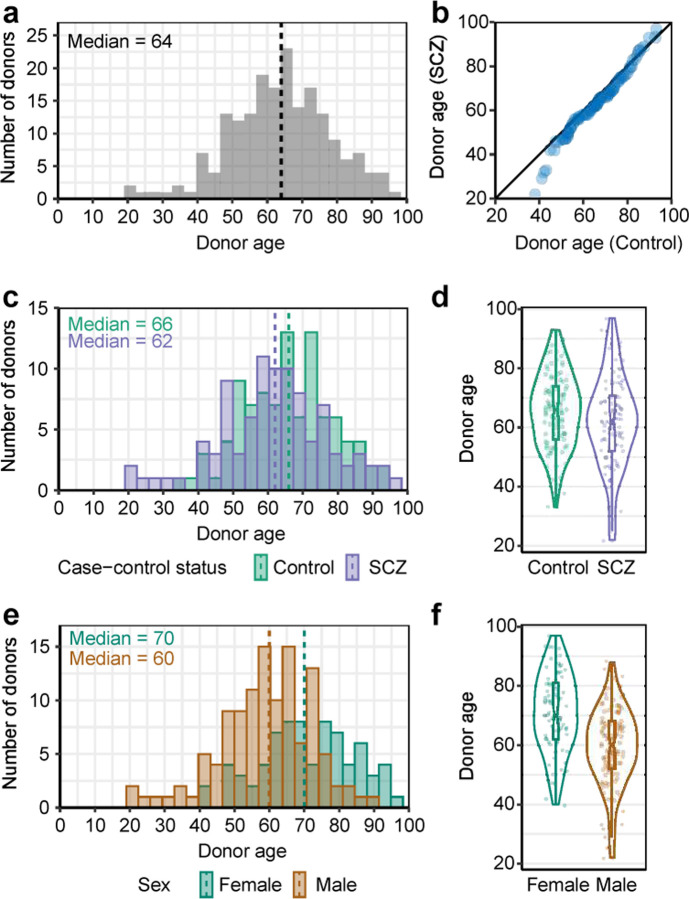
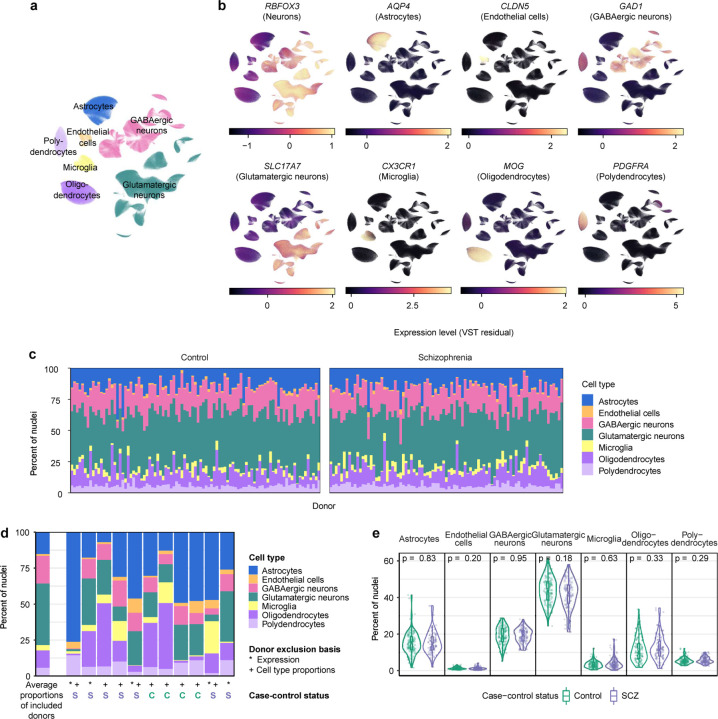
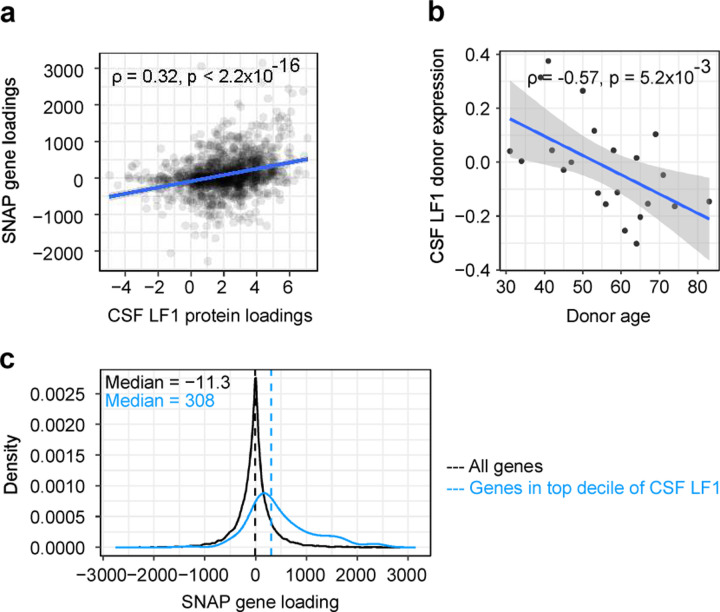
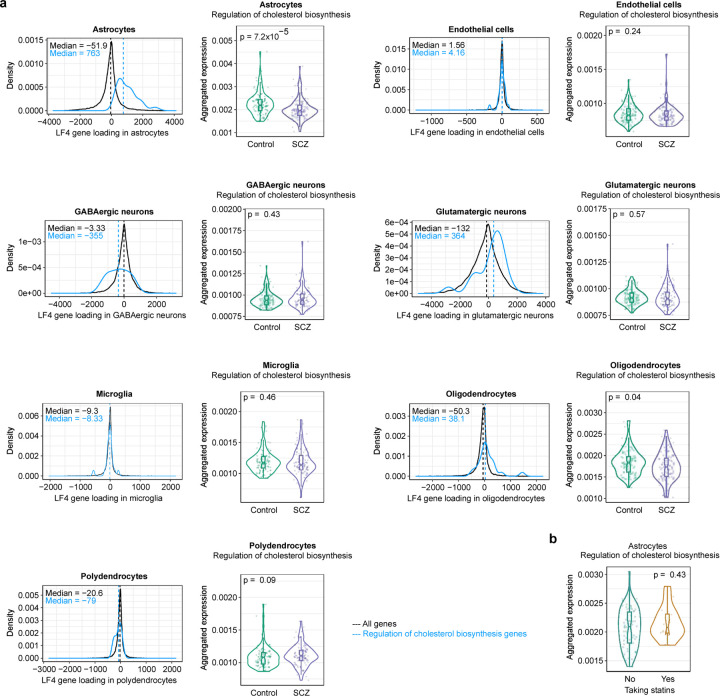
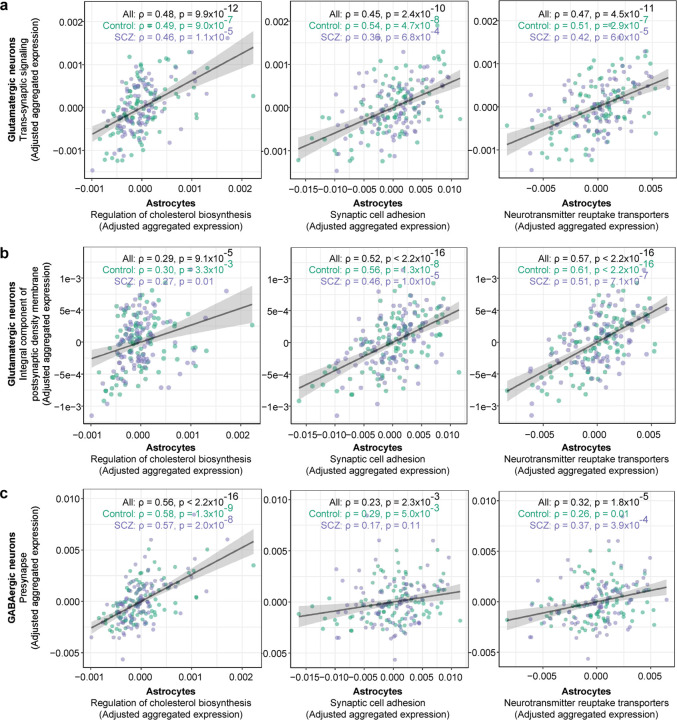
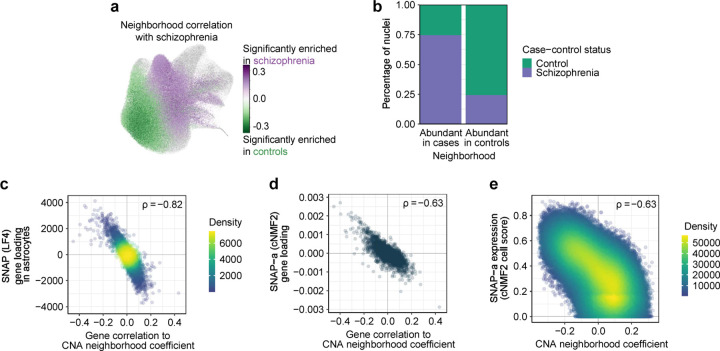
Human brains vary across people and over time; such variation is not yet understood in cellular terms. Here we describe a striking relationship between people's cortical neurons and cortical astrocytes. We used single-nucleus RNA-seq to analyze the prefrontal cortex of 191 human donors ages 22-97 years, including healthy individuals and persons with schizophrenia. Latent-factor analysis of these data revealed that in persons whose cortical neurons more strongly expressed genes for synaptic components, cortical astrocytes more strongly expressed distinct genes with synaptic functions and genes for synthesizing cholesterol, an astrocyte-supplied component of synaptic membranes. We call this relationship the Synaptic Neuron-and-Astrocyte Program (SNAP). In schizophrenia and aging - two conditions that involve declines in cognitive flexibility and plasticity - cells had divested from SNAP: astrocytes, glutamatergic (excitatory) neurons, and GABAergic (inhibitory) neurons all reduced SNAP expression to corresponding degrees. The distinct astrocytic and neuronal components of SNAP both involved genes in which genetic risk factors for schizophrenia were strongly concentrated. SNAP, which varies quantitatively even among healthy persons of similar age, may underlie many aspects of normal human interindividual differences and be an important point of convergence for multiple kinds of pathophysiology.
人类大脑因人而异,且随时间变化;这种变化在细胞层面尚未得到理解。在此,我们描述了人类皮质神经元与皮质星形胶质细胞之间的一种显著关系。我们使用单核RNA测序分析了191名年龄在22至97岁之间的人类供体的前额叶皮质,包括健康个体和精神分裂症患者。对这些数据的潜在因子分析显示,在皮质神经元更强地表达突触成分相关基因的个体中,皮质星形胶质细胞更强地表达具有突触功能的不同基因以及合成胆固醇(突触膜的一种由星形胶质细胞提供的成分)的基因。我们将这种关系称为突触神经元与星形胶质细胞程序(SNAP)。在精神分裂症和衰老这两种涉及认知灵活性和可塑性下降的情况中,细胞脱离了SNAP:星形胶质细胞、谷氨酸能(兴奋性)神经元和γ-氨基丁酸能(抑制性)神经元都相应程度地降低了SNAP表达。SNAP中不同的星形胶质细胞和神经元成分都涉及精神分裂症遗传风险因素高度集中的基因。SNAP即使在年龄相似的健康个体中也存在定量差异,可能是正常人类个体差异的许多方面的基础,并且是多种病理生理学的一个重要交汇点。