The Francis Crick Institute, London, United Kingdom.
Department of Infectious Disease, Imperial College, London, United Kingdom.
Front Immunol. 2024 Jan 9;14:1326651. doi: 10.3389/fimmu.2023.1326651. eCollection 2023.
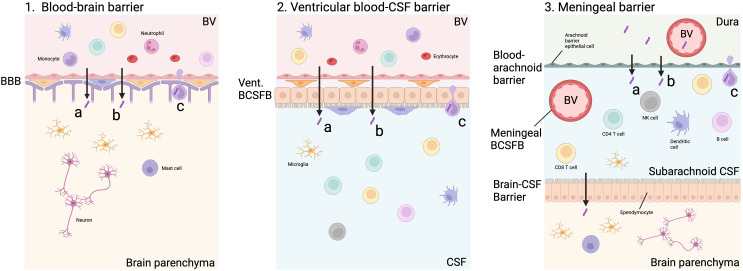
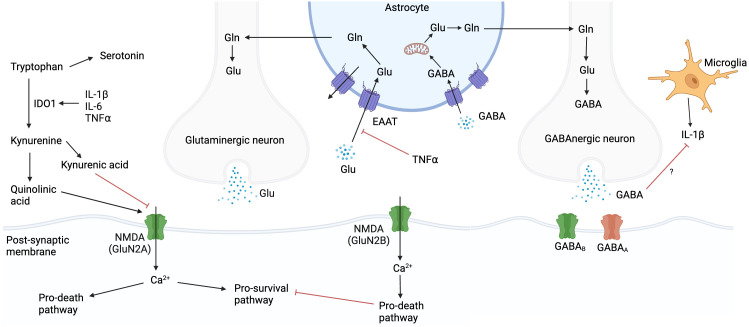
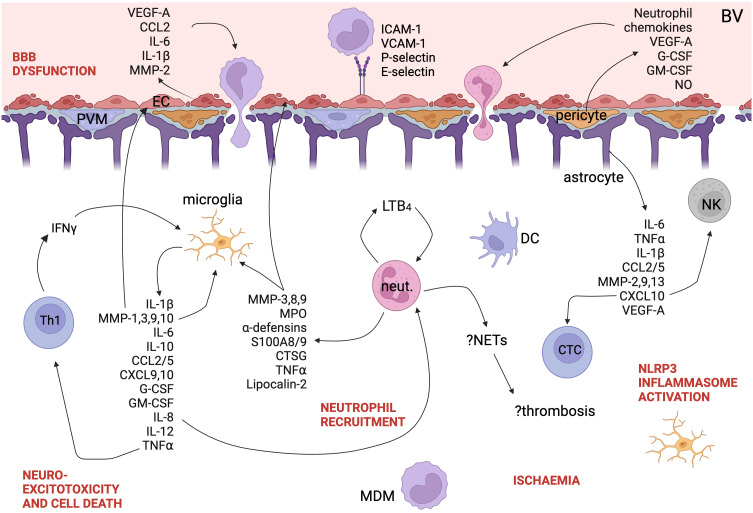
Tuberculous meningitis (TBM), the most severe form of tuberculosis, causes death in approximately 25% cases despite antibiotic therapy, and half of survivors are left with neurological disability. Mortality and morbidity are contributed to by a dysregulated immune response, and adjunctive host-directed therapies are required to modulate this response and improve outcomes. Developing such therapies relies on improved understanding of the host immune response to TBM. The historical challenges in TBM research of limited and models have been partially overcome by recent developments in proteomics, transcriptomics, and metabolomics, and the use of these technologies in nested substudies of large clinical trials. We review the current understanding of the human immune response in TBM. We begin with entry into the central nervous system (CNS), microglial infection and blood-brain and other CNS barrier dysfunction. We then outline the innate response, including the early cytokine response, role of canonical and non-canonical inflammasomes, eicosanoids and specialised pro-resolving mediators. Next, we review the adaptive response including T cells, microRNAs and B cells, followed by the role of the glutamate-GABA neurotransmitter cycle and the tryptophan pathway. We discuss host genetic immune factors, differences between adults and children, paradoxical reaction, and the impact of HIV-1 co-infection including immune reconstitution inflammatory syndrome. Promising immunomodulatory therapies, research gaps, ongoing challenges and future paths are discussed.
结核性脑膜炎(TBM)是最严重的结核病形式,尽管采用抗生素治疗,仍有约 25%的病例导致死亡,且半数幸存者留有神经功能残疾。免疫反应失调促成了死亡率和发病率,需要辅助宿主导向疗法来调节这种反应,以改善结局。开发此类疗法依赖于对宿主对 TBM 的免疫反应的更好理解。在 TBM 研究中,由于模型有限,历史上存在挑战,而蛋白质组学、转录组学和代谢组学的最新进展以及在大型临床试验的嵌套子研究中使用这些技术,部分克服了这些挑战。我们回顾了目前对 TBM 中人类免疫反应的理解。我们首先介绍 CNS 进入、小胶质细胞感染和血脑及其他 CNS 屏障功能障碍。然后概述先天反应,包括早期细胞因子反应、经典和非经典炎性小体、类花生酸和专门的促解决介质的作用。接下来,我们回顾适应性反应,包括 T 细胞、microRNAs 和 B 细胞,然后是谷氨酸-γ-氨基丁酸神经递质循环和色氨酸途径的作用。我们讨论了宿主遗传免疫因素、成人和儿童之间的差异、矛盾反应以及 HIV-1 合并感染的影响,包括免疫重建炎症综合征。讨论了有前途的免疫调节疗法、研究空白、当前挑战和未来方向。