New Jersey Medical School, Rutgers, Public Health Research Institute, The State University of New Jersey, Newark, NJ, United States.
University of Cape Town, Cape Town, South Africa.
Front Cell Infect Microbiol. 2020 Jan 14;9:450. doi: 10.3389/fcimb.2019.00450. eCollection 2019.
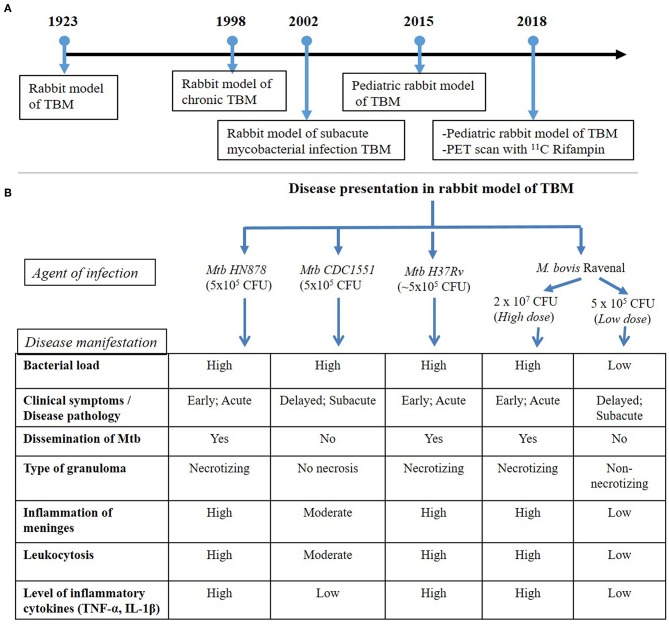
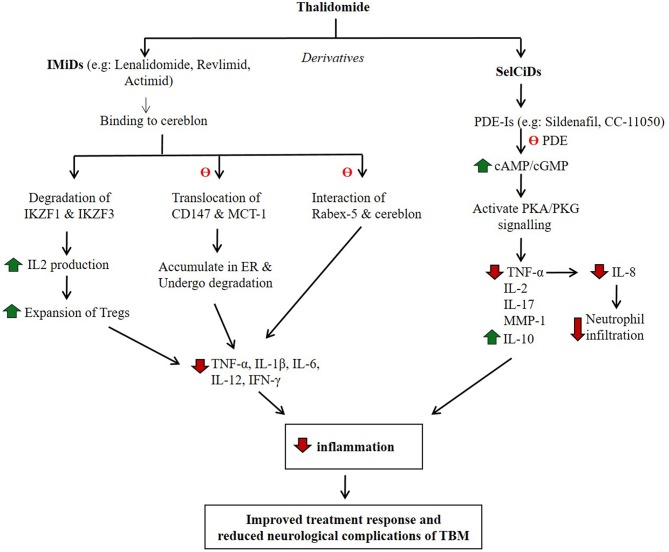
Tuberculous meningitis (TBM) is the most devastating form of extrapulmonary infection in humans. Severe inflammation and extensive tissue damage drive the morbidity and mortality of this manifestation of tuberculosis (TB). Antibiotic treatment is ineffective at curing TBM due to variable and incomplete drug penetration across the blood-brain barrier (BBB) and blood-cerebrospinal fluid (CSF) barriers. Adjunctive corticosteroid therapy, used to dampen the inflammation, and the pathologic manifestation of TBM, improves overall survival but does not entirely prevent the morbidity of the disease and has significant toxicities, including immune-suppression. The rabbit has served as a fit for purpose experimental model of human TBM since the early 1900s due to the similarity in the developmental processes of the brain, including neuronal development, myelination, and microglial functions between humans and rabbits. Consistent with the observations made in humans, proinflammatory cytokines, including TNF-α, play a critical role in the pathogenesis of TBM in rabbits focusing the attention on the utility of TNF-α inhibitors in treating the disease. Thalidomide, an inhibitor of monocyte-derived TNF-α, was evaluated in the rabbit model of TBM and shown to improve survival and reduce inflammation of the brain and the meninges. Clinical studies in humans have also shown a beneficial response to thalidomide. However, the teratogenicity and T-cell activation function of the drug limit the use of thalidomide in the clinic. Thus, new drugs with more selective anti-inflammatory properties and a better safety profile are being developed. Some of these candidate drugs, such as phosphodiesterase-4 inhibitors, have been shown to reduce the morbidity and increase the survival of rabbits with TBM. Future studies are needed to assess the beneficial effects of these drugs for their potential to improve the current treatment strategy for TBM in humans.
结核性脑膜炎(TBM)是人类肺部外感染最具破坏性的形式。严重的炎症和广泛的组织损伤导致这种结核病(TB)表现形式的发病率和死亡率。由于血脑屏障(BBB)和血脑脊液(CSF)屏障的药物渗透具有可变性和不完全性,抗生素治疗对 TBM 无效。皮质类固醇辅助治疗用于抑制炎症和 TBM 的病理表现,可提高总体生存率,但并不能完全预防疾病的发病率,且具有显著的毒性,包括免疫抑制。自 20 世纪初以来,由于大脑发育过程(包括人类和兔子的神经元发育、髓鞘形成和小胶质细胞功能)的相似性,兔子一直是研究人类 TBM 的理想实验模型。与在人类中观察到的一致,促炎细胞因子,包括 TNF-α,在兔子的 TBM 发病机制中发挥关键作用,这使得 TNF-α抑制剂在治疗该疾病中的应用受到关注。沙利度胺是一种单核细胞衍生的 TNF-α抑制剂,在兔 TBM 模型中进行了评估,结果表明其可提高生存率并减轻大脑和脑膜的炎症。人类的临床研究也表明沙利度胺有良好的反应。然而,该药物的致畸性和 T 细胞激活功能限制了其在临床上的应用。因此,正在开发具有更选择性抗炎特性和更好安全性特征的新药。一些候选药物,如磷酸二酯酶-4 抑制剂,已被证明可降低 TBM 兔的发病率并提高其生存率。需要进一步研究这些药物的有益作用,以评估其改善人类 TBM 当前治疗策略的潜力。