Abou Dalle Iman, Dulery Remy, Moukalled Nour, Ricard Laure, Stocker Nicolas, El-Cheikh Jean, Mohty Mohamad, Bazarbachi Ali
Hematology-Oncology Division, American University of Beirut Medical Center, Beirut, Lebanon.
Sorbonne University, Department of Clinical Hematology and Cellular Therapy, Saint-Antoine Hospital, AP-HP, INSERM UMRs 938, Paris, France.
Blood Cancer J. 2024 Jan 25;14(1):23. doi: 10.1038/s41408-024-00989-w.
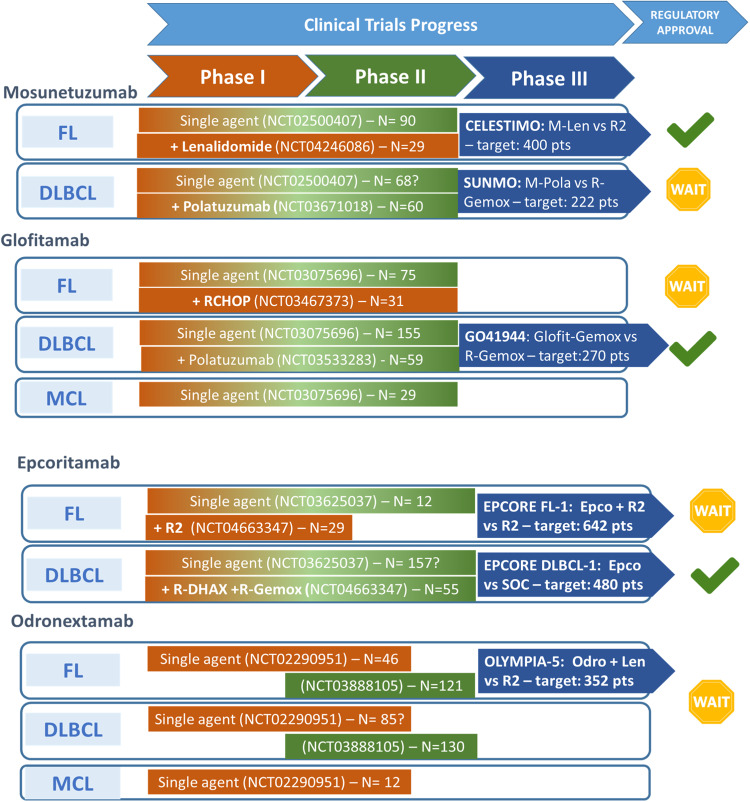
Bispecific antibodies (BsAbs) are a new group of targeted therapies that are revolutionizing the treatment landscape of B-cell non-Hodgkin's lymphoma (B-NHL). In the relapsed/refractory setting, salvage chemotherapy and autologous stem cell transplantation are capable of curing 50% of patients, whereas the other half will have a dismal outcome with a median overall survival of less than 12 months. This unmet need reinforced the importance of innovative therapies like the BsAbs and CAR-T cell therapies. In this review, we delve into BsAbs in B-NHL from the preclinical development to clinical data in both refractory and frontline settings, and then discuss future perspectives.
双特异性抗体(BsAbs)是一类新型靶向治疗药物,正在彻底改变B细胞非霍奇金淋巴瘤(B-NHL)的治疗格局。在复发/难治性患者中,挽救性化疗和自体干细胞移植能够治愈50%的患者,而另一半患者的预后则很差,总生存期中位数不到12个月。这种未满足的需求凸显了双特异性抗体和嵌合抗原受体T细胞(CAR-T)疗法等创新疗法的重要性。在本综述中,我们深入探讨了双特异性抗体在B-NHL中的应用,涵盖从临床前开发到难治性和一线治疗环境中的临床数据,然后讨论未来展望。