Stedile Micaela, Lara Montero Angela, García Solá Martín Emilio, Goddio María Victoria, Beckerman Inés, Bogni Emilia, Ayre Marina, Naguila Zaira, Coso Omar A, Kordon Edith C
Instituto de Fisiología, Biología Molecular y Neurociencias, Universidad de Buenos Aires, Consejo Nacional de Investigaciones Científicas y Tecnológicas (IFIBYNE-UBA-CONICET), Ciudad de Buenos Aires, Argentina.
Facultad de Ciencias Exactas y Naturales (FCEN), Universidad de Buenos Aires (UBA), Ciudad de Buenos Aires, Argentina.
Front Cell Dev Biol. 2024 Jan 11;11:1265475. doi: 10.3389/fcell.2023.1265475. eCollection 2023.
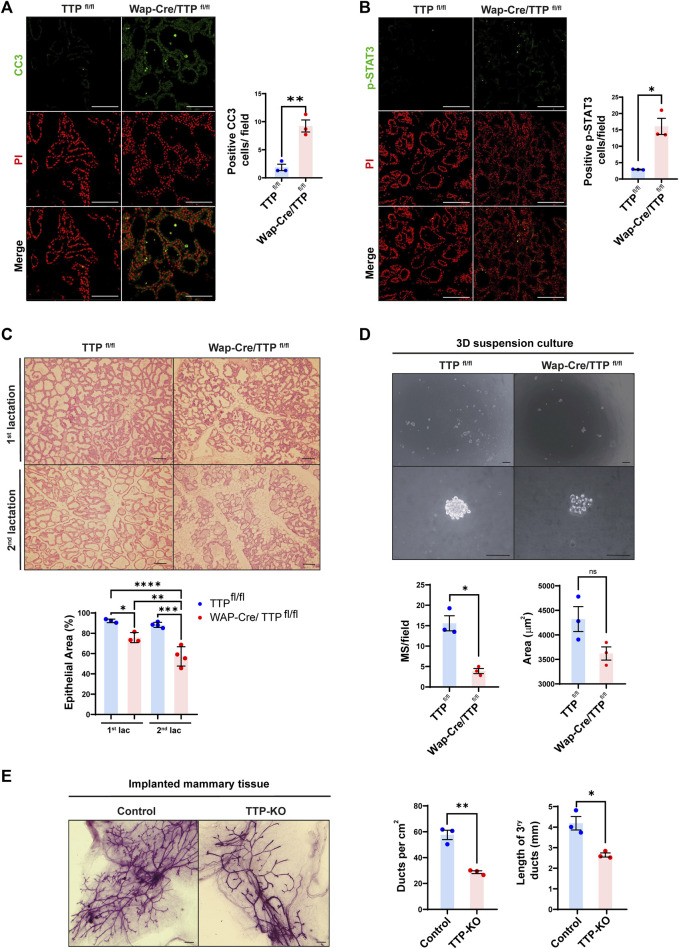
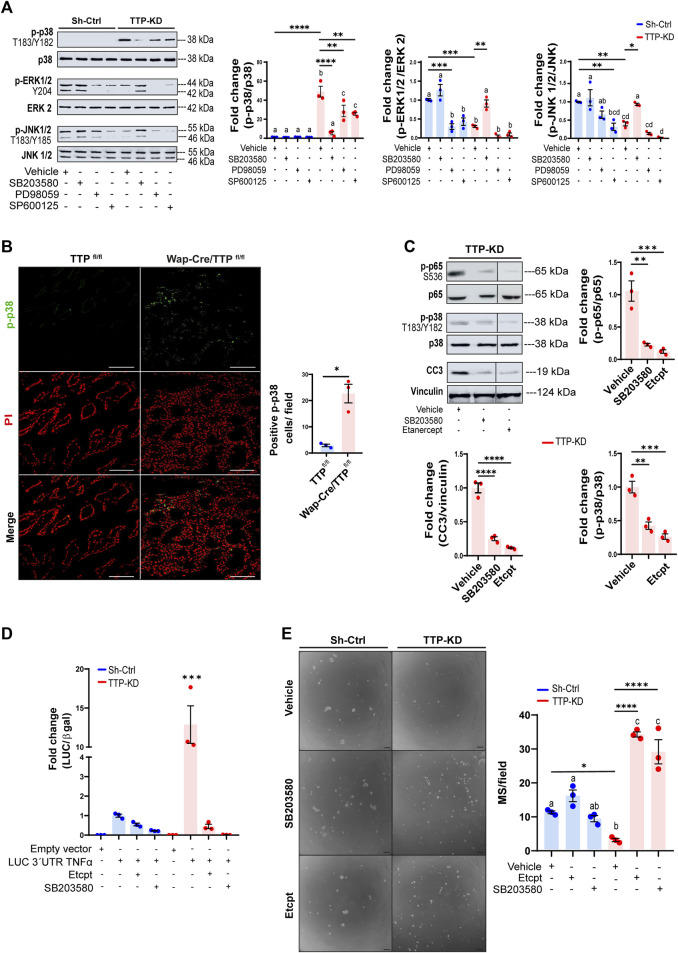
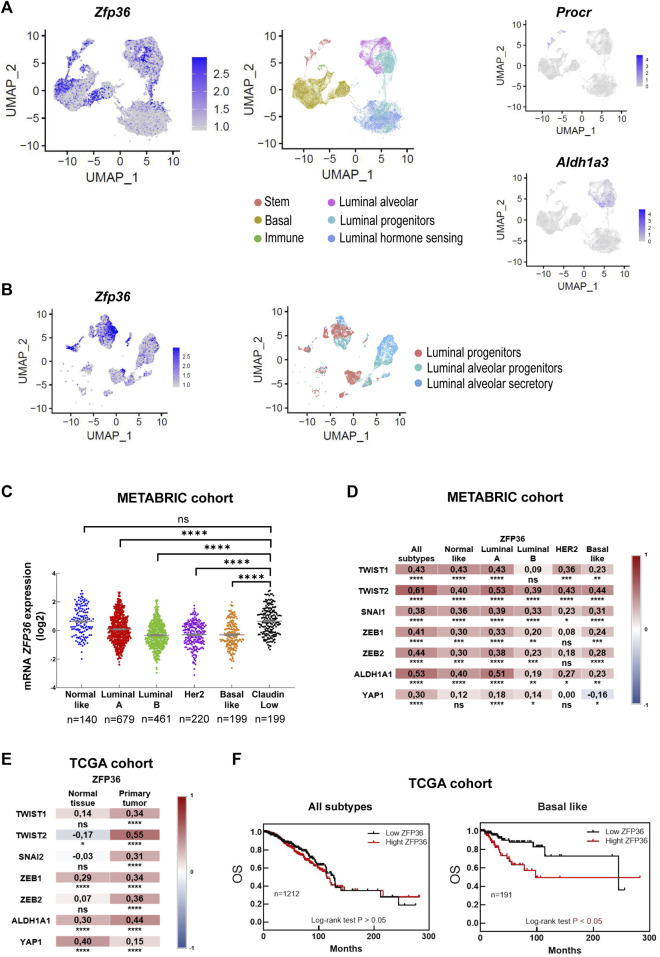
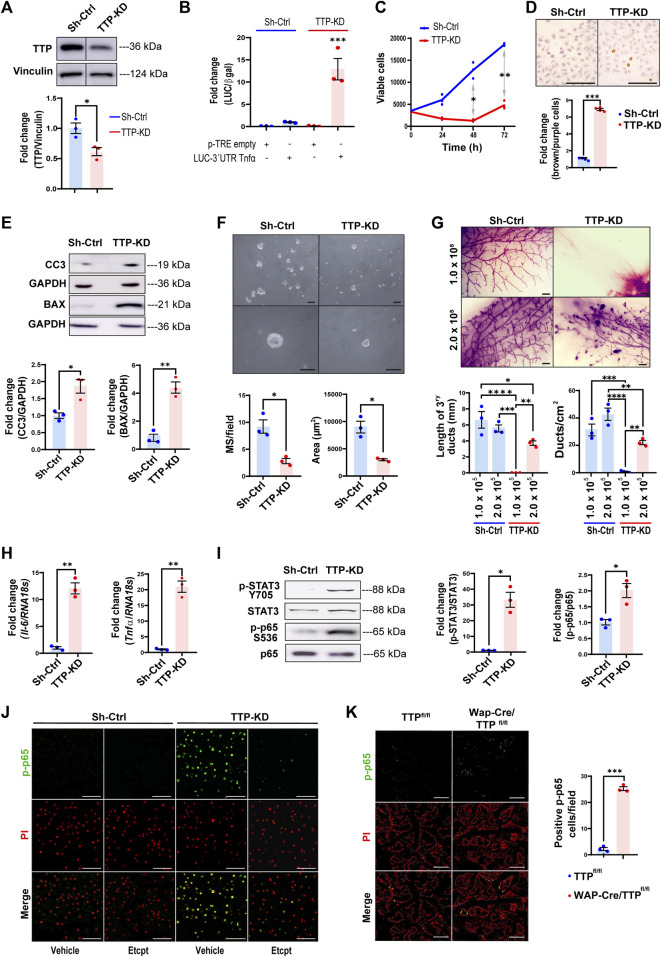
Tristetraprolin (TTP) is an RNA binding protein that destabilizes mRNAs of factors involved in proliferation, invasiveness, and inflammation. Disruption of the gene that codes for TTP () led to severe arthritis, autoimmunity, cachexia and dermatitis in mice. It has been shown that these phenotypes were mostly due to excessive TNFα levels in the affected tissues. We have previously reported that TTP expression is required for lactation maintenance. Our results indicated that conditional MG TTP-KO female mice displayed early involution due to the untimely induction of pro-inflammatory pathways led mostly by TNFα overexpression. Here we show that reducing TTP levels not only affects the fully differentiated mammary gland, but also harms morphogenesis of this tissue by impairing the progenitor cell population. We found that expression is linked to mammary stemness in human and mice. In addition, diminishing TTP expression and activity induced apoptosis of stem-like mouse mammary cells, reduced its ability to form mammospheres in culture and to develop into complete glands when implanted into cleared mammary fat pads . Our results show that survival of the stem-like cells is compromised by increased levels of inflammatory cytokines and stimulation of signaling cascades involving NFκB, STAT3 and MAPK-p38 activation. Moreover, TNFα overexpression and the consequent p38 phosphorylation would be the leading cause of progenitor cell death upon TTP expression restriction. Taken together, our results reveal the relevance of TTP for the maintenance of the mammary progenitor cell compartment by maintaining local TNFα levels at bay.
锌指蛋白36(Tristetraprolin,TTP)是一种RNA结合蛋白,可使参与增殖、侵袭和炎症的因子的mRNA不稳定。编码TTP的基因的破坏导致小鼠出现严重的关节炎、自身免疫、恶病质和皮炎。研究表明,这些表型主要是由于受影响组织中肿瘤坏死因子α(TNFα)水平过高所致。我们之前曾报道,维持泌乳需要TTP表达。我们的结果表明,条件性乳腺TTP基因敲除(MG TTP-KO)雌性小鼠由于主要由TNFα过表达导致的促炎途径过早诱导而出现早期退化。在这里,我们表明降低TTP水平不仅会影响完全分化的乳腺,还会通过损害祖细胞群来损害该组织的形态发生。我们发现TTP表达与人和小鼠的乳腺干性有关。此外,降低TTP表达和活性会诱导小鼠乳腺干细胞样细胞凋亡,降低其在培养中形成乳腺球以及植入清除后的乳腺脂肪垫后发育成完整腺体的能力。我们的结果表明,炎性细胞因子水平的升高以及涉及核因子κB(NFκB)、信号转导和转录激活因子3(STAT3)和丝裂原活化蛋白激酶p38(MAPK-p38)激活的信号级联反应的刺激会损害干细胞样细胞的存活。此外,TNFα过表达以及随之而来的p38磷酸化将是TTP表达受限后祖细胞死亡的主要原因。综上所述,我们的结果揭示了TTP通过控制局部TNFα水平来维持乳腺祖细胞区室的重要性。