Cancer Center, Renmin Hospital of Wuhan University, Wuhan, 430060, China.
Sci Rep. 2024 Jan 28;14(1):2315. doi: 10.1038/s41598-024-52034-2.
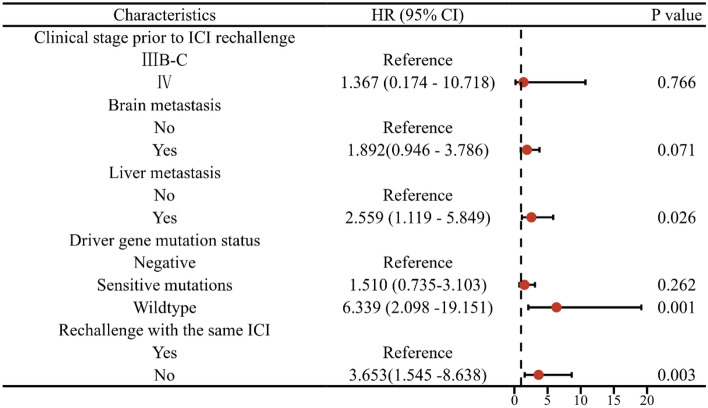
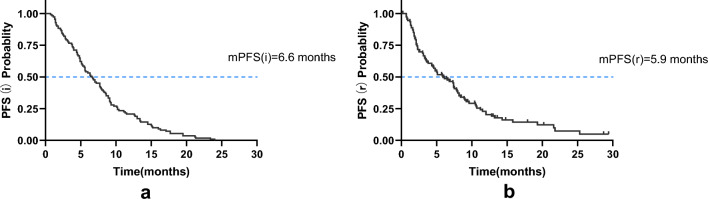
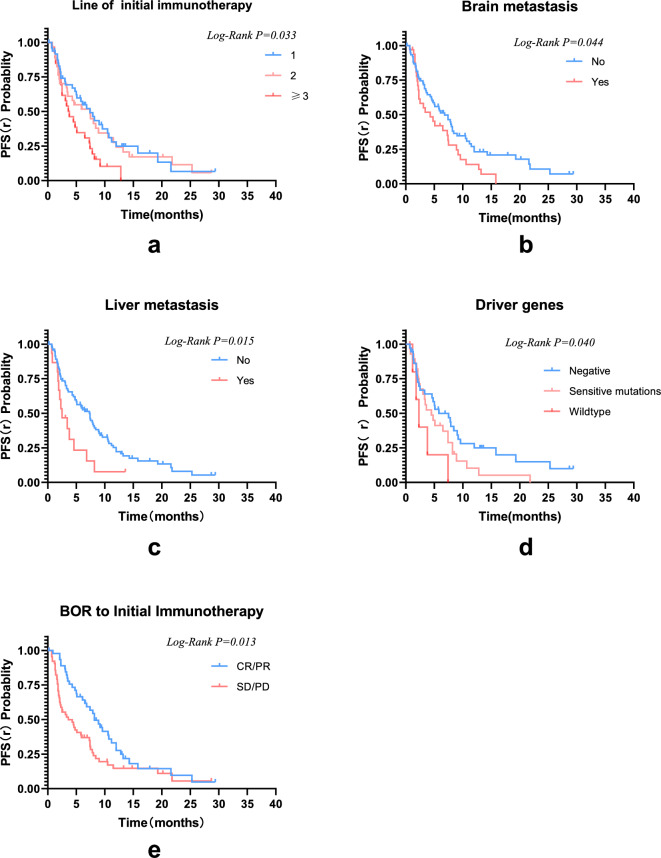
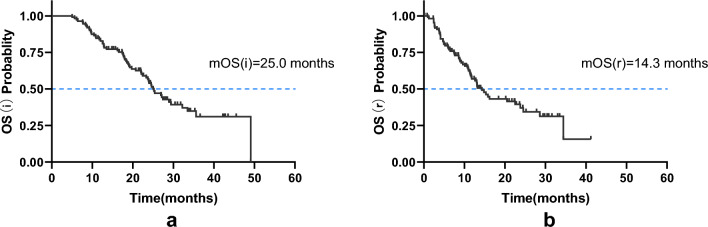
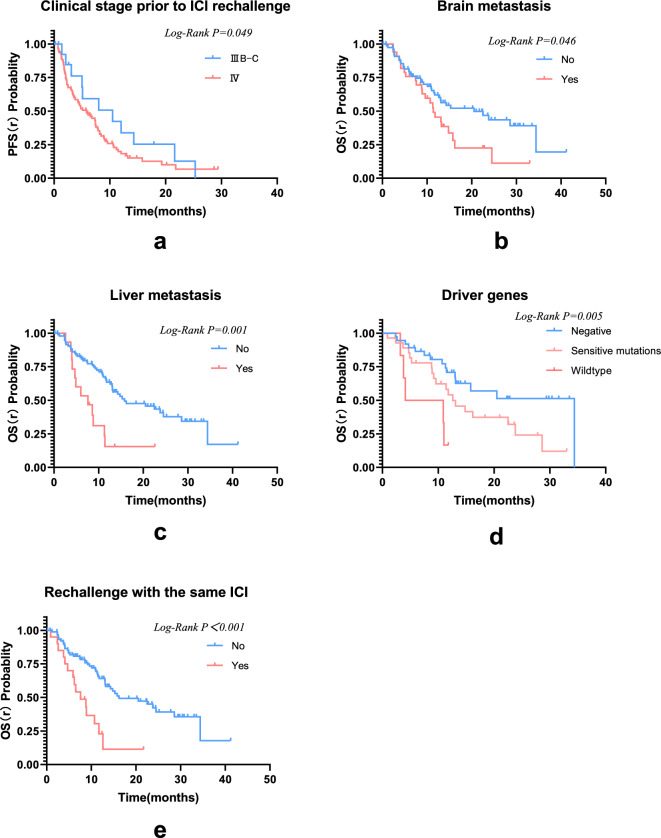
We conducted a retrospective study to evaluate the efficacy of immune checkpoint inhibitor (ICI) rechallenge in patients with advanced non-small cell lung cancer (NSCLC). The study included 111 patients who had previously received ICI therapy and experienced disease progression. The primary endpoints assessed were overall survival (OS), progression-free survival (PFS), and objective response rate (ORR). Our findings revealed that the ICI rechallenge showed promising results in improving patient outcomes. OS (r) is the time from rechallenging with immune checkpoint inhibitors to the last follow-up or death from any cause. The median OS (r) was 14.3 months (95% CI 11.3-17.3 months), with a median PFS (r) of 5.9 months (95% CI 4.1-7.7 months). The ORR was 17.1%; the DCR was 82.3%. Subgroup analysis demonstrated that patients without brain or liver metastases had a longer OS (r) compared to those with metastases (21.6 vs. 13.8 months, χ = 3.873, P = 0.046; 20.8 vs. 9.1 months, χ = 10.733, P = 0.001, respectively). Moreover, patients without driver gene mutations exhibited significantly longer OS than those with mutations or wild-type patients (22.9 vs. 16.1 vs. 7.5 months, χ = 10.710, P = 0.005). Notably, patients who switched to a different ICI during the rechallenge had shorter OS than those who did not change medications (10.4 vs. 21.1 months, χ = 9.014, P = 0.003). The incidence of immune-related adverse events did not significantly differ between the two treatment phases. These findings suggest that ICI rechallenge may be a viable therapeutic strategy for select NSCLC patients. Further prospective studies are needed to validate these results and guide treatment decisions for advanced NSCLC.
我们进行了一项回顾性研究,以评估免疫检查点抑制剂(ICI)在晚期非小细胞肺癌(NSCLC)患者中的再挑战疗效。该研究纳入了 111 例先前接受过 ICI 治疗并出现疾病进展的患者。主要终点评估包括总生存期(OS)、无进展生存期(PFS)和客观缓解率(ORR)。我们的研究结果表明,ICI 再挑战在改善患者预后方面显示出了良好的效果。OS(r)是指从重新开始使用免疫检查点抑制剂到任何原因导致的最后一次随访或死亡的时间。中位 OS(r)为 14.3 个月(95%CI 11.3-17.3 个月),中位 PFS(r)为 5.9 个月(95%CI 4.1-7.7 个月)。ORR 为 17.1%;DCR 为 82.3%。亚组分析表明,无脑或肝转移的患者 OS(r)较有转移的患者更长(21.6 比 13.8 个月,χ=3.873,P=0.046;20.8 比 9.1 个月,χ=10.733,P=0.001)。此外,无驱动基因突变的患者 OS 明显长于有突变或野生型患者(22.9 比 16.1 比 7.5 个月,χ=10.710,P=0.005)。值得注意的是,在再挑战期间转换为不同 ICI 的患者 OS 短于未改变药物的患者(10.4 比 21.1 个月,χ=9.014,P=0.003)。两治疗阶段的免疫相关不良事件发生率无显著差异。这些发现表明,ICI 再挑战可能是一种可行的治疗策略,适用于特定的 NSCLC 患者。需要进一步的前瞻性研究来验证这些结果,并指导晚期 NSCLC 的治疗决策。