Studnicki Amanda, Ferris Daniel P
J. Crayton Pruitt Family Department of Biomedical Engineering, University of Florida, Gainesville, FL 32611, United States.
Data Brief. 2023 Dec 30;52:110024. doi: 10.1016/j.dib.2023.110024. eCollection 2024 Feb.
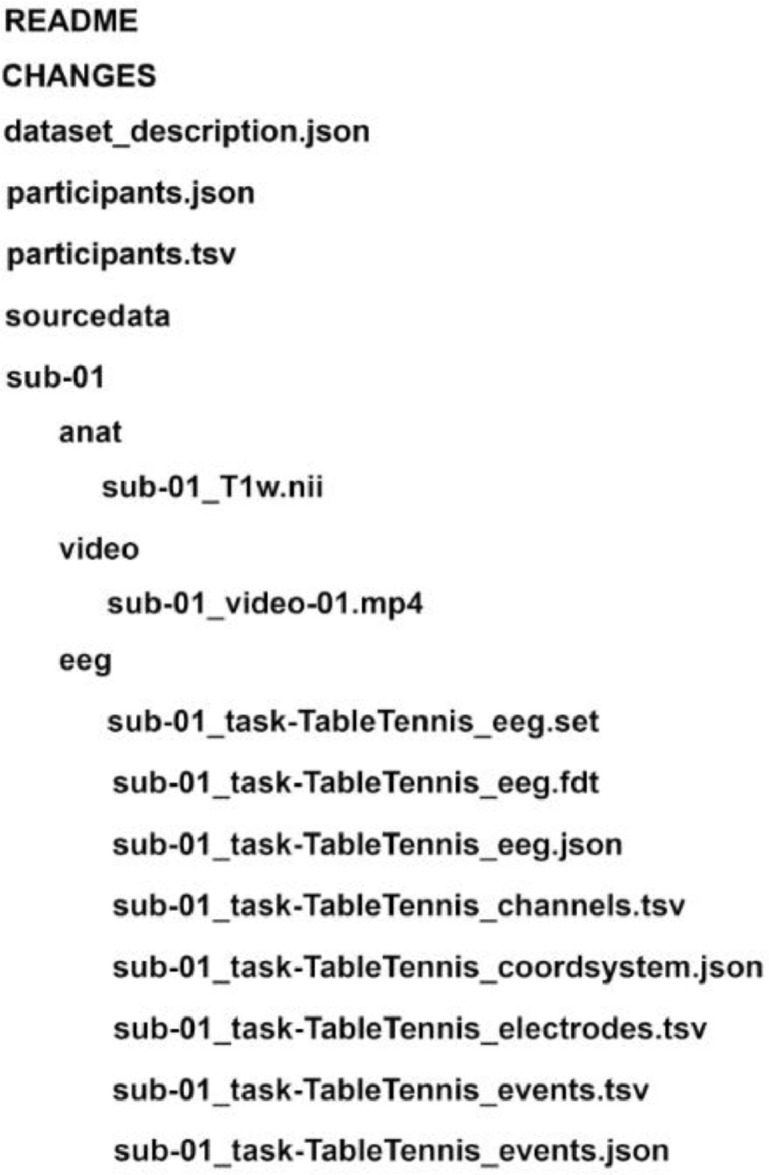
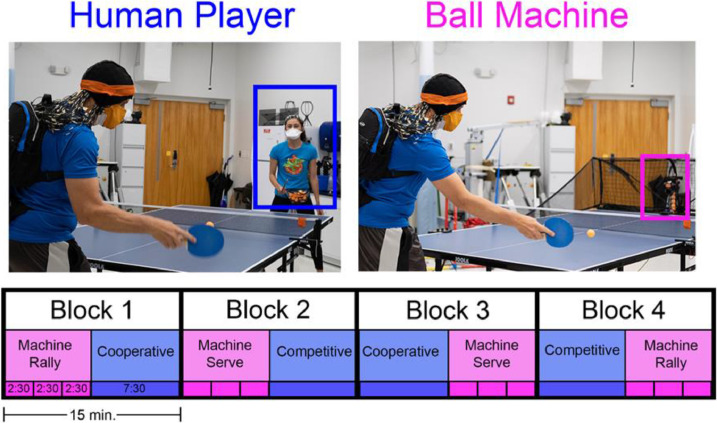
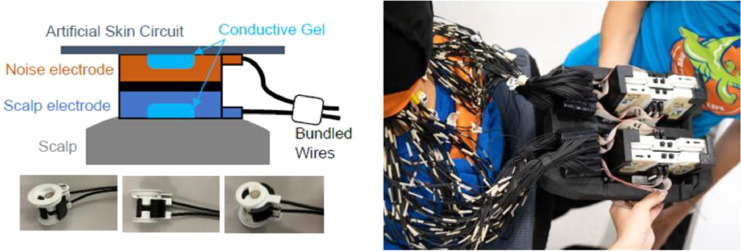
Real-world settings are necessary to improve the ecological validity of neuroscience research, and electroencephalography (EEG) facilitates mobile electrocortical recordings because of its easy portability and high temporal resolution. Table tennis is a whole-body, goal-directed sport that requires constant visuomotor feedback, anticipation, strategic decision-making, object interception, and performance monitoring - making it an interesting testbed for a variety of neuroscience studies. Although traditionally plagued by artifact contamination, recent advances in signal processing and hardware approaches, such as the dual-layer approach, have allowed high fidelity EEG recordings during whole-body maneuvers. Here, we present a dual-layer EEG dataset from 25 healthy human participants playing table tennis with a human opponent and a ball machine. Our dataset includes synchronized, multivariate time series recordings from 120 scalp electrodes, 120 noise electrodes, 8 neck electromyography electrodes, and inertial measurement units on the participant, paddles, and ball machine to record hit events. We also include de-identified T1 anatomical MR images and digitized electrode locations to create subject-specific head models for source localization. In addition, we provide anonymized video recordings and Adobe Premiere project files with hit events labeled (originally used to mark successful/missed hits). Researchers could use the videos to mark their own events of interest. We formatted our dataset in the Brain Imaging Data Structure (BIDS) format to facilitate data reuse and to adhere to the scientific community's new organization standard.
现实世界的环境对于提高神经科学研究的生态效度是必要的,而脑电图(EEG)因其易于携带和高时间分辨率,便于进行移动脑电记录。乒乓球是一项全身性的、目标导向的运动,需要持续的视觉运动反馈、预判、战略决策、物体拦截和表现监测,这使其成为各种神经科学研究的一个有趣的试验平台。尽管传统上受伪迹干扰的困扰,但信号处理和硬件方法(如双层方法)的最新进展使得在全身动作过程中能够进行高保真的脑电图记录。在这里,我们展示了一个双层脑电图数据集,该数据集来自25名健康的人类参与者,他们与一名人类对手和一台发球机进行乒乓球比赛。我们的数据集包括来自120个头皮电极、120个噪声电极、8个颈部肌电图电极以及参与者、球拍和发球机上的惯性测量单元的同步多变量时间序列记录,以记录击球事件。我们还包括去识别化的T1解剖磁共振图像和数字化电极位置以创建用于源定位的个体特异性头部模型。此外,我们提供了匿名视频记录和带有标记击球事件的Adobe Premiere项目文件(最初用于标记成功/未击中的击球)。研究人员可以使用这些视频来标记他们自己感兴趣的事件。我们将数据集格式化为脑成像数据结构(BIDS)格式,以促进数据重用并遵守科学界的新组织标准。