IEEE Trans Biomed Eng. 2020 Mar;67(3):842-853. doi: 10.1109/TBME.2019.2921766. Epub 2019 Jun 13.
Our aim was to determine if walking speed affected human sensorimotor electrocortical dynamics using mobile high-density electroencephalography (EEG).
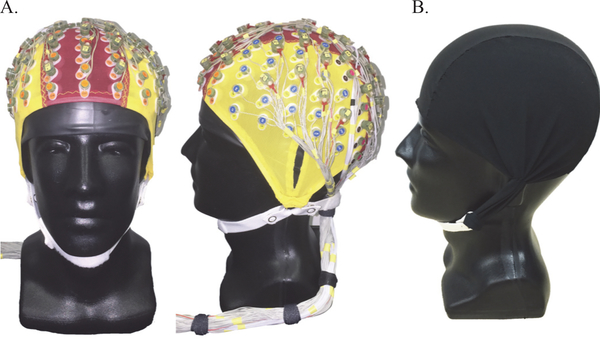
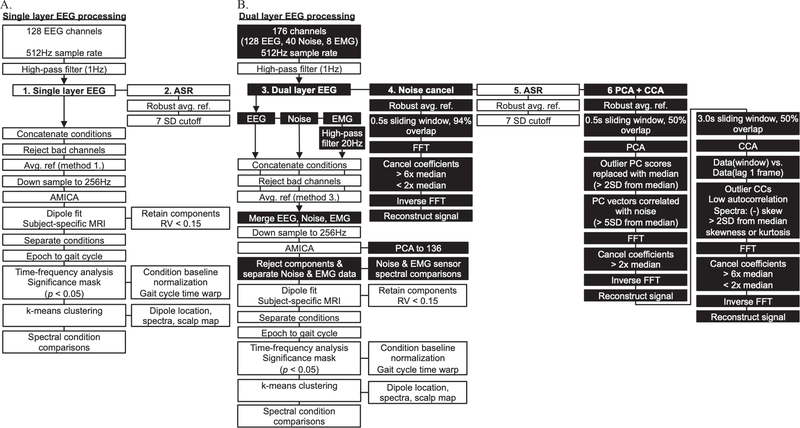
To overcome limitations associated with motion and muscle artifact contamination in EEG recordings, we compared solutions for artifact removal using novel dual-layer EEG electrodes and alternative signal processing methods. Dual-layer EEG simultaneously recorded human electrocortical signals and isolated motion artifacts using pairs of mechanically coupled and electrically independent electrodes. For electrical muscle activity removal, we incorporated electromyographic (EMG) recordings from the neck into our mobile EEG data processing pipeline. We compared artifact removal methods during treadmill walking at four speeds (0.5, 1.0, 1.5, and 2.0 m/s).
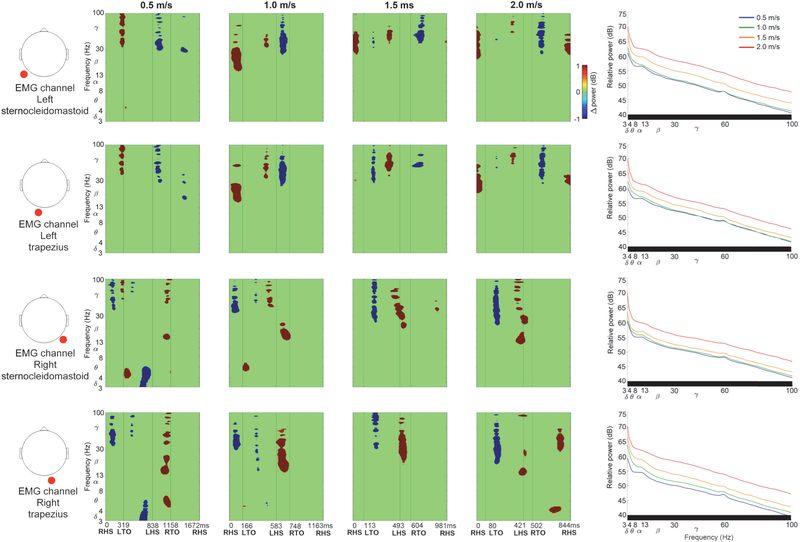
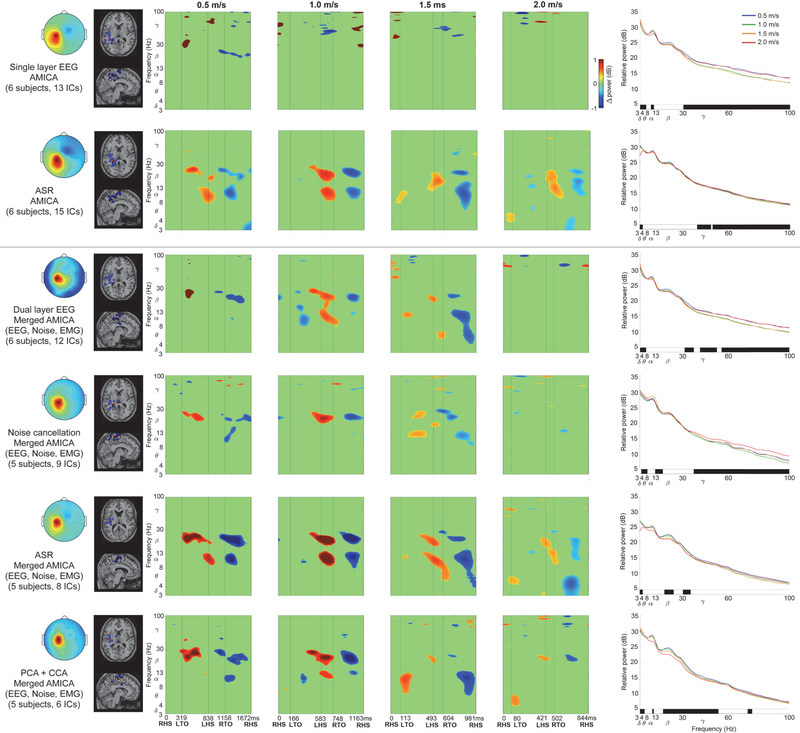
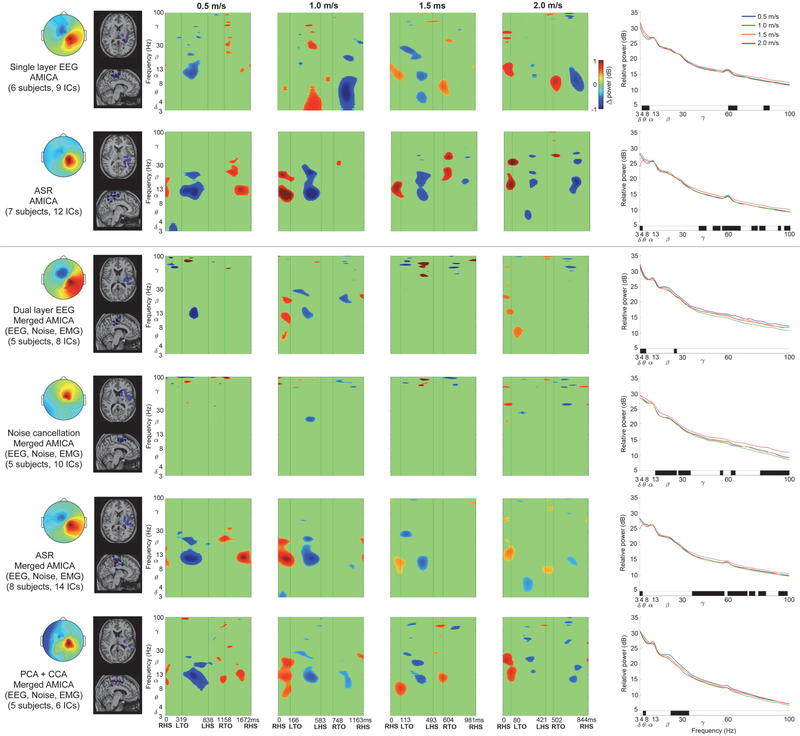
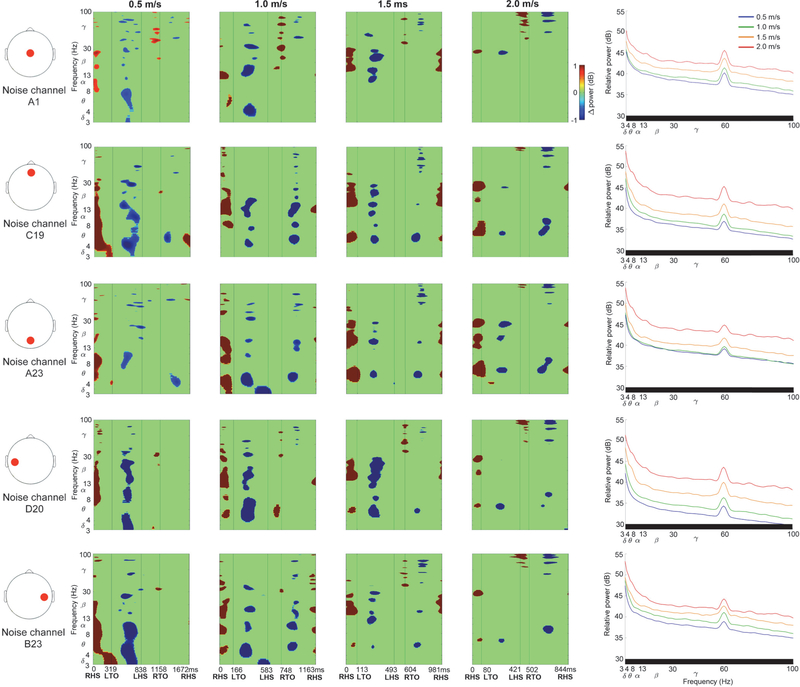
Left and right sensorimotor alpha and beta spectral power increased in contralateral limb single support and push off, and decreased during contralateral limb swing at each speed. At faster walking speeds, sensorimotor spectral power fluctuations were less pronounced across the gait cycle with reduced alpha and beta power (p < 0.05) compared to slower speeds. Isolated noise recordings and neck EMG spectral power fluctuations matched gait events and showed broadband spectral power increases at faster speeds.
Dual-layer EEG enabled us to isolate changes in human sensorimotor electrocortical dynamics across walking speeds. A comparison of signal processing approaches revealed similar intrastride cortical fluctuations when applying common (e.g., artifact subspace reconstruction) and novel artifact rejection methods. Dual-layer EEG, however, allowed us to document and rule out residual artifacts, which exposed sensorimotor spectral power changes across gait speeds.
本研究旨在使用移动高密度脑电图(EEG)确定行走速度是否会影响人体感觉运动皮层的电生理动力学。
为了克服 EEG 记录中运动和肌肉伪影污染相关的局限性,我们比较了使用新型双层 EEG 电极和替代信号处理方法消除伪影的解决方案。双层 EEG 同时记录人体脑电信号,并使用机械耦合且电独立的电极对来隔离运动伪影。为了去除肌电(EMG)活动的干扰,我们将颈部的 EMG 记录纳入到我们的移动 EEG 数据处理流程中。我们在 4 种速度(0.5、1.0、1.5 和 2.0 m/s)下的跑步机行走过程中比较了去除伪影的方法。
在每个速度下,对侧肢体单支撑和蹬离时左右感觉运动α和β频谱功率增加,而对侧肢体摆动时降低。在较快的行走速度下,与较慢的速度相比,步态周期中感觉运动频谱功率波动幅度较小,α和β功率降低(p < 0.05)。隔离噪声记录和颈部 EMG 频谱功率波动与步态事件相匹配,并显示出较快速度下的宽带频谱功率增加。
双层 EEG 使我们能够隔离行走速度变化对人体感觉运动皮层电生理动力学的影响。信号处理方法的比较表明,当应用常见(例如,伪影子空间重建)和新颖的伪影消除方法时,皮层内的波动相似。然而,双层 EEG 使我们能够记录和排除残留的伪影,从而揭示了跨步态速度的感觉运动频谱功率变化。